Valencian Community Travel Guide: Where to Stay, Eat & Explore in Luxury
There is a version of Spain that the crowds haven’t entirely ruined yet. It sits on the eastern Mediterranean coast, roughly midway down the country, and it has the audacity to offer genuinely world-class food, 300 days of sunshine, a coastline that shifts between wild coves and broad golden beaches, a medieval city that somehow also has one of Europe‘s great contemporary architecture museums, and rice grown in a lagoon that flamingos use as a weekend retreat. The Valencian Community does not shout about itself. It simply gets on with being excellent. That, in the end, is the most compelling reason to come.
This is a destination that works beautifully for a specific kind of traveller – and, in fact, for several kinds simultaneously. Families who want the privacy of a villa with a pool and the reassurance of calm, warm sea will find it here without the premium absurdity of the Balearics. Couples marking anniversaries or milestone birthdays will discover that the combination of Michelin-starred restaurants, golden-hour terraces and unhurried pace produces something quietly romantic without being choreographed. Groups of friends who have graduated from sharing Airbnbs will appreciate that a luxury villa in the Valencian Community can mean a ten-bedroom finca with a cinema room and a chef. Remote workers who have discovered that fibre broadband and a private pool are not mutually exclusive will find the infrastructure – particularly in and around Valencia city – impressively reliable. And anyone who has decided that wellness is now a priority but refuses to do it somewhere grey or joyless will find the outdoor life here – cycling through orange groves, morning swims, long walks in the Sierra Mariola – does the work without requiring any particular effort on their part.
Getting Here is Easier Than It Has Any Right to Be
Valencia Airport (VLC) sits just eight kilometres from the city centre and receives direct flights from most major European cities year-round. From London, you’re looking at roughly two and a half hours – marginally longer than the train to Edinburgh and considerably more pleasant. British Airways, Iberia, Vueling, EasyJet and Ryanair all serve the route, which means you can fly premium or frugal depending on your mood. If your villa is in the southern reaches of the region – around Denia, Jávea or the Costa Blanca – Alicante Airport (ALC) is often the better option, and it handles enormous volumes of traffic from the United Kingdom, Ireland, Germany and Scandinavia.
A private transfer from Valencia Airport to the city takes around twenty minutes; to Jávea or Denia, you’re looking at ninety minutes to two hours depending on traffic. Pre-booking a private chauffeur is worth every euro – the drive south along the AP-7 motorway, with the mountains to your left and the sea occasionally appearing to your right, is a proper arrival. Within the region, having a car is liberating rather than strictly essential in the cities, but becomes non-negotiable if you’re exploring the interior towns, the wine country of Utiel-Requena, or the quieter coves of the northern Costa Blanca. The roads are well-maintained, the signage is bilingual in Valencian and Spanish, and the toll roads are refreshingly honest about their charges.
A Food Culture That Would Embarrass Most Countries
Fine Dining
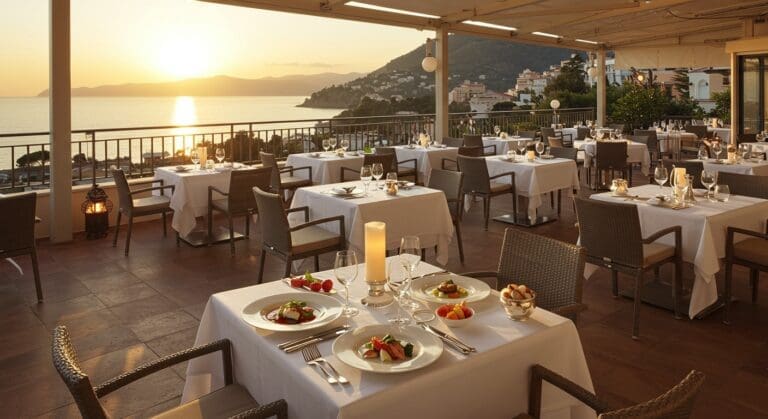
The Valencian Community holds more Michelin stars than most people realise, partly because it has never been particularly interested in your approval. Valencia city alone has a cluster of restaurants operating at a level that would generate considerable excitement in Paris or Tokyo – and here they sit on pleasant streets without much fuss being made about them.
El Poblet, just two minutes’ walk from Plaza del Ayuntamiento, carries two Michelin stars and represents chef Quique Dacosta’s presence in the city in the most persuasive possible way. Under chef Luis Valls, the open kitchen turns out elevated Valencian cuisine that draws on L’Albufera’s waters and the region’s market gardens with real authority. Tasting menus run from €165 to €190 and take several hours, which is not long enough. Ricard Camarena Restaurant, situated within the remarkable Bombas Gens arts centre on Avenida de Burjassot – itself worth visiting for the building alone – earns its two stars with cuisine that is committed to territory and tradition, threaded through with cosmopolitan influence and a reverence for acidity and freshness that is almost philosophical. The tasting menu at €220 runs to nearly three hours; the pacing is impeccable.
For something with one star and a personality all its own, Restaurante Lienzo on Plaza de Tetuán is the kitchen of María José Martínez, a Murcia-born chef known – affectionately, one hopes – as the “honey chef” for her dedication to bee pollination and organic farming. The restaurant, a converted art gallery that continues to host rotating exhibitions, produces modern Mediterranean food of genuine visual beauty from seasonal local produce. Tasting menus from €100 to €120. Lienzo won the Aquanaria Madrid Fusión 2024 Sustainability Award, which matters to an increasing number of travellers and should matter to all of them.
La Salita, in the vibrant Ruzafa neighbourhood, is chef Begoña Rodrigo’s one-starred restaurant in an 18th-century building with a garden terrace that is almost unfairly lovely on warm evenings. Rodrigo won Top Chef Spain in 2013 and has spent the intervening years building a menu that fuses Valencian produce with Asian and Latin American influences in ways that feel considered rather than gimmicky. The rating of 9.7 from TheFork speaks to a consistency that awards alone don’t always capture.
Where the Locals Eat
The most important thing to know about paella is that you are in the place where it was invented, and that the Valencians have opinions about it that border on the theological. Authentic Valencian paella contains chicken, rabbit, green beans and sometimes snails. It does not contain seafood – that is paella de marisco, a different thing entirely and perfectly delicious but not the original. Ordering the wrong one in the wrong place is not exactly dangerous, but it will be noted. The rice is grown in the paddy fields around L’Albufera, and eating it within sight of the lagoon where the ingredients essentially live is one of those experiences that justifies the entire trip.
The Mercado Central in Valencia is the largest covered market in Europe and a masterpiece of modernist architecture that happens to also sell the best tomatoes you have ever eaten. Arrive by ten, before the tour groups, and move through the stalls at a pace that allows proper examination. The adjacent bars serve coffee and small plates to the market vendors from early morning, and finding your way into one of those conversations – even without the language – is always worthwhile. Horchata and fartons, the local cold tiger nut drink and its accompanying pastry, must be consumed at least once, ideally at one of the old horchaterías in El Cabanyal or along the boulevards near the market.
Hidden Gems Worth Seeking Out
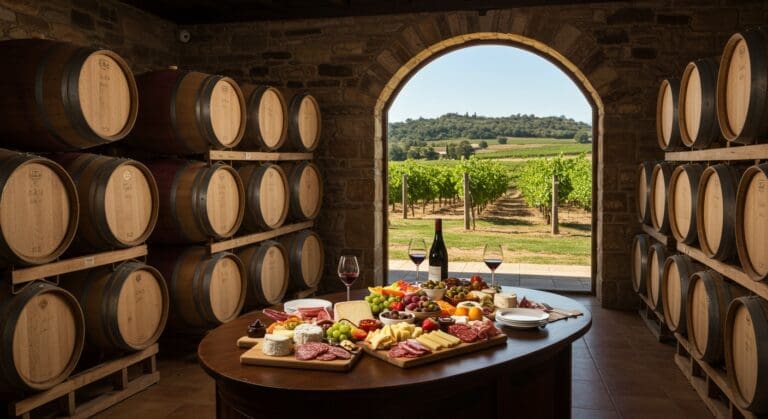
The wine region of Utiel-Requena, an hour west of Valencia in the high interior plateau, is producing red wines from the indigenous Bobal grape that serious wine people are extremely excited about and most tourists have never heard of. Several of the bodegas offer tastings and tours, and the combination of stark, beautiful landscape and genuinely excellent wine at reasonable prices makes for a compelling half-day. In the coastal towns, ask locally about chiringuitos – the beach restaurants that operate seasonally and don’t always advertise. Some of the best rice dishes on the Costa Blanca are served from what is essentially a shed on a beach, by people who have been cooking the same recipes for forty years. These places resist appearing on any list, which is broadly the point.
A Region That Takes Some Time to Understand, and Rewards Every Minute
The Valencian Community stretches nearly 500 kilometres along the Mediterranean coast, from Vinaròs in the north to Pilar de la Horadada at the southern tip, and extends significantly inland through a landscape of extraordinary variety. Understanding its geography is understanding why it works so well as a destination – you are never more than an hour from something completely different to where you already are.
Valencia city anchors the north-central portion of the region and is, by a considerable margin, Spain’s most underrated major city. The old town – Barrio del Carmen – is a layered medieval neighbourhood of narrow streets, Roman walls and Baroque church facades that rewards wandering without purpose. The City of Arts and Sciences, Santiago Calatrava’s breathtaking complex on the old Turia riverbed, is one of the genuinely great pieces of contemporary architecture anywhere in Europe. The riverbed itself, converted into a twelve-kilometre linear park after the devastating 1957 flood, is where the city actually lives – cycling, running, lounging, playing football with the kind of commitment that suggests Tuesday evening matters as much as the weekend.
South of Valencia, L’Albufera Natural Park is a freshwater lagoon surrounded by rice paddies and home to a remarkable variety of birdlife – flamingos, herons, egrets – that seems impossible given how close it sits to Spain’s third-largest city. Taking a boat across the lagoon at sunset, when the light turns everything an impossible shade of amber, is the kind of experience that would feel staged if it weren’t completely real.
The Costa Blanca, running south from the resort town of Benidorm down through Altea, Calpe, Jávea and Denia, is where the luxury villa market concentrates with good reason. Jávea in particular – set between the dramatic limestone headland of Cap de la Nau and the gentler bay around El Arenal – has built a reputation for quality that extends well beyond its famous expat community. Denia, with its castle and Michelin-starred restaurants and ferry connections to Ibiza and Mallorca, operates at its own unhurried frequency. Further inland, the mountain towns of the Marina Alta – Jalón, Pedreguer, Parcent – are quiet and beautiful and produce very good local wines that nobody has bothered to export yet.
Things to Actually Do Here, Which Turns Out to Be Quite a Lot
The obvious activity – and not less worthwhile for being obvious – is the beach. But the Costa Blanca’s coastline operates across a wide register, from the broad sandy sweep at Gandia suitable for families with young children to the coves of the Cap de la Nau accessible only on foot or by kayak, where the water is the kind of transparent blue that makes you question whether colour is usually this concentrated. The difference between these beaches is meaningful, and choosing one that matches your tolerance for other people is worth the research.
A boat trip along the coast – either chartered privately from Jávea or Denia or joining a small group sailing excursion – reveals the coastline in its best light and accesses coves that remain beautifully inaccessible by any other means. The sea temperature between June and October is warm enough to make extended swimming genuinely pleasurable rather than merely bracing, which is a distinction that anyone who has swum regularly off the British coast will appreciate acutely.
Inland, the Parque Natural de la Font Roja near Alcoy is a surprising pocket of green forest in the mountains – surprising because the surrounding landscape is so arid – with walking trails through ancient oak woodland and a monastery at its heart. The Sierra Mariola, extending between Alcoy and Bocairent, offers a similarly rewarding landscape for hikers and cyclists. The mountain town of Bocairent itself, with its cave theatre carved into the cliff face and its fiercely maintained medieval centre, is the sort of discovery that makes you feel unreasonably clever for having found it, despite the fact that it appears in every regional guide.
Las Fallas, Valencia’s extraordinary March festival involving elaborately constructed papier-mâché monuments and then the burning of said monuments in a night of spectacular and slightly terrifying fire, is genuinely one of the great street celebrations anywhere in the world. It has been a UNESCO Intangible Cultural Heritage since 2016, which represents an unusually accurate judgment by that organisation. If your visit coincides with mid-March, arrange your schedule accordingly and accept that sleep will be a lower priority for approximately five days.
For Those Who Like Their Holidays to Involve a Degree of Physical Risk
Diving along the Costa Blanca is excellent, with visibility conditions that typically exceed twenty metres and a varied underwater topography that includes wrecks, rocky reefs and seagrass meadows supporting substantial marine life. The area around the Islas Columbretes – volcanic islands off the coast of Castellón, accessible by boat from Oropesa del Mar or Benicarló – is a protected marine reserve with some of the best diving conditions in the western Mediterranean. Cova Tallada, a sea cave near Jávea accessible by kayak, offers an underwater cave system used by more experienced divers and serves as a vivid reminder that the Costa Blanca’s coast rewards those who move slowly and look carefully.
Kitesurfing has found a natural home at several locations along the coast, particularly around Santa Pola and the beaches south of Denia where the Levante wind produces conditions that attract serious practitioners from across Europe. Stand-up paddleboarding operates across a gentler frequency and can be done from almost any beach with rental equipment widely available. Sailing, either with a skipper or bareboat charter for the qualified, transforms the coast into something completely different – the network of marinas between Valencia and Alicante provides a logical route with endless diversions.
In the mountains, Via Ferrata routes have been developed across the region at various difficulty levels, with the routes around Simat de la Valldigna and in the Guadalest Valley offering proper mountain exposure with organised safety infrastructure. Road cycling has become a significant pursuit along the coastal roads and mountain circuits, with the terrain varying dramatically enough to suit both the casual weekend cyclist and the person who has decided to take this extremely seriously. (The latter group tends to be immediately identifiable by both their equipment and their unwillingness to stop for coffee, which is a shame.)
Why Families Keep Coming Back to This Particular Corner of Spain
The Costa Blanca and the beaches around Valencia have been attracting families for decades, and the infrastructure that has developed around this – water parks, child-friendly restaurants, shallow-shelving beaches with lifeguards, reliable pharmacy coverage – is genuinely impressive without becoming the kind of packaged-holiday apparatus that makes sensitive adults slightly desperate. The critical advantage of a private luxury villa with a pool over any hotel arrangement becomes clear immediately once you’re travelling with children: the pool is always available, lunch happens when people are hungry rather than between 1pm and 3pm, and the noise a family naturally produces does not become a social problem.
The water parks deserve a mention above and beyond the dismissive tone they sometimes receive. Aqualandia in Benidorm and Terra Mítica, the large theme park near the same city, are genuinely well-operated facilities that keep children aged five to fifteen occupied with sufficient thoroughness to justify a full day’s visit. Benidorm itself, which has been the subject of British cultural condescension for so long it has become almost affectionate, is in fact a remarkably efficient resort with good beaches, extensive evening entertainment and the particular advantage of being exactly what it claims to be. It is not, perhaps, the primary destination for guests of a luxury villa in the Valencian Community, but it makes an excellent day trip when the children have been virtuous about cultural activities for long enough.
The L’Oceanogràfic aquarium in Valencia – part of the City of Arts and Sciences complex – is one of the largest in Europe and managed with a seriousness about marine conservation that means visiting it feels educational without feeling worthy. The dinosaur park at Morella, in the northern interior, is a long drive but produces the kind of child enthusiasm that justifies most journeys. And the simple pleasure of a family morning in a Valencian market, teaching children that tomatoes taste like something and oranges do not come in plastic bags, has an educational value that no theme park can replicate.
Eight Centuries of History Wearing Its Age Remarkably Lightly
Valencia was founded by the Romans in 138 BC, occupied by the Moors for several centuries, reconquered by King James I of Aragon in 1238, and subsequently developed into one of the most prosperous trading cities in the Mediterranean during the 15th century. This history is legible in the architecture – the Gothic Cathedral, begun in the 13th century, contains what is claimed (by Valencia, naturally) to be the Holy Grail, which is either an extraordinary piece of medieval provenance or an extraordinary piece of medieval marketing. The Silk Exchange, La Lonja de la Seda, is an undisputed UNESCO World Heritage Site: a late-Gothic trading hall of breathtaking elegance, its helical columns rising to vaulted ceilings as if the building’s ambition got slightly ahead of its era.
The Barrio del Carmen, the old quarter, layers Roman, Moorish and medieval Christian history in a way that is confusing geographically and fascinating intellectually. The Torres de Quart and Torres de Serranos, the two remaining medieval city gates, still stand with considerable presence at what is now the edge of the old town. The Fine Arts Museum holds a collection of Valencian painting and sculpture that would be internationally celebrated if it were in a more celebrated city – the work of Joaquín Sorolla, Valencia’s greatest painter, all blinding Mediterranean light and loose brushwork that captures exactly how the light here behaves in summer, is particularly well-represented.
Further south, the hilltop castle at Denia – Moorish in origin, considerably modified over subsequent centuries – offers views across the coast and towards the island of Ibiza on clear days. Villena’s extraordinary castle, further inland, contains one of the most significant Bronze Age gold treasures ever discovered in Europe, housed in a small local museum that you could easily drive past without noticing. That would be a mistake.
What to Buy, and Where to Buy It Properly
Valencia’s Mercado Central is the obvious starting point for food provisions – and taking a large cool bag and filling it with local cheeses, cured meats, preserved vegetables and the extraordinary local olive oil is one of the most pleasurable forms of grocery shopping available to modern man. The oranges are almost offensively good in winter and spring. Tiger nut milk, locally made ceramic tiles, and esparto grass baskets all make excellent and genuinely local souvenirs that resist looking like airport purchases.
The ceramics tradition in the Valencian Community is ancient and the town of Manises, just outside Valencia, has been producing decorative pottery for over seven centuries. Contemporary Valencian ceramicists have built on this tradition in interesting directions, and several studios and galleries in both Manises and the city itself sell work of genuine quality at prices that seem reasonable by any international standard. The Ruzafa neighbourhood in Valencia – home to La Salita, the Michelin-starred restaurant – has developed into a genuinely interesting quarter for independent boutiques, galleries and design shops over the past decade, concentrated enough to make an afternoon’s browsing productive without becoming exhausting.
In the market towns of the interior – Ontinyent, Alzira, Gandia’s market days – local crafts, cured sausages, local honeys and mountain herbs are available at prices that remind you how far from tourist infrastructure you have successfully travelled. Bring the cool bag.
The Practical Details, Presented Without Condescension
Spain uses the euro. The language is Spanish (Castilian), with Valencian – a dialect of Catalan – widely spoken and seen on all signage throughout the region. In tourist areas English is widely understood; in the mountain interior it helps to have even basic Spanish. A simple greeting in either language is met with disproportionate warmth.
Tipping is customary but not at the scale expected in North America. Rounding up or leaving five to ten percent in restaurants is standard; in bars, leaving small change is sufficient and appreciated. Tap water is safe throughout the region, though many locals drink bottled water as a preference rather than a precaution – the taste in some areas does genuinely benefit from filtration.
The best time to visit depends on what you want. For beach holidays and outdoor dining, June through to early October is the operational sweet spot, with July and August the busiest and hottest – beach temperatures can reach 35°C inland, though the coast is tempered by sea breezes. May, June and September offer a compelling combination of warm sea temperatures, full-length days and manageable crowds. The spring months – March and April – are excellent for city exploration, cycling and cultural visits: the light is extraordinary, the orange trees are in blossom and the Fallas festival in March transforms Valencia into something that must be seen directly. Winter is mild, rarely cold and often sunny, particularly on the coast – not swimming weather by Valencian standards, though visitors from northern Europe sometimes disagree.
Healthcare is excellent in the region, with the Hospital La Fe in Valencia ranking among the best in Spain. EU citizens with a European Health Insurance Card have access to public healthcare. Travel insurance is sensible regardless. The crime rate in tourist areas is low by European standards; normal urban precautions in busy areas are sufficient.
Why a Private Villa Here Is Not a Luxury – It’s the Logical Choice
A hotel in Valencia or along the Costa Blanca will give you a room, a pool shared with strangers at fixed hours, a breakfast service that ends at ten and a concierge who is professionally pleasant but ultimately working from the same recommendations sheet as every other concierge. A private luxury villa in the Valencian Community gives you a different kind of holiday entirely – one that bends to your schedule rather than accommodating you within its own.
For families, the arithmetic is immediate: a private pool available at any hour, outdoor dining space that doesn’t require advance reservation, bedrooms arranged so that adults and children are not in constant proximity, and a garden that substitutes for the public spaces that feel less comfortable with children in tow. For groups of friends, a villa with eight or ten bedrooms means gathering and dispersing at will – a shared dining table in the evening, independent days, the particular pleasure of a long communal breakfast that nobody is hurrying you through.
The villa stock in the Valencian Community spans an enormous range – from restored fincas in the orange-growing interior to contemporary architectural statements on the clifftops above Jávea, from large properties with staff quarters and full catering options to smaller retreats designed for couples wanting seclusion and a pool with a serious view. Many premium properties now come equipped with high-speed fibre or Starlink satellite connectivity as standard, which means that the remote worker who has convinced themselves that a two-week stay in a villa overlooking the Mediterranean is actually a sensible professional decision has the infrastructure to make that argument genuinely credible. Dedicated workspace, reliable video call capability, fast upload speeds – the digital nomad infrastructure here is more robust than in comparable Spanish coastal destinations.
Wellness amenities in the upper tier of the villa market have expanded significantly: private gyms, outdoor yoga terraces, plunge pools and full spa facilities are available in properties that would not have offered these ten years ago. The outdoor life of the region – morning swims, early cycling, long evening walks through orange and almond groves – does most of the wellness work before you’ve even thought about booking a treatment. The pace of Valencian daily life, which prioritises the long lunch and the evening passeo above the kind of productive urgency that makes northern European cities so exhausting, has a restorative effect that is not easily replicated elsewhere.
Whatever your reason for coming – the food, the coast, the architecture, the wine, the mountains, the light, or simply the accumulated evidence that this region does everything well without making a great deal of noise about it – a private villa is the right base from which to experience it. Explore our collection of luxury villas in Valencian Community with private pool and find the property that makes the most compelling case for itself.
More Valencian Community Travel Guides
- Best Restaurants in Valencian Community: Fine Dining, Local Gems & Where to Eat
- Valencian Community Food & Wine Guide: Local Cuisine, Markets & Wine Estates
- Valencian Community with Kids: The Ultimate Family Holiday Guide
- Best Time to Visit Valencian Community: Month by Month Weather, Crowds & Tips
- Valencian Community Luxury Itinerary: The Perfect 7-Day Guide
- Romantic Valencian Community: The Ultimate Couples & Honeymoon Guide
What is the best time to visit Valencian Community?
For beach holidays, June through early October offers warm sea temperatures and long sunny days, with July and August being the busiest and hottest months. May, June and September are widely considered the sweet spot – warm enough for swimming, quieter than peak summer and still fully operational across restaurants, boat charters and outdoor activities. March is exceptional for city breaks coinciding with the Las Fallas festival, when Valencia becomes one of the great spectacles in European travel. Winter on the coast is mild and often sunny – genuinely pleasant for walking, cycling and cultural visits, even if the sea temperature has other ideas.
How do I get to Valencian Community?
Valencia Airport (VLC) is the main gateway, located eight kilometres from the city centre and served by direct flights from most major European cities including London, Amsterdam, Paris, Berlin and Dublin. Flight time from the UK is approximately two and a half hours. For the southern Costa Blanca – Jávea, Denia, Calpe, Benidorm and Alicante – the region’s second airport, Alicante (ALC), is often the more practical choice and handles significant volume of direct flights from UK and northern European cities. Private transfers can be arranged from both airports directly to villa properties throughout the region.
Is Valencian Community good for families?
Genuinely excellent. The combination of warm, calm Mediterranean sea with gently shelving beaches, outstanding water parks, excellent family restaurants, and a culture that actively welcomes children makes the Valencian Community one of the most reliable family holiday destinations in southern Europe. The private villa with pool option is particularly well-suited to family travel – the pool is available on your schedule, outdoor space removes the pressure of hotel common areas, and the ability to self-cater or hire a private chef takes considerable logistical pressure out of travelling with children of different ages and tastes.
Why rent a luxury villa in Valencian Community?
A private villa gives you the kind of holiday that a hotel structurally cannot – your own pool, your own schedule, dining on your terrace when you choose rather than when the kitchen opens, and a level of space and privacy that becomes immediately apparent once you’ve experienced it. For families, the pool and outdoor space change the dynamic entirely. For groups, the economics of a large villa versus multiple hotel rooms are often comparable, and the shared experience is incomparably better. For couples, the seclusion and intimacy of a well-chosen villa property is simply a different category of holiday. Most premium villas in the Valencian Community can also arrange private chef, daily housekeeping and concierge services, which provides the service ratio of a good hotel without the loss of privacy.
Are there private villas in Valencian Community suitable for large groups or multi-generational families?
Yes, and in considerable number. The villa market in the Valencian Community includes properties of up to ten or twelve bedrooms, many configured with separate wings or guest annexes that allow different family generations to share a property without being in constant proximity – which tends to be what everyone actually wants. Large private pools, outdoor dining areas for twenty or more guests, staff quarters, games rooms and home cinemas feature across the premium end of the market. Properties around Jávea, Denia and the broader Costa Blanca, as well as inland fincas in the orange and wine country, offer the most variety at the larger end of the scale.
Can I find a luxury villa in Valencian Community with good internet for remote working?
Connectivity in the Valencian Community has improved significantly in recent years. Fibre broadband reaches a wide range of coastal and urban areas, and many premium villa properties now specify their connection speeds as a standard part of their listing details. In more rural or elevated locations, Starlink satellite connectivity has become increasingly available as an installation option, providing reliable broadband where fibre infrastructure has not yet reached. If consistent, high-speed connectivity is a practical requirement rather than a preference, it is worth confirming directly with the property – our team can advise on which villas in the portfolio have verified remote working capability.
What makes Valencian Community a good destination for a wellness retreat?
The combination of outdoor environment, diet and pace of life here does much of the wellness work without requiring any particular programme. Morning swims in warm, clear Mediterranean water, cycling through orange groves and almond orchards, long walks in the Sierra Mariola or the Font Roja natural park, and the Mediterranean diet at its most authentic source – genuinely good olive oil, fresh fish, vegetables from market gardens, local legumes – constitute a natural wellness regime of real efficacy. Premium villa properties add private gyms, outdoor yoga terraces, plunge pools and on-site spa treatments. The Valencian approach to time – the long lunch, the evening walk, the absence of urgency – has a restorative effect that is genuinely difficult to replicate in a more performatively wellness-focused destination.