

Africa Travel Guide: Where to Stay, Eat & Explore in Luxury
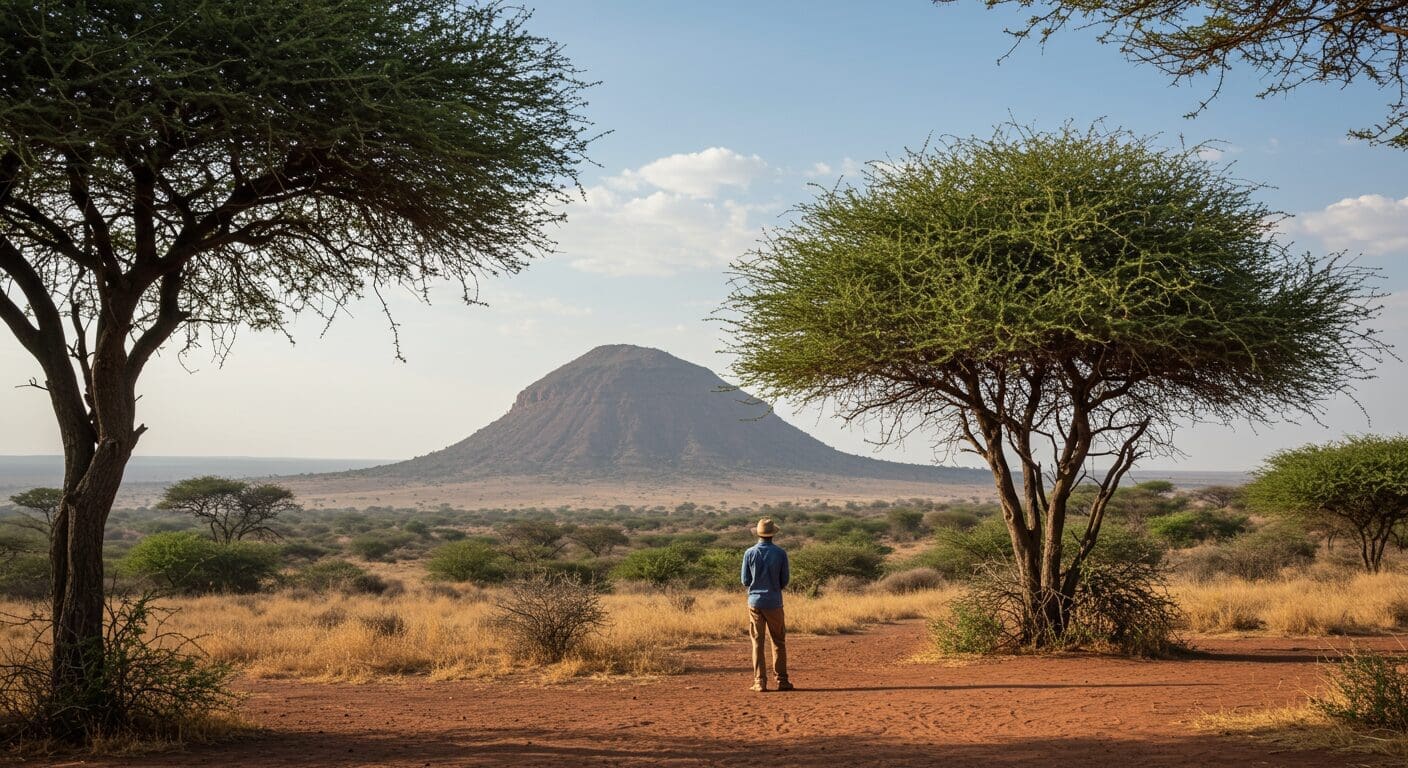
There is a moment, somewhere in Africa, that rewrites everything you thought you knew about travel. It might happen on a Kenyan dawn, when the light comes in sideways and turns the savanna the colour of old gold and a lone giraffe moves through the frame so slowly it seems choreographed. Or it might come later, in a private plunge pool overlooking the Indian Ocean in Zanzibar, cold drink in hand, wondering in all seriousness why you ever bothered going anywhere else. Africa doesn’t seduce gradually. It simply arrives – vast, improbable, and entirely itself – and leaves a mark that no subsequent holiday can quite erase. This is a continent that accommodates the full spectrum of luxury: from private safari lodges on the edge of the Serengeti to oceanfront villas in Cape Town where the Winelands begin practically at the garden gate. The question isn’t whether Africa deserves your holiday budget. The question is only where, and when, and how long you can stay.
Why Africa for a Luxury Villa Holiday
Luxury travel has a tendency to look the same everywhere. The same pale marble lobbies, the same drift of Egyptian cotton, the same carefully curated minibar. Africa has no patience for that kind of anonymity. Stay in a private villa on the Kenyan coast, and you’re sleeping in a place with its own logic – thatched makuti roofs designed to breathe in the heat, open-air bathrooms that make a virtue of the night sky, architecture that knows its landscape and works with it rather than against it. This is not luxury as performance. It’s luxury as knowledge.
The privacy argument matters here, perhaps more than anywhere else. A luxury villa in Africa means waking at your own hour, eating what you want, watching wildlife cross the horizon without a dozen other guests reaching for their cameras at exactly the same moment. In regions like the Cape Winelands or the Kenyan Highlands, a private villa also gives you a base from which to move on your own terms – a distinction that becomes increasingly precious when the distances involved are large and the experiences available are genuinely once-in-a-lifetime.
There is also, without wishing to be crass about it, the question of value. Africa’s luxury villa market offers a range of quality that rivals the best of Europe, often at more favourable exchange rates for visitors arriving from the United Kingdom or the United States. The staffing culture at high-end African properties – attentive, warm, personalised without being suffocating – raises the experience in ways that no thread count can fully explain.
The Best Regions in Africa for Villa Rentals
South Africa remains the continent’s most mature luxury travel destination, and for good reason. The Cape Peninsula offers a remarkable concentration of private villas – many with Atlantic or Indian Ocean frontage, and several with direct access to the Winelands, one of the world’s great wine-producing regions. Cape Town itself, beneath the theatrical flat-topped mountain that dominates every postcard, is one of the world’s genuinely great cities: sophisticated, complicated, and alive in ways that reward curiosity. Inland, the Franschhoek and Stellenbosch valleys offer rural villa retreats with vineyards on the doorstep and the faint sense that you’ve accidentally stumbled into somewhere considerably more beautiful than you’d planned.
Kenya is, for many, Africa distilled to its essentials. The Masai Mara needs no explanation – this is wildlife spectacle at its most operatic, particularly during the great wildebeest migration. But Kenya rewards those who look beyond the obvious. The coast around Malindi, Kilifi and the Watamu area offers a version of Africa that feels entirely different: languid, ocean-facing, shaped by centuries of Swahili and Arab influence. Luxury villas here tend towards the architectural – coral stone walls, vaulted ceilings, deep shaded verandas. The Indian Ocean arrives warm and turquoise. One manages.
Morocco, meanwhile, occupies a category of its own – geographically African, culturally unlike anywhere else on the continent. The riad-style villa in Marrakech, opening inward around a tiled central courtyard, is one of travel’s most distinctive forms of accommodation. The Palmeraie district and the hills of the Agdal offer private villa compounds of genuine grandeur. Escape to the Atlas Mountains or south towards the Saharan fringe and the landscape shifts entirely, in the way that only Morocco can manage with such casual drama.
Tanzania and Zanzibar combine two entirely different pleasures in geographical proximity. Zanzibar’s beaches – white, long, fringed with casuarina trees – offer the best Indian Ocean swimming outside the Maldives, and the island’s private villa market has matured considerably in recent years. Stone Town, the island’s UNESCO-listed heart, is a labyrinth of carved doors and sea breezes and history that arrives in layers. Pair a week in Zanzibar with a safari in the Ngorongoro Crater or on the Serengeti plains and you have a holiday structure of near-perfect logic.
When to Visit Africa
Africa is not a single climate. It is dozens of them stacked beside each other across 54 countries and three time zones, which means the timing question demands specificity. That said, certain broad principles apply.
For East Africa – Kenya, Tanzania, Uganda – the classic safari season runs from July through October, when the long dry season pushes wildlife toward water sources and open savanna. The Masai Mara’s wildebeest migration peaks from July through September, when somewhere in the region of 1.5 million animals make their characteristically chaotic crossing of the Mara River. This is also, predictably, peak season for visitors – if solitude matters, consider the shoulder months of June or early November.
South Africa’s Western Cape operates on a Mediterranean-style calendar. December through February brings warm, dry summers and the Cape Winelands at their most abundant – harvest season runs from late January, and if you’ve never watched grapes come off the vine in golden late-afternoon light, it’s a reasonably persuasive argument for arriving in February. Winters – June through August – are mild by northern standards and bring a particular quality of light to the Cape Peninsula that photographers understand instinctively.
Morocco is at its best in spring (March to May) and autumn (September to November). Marrakech in July is technically possible. It is also approximately 42 degrees. The Sahara, paradoxically, works better in winter – cold nights and crystalline skies, with daytime temperatures that allow actual movement.
Zanzibar and the Swahili coast are governed by two monsoon seasons. The long rains run from April through June; the short rains from November through December. July through October and January through March represent the clearest windows for beach-focussed travel.
Getting to Africa
Direct flights from London to Cape Town, Nairobi, Marrakech, Dar es Salaam and Casablanca are well established, with a range of carriers including British Airways, Kenya Airways, Royal Air Maroc, and South African Airways offering reasonable connections. Cape Town sits roughly 11 hours from the England, which is long enough to justify the flat-bed business class upgrade if you’re going to arrive in any useful condition. Nairobi’s Jomo Kenyatta International Airport connects efficiently onward to Mombasa, Zanzibar, and the Kilimanjaro gateway for northern Tanzania.
Internal travel in Africa varies enormously by country. In South Africa, hiring a car is straightforward and the roads around the Cape Peninsula and Winelands are genuinely excellent. In East Africa, light aircraft transfers to bush camps or coastal villas are the established approach – a 45-minute flight in a Cessna above the Rift Valley is, by any objective measure, a reasonable alternative to a six-hour road journey. Morocco’s major cities are accessible by train (the Casablanca-Marrakech line is fast and comfortable) or by road in rental cars, with the caveat that Marrakech’s medina is best approached without a vehicle and with some tolerance for structured chaos.
Food & Wine in Africa
South Africa holds the strongest claim to a fully developed fine-dining culture on the continent – and it is not a modest claim. The Cape Winelands produce wines of genuine international standing, from the Chenin Blancs of Swartland to the Cabernet-forward blends of Stellenbosch. Restaurant culture in Cape Town has evolved rapidly – the city now supports a dining scene of genuine ambition, with chefs drawing on Cape Malay, indigenous, and modern influences in ways that feel neither forced nor folkloric.
Moroccan cuisine is one of the world’s great pleasures – a slow-cooked, spiced, honey-and-preserved-lemon tradition of enormous depth. A good tagine, in the right riad courtyard, with the scent of orange blossom somewhere in the middle distance, is a meal that earns its mythology. The bastilla – that extraordinary pigeon pie of sweet and savoury and flaky pastry – is the dish Morocco doesn’t export well enough. Seek it out.
On the Swahili coast, the cuisine reflects centuries of trade: coconut milk, tamarind, cardamom, clove – a fragrant, layered cooking tradition that makes seafood taste more interesting than it ever manages elsewhere. Zanzibar’s night food market at Forodhani Gardens, which runs along the seafront in Stone Town, is an institution – grilled lobster, octopus, sugarcane juice, the whole fragrant theatre of it.
East Africa more broadly is not celebrated for its cuisine, and it would be disingenuous to pretend otherwise. But a private villa experience changes the equation: a skilled local chef, access to extraordinary fresh ingredients – coastal catch, highland vegetables, quality beef – and a kitchen that responds to what you actually want produces results that transcend the general rule.
Culture & History of Africa
The temptation, in writing about African culture, is to reach for the sweeping statement. Resist it. Africa’s cultural complexity is the whole point – 54 nations, over 2,000 languages, civilisations that predate many of the world’s celebrated ancient cultures. What a luxury villa holiday allows, at its best, is a slow, contextualised engagement with one place at a time.
Morocco offers some of the continent’s most immediately accessible historical depth. The imperial cities – Marrakech, Fez, Meknes, Rabat – each carry distinct architectural and cultural identities. Fez’s medina, the world’s largest living medieval city, is the kind of place that takes days to begin to understand and years to fully absorb. The blue walls of Chefchaouen in the Rif Mountains are so frequently photographed that seeing them in person produces a mild surreal experience – the reality matching the image, which is either satisfying or slightly unsettling, depending on your feelings about Instagram.
In East Africa, the Swahili coast traces a 1,000-year tradition of maritime trade that connected East Africa with Arabia, Persia, and India. Stone Town’s architecture – carved wooden doors, coral-stone walls, layered influences from every direction – is its most tangible legacy. Further inland, the history of the East African Rift Valley is of a different order entirely: this is the region from which, according to current scientific understanding, all of human life eventually emerged. There is something appropriately humbling about sitting in the landscape and contemplating that particular fact.
South Africa carries its history differently – more visibly, more painfully, and more honestly than many countries manage. A visit to Cape Town without engaging with its apartheid history, through the District Six Museum or the Robben Island ferry, produces a flatter, less truthful version of the city. The new South Africa’s creative culture – its visual arts, music, literature – reflects both that painful past and a complicated, unfinished optimism.
Activities Across Africa
The safari is the obvious starting point, but it rewards precision. A private game drive in the Masai Mara at first light, in a vehicle shared with no one but your party and a knowledgeable guide, is a genuinely different experience from a shared game drive in a packed minivan at peak season. Wildlife sightings are not guaranteed anywhere in Africa – it is one of the things that makes it real rather than theatrical – but the quality of your guide and the privacy of your vehicle materially affect your chances and, more importantly, your experience of whatever you encounter.
Beyond the safari: ocean diving and snorkelling off the Kenyan coast and Zanzibar’s coral reefs; hiking in Morocco’s Atlas Mountains, including treks toward Toubkal, North Africa’s highest peak; surfing at Cape Town’s Muizenberg and Kommetjie beaches; hot-air ballooning over the Masai Mara at dawn, which is as close to moving silence as aviation gets; wine tasting along the Stellenbosch wine route; kite-surfing at Diani Beach on Kenya’s south coast; camel trekking to Saharan camps where the stars appear in their implausible thousands.
For those interested in walking safaris – which allow a fundamentally different relationship with the landscape – Tanzania’s Selous Game Reserve and Zambia’s South Luangwa Valley offer guided walks with rangers whose knowledge of tracking and ecology tends to recalibrate what you notice for the rest of the trip. Walking through elephant country at ground level is not, to be clear, the same as watching elephants from a vehicle. It is considerably more attentive.
Family Holidays in Africa
Africa works exceptionally well for families – with appropriate calibration for age and temperament. The common assumption that safari holidays are exclusively adult territory is outdated. Many high-end private properties across Kenya, Tanzania, and South Africa actively accommodate children, with dedicated children’s programmes, junior ranger activities, and guides who understand that a ten-year-old engaging with wildlife tracking is likely to remember the experience longer than any beach holiday.
South Africa is arguably the continent’s most straightforward family destination. Cape Town’s combination of beaches, the Two Oceans Aquarium, Boulders Beach (penguins, and rather a lot of them), Table Mountain’s cable car, and the various child-friendly wine estates that double as picnic grounds makes it adaptable to a wide age range. The road to Cape Point passes through scenery of the kind that tends to silence even teenagers who have made clear they’d rather have stayed home.
Morocco with children works best with a villa base – the medinas of Fez and Marrakech are simultaneously exciting and exhausting for young travellers, and having a private compound to retreat to at the end of the day transforms the logistics. Zanzibar’s beaches, particularly the calmer western shore, offer shallow, warm swimming ideal for younger children.
A note of honesty: certain activities – remote wilderness camps, serious trekking, or multi-day desert crossings – have age restrictions or practical limitations. Research specific requirements before booking, and be realistic about what your particular children will actually enjoy versus what looks good on paper. Africa is big enough to contain both.
Practical Information for Africa
Visa requirements vary significantly by country and by nationality. South Africa allows visa-free access for UK and US passport holders for tourism of up to 90 days. Kenya has moved to an e-visa system, with applications available online prior to arrival. Morocco offers visa-free entry for most Western passport holders. Tanzania requires a visa, obtainable either in advance or on arrival at major entry points. Always verify current requirements before travel – the situation updates and a single missed requirement at check-in is a disproportionately unpleasant experience.
Health preparation matters in Africa. Yellow fever vaccination is required for entry to Tanzania if travelling from a country where yellow fever is endemic. Malaria prophylaxis is recommended for most safari regions in East Africa, certain areas of South Africa, and coastal regions generally. Morocco and Cape Town, at altitude and latitude, are generally considered malaria-free. Consult a travel health clinic at least six weeks before departure.
Currency: South Africa uses the South African Rand; Kenya the Kenyan Shilling; Morocco the Moroccan Dirham; Tanzania the Tanzanian Shilling. US dollars and euros are widely accepted at high-end properties across most of the continent, though local currency is useful for markets and smaller transactions. Tipping culture is established and meaningful – build it into your budget with appropriate generosity.
Internet connectivity has improved substantially across the continent’s major destinations. Mobile data via local SIM cards is both available and affordable in South Africa, Kenya, and Morocco. Remote safari camps vary – some embrace the blackout as a feature; others offer surprisingly reasonable satellite connections. Either way, take the wildlife seriously and put the phone down more often than you think you need to.
Luxury Villas in Africa
A private villa changes the tempo of an African holiday in ways that go beyond the obvious comforts. There are no restaurant sittings to observe, no schedules to negotiate, no pool to share with twelve other couples. In a continent where the landscapes are already operating at a scale that dwarfs ordinary experience, the ability to process it privately – slowly, on your own terms, with coffee on your own terrace – is not an indulgence. It is, arguably, the only sane response.
The range available is genuinely broad. A Cape Town clifftop villa with Atlantic views and a wine cellar stocked with Stellenbosch Syrah. A makuti-roofed coastal retreat on the Kenyan coast where the tide determines the day’s rhythm. A Marrakech riad of cool tiles and candlelit courtyards that makes the heat outside feel like a different country. A bush villa in the Karoo, improbably remote, where the silence at night is so complete it becomes its own kind of presence.
Staff at the finest African villas – cooks, guides, managers, housekeepers – bring a quality of care that is both professional and genuinely warm. This is not a continental cliché. It is a consistent feature of the best properties, and it elevates the experience in ways that are difficult to quantify but immediately felt.
Africa will ask something of you – a willingness to be surprised, to be occasionally humbled, to accept that some things operate on a schedule entirely their own. A luxury villa gives you the conditions in which to meet those demands with appropriate comfort. Explore our collection of private villa rentals in Africa and find the base from which your own version of this continent begins.
What is the best region in Africa for a villa holiday?
It depends entirely on what you’re after – which is the honest answer rather than the convenient one. For a combination of world-class beaches, wine, cuisine, and wildlife, South Africa’s Western Cape is the most versatile option and arguably the easiest entry point for first-time visitors. For safari with serious wildlife credentials, Kenya’s Masai Mara or Tanzania’s Serengeti combined with a Zanzibar beach stay offers a near-perfect structure. Morocco’s Marrakech and the Atlas Mountains suit those drawn to architecture, cuisine, and cultural immersion in a more compact geography. East Africa’s Swahili coast – particularly the Kenyan islands and bays around Kilifi and Watamu – is the choice for Indian Ocean luxury with genuine remoteness. The best region is, in the end, the one that matches your specific interests rather than the most-photographed one.
When is the best time to visit Africa?
East Africa’s prime safari season runs July through October, with the Masai Mara wildebeest migration at its peak between July and September. South Africa’s Western Cape is best from November through February for warm, dry summer conditions, though the Winelands and Cape Peninsula reward visits in almost any month. Morocco is most comfortable in spring (March to May) and autumn (September to November), when temperatures are moderate and the country is at its most navigable. Zanzibar’s optimal beach season runs July through October and January through March, avoiding the monsoon rains of April to June. The key is to match your timing to your specific itinerary rather than looking for a single answer to a continent this large.
Is Africa good for families?
Very much so, with appropriate planning. South Africa is the most immediately family-friendly destination – Cape Town in particular offers beaches, wildlife experiences (penguins at Boulders Beach, for a start), and a range of accessible activities across age groups. Safari holidays work well for families with children aged seven and above, with many private properties offering junior ranger programmes and guides experienced in engaging younger visitors. Zanzibar’s calmer western beaches are excellent for families with young children. Morocco works best with a private villa base, which turns the intensity of the medina experience into something manageable rather than overwhelming. The main consideration is matching destination and activity to your children’s specific ages and interests – Africa is large and varied enough to accommodate almost any family configuration.
Why choose a luxury villa in Africa over a hotel?
Privacy is the central argument, and in Africa it carries particular weight. A private villa means no shared pool at sunrise when the light is doing something extraordinary, no dining room schedule competing with your game drive return time, no lobby full of fellow travellers processing the same experience. It also means space – genuinely important when you’re travelling with family or a group – and the ability to set your own rhythm in a continent where the landscapes and experiences already ask a great deal of you. The staffing model at top African villas, with dedicated cooks, housekeepers and often in-house guides or safari arrangers, delivers a level of personalisation that hotel stays rarely match. And practically speaking, the kitchen: a skilled villa cook preparing fresh coastal seafood on the Kenyan coast, or a Cape Malay-inspired spread in a Cape Town villa, beats any restaurant for the simple reason that it’s entirely yours.