
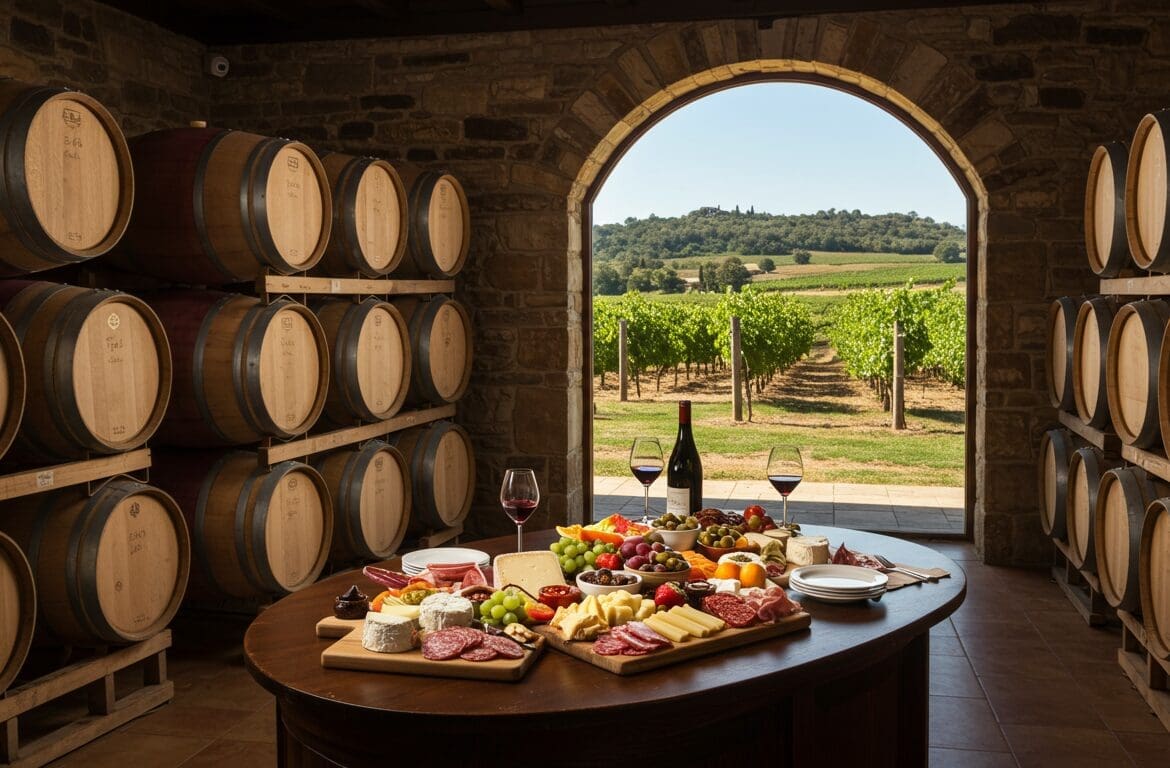
Alicante Food & Wine Guide: Local Cuisine, Markets & Wine Estates
There is a version of Alicante that exists entirely on the surface: the castle lit gold at night, the promenade, the sun-bleached crowds. Then there is the version that exists in a ceramic bowl of rice, black with squid ink and lacquered with alioli, set down on a paper tablecloth somewhere inland where no one speaks English and the house wine arrives without ceremony in a clay jug. The second version is the reason to come here. Not instead of everywhere else – but ahead of it.
Alicante sits at the intersection of two serious gastronomic traditions: the rice culture of Valencia to the north and the bold, sun-concentrated flavours of Murcia to the south. It takes the best of both and then adds its own. The result is a regional cuisine that rarely gets the attention it deserves, largely because it has never felt the need to ask for it.
The Soul of Alicantino Cuisine
Rice is not just a staple here – it is an identity. The province of Alicante sits within the broader Valencian Community, and while paella gets most of the international attention (and most of the tourist-facing disappointment), the local rice traditions run considerably deeper and stranger and better. Arroz a banda is the dish that serious cooks talk about: rice cooked in concentrated fish stock, served in two courses – the broth-soaked rice first, the fish that made it afterwards. It is disciplined and deeply flavoured and not especially photogenic. It is also one of the finest things you can eat in Spain.
Then there is arroz negro, stained black with cuttlefish ink, its brininess cut with a spoonful of alioli made properly – meaning by hand, meaning with patience, meaning nothing like the stuff in jars. Caldero is another rice preparation from the Mar Menor area, cooked in a traditional iron pot with ñora peppers and fish so fresh it has barely had time to form an opinion about its situation.
Beyond rice, the landscape asserts itself on the plate. Almonds, saffron, pomegranates and dried peppers appear with a frequency that tells you something about the terrain. Turrón – the almond nougat that has been made in the nearby town of Jijona since before anyone thought to write it down – is not merely a Christmas confection here. It is a year-round presence, and the artisan producers in Jijona make versions that would cause a Parisian chocolatier to sit very quietly for a moment.
The Mediterranean anchors everything. Salted fish, salt-cured mojama (tuna, sliced thin as paper, with a density of flavour entirely disproportionate to its size), sea urchins eaten raw with a squeeze of lemon – this is a coastal cuisine in the most serious sense. Not decorative. Nourishing.
Alicante’s Wine Country: DO Alicante and Beyond
The wine of this region has had something of a quiet rehabilitation over the past two decades. For a long time, Alicante’s wines were valued primarily for their colour and strength – used to bolster thinner northern European wines in the blending days before anyone thought such a thing was worth mentioning. That chapter is over. What remains is a wine region of genuine character, built on the Monastrell grape and on terroir – particularly in the Marina Alta subzone – that produces results worth travelling for.
Monastrell, known internationally as Mourvèdre, thrives in Alicante’s extreme conditions: intense summer heat, minimal rainfall, and soils that would challenge a cactus. The wines it produces here tend towards deep colour, ripe dark fruit, and a kind of muscular warmth that pairs extraordinarily well with the region’s food. In the hands of the better producers, Monastrell becomes something considerably more complex – earthy, spiced, with a long finish that justifies the drive inland.
The Marina Alta subzone in the north of the province is the other story worth knowing. Here, at altitude and influenced by sea breezes, Moscatel de Alejandría produces aromatic whites of real elegance. Not just sweet wines – though those can be excellent – but dry and semi-dry expressions that are fragrant without being cloying. The contrast with the big southern reds is startling and delightful in equal measure.
Among the producers to seek out: Bodegas Enrique Mendoza in Alfás del Pi has been one of the most respected names in the DO for years, producing a range from solid everyday drinking to genuinely ambitious single-vineyard reds. El Sequé, in the high inland Vinalopó valley, is owned by the Artadi group and makes some of the most polished Monastrell in the region – wines that travel well both physically and conceptually. Bodegas Bocopa, a cooperative with admirable quality standards, is responsible for the widely exported Marina Alta white, which is a very good introduction to the region’s fresher styles.
For the serious wine traveller, a day circuit of the inland bodegas – combining tastings at Enrique Mendoza, a visit to El Sequé’s dramatic high-altitude vineyards, and lunch somewhere that understands what to do with a bottle of aged Monastrell – represents one of the most rewarding possible uses of a hire car in Spain. Which is saying something.
Wine Estates Worth Visiting
Wine tourism in Alicante is less codified than in, say, La Rioja, which is partly a frustration and partly a pleasure. You are less likely to encounter a gift shop stocked with branded corkscrews, and more likely to find yourself talking to an actual winemaker who has opinions about what you should have for lunch.
Bodegas Enrique Mendoza offers well-organised visits to their estate in Alfás del Pi, with tastings conducted in a cellar that smells exactly as a cellar should. The range covers everything from their approachable Shiraz and Monastrell blends to the serious Santa Rosa single vineyard wines that made their reputation. They can arrange private tasting sessions for villa groups, which is the correct way to approach this.
El Sequé sits at around 700 metres above sea level in the Pinoso area, with vineyards that look like they have no business producing anything except difficulty. The estate’s flagship red – barrel-aged, structured, built for the long term – is the kind of wine you open on the last evening of a villa stay and finish in contemplative silence.
In the Marina Alta, smaller artisan producers in the hills above Dénia and Jávea are beginning to attract serious attention. These tend to be family estates making Moscatel in styles ranging from rich and honeyed to fresh and mineral, sometimes with experimental orange wine or local grape varieties thrown in for good measure. The region’s wine scene here has a welcome element of improvisation about it.
Food Markets and Where to Find Them
Alicante’s Mercado Central is the correct starting point. Housed in a 1920s Modernista building in the city centre, it is the sort of market that makes you want to cancel your restaurant reservation and just cook. The fishmongers alone – rows of gleaming gilthead bream, red mullet, whole octopus of varying ambition, mounds of clams and razor clams – will reorient your relationship with what fresh fish is supposed to look like. The fruit and vegetable stalls in summer are essentially an argument against northern European agriculture made entirely in produce.
For a different experience, the weekly markets in the smaller towns reward exploration. The Saturday market in Dénia, in the Marina Alta, draws serious food shoppers from across the region and has a particular strength in local almonds, olive oil, and the small purple artichokes that appear in spring and taste like nothing you have encountered in a restaurant. Orihuela’s market, in the Vega Baja, is less visited by tourists and correspondingly more interesting.
The Mercado de Benalúa in Alicante city serves the local neighbourhood in a way that tourist-facing markets rarely do – the atmosphere is functional and unselfconscious, the prices reflect what things actually cost, and the stall holders will tell you what to do with everything you buy. This is useful.
Olive Oil, Almonds and Artisan Producers
Alicante’s agricultural interior is olive country. The Villena and Vinalopó valleys produce extra virgin olive oils with considerable character – the predominant variety is Blanqueta, which gives a lighter, more delicate oil than the robust Picual of Andalusia, with a pleasant fruitiness and a clean, grassy finish. Several estates in the area offer oil tourism: harvest visits in October and November, mill tours, and tastings that follow the same serious structure as a wine tasting but somehow feel more elemental.
Almonds are equally integral to the landscape and the cuisine. The almond groves that cover the inland hillsides in white blossom each February are one of the province’s great seasonal spectacles, and the nuts that follow are used in everything from the turrón of Jijona to almond-thickened stews called olla, to the local pastries and marzipans that appear in pastelería windows alongside the morning coffees. Buying directly from a producer in the Jijona area is straightforward and results in far better turrón than anything that has been exported.
The region’s ñora peppers – small, round, dried, and essential to the flavour base of most traditional sauces and rice dishes – are worth bringing home in quantity. They are available in every market and most supermarkets, cost almost nothing, and will transform your cooking for months afterwards. This is a better souvenir than a ceramic plate.
Cooking Classes and Culinary Experiences
The most gratifying cooking experiences in the Alicante region tend to be organised through private channels – market visits followed by hands-on classes focused on arroz a banda or the local fideuà (the noodle version of paella, which locals will tell you is superior, and they are not entirely wrong). Several chefs in the province offer bespoke experiences for villa guests: a morning at the market selecting ingredients, an afternoon learning the precise technique of the socarrat – the coveted crisp rice crust at the bottom of a properly made pan – and an evening eating what you have made with rather good local wine.
For those who prefer to observe before attempting, some of the better restaurants in the Costa Blanca interior – particularly in the wine-country towns of Monóvar and Pinoso – offer informal kitchen experiences where the chef will explain, if asked, exactly what is happening at each stage of a dish. The approach requires confidence and reasonable Spanish but rewards both.
A private paella masterclass at a luxury villa, conducted by a local chef who brings their own equipment and shopping, is one of those experiences that sounds slightly touristy in description and proves to be genuinely memorable in practice. The distinction between a good teacher and a great one becomes very clear around the time the alioli is either emulsifying or it isn’t.
The Best Food Experiences Money Can Buy
A private boat trip along the coast towards the Tabarca Island with a local fisherman who sets traps in the morning and cooks them at sea in the afternoon is not widely advertised. It exists. It takes some arranging. It involves eating sea urchins on a rocking boat with a plastic fork. It is one of the better meals available in this part of Europe.
At the more structured end, the region has produced a handful of chefs who have taken traditional Alicantino flavours and applied serious contemporary technique without losing the essential character of the cuisine. The coastal towns – particularly Dénia, which has long attracted culinary talent – offer restaurants where the tasting menu reads like a condensed argument for why this specific stretch of coast produces food worth eating.
For true extravagance: a private truffle experience in the elevated interior during winter. The province of Alicante shares the truffle terrain of Castellón and Teruel – black Périgord truffles found here are of genuine quality, and the tuber season from November through February offers the chance to join a hunt with trained dogs across limestone scrubland before bringing the results back to a villa kitchen. The combination of truffle, local olive oil, and a good egg is not a complicated dish. It is also not a forgettable one.
Montilla wine (technically from Córdoba but widely drunk here) alongside aged Manchego and fresh-pressed almond oil on toasted bread, eaten at a terrace table overlooking the inland valley in early evening – this costs almost nothing and is one of the finest things on the list.
Plan Your Alicante Food & Wine Journey
The fuller context for exploring Alicante – the logistics, the geography, the seasonal considerations – is covered in our comprehensive Alicante Travel Guide, which sits alongside this food and wine guide as part of our destination hub. The two are best read together.
What the food and wine of Alicante ultimately offer is something that the more famous Spanish destinations have become slightly too aware of themselves to provide consistently: the sense that the cuisine exists for the people who live here rather than for the people who visit. The restaurants do not perform. The markets do not curate. The wine estates do not have lifestyle photography. The food is just very good, delivered without theatre, in a landscape that makes excellent sense of it.
The best base from which to explore all of this is a private villa – for the kitchen, for the terrace, for the ability to bring a case of Monastrell home from a bodega visit and open it at your own pace over the following evenings. Browse our collection of luxury villas in Alicante and find the right setting for a stay built entirely around eating and drinking well. There are worse frameworks for a holiday.