
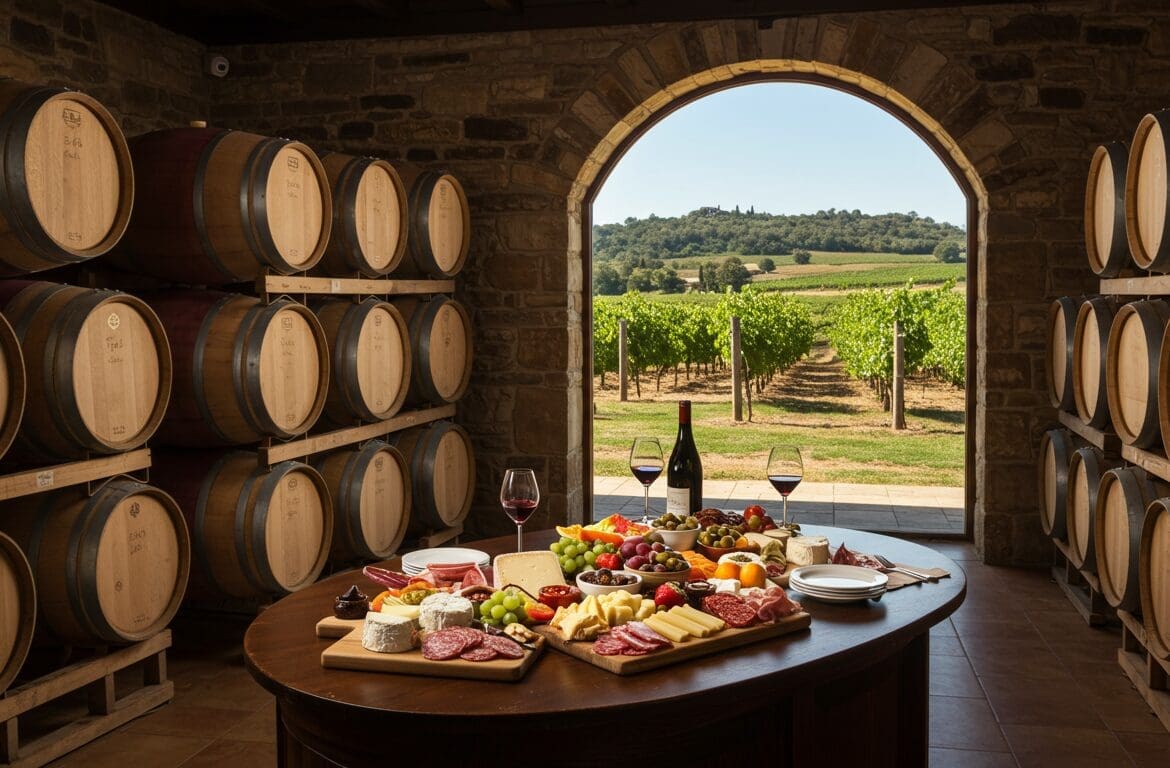
Food & Wine in Andalusia
Come to Andalusia in late September and the air smells of something you cannot quite place at first – sweet, faintly alcoholic, warm with possibility. It is the scent of the grape harvest, the vendimia, rolling across the Jerez countryside and the Axarquía hills above Málaga. The vines are heavy, the days still long and golden, and in the white-walled villages, the mood is one of quiet, ancient celebration. This is when the region reveals itself most honestly: not through its monuments or its flamenco, but through its food and its drink. Andalusia has one of the most distinctive and, frankly, underestimated culinary identities in Europe. Spend a serious week eating and drinking your way through it and you will wonder why anyone ever flies straight to the beach.
The Andalusian Table: A Cuisine Shaped by History
Andalusian cooking is a direct product of its improbable history. Eight centuries of Moorish rule left their mark not just on the architecture but on the larder – almonds, saffron, cumin, coriander, honey, dried fruits and the generous use of olive oil all trace back to Al-Andalus. The Romans were here before that and planted the olive groves. The Spanish then absorbed, adapted, and gradually made the whole thing their own. The result is a cuisine that is simultaneously simple and deeply layered, built on extraordinary raw ingredients treated with intelligence rather than fuss.
The climate does most of the heavy lifting. The heat concentrates flavour. Tomatoes grown in the province of Almería taste of something a supermarket tomato can only impersonate. Almonds from the Antequera plateau are fat and sweet. Jamón ibérico from the Jabugo area of Huelva – fed on acorns in the dehesa woodlands – is, by any reasonable measure, one of the finest things a human being can eat. The coastal waters, swept by both Atlantic and Mediterranean currents, yield seafood of remarkable quality: sardines grilled over vine cuttings on the Málaga beachfront, razor clams from Cádiz, red tuna from Barbate, cured in the ancient almadraba trap-fishing tradition that dates back to the Phoenicians.
Poverty also shaped this food, as it so often shapes the best cooking. Gazpacho and salmorejo – cold tomato soups blended with bread and olive oil – were peasant dishes designed to use what was available in summer. Today they appear in the smartest restaurants in Sevilla and Granada, and they deserve to. They are brilliant.
Signature Dishes You Need to Eat
Any serious engagement with food and wine in Andalusia requires a working knowledge of its canonical dishes. Gazpacho you already know, or think you do – try it made properly here and you may realise the carton version has been lying to you. Salmorejo, its thicker Córdoban cousin, comes topped with hard-boiled egg and jamón and is, in the right company, close to perfect.
Pescaíto frito – small fish lightly floured and fried in olive oil at ferocious heat – is the snack of the coast, best eaten standing up from a paper cone in Cádiz or Málaga. The technique matters enormously: the oil must be plentiful and furiously hot, the fish must be impeccably fresh, the flour a specific fine variety. When it is done right, it is extraordinary in its simplicity. When it is done badly, it is a limp, greasy tragedy. Order it where the locals order it.
Espinacas con garbanzos – spinach with chickpeas, fried in olive oil with garlic, cumin and a little bread for body – is a Sevillano tapa of North African origin that deserves far more international attention than it gets. Rabo de toro, oxtail braised in red wine until it collapses from the bone, is the great autumn and winter dish of Córdoba. Tortillitas de camarones, fritters made with tiny transparent shrimp from the Bay of Cádiz, are so delicate they seem improbable. And then there is the jamón. Always, the jamón.
Olive Oil: Andalusia’s Liquid Gold
Andalusia produces around half of the world’s olive oil. That statistic is so large it becomes almost meaningless until you are standing in the Jaén countryside in November, watching the olives fall into nets spread beneath ancient trees, and someone hands you a piece of bread with just-pressed oil and a pinch of salt. Then it becomes entirely real.
The province of Jaén alone has more olive trees than Greece. The region holds several Protected Designations of Origin – Baena, Priego de Córdoba, Sierra de Cazorla, Sierra Mágina and others – each producing oils of distinct character. Picual, the dominant variety, gives a robust, peppery oil with a pleasing bitterness at the back of the throat, a sign of high polyphenol content that the health-conscious will note with satisfaction. Hojiblanca, grown further south, is fruitier, more delicate.
Luxury travellers should seek out estate-bottled oils from single-variety harvests, available at premium food shops in Sevilla, Córdoba and Granada, as well as directly from producers. Several of the larger olive estates now offer guided visits with tasting sessions – a morning spent among the mills and orchards, followed by an oil-focused lunch, is one of those quietly revelatory experiences that tends to recalibrate how you think about cooking entirely. You will absolutely overpack olive oil into your luggage going home. Everyone does.
The Wines of Andalusia
Wine in Andalusia operates by its own logic. This is not Rioja or Ribera del Duero territory – the climate is too extreme for conventional table wines to dominate, though the picture is changing fascinatingly. What Andalusia does, and has always done brilliantly, is fortified and naturally oxidative wines of extraordinary complexity. The wines of the sherry triangle – the chalky albariza soils around Jerez de la Frontera, Sanlúcar de Barrameda and El Puerto de Santa María – produce a range of styles that remains one of Spain’s most undervalued treasures. Which suits those in the know rather well.
Fino and manzanilla are the dry, saline, almost haunting whites that pair so perfectly with pescaíto frito and jamón that it begins to seem like the dishes were designed around the wine. (They were, in a sense.) Amontillado develops complexity through an oxidative process after the layer of flor yeast dies, gaining nutty, amber depth. Oloroso is richer still, without the flor phase, dark and walnut-scented. Palo cortado sits in between categories in a way that is either maddening or fascinating depending on your mood. And then there is Pedro Ximénez – black as midnight, thick, intensely sweet, smelling of raisins and dried figs – poured over vanilla ice cream by anyone who understands what life is for.
Beyond sherry, the Denominación de Origen of Montilla-Moriles in Córdoba produces wines in similar styles from the Pedro Ximénez grape, often at a fraction of the price and of genuinely excellent quality. The DO Málaga and DO Sierras de Málaga are producing increasingly interesting table wines and Muscatel-based sweet wines – the Moscatel de Alejandría grape grown on terraced hillsides above the coast gives something fragrant, amber and strangely addictive. And in the cooler, higher elevations of the Axarquía and the Sierra Nevada foothills, young winemakers are doing genuinely exciting things with varieties that had all but disappeared.
Wine Estates and Sherry Bodegas to Visit
A visit to a sherry bodega is one of the great sensory experiences available in southern Spain. The cathedrals of stacked barrels, the cathedral-like silence, the cool dimness after the brutal Andalusian sun, the ritual of the venenciador drawing wine from the barrel with a long-handled silver cup and pouring it into a glass from a height without spilling a drop – it is theatrical in the best possible way.
The major houses in Jerez welcome visitors with tours and tastings, and the quality of the experience varies considerably. For luxury travellers, private visits arranged in advance will yield something much richer – access to older soleras, smaller warehouses, conversations with the winemakers themselves rather than a rote tour. Sanlúcar de Barrameda, a town with more character per square metre than almost anywhere in Spain and a food scene to match, is the home of manzanilla and worth a half-day of anyone’s time purely on gastronomic grounds. The local speciality of langostinos de Sanlúcar – large prawns from the Guadalquivir estuary, simply grilled – with a cold glass of manzanilla is the kind of combination that makes you question every life decision that previously kept you away.
In Montilla, the bodegas are equally welcoming and rather less crowded with tourists, which has its own considerable appeal. The wines here are unfortified – they reach their alcohol levels naturally – and the best are complex, age-worthy and wholly individual.
Food Markets Worth Seeking Out
Andalusia’s covered markets – mercados de abastos – remain genuinely functional places where local people shop, rather than performance spaces for tourists. This is their value. The Mercado de Triana in Sevilla occupies a historic building beside the river and is one of the finest urban food markets in Spain: the fish hall is a lesson in Atlantic and Mediterranean abundance, the jamón and charcuterie stalls are operated by people who have been doing this for generations, and the bars tucked along the perimeter serve wine and tapas to shoppers from mid-morning onwards. As markets should.
The Mercado Central de Atarazanas in Málaga is another essential stop – a nineteenth-century iron market hall with a spectacular stained-glass window and stalls piled with the region’s produce. Granada’s Mercado San Agustín rewards an early visit before the heat builds. In Cádiz, the Mercado Central is the place to understand why this city has one of the most passionate food cultures in the region.
For those staying in rural Andalusia, the smaller village markets – often held on a specific morning each week – are where the serious olive oil, artisan cheeses from the Ronda area, and local honey are found. Ask in the village, not on the internet. The answer will be more reliable.
Cooking Classes and Culinary Experiences
The appetite for hands-on culinary education in Andalusia has grown substantially, and the quality of what is on offer has grown with it. In Sevilla and Granada particularly, a number of professional-grade cooking schools and private chefs now offer market-to-table experiences: you visit the market in the morning with a chef or local food guide, select the day’s produce, then cook together in a proper kitchen before eating what you have made with local wine. For a private group staying in a villa, this can be arranged to take place in your own space – a private chef arriving with market produce and conducting a cooking session for the group before preparing the meal is one of those experiences that satisfies in multiple directions simultaneously.
More specialised experiences are increasingly available for those who seek them: private olive oil tastings with a certified sommelière, ham carving masterclasses with a cortador de jamón (the carver’s skill is considerable and genuinely worth understanding), and guided tastings through aged sherry soleras. The region is not yet as saturated with curated food tourism as Tuscany or Bordeaux, which means the experiences that exist tend to be less performative and more genuinely informative.
Truffles and Wild Produce
Andalusia is not the first region that comes to mind for truffle hunting, but it probably should feature in the conversation. The province of Jaén in particular, and parts of the Sierra Nevada and the Cazorla natural park, harbour deposits of the black summer truffle – Tuber aestivum – and the scarcer black winter truffle. The hunting season for the winter truffle runs roughly from November through March, and the experience of going into the countryside with a trained dog and a guide, then eating what you find for lunch, is one of those intensely pleasurable things that requires very little justification.
The landscape itself rewards the outing – the Cazorla natural park is extraordinary terrain, vast and wild in a way that surprises those who arrive expecting a more manicured southern Spain. Several guides and rural properties in the area offer truffle experiences for private groups, and some of the better rural restaurants in Jaén and Córdoba feature local truffles on seasonal menus. Wild asparagus, mushrooms in autumn, and the extraordinary alcachofas – artichokes – from the Huétor Tájar area are further reasons to engage seriously with Andalusia’s wild and seasonal produce calendar.
The Best Food Experiences Money Can Buy
The question of where to spend seriously in Andalusia’s food scene has a more interesting answer than it might have had even a decade ago. The region now has chefs operating at the highest level – Sevilla in particular has emerged as one of the most dynamic restaurant cities in Spain, with a generation of chefs doing genuinely innovative work with local ingredients without losing sight of what Andalusian food is actually about. Fine dining here tends to be rooted rather than ethereal, which makes it more satisfying to most people most of the time.
For private villa stays, the summit of the food experience is arguably arranging for a private chef – ideally one with serious restaurant credentials – to cook for your group using the region’s best seasonal produce. A dinner built around old-vintage manzanilla, locally carved jamón, Barbate tuna prepared multiple ways, a braised rabo de toro that has been cooking since morning, and a finish of local almonds and Pedro Ximénez is simply one of the finest meals available in the world. It does not require a Michelin-starred address to achieve. It requires excellent ingredients, a skilled cook, a beautiful table in a well-chosen villa, and the kind of unhurried evening that only a private property provides.
Add a morning visit to a sherry bodega, an afternoon at a Jaén olive oil estate, and a late-night tapa of pescaíto frito eaten from paper near the waterfront, and you have a day in Andalusia that a reasonable person would struggle to improve upon.
For everything you need to plan your trip beyond the table, visit our full Andalusia Travel Guide. And when you are ready to find the perfect base for a culinary journey through the south of Spain, explore our collection of luxury villas in Andalusia – from cortijos in the olive groves of Jaén to whitewashed fincas above the Costa del Sol, each one chosen to give you the freedom to eat, drink and live here properly.