Canary Islands Travel Guide: Best Beaches, Restaurants & Luxury Villas
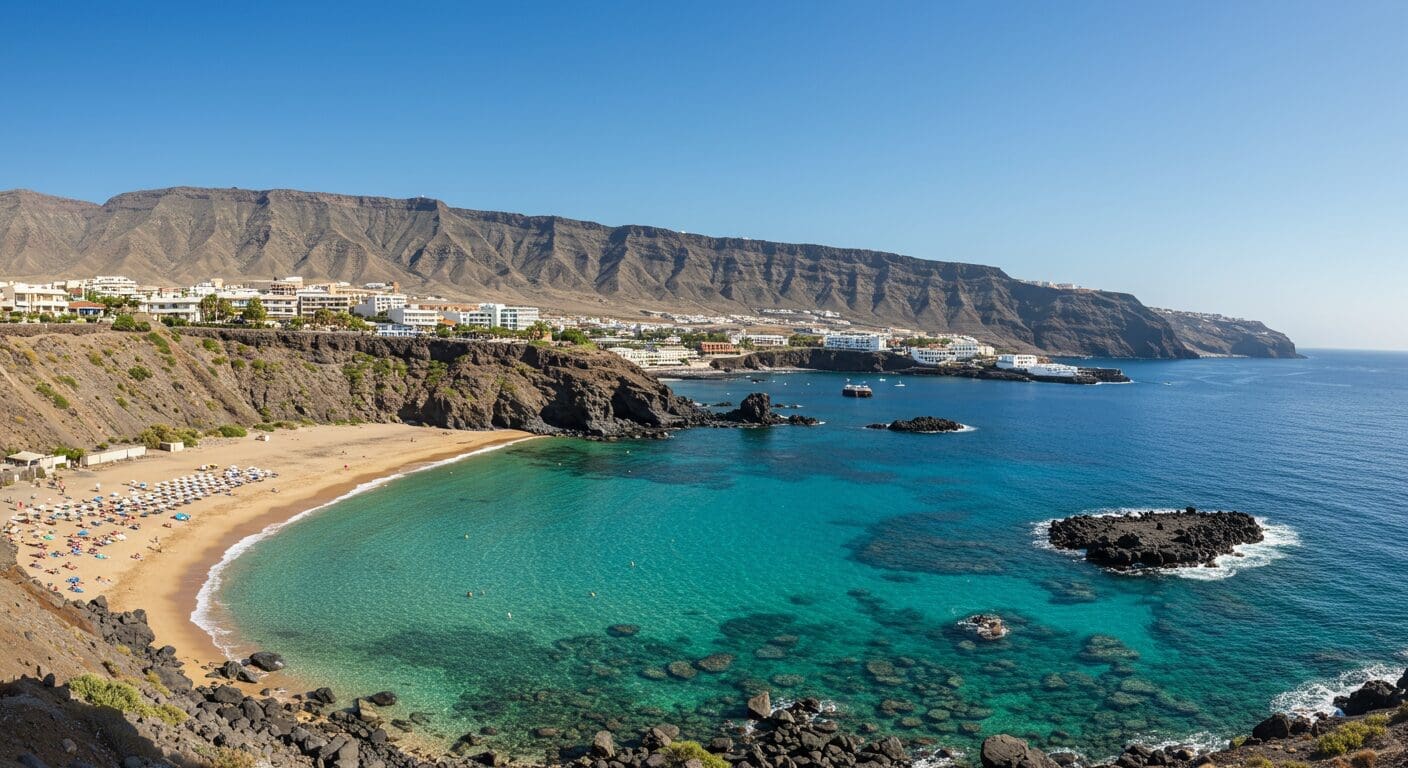
Here is a confession that most travel writers would rather not make: the Canary Islands are considerably better than their reputation. For decades, these seven Atlantic islands off the northwest coast of Africa have been the backdrop for budget package holidays, all-inclusive resorts of questionable architectural merit, and the kind of holidays where the most strenuous decision is whether to have the paella or the fish and chips. This is, to put it politely, a grotesque misrepresentation. Beneath the sunburned surface lies an archipelago of genuine wildness – volcanic craters, ancient laurel forests, black sand beaches, two Michelin-starred restaurants, and a food scene that has quietly been winning international recognition while everyone was looking the other way. The Canary Islands, it turns out, have been hiding in plain sight.
The question isn’t whether to come – it’s knowing which version of these islands to seek out. A luxury holiday in Canary Islands works extraordinarily well for an unusually broad range of travellers. Families seeking genuine privacy away from the relentless hotel-corridor shuffle find exactly what they need here: large private villas with gated gardens and private pools, where children have space to actually be children. Couples on milestone anniversaries or honeymooners who’ve considered Balearic Islands or the Greek Islands but want guaranteed sunshine in February will find the Canaries compelling in a way that nothing north of Morocco can quite match. Groups of friends – the kind who want good wine, better food, and serious hiking one day and total indolence the next – are exceptionally well served. And the growing number of remote workers who’ve discovered that Tenerife and Gran Canaria have fibre-optic connectivity that would embarrass some European capitals have quietly made the archipelago one of the continent’s most productive places to disappear to. Wellness travellers, meanwhile, have been catching on to the islands’ extraordinary outdoor environment: clean Atlantic air, year-round warmth, and landscapes that demand you walk into them.
Getting Here is the Easy Part – What You Do Next Is Altogether More Interesting
The Canary Islands are served by an impressive array of direct flights from across Europe, which is one of their significant and underappreciated advantages. Tenerife has two airports: Tenerife South (TFS), which serves the resort-heavy south and is the more commonly used arrival point for leisure travellers, and Tenerife North (TFN), which is closer to Santa Cruz and the island’s more authentic interior. Gran Canaria’s Las Palmas airport (LPA) is a major hub with particularly good connectivity from the UK, Germany, and Scandinavia. Lanzarote (ACE) and Fuerteventura (FUE) also have busy international airports, with the former being a surprisingly compact island to navigate once you land.
Flying time from London is roughly four hours. From most of continental Europe, it’s less. This matters more than it sounds: four hours gets you to an island that feels genuinely remote and subtropical, with a climate that rarely dips below 18°C even in January. By comparison, four hours north gets you to Edinburgh in November. The choice practically makes itself.
Getting around within each island is straightforward by hire car – and a hire car is genuinely recommended. The public bus networks (called guaguas, which visitors find either charming or frustrating depending on their schedule) are functional but infrequent in rural areas. The roads in Tenerife and Gran Canaria are well-maintained and dramatic in the best possible way: mountain passes, coastal corniche roads, and the kind of driving that requires both hands on the wheel and rewards the effort handsomely. Inter-island travel is handled by Binter Canarias flights, which are short, cheap, and operate with commendable frequency. Fred Olsen and Naviera Armas run ferry services if you’d prefer to arrive somewhere by sea, which always feels appropriately theatrical in an archipelago.
A Food Scene That Has Absolutely No Business Being This Good
Fine Dining
Tenerife is, quietly and without sufficient fanfare, one of the most exciting fine dining destinations in Spain. El Rincón de Juan Carlos in Los Gigantes is the headline act: a two-Michelin-starred restaurant run by brothers Juan Carlos and Jonathan Padrón that has been elevating Canarian ingredients – black pig, island-grown vegetables, fish pulled from Atlantic waters that most European restaurants have never even heard of – into something genuinely extraordinary. Their foie gras with roasted banana is the kind of dish that causes a specific, slightly embarrassed silence at the table when it arrives. The tasting menu is intimate, seasonal, and worth planning an entire trip around. Booking well in advance is not optional.
Also in Tenerife, MB by Martín Berasategui at the Ritz-Carlton Abama is the archipelago’s other two-star landmark. Berasategui is one of Spain’s most decorated chefs – the man has more Michelin stars than most countries – and his Tenerife outpost brings his distinctive Basque-inflected precision to local Canarian produce with results that are, frankly, quite difficult to fault. The dining room is elegant without being intimidating, the service impeccable without being stiff. The kind of restaurant where you find yourself examining the menu with the concentration usually reserved for legal documents.
Gran Canaria joined the constellation in 2025 with Muxgo, led by chef Borja Marrero at the Hotel Santa Catalina in Las Palmas. Marrero, who hails from the mountain town of Tejeda, earned both a Michelin star and a green star for his deeply rooted approach to Canarian ingredients – an approach that feels less like cuisine and more like an argument for why the island’s larder deserves more attention than it gets. In the south of Tenerife, Donaire at the GF Victoria Hotel under chef Jesús Camacho has also earned its star, weaving the island’s coastal character into dishes that feel genuinely of this place rather than imported from somewhere with a better press agent.
And then there is Lanzarote, which achieved something of a milestone in 2025 when Kamezí Deli Bistró in Playa Blanca, under chef Rubén Cuesta, became the island’s first-ever Michelin-starred restaurant. It’s the kind of recognition that suggests Lanzarote’s food scene – long somewhat overshadowed by its more dramatic neighbours – is finally getting the scrutiny it deserves.
Where the Locals Eat
Away from the starred restaurants, the Canary Islands have a straightforward, honest food culture that rewards the curious. Guachinches are the thing to know about: these are unofficial, semi-legal rural taverns in Tenerife, typically run by farming families who are licensed to sell their own wine alongside simple home-cooked food. They are not signposted, they are not on Google Maps in any reliable way, and the food is extraordinary in the way that things cooked by someone’s grandmother in a building that used to be a barn tend to be. Papas arrugadas – small wrinkled potatoes cooked in heavily salted water and served with mojo rojo or mojo verde – appear at every guachinche and every proper Canarian table, and they are one of those dishes that sounds utterly simple and tastes of something you cannot quite articulate.
In Las Palmas, the Mercado de Vegueta is the city’s central market and a serious place for serious eating. Fresh fish, local cheese, tropical fruit that has been grown somewhere in sight rather than shipped across a continent. The tapas culture in the old town is also well worth exploring on foot – the Vegueta and Triana neighbourhoods in particular, where the bars are genuine and the portions generous.
On Lanzarote, the volcanic wine from La Geria is worth seeking out: vineyards planted in individual craters dug into black volcanic ash, each vine surrounded by a low semicircular wall of lava rock to protect it from the wind. It looks like something from another planet and produces a white wine – usually Malvasía – that is dry, mineral, and singular. The Bodega El Grifo is the oldest winery in the Canaries and offers tastings worth building an afternoon around.
Hidden Gems Worth Seeking Out
Beach clubs deserve more attention than they typically receive in travel writing about the Canaries. Papagayo Beach Club at Playa de las Américas in Tenerife is one of the island’s most established and stylishly run venues – Bali beds, panoramic Atlantic views, Mediterranean-leaning food that holds up in daylight, and a transition to something louder and more energetic as the evening develops. Le Club at Playa de Fañabé operates in a similar register: the kind of place where the loungers are properly comfortable and the cocktails arrive without being asked for twice. Both are considerably more enjoyable than their beach club category might initially suggest.
Eight Islands, Eight Coastlines – Each One Insisting It’s the Best
The Canary Islands are not all the same kind of beautiful, which is one of the things that makes island-hopping so genuinely rewarding. Fuerteventura has the finest beaches in the archipelago by almost any measure: long, pale, wind-swept stretches in the north around Corralejo, where the dunes shift and the light is extraordinary, and the quieter, more sheltered coves of the Jandía peninsula in the south. The water here is clear and cold, and the island has a kind of stripped-back, elemental quality that either seduces you completely or leaves you wondering where the trees are.
Lanzarote’s coastline is dramatic in an entirely different register: black volcanic rock meeting turquoise water with a violence that feels almost theatrical. Playa Papagayo, accessible only by dirt track, is regularly cited as one of the most remarkable beaches in Spain – a series of small coves beneath ochre cliffs, with water that shifts from pale green to deep blue as the depth increases. The fact that it requires a little effort to reach has, mercifully, kept it from the fate of more accessible beaches.
Tenerife has the south coast’s wide, dark-sand resort beaches – Playa de las Américas, Los Cristianos – which are exactly what they are and very popular with people who know what they want. But the north and northeast offer something altogether different: the wild, windswept coastline around Punta del Hidalgo, the black beach at Benijo within the Anaga Rural Park, where you are more likely to find local surfers than sunbathers, and the dramatic cliffs of Los Gigantes, which rise 600 metres straight out of the Atlantic and cause a specific gasp when first encountered.
Gran Canaria’s eastern and southern coasts have long, sandy beaches built for serious sun worship – Maspalomas with its famous dune system is one of the island’s most iconic sights. The northern coast is wilder, wetter, and considerably less visited, which is its own kind of recommendation.
Things to Do That Have Nothing to Do with Lying on a Sunlounger
The received wisdom about the Canary Islands is that they are a beach destination, which is accurate as far as it goes but leaves out most of what makes them interesting. The archipelago sits at a latitude roughly level with southern Morocco, which means the variety of landscape compressed into relatively small islands is extraordinary – from desert to cloud forest within an hour’s drive on Tenerife, or from sea-level volcanic moonscape to 3,718-metre summit in the case of Mount Teide.
A sunrise visit to Teide National Park is the experience that stops people mid-conversation when they try to describe it. The volcano itself is Spain’s highest peak and the third tallest volcanic structure on Earth measured from its oceanic base. The cable car ascent brings you above the cloud layer in most conditions; the landscape at the top is lunar, silent, and genuinely moving in a way that overused word rarely manages to justify. Booking the cable car well in advance is advised – permits for the summit path are limited and disappear fast.
Whale and dolphin watching in the waters between Tenerife and La Gomera is another experience of a different order. These are not sighting guarantees – the wildlife doesn’t read the brochures – but the waters here host resident populations of short-finned pilot whales and common dolphins that make encounters more reliable than in most places. Several operators run serious, properly regulated excursions from Los Gigantes and Los Cristianos.
Gran Canaria’s interior is consistently underestimated: the road through the central mountains past Tejeda and Artenara offers some of the most dramatic driving in the Canaries, with views across a landscape that looks more like the Andes than the Atlantic. The Roque Nublo – a volcanic monolith rising from the high plateau – is a short hike from the road and rewards the effort with a view that encompasses most of the island.
On Lanzarote, the work of César Manrique is inescapable and entirely worth embracing. The island’s most celebrated artist and architect shaped much of Lanzarote’s visual identity in the latter half of the 20th century, creating a series of extraordinary spaces – the Jameos del Agua, built within a lava tube that leads to the sea; the Mirador del Río, perched above the northern cliffs with views across to La Graciosa – that blend architecture with volcanic landscape in ways that remain remarkable decades later.
For People Who Can’t Actually Sit Still on Holiday
The Canary Islands have built a genuine reputation for adventure sports, and not without reason. Fuerteventura is one of Europe’s leading kitesurfing destinations – the combination of consistent Atlantic wind and shallow, flat-water lagoons at Sotavento in the south provides conditions that attract serious riders from across the continent every summer. The annual Windsurfing and Kitesurfing World Championships at Sotavento is, for those in the know, a major event; for those not in the know, it is a genuinely spectacular thing to stumble across.
Tenerife’s surf scene is concentrated on the north coast, with spots like El Médano (technically in the south) and the breaks around Punta del Hidalgo and Boca Cangrejo attracting intermediate and advanced surfers. La Santa on Lanzarote is home to Club La Santa, one of Europe’s most serious multisport facilities, which draws triathletes, cyclists, and swimmers who are on holiday in the technical sense only.
Cycling is a significant pursuit on all the major islands. The mountains of Gran Canaria and Tenerife draw professional teams for winter training, which is either inspiring or mildly demoralising depending on your relative pace up a climb. The roads are generally good, the gradients satisfyingly serious, and the views from the high passes sufficient reward for the suffering involved. Guided cycling companies offer route-planning and vehicle support for those who prefer to suffer with assistance.
Scuba diving and snorkelling are excellent throughout the archipelago. The waters around Lanzarote – particularly the Papagayo marine reserve and the dive site at the harbour of Puerto del Carmen – offer good visibility and a variety of marine life that rewards even relatively inexperienced divers. The wreck of the Telamon, a cargo ship sunk deliberately off Lanzarote as an artificial reef, is one of the archipelago’s more atmospheric dive sites.
Hiking in the Anaga Rural Park on Tenerife and the Garajonay National Park on La Gomera provides a category of walking that feels nothing like a beach holiday. The laurisilva – ancient laurel forest that once covered much of southern Europe before the ice ages – survives in these highlands, draped in moss and cloud, silent except for birds and the sound of water. La Gomera’s Garajonay is a UNESCO World Heritage Site, and the hiking trails through it are among the most atmospheric in the Atlantic islands.
Why the Canary Islands Work Surprisingly Well for Families
The Canary Islands have been a family destination for so long that it’s easy to underestimate how genuinely good they are at it – and how much better the experience becomes when you trade the family hotel room for a private villa. The climate is the foundation: reliably warm and sunny for most of the year, without the crushing heat that can make summer holidays in the Mediterranean genuinely unpleasant for children and their parents simultaneously.
A private villa with its own pool changes the family holiday calculus entirely. No jostling for sunloungers at 7am. No hotel breakfast queue. No explaining to a six-year-old why they can’t run by the pool. The children have space; the adults have peace. These things are not unrelated. Many luxury villas in the Canary Islands are designed with families specifically in mind: shallow steps into the pool, fenced gardens, multiple sleeping areas arranged to give different generations some actual separation, and the kind of space that allows everyone to breathe.
The beaches on Fuerteventura and Gran Canaria are excellent for families with young children – wide, sandy, with gradual entries into the water and reliable surf conditions. Siam Park on Tenerife is consistently rated among the best water parks in the world (it has topped the TripAdvisor rankings for global theme parks more than once, which is both impressive and a very useful fact when negotiating with under-tens). Loro Parque, also on Tenerife, is a serious zoological facility rather than a tourist trap – it has real conservation credentials and is substantially more interesting than the average family-oriented attraction.
The relative ease of getting here from across Europe – short flights, no long-haul stress, no jet lag – is also significant. Four hours from London with children in tow is a fundamentally different proposition from fourteen hours anywhere else.
A History That Goes Rather Further Back Than the Package Holiday
The Canary Islands were known to the ancient world. The Romans wrote about them as the Fortunate Isles – the Insulae Fortunatae – at the edge of the known ocean, a place of perpetual spring beyond the reach of ordinary geography. The Guanche people, the islands’ original Berber inhabitants, developed a sophisticated culture in isolation, and evidence of their presence remains across the archipelago: cave dwellings in Gran Canaria, mummification practices strikingly similar to those of ancient Egypt, and the extraordinary survival of the silbo – a whistled language developed on La Gomera to communicate across the island’s deep ravines, which is now a UNESCO Intangible Cultural Heritage and still taught in schools.
The Spanish conquest in the 15th century was neither quick nor painless, and the islands subsequently became a critical staging point for the exploration and colonisation of the Americas. Columbus stopped in Gran Canaria and La Gomera on multiple voyages; the history here connects to the wider history of the Atlantic world in ways that reward some attention. The old quarters of Las Palmas de Gran Canaria and La Laguna on Tenerife – the latter a UNESCO World Heritage Site – preserve colonial-era architecture of genuine quality: cobbled streets, carved wooden balconies, convents and churches that have been standing since the 16th century.
The influence of César Manrique on Lanzarote represents a more recent and equally compelling chapter. His insistence on architecture that harmonised with rather than dominated the landscape, and his political pressure to prevent the overdevelopment that consumed other Canarian islands in the 1960s and 70s, left Lanzarote in possession of something remarkable: a largely unspoiled landscape with no buildings higher than two storeys, a commitment to local materials and colours, and a visual coherence that is unique in the archipelago and rare in Europe.
What to Actually Buy and Where to Find It
The Canary Islands have a shopping scene that ranges from genuinely interesting to comprehensively avoidable, and the skill is largely in knowing which category you’re entering. The avoidable end is well represented by the resort areas: counterfeit goods, factory-made “local crafts,” and the kind of souvenir shops that sell the same things in every port from Tenerife to Tallinn. Step back from the seafront and the picture improves considerably.
Canarian mojos – the red and green sauces that accompany almost every meal – are available in good quality jarred versions at local markets and specialist food shops. Gofio, the toasted grain flour that is one of the most ancient Canarian staples (the Guanche ate it; it is still eaten), is a genuinely interesting thing to bring home and does things to bread and soup that are worth discovering. The honey from Tenerife’s Teide region and La Palma has been awarded protected designation of origin status and is substantively different from anything you’ll find in a supermarket.
Lanzarote’s volcanic wines, as mentioned, travel well and represent something genuinely singular. The island’s salt pans at Las Salinas de Janubio produce a fleur de sel that serious cooks will find useful. Hand-made pottery from Tenerife – particularly from the villages of La Victoria de Acentejo and El Cercado on La Gomera, where traditional hand-built techniques survive without the wheel – is among the most authentic craft available in the islands.
In Las Palmas, the Triana neighbourhood has independent boutiques selling local fashion and design alongside well-curated food shops. The Mercado de Artesanía in Santa Cruz de Tenerife is a better option for genuine local craft than the resort market stalls and worth an afternoon if you’re in the capital.
The Practical Matters – Dealt With Efficiently So You Can Get Back to Planning
Currency is the euro, and the Canary Islands sit outside the EU’s standard VAT framework with their own IGIC tax (generally 7% rather than the standard Spanish 21%), which means shopping and eating out is marginally cheaper than equivalent mainland Spain. This is a pleasant surprise that most visitors don’t realise until they check the receipt.
The official language is Spanish, and specifically Canarian Spanish, which has its own cadences, some vocabulary borrowed from Latin America, and the characteristic speed that makes mainland Spanish speakers occasionally do a double-take. English is widely spoken in tourist areas, though any effort with Spanish is warmly received – and in the guachinches and rural restaurants where the real food is happening, a few words of Spanish is genuinely useful rather than merely polite.
Tipping is not obligatory but is appreciated: rounding up the bill or leaving 10% at restaurants is the general practice. Taxi drivers don’t expect tips but won’t refuse them.
Safety throughout the Canary Islands is generally very good. Standard urban precautions apply in Las Palmas and Santa Cruz, as they would in any city. The islands have a low serious crime rate and are considered safe for solo travellers, families, and groups.
The best time to visit depends on what you’re looking for. The islands are warm and sunny year-round – this is not a rhetorical flourish, it is meteorologically accurate. Summer (July to September) brings the highest temperatures and the most crowds in the resort areas. Winter (November to March) is the secret season for many informed travellers: the weather is warm, the light is extraordinary, and the north European world has entirely forgotten the Canaries exist during this period, which keeps the better beaches and restaurants at a civilised level of occupancy. Spring and autumn are the shoulder seasons in the best sense: reliably good weather, reasonable pricing, and the islands showing themselves with a certain ease.
The Calima – hot, dusty wind from the Sahara – can occasionally reduce visibility and raise temperatures suddenly, usually in summer and autumn. It passes within a day or two and is largely an inconvenience rather than a disaster, though the quality of light it produces over the volcanic landscape is, admittedly, rather extraordinary.
Why a Private Villa Is Simply the More Sensible Arrangement
There is a version of a luxury holiday in the Canary Islands that involves a large hotel, a pool shared with several hundred other guests, breakfast at a specific time in a specific room, and the particular social intimacy of listening to strangers through a wall. This version exists, and people choose it, and nobody is judging anyone. But there is another version.
A private luxury villa in the Canary Islands offers something qualitatively different from the hotel experience – not merely better, but categorically unlike. The privacy is the starting point: your own pool, your own terrace, your own garden, your own breakfast at a time you have chosen. For families, this changes the fundamental nature of the holiday. Children have room to move; adults have room to breathe; these requirements coexist without requiring compromise. For groups of friends or multi-generational families, a large villa with multiple bedrooms and shared living spaces creates a form of togetherness that hotel corridors simply cannot replicate.
The luxury villas in Canary Islands available through Excellence Luxury Villas run from intimate retreats for couples – villas perched above the cliffs of the north coast, or facing the Atlantic across private terraces in the south – to substantial estates sleeping twelve or more, with outdoor kitchens, multiple pool areas, and the kind of architecture that takes the volcanic landscape seriously. Many properties are now equipped with fast fibre-optic internet and in some cases Starlink connectivity, making them entirely functional as working bases for the growing number of travellers who have discovered that the islands’ time zone (GMT in winter, GMT+1 in summer) aligns well with European business hours. Working from a terrace with an Atlantic view, it should be noted, does not make the work easier, but it makes the day around it considerably better.
Staff options at the luxury villa level frequently include private chefs – which, in an archipelago with this quality of local produce and this concentration of culinary talent, is rather a compelling proposition. Concierge services can arrange whale watching, golf, private winery visits, hiking guides, and restaurant reservations at precisely the establishments that don’t have tables available if you ring on the day. A private pool in Lanzarote in January, a chef preparing papas arrugadas and freshly caught fish, a bottle of Malvasía from La Geria open on the table: the Caribbean charges considerably more for something rather similar.
Browse our full collection of private pool villa rentals in Canary Islands and find the property that matches your particular version of this.
More Canary Islands Travel Guides
- Best Restaurants in Canary Islands: Fine Dining, Local Gems & Where to Eat
- Best Beaches in Canary Islands: Hidden Coves, Beach Clubs & Coastal Secrets
- Canary Islands with Kids: The Ultimate Family Holiday Guide
- Best Time to Visit Canary Islands: Month by Month Weather, Crowds & Tips
- Canary Islands Luxury Itinerary: The Perfect 7-Day Guide
- Romantic Canary Islands: The Ultimate Couples & Honeymoon Guide
What is the best time to visit Canary Islands?
The Canary Islands have a genuinely year-round climate, but the answer depends on what you’re after. Winter – November through March – is the insider’s choice: warm, uncrowded, with the best light and the most manageable prices at the top restaurants and villas. Summer brings the highest temperatures and the most visitors, particularly in the resort areas of Tenerife’s south coast and Gran Canaria’s Maspalomas. Spring and autumn sit in an excellent middle ground: reliable warmth, reduced crowds, and the islands operating at a comfortable pace. The one caveat is the Calima – the periodic hot wind from the Sahara, which can arrive in summer or autumn and last a day or two before clearing.
How do I get to Canary Islands?
The Canary Islands are served by direct flights from across Europe, with no long-haul travel required. The main airports are Tenerife South (TFS) and Tenerife North (TFN), Gran Canaria (LPA), Lanzarote (ACE), and Fuerteventura (FUE). Flying time from London is approximately four hours; from most European cities, it ranges from three to five hours. Inter-island connections are handled efficiently by Binter Canarias, with multiple daily flights between all the main islands. Ferry services from Fred Olsen and Naviera Armas connect the islands by sea for those who prefer the slower, more atmospheric approach.
Is Canary Islands good for families?
Genuinely excellent, and for reasons that go beyond the obvious. The climate is warm and reliable year-round without the extreme heat of Mediterranean summers. The beaches on Fuerteventura and Gran Canaria are wide, sandy, and well-suited to young children. Siam Park on Tenerife is consistently ranked among the world’s best water parks. Loro Parque has serious zoological credentials. The flight from most European cities is short enough that jet lag isn’t a factor. And a private villa – rather than a hotel – transforms the family dynamic entirely: children have space, adults have privacy, and nobody is negotiating over sunloungers at breakfast time.
Why rent a luxury villa in Canary Islands?
Because a private villa gives you something a hotel structurally cannot: your own space, your own pool, your own schedule. For families, it means children can move freely while adults retain genuine peace. For couples, it means privacy and intimacy that shared hotel environments undermine by design. For groups, it creates a shared base with room to be together or apart, depending on the mood. The best luxury villas in the Canary Islands also come with options for private chefs, concierge services, and in-villa wellness facilities – access to a level of personal attention that five-star hotels provide in a diluted form across hundreds of guests simultaneously.
Are there private villas in Canary Islands suitable for large groups or multi-generational families?
Yes, in considerable variety. Excellence Luxury Villas offers properties across the archipelago ranging from intimate two-bedroom retreats to large estates sleeping twelve or more guests. Larger villas typically feature multiple pool areas, separate bedroom wings that give different generations actual acoustic separation, outdoor dining and kitchen facilities, and living spaces designed to accommodate a group without requiring everyone to be in the same room at the same time. Staff options including private chefs and housekeeping are frequently available. The architecture of the best properties on Lanzarote and Tenerife in particular integrates indoor and outdoor living in ways that make large-group stays genuinely comfortable rather than merely logistically possible.
Can I find a luxury villa in Canary Islands with good internet for remote working?
Yes – and this is one of the more pleasant surprises the islands offer. Tenerife and Gran Canaria in particular have invested significantly in digital infrastructure, and