
Cape Town Travel Guide: Where to Stay, Eat & Explore in Luxury
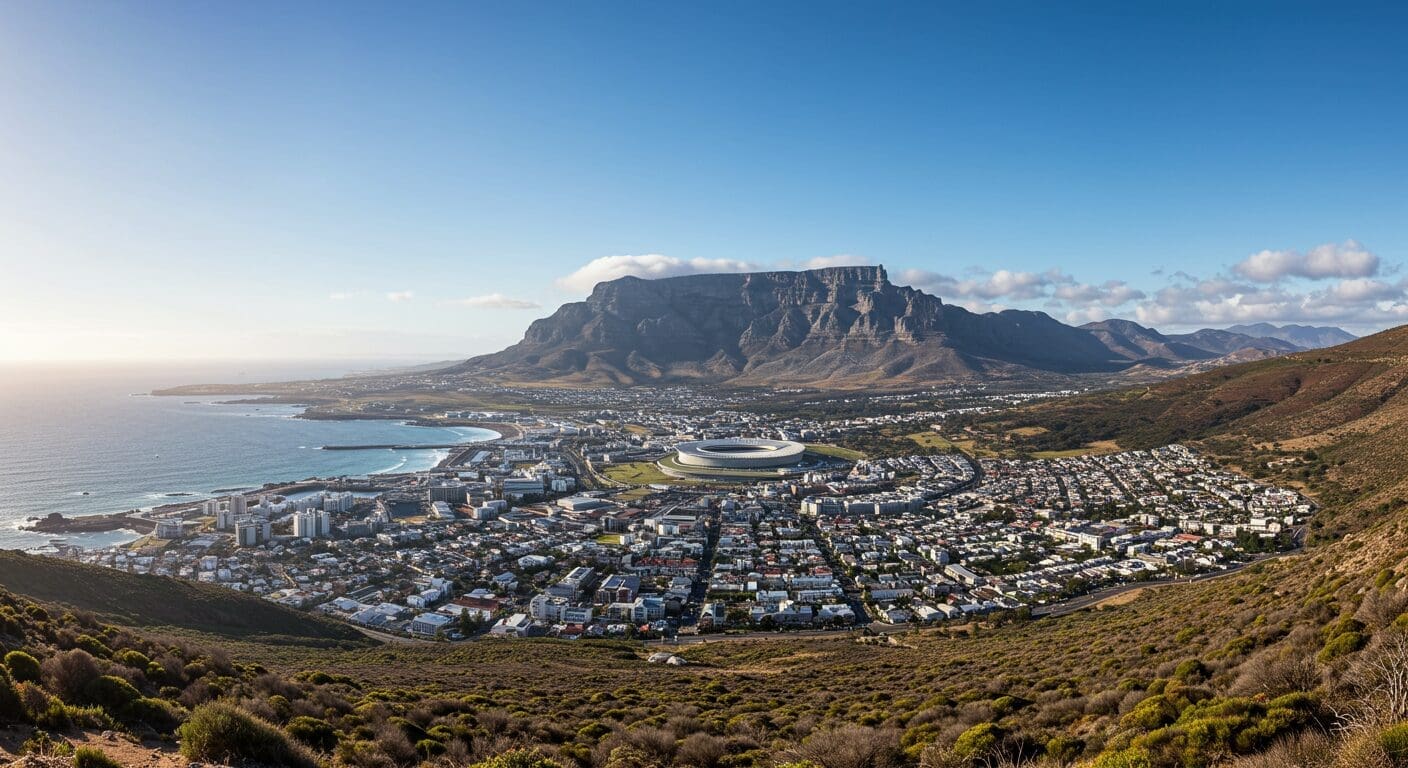
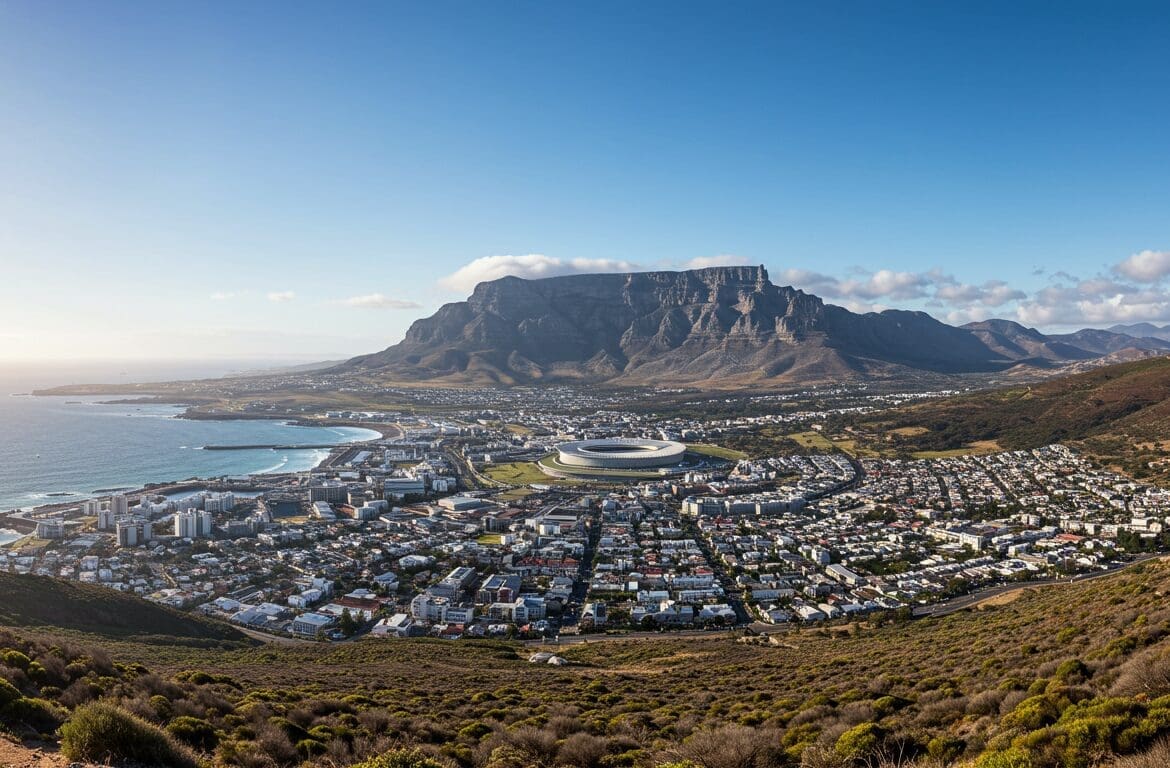
In January, Cape Town does something quietly unfair to the rest of the world. The light turns gold by five in the afternoon, the southeaster has taken a breath, and Table Mountain sits above the city in that particular shade of blue that photographers chase and never quite capture. The beaches are full. The wine is cold. And the people who live here wear the expression of those who know, with some smugness, that they’ve made excellent life choices. January is peak summer – warm, bright, and thoroughly hedonistic – but Cape Town in the shoulder months (March, April, October) offers something subtler: fewer crowds, softer light, and the peculiar satisfaction of having a great city almost to yourself.
Cape Town is one of those rare destinations that works for almost everyone, which would make it generic if it weren’t so genuinely extraordinary. Couples marking milestone anniversaries find the combination of world-class wine, cinematic scenery, and some of the finest restaurants on earth to be exactly the backdrop such moments deserve. Families seeking privacy – real privacy, not the carefully managed version offered by resort hotels – find it here in abundance, particularly in the villa heartlands of Camps Bay, Clifton, and Constantia. Groups of friends who’ve been vaguely planning “a big trip” for three years finally commit to Cape Town and discover it exceeded the planning. Remote workers who’ve grown tired of identical co-working spaces in Lisbon or Bali find fibre-connected villas with ocean views and a wine cellar that makes 3pm feel, morally speaking, quite flexible. And those who come specifically for wellness – the hikers, the yoga practitioners, the people who say things like “I just need to reset” – find that Cape Town obliges with a completeness that’s almost theatrical.
The Journey In: Getting to the Edge of Africa in Some Comfort
Cape Town International Airport sits about 20 kilometres from the city centre, and while that sounds unremarkable, the drive in – particularly on a clear day when Table Mountain looms ahead like a declaration – is a rather effective way to announce that you have, in fact, arrived somewhere worth arriving at. The airport handles direct flights from London Heathrow, Amsterdam, Frankfurt, and Dubai, among others, and British Airways, Virgin Atlantic, Qatar, Lufthansa, and South African Airways all serve the route. Flying time from the United Kingdom is roughly eleven to twelve hours – long enough to justify the flat bed, not so long that you arrive broken.
Transfers are best arranged in advance. A private chauffeur service is the sensible choice for a luxury holiday in Cape Town, not least because it sets the tone immediately and avoids the slightly dispiriting theatre of the taxi queue. Uber operates widely in the city and is generally reliable and well-priced, which will surprise anyone arriving from the United States used to surge pricing at inopportune moments. Renting a car, particularly for excursions to the Winelands or the Cape Peninsula, is genuinely recommended – South Africans drive on the left, roads are in good condition, and the freedom to stop at a wine estate on an impulse is one of the great privileges of having your own wheels. For getting around the city itself, a combination of Uber and your villa’s concierge will handle most requirements with minimal friction.
Named the World’s Best Food City – and It Knows It (Deservedly)
When Condé Nast Traveller named Cape Town the Best City in the World for Food in 2024, the city received the news with the quiet satisfaction of someone being told something they’d suspected for years. The dining scene here operates at a level that would astonish visitors arriving with expectations calibrated for “good African food” – whatever that vague phrase is supposed to mean. What you get instead is a cuisine defined by extraordinary local produce, multicultural heritage, remarkable wine on the doorstep, and a generation of chefs who’ve trained globally and come home to cook somewhere with better ingredients.
Fine Dining
The conversation about Cape Town’s finest table usually begins – and often ends – at Salsify at The Roundhouse in Camps Bay. In 2025, Salsify made its debut on the World’s 50 Best Restaurants extended list at number 88, a milestone that confirmed in international rankings what discerning diners had known for some time. The setting – a restored Georgian building at the foot of the Twelve Apostles mountain range – is dramatic without trying to be, and the menu showcases South African produce with a precision and creativity that makes the experience genuinely memorable rather than merely expensive. The cocktail list is exceptional. Book well in advance. This is where you celebrate things.
Belly of the Beast in the CBD operates on a different principle entirely. There is one tasting menu, served to everyone in the room that day, built around whatever ingredients are at their best in that particular week. The atmosphere is intimate and unhurried, and the experience has been described by those who’ve visited as among the most memorable meals of their lives – which is, when you think about it, the only standard worth aiming for.
For fine dining that doesn’t require monastic planning, Chef’s Warehouse at Beau Constantia – part of Liam Tomlin’s acclaimed group – remains an iconic Cape Town experience. Perched in the Constantia Valley with vineyard views that would distract you from considerably better food, it serves a sharing-plates format that suits its relaxed, sun-drenched setting perfectly. The Bree Street location, Chef’s Warehouse at The Bailey, takes a different direction, celebrating European, Asian, and Middle Eastern influences with equal skill.
Where the Locals Eat
Foxcroft in Constantia occupies a category that Cape Town does particularly well: the restaurant that is technically fine dining but refuses to behave like it. Open for breakfast, lunch, and dinner, unpretentious in atmosphere, with mountain views across the valley and prices that seem almost apologetically reasonable for the quality of what arrives at the table. Locals return to Foxcroft with the frequency usually reserved for a favourite neighbourhood bistro. Visitors who discover it early in a trip often find themselves rearranging their itinerary to return.
The wine bar scene along Bree Street and in De Waterkant is worth an evening of unhurried exploration. Cape Town’s craft gin and natural wine movements have both found confident footholds here, and the proximity to the Winelands means that wines on most lists carry a price-to-quality ratio that would make a Parisian sommelier quietly emotional. The V&A Waterfront, for all its tourist-facing busyness, contains genuinely good restaurants alongside the inevitable franchise fodder – the trick is knowing which side of the rope you’re on.
Hidden Gems Worth Seeking Out
Bukhara in the City Centre has been operating for thirty years, which in the restaurant business is roughly equivalent to geological time. It is widely considered one of Cape Town’s finest Indian restaurants – which is saying something in a city with a significant Cape Malay culinary heritage – and the thoughtful detail of a window between the kitchen and the dining room means that watching your meal being prepared becomes part of the pleasure. An institution, in the proper sense of the word.
Further afield, the Bo-Kaap neighbourhood’s home-cooking traditions occasionally surface in small eateries and pop-ups worth tracking down. Cape Malay cuisine – a unique culinary inheritance born from the blending of Southeast Asian spices, Dutch colonial ingredients, and local produce – is one of the world’s genuinely distinctive food cultures and one that most international visitors never properly encounter. Finding it, ideally in someone’s actual kitchen, is one of the more rewarding culinary detours a Cape Town visit can take.
From the Winelands to the Cape of Good Hope: Making Sense of the Geography
Cape Town sits at the southwestern tip of Africa in a way that would feel almost symbolic if the scenery weren’t so distractingly beautiful. The city is effectively bookended by mountains and ocean, which creates both its visual drama and its slightly complicated road network – getting from one side of the peninsula to the other requires more planning than a map might suggest. Understanding the geography early makes everything easier.
The Atlantic Seaboard – Camps Bay, Clifton, Sea Point, Green Point – is where you’ll find the most glamorous beaches, the most photographed sunsets, and the majority of the city’s luxury villa stock. These suburbs cling to the western face of Table Mountain, which means the sea views are extraordinary and the wind, when the Cape Doctor is blowing, can be memorable. Clifton’s four beaches are sheltered by granite boulders and consequently calmer; Camps Bay has the postcard appeal and a beachfront strip that hums pleasantly well into the evening.
The Southern Suburbs – Constantia, Newlands, Bishopscourt – offer a different register entirely: leafy, established, and home to the oldest wine estates in the Cape. This is where families with children and travellers seeking peace and space tend to gravitate, and where the landscape has a lushness that the Atlantic Seaboard’s more dramatic terrain doesn’t quite replicate. The Constantia Valley in particular, with its vine-covered hillsides and a choice of excellent restaurants within a few minutes’ drive, functions as its own self-contained luxury enclave.
Beyond the city, the Winelands – Stellenbosch, Franschhoek, and Paarl – are less than an hour’s drive and offer a full day (or more sensibly, a long weekend) of estate visits, cellar doors, and excellent dining. Franschhoek, a small town founded by French Huguenot settlers and still faintly Gallic in atmosphere, has a main street lined with some of South Africa’s finest restaurants. The Cape Peninsula drive, from the city south to the Cape Point Nature Reserve, takes in Chapman’s Peak, the Boulder’s Beach penguin colony, and some of the most dramatic coastal scenery on earth. It’s a full day out. Take provisions.
What to Actually Do Here: A Curated Menu of Experiences
The question isn’t what to do in Cape Town. The question is how to edit. The city and its surroundings offer a range of experiences so varied that most visitors leave with a list of things they didn’t get to – which, perversely, is part of the reason people come back.
Table Mountain is the obvious starting point and remains, despite its familiarity from a thousand album covers and screensavers, genuinely worth the effort. The cable car runs most days and deposits you on a flat summit plateau that offers 360-degree views of the peninsula, the city, and the ocean in three directions. On a clear day, it is unreasonably beautiful. On a cloudy day, when the famous “tablecloth” of cloud spills over the edge, it is otherworldly in a different way. Go up. It is not a cliché. Or rather, it is, and it doesn’t matter.
The V&A Waterfront is unavoidable and, actually, rather enjoyable once you’ve made peace with the crowds. The Two Oceans Aquarium is excellent – genuinely excellent, not just adequate – and is one of the better half-days on offer for families. Boat trips to Robben Island, where Nelson Mandela was imprisoned for eighteen years, provide one of the most significant historical experiences available anywhere in South Africa, and the guides who lead tours there are, in many cases, former political prisoners. That detail makes it different.
Wine tasting in the Winelands requires little justification, but a word about doing it well: book a private tour rather than attempting to self-drive if you plan to do it properly. The estates of Stellenbosch and Franschhoek receive serious visitors alongside the coach-party traffic, and with the right introductions, access to barrel rooms, private cellars, and estate owners who actually want to talk to you about their wine becomes entirely possible. This is a different experience from standing at a counter while a bored student pours you three reds.
Paragliding Over the Atlantic and Other Things You Shouldn’t Miss
Cape Town has an unusual relationship with adventure sports: it offers some of the best in the world while somehow managing to make them feel entirely natural and unforced. The infrastructure is professional, the natural settings are extraordinary, and the calibre of instructors and guides is, on the whole, excellent.
Tandem paragliding from Signal Hill or Lion’s Head is one of those experiences that sounds terrifying in theory and turns out to be transcendent in practice. No previous experience is required – your instructor handles everything – and the flight itself, drifting out over the Atlantic with the city below and the Twelve Apostles range to one side, offers a perspective on Cape Town’s geography that no amount of cable-car rides quite replicates. Landing on the beach at Camps Bay while restaurants carry on their business around you is a surreal and rather pleasing denouement.
Hiking Lion’s Head is the city’s defining walking experience and one of the best urban hikes anywhere in the world. At 669 metres above sea level, the peak sits between Table Mountain and Signal Hill, and the circular trail to the summit – roughly ninety minutes at a moderate pace, with some ladder-and-chain scrambling near the top – rewards you with views that justify every photograph you take and every one you send to people still at their desks. Go at sunrise if you want solitude. Go at sunset if you want a sunset. Go on a full moon if you want to understand why Capetonians are the way they are.
The two oceans that meet off Cape Point – the cold Benguela Current from the Atlantic and the warmer Agulhas Current from the Indian Ocean – create world-class conditions for great white shark cage diving out of Gansbaai, around two hours from the city. This is not for everyone, and it doesn’t need to be. But for those who’ve been vaguely thinking about it: the operators are well-regulated, the experience is extraordinary, and you will almost certainly have a story you’ll be telling at dinner tables for the rest of your life.
Surfing, kitesurfing, kayaking, stand-up paddleboarding, cycling the Cape Peninsula, horse riding along deserted beaches – the list is genuinely long and genuinely excellent. Cape Town is one of the best outdoor activity destinations on earth. It is difficult to be bored here. People do try.
Why Cape Town Works Beautifully for Families
Travelling with children introduces certain complications that Cape Town handles with unusual grace. The combination of private villa living, outdoor space, and a city that doesn’t treat young visitors as a nuisance to be accommodated somewhere near the car park makes it one of the better family destinations anywhere in the world.
The practical advantages of a luxury villa in Cape Town for families are considerable. A private pool – which almost all villa properties at this level offer – means that children have their own controlled swimming environment, parents aren’t navigating hotel pool schedules, and the rhythm of the day is set by the family rather than a resort’s entertainment programme. Villa properties in the Constantia Valley and Southern Suburbs in particular offer the kind of garden space, quiet streets, and proximity to excellent family-friendly restaurants that make a week feel genuinely restorative rather than merely relocated stress.
The Boulders Beach penguin colony near Simon’s Town is one of the more remarkable wildlife experiences available to families in an accessible day-trip format – a colony of African penguins living on a suburban beach, apparently unbothered by the humans who come to observe them. The Two Oceans Aquarium at the Waterfront is another reliable half-day, with a strong focus on the unique marine life of the Cape. For older children, Lion’s Head provides an achievable hiking goal with a summit reward. For younger ones, the beaches of Clifton – calm, sheltered, and spectacularly beautiful – require little in the way of programming.
Cape Town is also, it should be noted, significantly more affordable for families than comparable luxury destinations in Europe. The rand’s exchange rate makes the maths generous for visitors paying in sterling, euros, or dollars, and the local habit of treating children as welcome guests rather than small obstacles goes a long way.
History, Culture, and the Things Worth Understanding Before You Arrive
Cape Town is a city of layered and often painful history, and the more you understand of it before you arrive, the richer your experience will be. The Dutch East India Company established a refreshment station at the Cape in 1652, making this one of the oldest European settlements in sub-Saharan Africa. What followed was several centuries of colonial rule, the Cape Malay slave trade, apartheid, and – ultimately – one of the most extraordinary political transitions in modern history.
Robben Island is the most direct engagement with that history available to visitors, and it carries an emotional weight that doesn’t diminish with repetition. The Constitutional Hill complex in Johannesburg is beyond most Cape Town itineraries, but within the city itself, the District Six Museum provides a haunting and essential account of the forced removals that cleared one of Cape Town’s most vibrant mixed-race neighbourhoods under apartheid. These are not obligatory stops on a checklist. They are simply part of understanding where you are and what it cost.
The Bo-Kaap neighbourhood, climbing the slopes of Signal Hill in its famous candy-coloured houses, is the historic home of the Cape Malay community and one of the city’s most visually distinct areas. The Cape Malay architectural style – a fusion of Dutch colonial forms and the cultural influences brought by enslaved people from Southeast Asia and the Indian subcontinent – is unlike anything else in Africa or elsewhere. Walking its steep streets on a Saturday morning, when the call to prayer drifts across the rooftops and the smell of koeksisters from a local bakery follows shortly behind, is one of the quieter pleasures Cape Town offers.
The city’s contemporary art scene has expanded significantly in the past decade. The Zeitz Museum of Contemporary Art Africa (MOCAA) at the V&A Waterfront, housed in a converted grain silo in a conversion that is itself a feat of architectural drama, is the largest museum of contemporary African art in the world. It is genuinely worth an afternoon, both for the collection and for the building.
Cape Town also hosts one of the world’s great jazz traditions – a legacy of District Six’s musical culture – and the Cape Town International Jazz Festival, held annually in late March or early April, draws performers and audiences from across Africa and the world. Timing a visit around it is not a bad idea. The Cape Town Cycle Tour in March, the Mother City Queer Project electronic music festival, and Franschhoek’s various culinary events throughout the year add further texture for those who enjoy their travel with a calendar event attached.
What to Buy and Where to Buy It (Without Embarrassing Yourself)
Cape Town rewards considered shopping. Not frantic market-hopping in search of fridge magnets, but the slower, more satisfying process of finding things that are genuinely from here and genuinely worth taking home.
The V&A Waterfront’s Watershed market is the city’s best-curated craft market, a large indoor space that has been carefully edited to favour genuine local designers, artists, and craftspeople over the tourist-facing generic production that dominates lesser markets. Leather goods, ceramic work, jewellery, textiles using African print traditions filtered through contemporary design sensibility – it rewards time spent, and the Saturday morning buzz is part of the pleasure.
Woodstock, the slightly scruffy suburb east of the CBD that has been gentrifying in artful fits and starts for the past fifteen years, is home to a number of excellent independent stores, design studios, and the Old Biscuit Mill’s Saturday market – one of the city’s great weekly institutions, combining food, wine, fashion, and the kind of browsing that can absorb an entire morning without you quite noticing.
For wine, the most sensible approach is to buy at source: visiting estates in Stellenbosch, Franschhoek, or Constantia and purchasing directly from the cellar, often at prices that require a second look. South African wine – particularly from Chenin Blanc, Pinotage, and the Rhône varietals that thrive in the Cape’s climate – remains seriously undervalued on the international market. Shipping a case home is both possible and prudent. Your future self will be grateful.
South African craft gin, rooibos tea, locally made preserves and chutneys, and the work of Cape Town’s growing cohort of independent fashion designers all make for more interesting souvenirs than anything available in the airport’s departure hall. A visit to the city’s smaller boutiques along Kloof Street, Long Street, and in the trendy Bree Street corridor will provide options considerably more individual than anything a global duty-free can offer.
The Practical Details That Actually Matter
The currency is the South African rand (ZAR), and the exchange rate is, at the time of writing, generous to visitors arriving from the United Kingdom, Europe, and North America. This is one of the main reasons that what constitutes a luxury holiday in Cape Town costs considerably less than equivalent experiences in comparable European destinations – and why those who come once tend to come back.
English is one of eleven official languages but serves as the lingua franca of business, hospitality, and most daily interactions a visitor will have. The Cape Malay community speaks Afrikaans alongside Cape Malay Creole; Xhosa is widely spoken in the townships and among older residents. A handful of Xhosa greetings – “Molo” (hello to one person), “Molweni” (hello to more than one) – will be received with warmth and mild surprise. Both are worth knowing.
Tipping is expected and important. Restaurant service staff earn low base wages and rely heavily on gratuity. Ten to fifteen percent is standard; for exceptional service, fifteen to twenty percent is appreciated and genuinely meaningful. Taxi and Uber drivers don’t expect tips, but small ones are welcomed. The same applies to hotel and villa staff.
On safety: Cape Town has a complicated reputation, some of it warranted, some of it the result of headline-driven exaggeration. Violent crime is concentrated in specific areas – primarily the Cape Flats townships, which visitors on conventional itineraries will not be moving through – and the tourist-facing city, while not without risk, operates at a level of day-to-day safety that most visitors from major world cities will find broadly familiar. Sensible precautions apply: don’t flash expensive equipment, use Uber rather than hailing taxis on the street, don’t wander in unfamiliar areas after dark. Your villa concierge will give you honest, current advice on specific neighbourhood dynamics.
The best time to visit is broadly November through April for summer sun, beach weather, and outdoor activities. March and April offer the double advantage of warm conditions and thinning crowds. The Cape winter (June to August) is mild by most European standards but can be wet and overcast – not catastrophic, but worth knowing if your holiday plans are built around poolside mornings. September and October bring spring flowers to the Cape’s unique fynbos landscape: an annual spectacle of considerable botanical drama.
Why a Private Villa is the Only Sensible Way to Do This
There is a version of a luxury holiday in Cape Town that involves a five-star hotel on the Waterfront, efficient service, a spa menu, and a pleasant but fundamentally managed experience of a city that is, at its best, wild and personal and alive with possibility. That version is fine. This is not that version.
A private luxury villa in Cape Town does something a hotel cannot replicate: it gives you the city on your own terms. Breakfast when you want it, by whichever pool you prefer, with a view of Table Mountain or the Atlantic or both, depending on which suburb you’ve chosen and how ambitious your architect was. The difference in quality of daily life between a serviced room and a villa with a private pool, a stocked kitchen, and staff who exist solely to attend to your group – not a building full of other people’s groups – is the difference between a holiday and an experience you genuinely remember.
For families, the advantages are structural: children can run between rooms and garden and pool without negotiating hotel corridors. For groups of friends, sharing a single large villa is typically more cost-effective than multiple hotel rooms while being dramatically more pleasurable – communal evenings on a terrace with the lights of the city below are a different category of social experience from meeting at a hotel bar. For couples on milestone trips, the privacy of a villa property – a chef, a pool, the morning entirely your own – creates the conditions for exactly the kind of restorative, intimate holiday that commemorating something important actually requires.
For remote workers, many Cape Town villas now come equipped with fibre-optic connectivity that outperforms hotel Wi-Fi on a busy floor, dedicated workspace, and the motivational backdrop of a view that makes you genuinely glad you opened your laptop. Cape Town’s time zone (SAST, UTC+2) works well for teams based in the United Kingdom and Europe, making the “work from a better place” calculation unusually viable.
Wellness-focused guests find that a villa with a private pool, gym, and the option of in-villa massage and yoga instruction – all available through a concierge worth their salt – provides the kind of curated reset that wellness retreat centres charge considerably more for in considerably less interesting locations. Add daily hikes on Lion’s Head and the farm-to-table dining that Cape Town’s restaurant scene makes almost inevitable, and the wellness credentials are built into the destination itself.
Excellence Luxury Villas’ Cape Town portfolio covers the full spectrum: compact couple’s retreats in Camps Bay with Atlantic-facing terraces, expansive multi-bedroom family properties in Constantia with private pools and gardens, and large-group villas on the Atlantic Seaboard with the kind of staff-to-guest ratios that reframe what hospitality actually means. Browse our collection of luxury holiday villas in Cape Town and find the property that fits the trip you actually want to take.
More Cape Town Travel Guides
- Best Restaurants in Cape Town: Fine Dining, Local Gems & Where to Eat
- Cape Town Food & Wine Guide: Local Cuisine, Markets & Wine Estates
- Cape Town with Kids: The Ultimate Family Holiday Guide
- Best Time to Visit Cape Town: Month by Month Weather, Crowds & Tips
- Cape Town Luxury Itinerary: The Perfect 7-Day Guide
- Romantic Cape Town: The Ultimate Couples & Honeymoon Guide
What is the best time to visit Cape Town?
November through April is Cape Town’s summer season – warm, long days, reliable sunshine, and the best conditions for beaches, outdoor activities, and the Winelands. December and January are peak season with correspondingly busy beaches and higher villa rates; March and April offer excellent conditions with noticeably fewer crowds. For the annual wildflower bloom in the Cape’s fynbos landscape, September and October are spectacular. The winter months (June to August) are mild compared to most European winters but can be overcast and wet – fine for city exploration and wine tasting, less suited to a beach-focused holiday.
How do I get to Cape Town?
Cape Town International Airport (CPT) is the main gateway, located approximately 20 kilometres from the city centre. Direct flights operate from London Heathrow (British Airways and Virgin Atlantic), Amsterdam (KLM), Frankfurt (Lufthansa), Dubai (Emirates), and Doha (Qatar Airways), among others. Flight time from the United Kingdom is around eleven to twelve hours. From the airport, private chauffeur transfers are recommended for a seamless arrival; Uber is also widely available and reliable for those travelling more informally. Renting a car is advisable if you plan to explore the Cape Peninsula or the Winelands independently.
Is Cape Town good for families?
Exceptionally so. Cape Town combines a remarkable range of family-friendly activities – the Boulders Beach penguin colony, the Two Oceans Aquarium, accessible hiking on Lion’s Head, sheltered beaches at Clifton and Camps Bay – with the practical advantages of a city that genuinely welcomes children. Private villa rentals are particularly well-suited to families: a dedicated pool, space for children to move freely, and the flexibility to structure days around the family’s rhythm rather than a hotel timetable. The rand’s favourable exchange rate also means that a family luxury holiday in Cape Town is typically more affordable than an equivalent trip to southern Europe.
Why rent a luxury villa in Cape Town?
A private villa gives you Cape Town on entirely your own terms. The privacy is real – not the managed version hotels offer – and the space, a private pool, and staff dedicated solely to your group rather than an entire building creates a fundamentally different quality of holiday. For families, it means children have room to move without negotiating hotel corridors. For couples, it means mornings entirely your own, with a concierge who can arrange anything from private chef dinners to sunrise hikes. For groups, sharing a large villa is typically more cost-effective than multiple hotel rooms and considerably more enjoyable. The staff-to-guest ratio available in top-tier Cape Town villas simply cannot be replicated by any hotel at any price point.
Are there private villas in Cape Town suitable for large groups or multi-generational families?
Yes, Cape Town’s villa market accommodates large groups well. Properties sleeping ten to sixteen guests are available across the Atlantic Seaboard and Southern Suburbs, many with separate wings or guest cottages that provide privacy within the group – useful for multi-generational families where grandparents and grandchildren both need somewhere to escape to. The best large-group villas come with private pools, dedicated staff including housekeeping and sometimes an in-villa chef, and enough communal space for the group to gather without living on top of each other. A good concierge service can also arrange private catering, transport, and group excursions to the Winelands or Cape Peninsula.
Can I find a luxury villa in Cape Town with good internet for remote working?
Connectivity in Cape Town’s villa market has improved significantly in recent years. Many premium properties now have fibre-optic broadband installed as standard, and a growing number offer Starlink or supplementary connectivity options for upload-heavy users or those on video calls for significant portions of the day. Cape Town’s time zone (SAST, UTC+2