
Best Restaurants in City of Cape Town Metropolitan Municipality: Fine Dining, Local Gems & Where to Eat
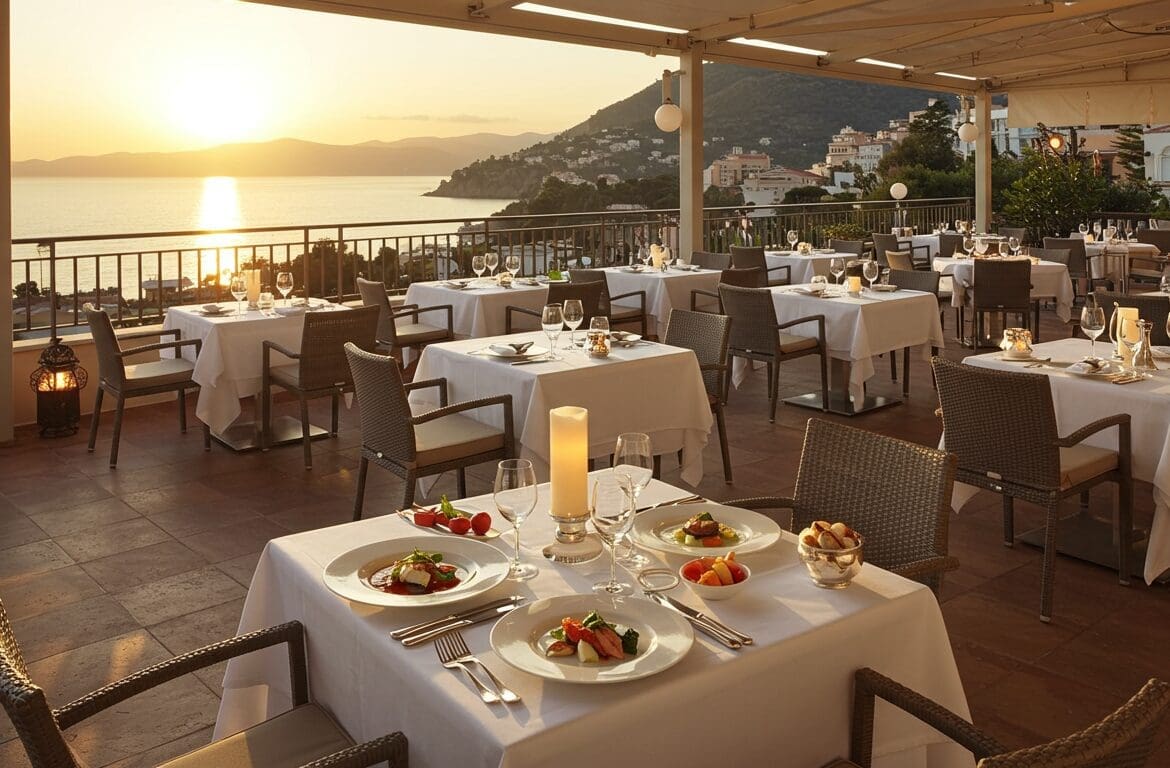
There is a particular quality to the light in Cape Town at seven in the evening – that specific hour when the sun drops behind the Twelve Apostles and the whole city turns a shade of amber that makes everything look better than it probably is. The mountain goes gold. The Atlantic goes pewter. And somewhere below you, on a terrace or a rooftop or a converted industrial floor, someone is opening a bottle of Sauvignon Blanc from Constantia and the evening is, officially, beginning. Cape Town has always had the scenery. What it has built, quietly and with considerable intention, is a dining scene to match it – one that draws on the extraordinary abundance of the Cape, the cultural layering of a city that has been a crossroads for centuries, and a generation of chefs who have stopped looking to Europe for permission.
This is a city where you can eat exceptionally well in a repurposed grain silo, in a wine estate manor house, on a clifftop with the ocean three hundred metres below, or at a street market where the smells of koeksisters and Cape Malay curry drift pleasantly into your coffee. The best restaurants in City of Cape Town Metropolitan Municipality represent a scene that is genuinely world-class – not in the way that phrase is usually deployed, as a kind of polite encouragement, but verifiably, measurably so, with placements on the lists that matter to prove it.
Here is where to eat, what to order, and how to do it properly.
Fine Dining in Cape Town: World-Class Tables Worth Every Rand
The Cape Town fine dining scene has, in the last decade, undergone a transformation that the international food press is still catching up with. This is no longer a destination where you settle for good-enough in a beautiful setting. These are restaurants that belong on any serious global itinerary.
La Colombe, on the slopes of Constantiaberg at Silvermist Wine Estate in the Constantia Valley, is the standard-bearer. Headed by chef-proprietor Scot Kirton and executive chef James Gaag, it has spent more than two decades building a body of work that is now recognised globally – currently ranked 81st on The World’s 50 Best Restaurants list, which is the kind of accolade that tends to make reservations significantly harder to come by. The cooking is built on a French-Asian foundation, brought to life with foraged ingredients and a precision of presentation that stops just short of intimidating. This is food that rewards attention. The setting – elevated, elegant, surrounded by vineyard – does nothing to hurt matters.
Also in Constantia, Chefs Warehouse at Beau Constantia represents Liam Tomlin at his most assured. The four-course set menu leans into seasonal produce, much of it grown on the farm itself, combining local ingredients with broad global influences in a way that feels generous rather than showy. In April 2025, it received three Eat Out Award Stars – one of only seven restaurants in the entire country to achieve this distinction. It is, in short, not somewhere you stumble across. It is somewhere you plan for.
Salsify at The Roundhouse in Camps Bay is the newest member of this rarefied tier, debuting at number 88 on the World’s Best Restaurant list – a debut, it should be noted, that most restaurants spend their entire existence aspiring to. Chef Ryan Cole created the restaurant as a tribute to his father, a veteran fisherman, and that story runs through the food: a ten-course menu that champions local and foraged ingredients, executed with head chef Nina du Toit with a rigour and delicacy that elevates humble provenance into something quietly magnificent. The Atlantic view is, frankly, not a hardship.
Reservations at all three should be made well in advance – weeks, not days, and certainly not the morning of. This is not a suggestion.
The Pot Luck Club and Woodstock: Where Energy Meets Excellence
If the Constantia fine dining experience is all candlelight and precision, The Pot Luck Club in Woodstock offers something different but no less serious – a restaurant with genuine verve, occupying the top floor of the original silos in The Old Biscuit Mill. The floor-to-ceiling glass windows frame views over the neighbourhood of Woodstock, which has the kind of gritty creative energy that cities spend decades trying to manufacture and Cape Town arrived at rather naturally. The space was revamped in 2025 but retains the modern industrial elegance that made it famous – exposed structure softened by considered design.
The menu is built on small plates with strong Asian influences and exceptional local produce, rotating seasonally and demanding a willingness to order several things and share them, which is, it turns out, entirely the right approach. The signature smoked fillet with café au lait sauce is the dish that regulars will tell you about unprompted, and they are right to. The cocktail programme is serious, the Sunday Brunch set menu is beloved by locals to the point of genuine competition for tables, and the whole enterprise has the kind of confident momentum that comes from knowing exactly what it is.
The Old Biscuit Mill itself, on a Saturday morning, also houses the Neighbourgoods Market – a weekly gathering of artisan producers, bakers, coffee roasters and street food vendors that has become a Cape Town institution. Go with a large appetite and no particular schedule. You will need both.
Ouzeri and the CBD: Mediterranean Spirit, Cape Town Soul
In the City Bowl, on Wale Street, Ouzeri has been a fixture of the Cape Town dining conversation for long enough to feel like a neighbourhood cornerstone, while remaining dynamic enough to have just earned recognition on the 50 Best Discovery list – a nod that acknowledges restaurants on a clear upward trajectory, and in this case, a well-deserved one.
The spirit is Mediterranean – convivial, generous, built for sharing – but the execution is Cape Town: smart, inventive, shaped by exceptional local ingredients and a drinks programme that takes its cocktails as seriously as its food. The small plates format encourages ordering widely and adventurously, and the room has the particular hum of a place where people are genuinely happy to be. It is the kind of restaurant that makes a city feel like itself.
The CBD more broadly rewards exploration at meal times. The Bo-Kaap neighbourhood, with its coloured houses and Cape Malay culinary heritage, offers some of the most characterful eating in the city – fragrant curries, koeksisters, pickled fish, and a spice culture that has been quietly shaping Cape Town’s flavour for three centuries. No tasting menu in the world quite replicates what you find in a family-run spot in Bo-Kaap on a Friday afternoon. Both experiences are worth having.
Beach Clubs, Casual Dining and the Atlantic Seaboard
Cape Town’s Atlantic Seaboard – Camps Bay, Clifton, Bakoven – has a casual dining culture that exists in a state of studied relaxation. The restaurants and beach clubs here are not trying to be anything other than places to eat well, drink cold things, and watch the sun perform its nightly drama over the ocean. This is an entirely reasonable ambition and they pursue it with conviction.
Camps Bay’s main strip has a certain parade-ground quality at peak season – beautiful people, beautiful cars, everyone performing their leisure at each other – but the food, particularly at the better establishments, is genuinely good. Fresh line fish, sustainably sourced seafood, sharing platters of mezze-style Cape produce, and long, cold glasses of something crisp from nearby Constantia or Stellenbosch. The prawns, when they appear on a menu, tend to be Mozambican and tend to be excellent. Order them.
For something less performative, the smaller restaurants tucked into the residential streets behind the main drag in Camps Bay and Green Point offer quality without the audience. These are where the locals who live nearby actually eat on a Tuesday night, which is usually a reliable indicator of worth.
Local Gems and Hidden Finds
Cape Town rewards curiosity. Beyond the celebrated names – and they deserve every celebration they receive – there is a layer of neighbourhood restaurants, small cafés and market stalls that reveals the city’s genuine character. The Oranjezicht City Farm Market at the V&A Waterfront on Saturdays is particularly good for this: a gathering of small producers selling everything from heritage grain bread to smoked charcuterie to freshly pressed juices from South African citrus, all in sight of the mountain. It is one of those markets that manages to be genuinely good rather than merely photogenic. (A rarer achievement than it sounds.)
De Waterkant and Green Point have a cluster of independent restaurants that sit pleasantly between the ambition of the fine dining scene and the ease of beach dining – neighbourhood bistros with short menus, good wine lists, and the unhurried pace of somewhere that doesn’t need to hustle. These are the places you return to on your last night because everything else suddenly seems like too much effort.
In the Southern Suburbs, the food culture around Newlands and Claremont is less tourist-facing and more genuinely embedded in local life – worth an afternoon’s exploration if you are staying in a villa in the Constantia area and want to eat like someone who actually lives there.
Wine, Local Drinks and What to Order
You cannot eat well in Cape Town without engaging with the wine, and the good news is that engaging with Cape wine is one of the more pleasurable obligations a visitor can have. The Constantia Valley – the oldest wine-producing region in the Cape, and arguably South Africa – sits within the metropolitan municipality itself, meaning you can drink wine made from vines grown within sight of Table Mountain. This is a pleasing fact to contemplate over a glass of Steenberg Sauvignon Blanc or a Buitenverwachting Chardonnay.
Chenin Blanc is the grape variety that most serious wine people will tell you to pay attention to – South Africa does things with Chenin that the Loire Valley watches with mild, respectful alarm. The Pinotage debate (love it or not) is one of the enduring conversations of a Cape wine evening and is best conducted with a glass of a well-made example in hand rather than on theoretical grounds. Syrah from the Cape is also, if you haven’t encountered it, a revelation.
For something softer, Amarula – the cream liqueur made from marula fruit – is the indigenous option, as is Rooibos in every form, served hot, iced, or increasingly as a mixer in thoughtful cocktail programmes. The craft beer scene has matured considerably; Cape Town Pale Ale styles tend to lean tropical, which makes sense given the climate and the proximity to citrus country.
At the table, what to order depends on where you are – but certain principles hold. Eat the local fish rather than the imported alternatives. Order the ostrich at least once. Try the bobotie if you find a kitchen doing it well – Cape Malay spiced meat bake with an egg custard top, sweet and savoury and quietly unlike anything else. And if snoek is on the menu at a beach shack, smoked and served with apricot jam in the Cape tradition, consider it a cultural experience as much as a meal.
Reservation Tips and Practical Wisdom
Cape Town’s peak dining season runs roughly from November through March, when the city fills with international visitors and domestic holiday-makers simultaneously, and competition for tables at the better restaurants becomes fierce. La Colombe, Salsify, and Chefs Warehouse at Beau Constantia should all be booked as far in advance as practically possible – six to eight weeks is not excessive for prime dates in December and January.
The Pot Luck Club operates a booking system that is slightly more accessible, but the Sunday Brunch in particular fills quickly and should be secured in advance. Ouzeri accepts reservations and it would be optimistic to arrive without one on a weekend evening.
For the markets – Neighbourgoods at The Old Biscuit Mill on Saturday mornings, Oranjezicht City Farm Market at the Waterfront on Saturdays and Sundays – no reservation is required, but arriving with genuine hunger and comfortable shoes is strongly advised. The queues at the better stalls are a feature rather than a flaw. Take them in good spirit.
Tipping is customary and expected at around ten to fifteen percent; South Africa’s restaurant industry is heavily dependent on service staff gratuities in ways that are worth bearing in mind when the bill arrives.
Finally, ask your concierge – or, if you are staying in a luxury villa in City of Cape Town Metropolitan Municipality, your villa manager – for their current personal recommendations. The Cape Town dining scene moves quickly, and the restaurant that a well-connected local loves this month is often a better evening than the one that won an award two years ago. Both matter. Neither should be ignored. Many of the finest villa properties in the area also offer private chef options, which is worth considering on evenings when you would rather the mountain came to you – particularly if you have spent the day acquiring exceptional local produce at one of the markets and the logic of eating it with a glass of Constantia white on your own terrace has become entirely irresistible.
For a broader view of everything the city offers – beyond what is on the plate – the City of Cape Town Metropolitan Municipality Travel Guide covers the full picture, from cultural landmarks to the best ways to spend a day when you are not eating. Which, in Cape Town, will inevitably be fewer days than you planned.