
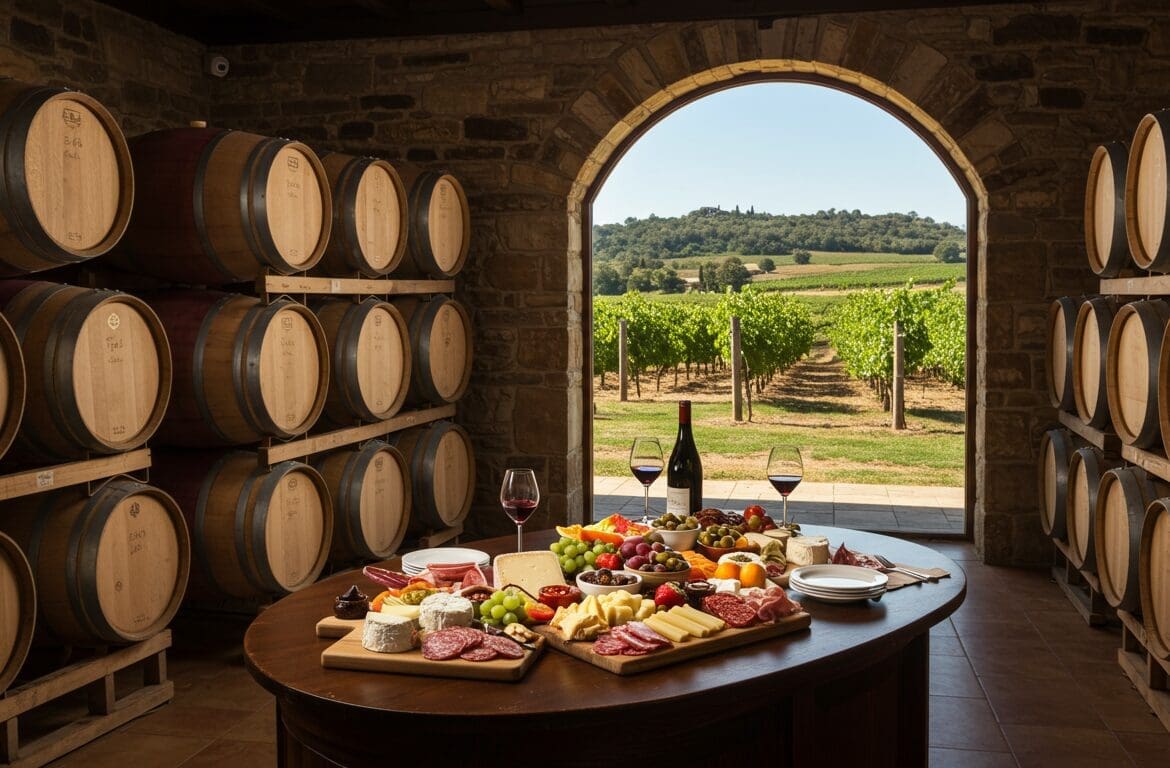
Crete Food & Wine Guide: Local Cuisine, Markets & Wine Estates
It starts before you even sit down. Somewhere around mid-morning in a Cretan village, wood smoke meets wild thyme on the breeze, and someone’s grandmother is already slow-roasting lamb in an outdoor oven that was old when your parents were young. The light is particular here – that hard, southern Aegean brightness that makes everything look slightly overexposed. The olive trees are silver. The figs are splitting. And the taverna owner, without asking, is already pouring something cold and golden into a glass. This is the Crete that no itinerary fully prepares you for: a place where the food isn’t a backdrop to the experience. It is the experience.
For serious food travellers – the ones who would rather spend a morning in a mountain village pressing their own olive oil than photograph a fourth consecutive sunset – Crete is not just a Greek island with good cheese. It is one of the most coherent, confident, and quietly extraordinary food cultures in the Mediterranean. This guide is your starting point. Consider it essential reading alongside our broader Crete Travel Guide.
The Foundation: What Makes Cretan Cuisine Different
Cretan cuisine predates the fashionable concept of the Mediterranean diet by approximately three thousand years. The Minoans were cultivating olives and vines before most of Europe had figured out the wheel. What has emerged across the centuries is a cuisine of fierce locality – one that doesn’t borrow much, doesn’t need to, and is quietly contemptuous of shortcuts.
The pillars are olive oil, wild greens, legumes, cheese, honey, and meat from animals that have spent their lives doing exactly what they should: eating aromatic herbs on hillsides. The fat content of Cretan food is high, which sounds alarming until you consider that it’s almost entirely from cold-pressed extra virgin olive oil and aged sheep’s milk cheese. Nutritionists have been writing excitedly about this for decades. Cretans have been eating this way and not particularly reading the papers.
What distinguishes the cuisine further is its seasonality – an actual, unperformative seasonality that supermarkets have not yet managed to dilute. Spring means horta (wild greens), artichokes, and lamb. Summer brings tomatoes with a flavour intensity that can genuinely realign your expectations. Autumn delivers figs, grapes, and the first pressing of the olive harvest. Winter is for slow-cooked goat, thick bean soups, and fennel sausages dried in mountain air. A calendar and a stomach are all you need.
Signature Dishes Worth Knowing
To eat in Crete without knowing a few key dishes is to navigate a city without a map. You’ll get somewhere eventually, but you’ll miss quite a lot.
Dakos is the dish that appears on nearly every table, and rightly so – barley rusks soaked just enough to soften, topped with grated tomato, crumbled mizithra or feta, a pour of olive oil, and wild oregano. It is the Cretan answer to bruschetta, and it wins. Apaki is smoked pork marinated in vinegar and spices before being hung over a slow fire – intensely flavoured, produced largely in villages around Rethymno and the Amari Valley, and the sort of thing you eat one slice of and immediately want more of.
Staka – a rich, buttery cream skimmed from sheep’s milk and cooked slowly with flour – is one of those ingredients that food writers reach for adjectives and come up slightly short. Served over fried eggs or simply spread on bread, it is caloric in a way that feels entirely justified. Gamopilafo, the traditional wedding rice cooked in meat broth until it reaches a thick, almost risotto-like consistency, is the kind of dish you order once and then spend the rest of the holiday trying to find again. And then there is snails – chochlioi bourbouristi – fried in olive oil with rosemary and vinegar. It is not something to approach nervously. Approach confidently.
The Wines of Crete: Older Than the Romans, Better Than You Think
Crete’s wine culture has been somewhat overshadowed by its food reputation, which is a pity, because the island is producing genuinely exciting wines from grape varieties most of the world has never encountered. The main wine-producing regions are Heraklion, with its high-altitude Peza appellation; the slopes around Sitia in the east; and the area around Chania and Kissamos in the west.
The indigenous grape Vidiano produces some of the island’s most interesting whites – aromatic, full-bodied, with a distinctive richness that holds up to the island’s substantial food. It spent several decades out of fashion and is currently experiencing exactly the kind of thoughtful revival that makes wine writers professionally emotional. Liatiko is the red to know – light in colour but deceptively complex, it produces everything from elegant dry reds to the extraordinary sweet wines of Sitia. Kotsifali and Mandilari are frequently blended together to produce fuller, more structured reds.
At the upper end, the quality has risen sharply in recent years. Several producers are now working with rigorous attention to viticulture, low-intervention winemaking, and the kind of ambition that produces wines worth seeking out in London or New York. Crete is not a novelty on the natural wine circuit. It is, increasingly, a reference point.
Wine Estates to Visit
The wine estates of Crete are not universally set up for the glossy wine tourism experience you might find in Tuscany or Napa. Some are modest, family operations where you’ll sit in someone’s yard and taste from mismatched glasses. This is not a criticism. It is, in fact, often the better experience.
That said, several estates offer visits of genuine quality. The Lyrarakis winery near Heraklion is one of the more visitor-ready operations on the island – instrumental in reviving Vidiano and Dafni (a rare aromatic white variety), with tastings that make a compelling case for Cretan wine’s seriousness. Douloufakis (also known as Dafnios) in the Peza region combines attractive vineyard settings with a broad portfolio that covers the full range of indigenous varieties.
In the Sitia appellation in eastern Crete, the region’s designation for Liatiko – including both dry and sweet styles – makes a visit to the area’s cooperative and boutique producers worthwhile for anyone with a serious interest in the grape. The east is generally underdone by wine tourists, which means you’re unlikely to be sharing a tasting with a tour bus.
For a private wine experience of real distinction, several villa stays in Crete can be arranged with personalised winery tours, sommelier-led tastings, and cellar dinners – the kind of afternoon that ends well after dark and with several bottles you absolutely didn’t intend to buy.
Food Markets: Where to Go and What to Look For
The municipal market of Heraklion – housed in a cross-shaped building near the town centre – is the market against which all other Cretan markets should be measured. It is emphatically not a tourist market, in the sense that the people inside it are there to buy and sell food rather than photograph it. The butchers are arranged along one corridor, the cheese and cured meat vendors along another, and the whole thing operates at a volume and intensity that requires a certain confidence to navigate. Go mid-morning. Go hungry. Do not wear white.
Beyond Heraklion, the weekly laiki agora – farmers’ markets that move around towns and villages on different days – are where you encounter the real texture of Cretan food culture. Stalls piled with fresh herbs, bundles of dried mountain tea (malotira), jars of thyme honey, baskets of local almonds, and olive oil sold in unlabelled plastic containers by people who would find the concept of a tasting note faintly amusing. Chania’s covered market, in a beautiful cruciform building constructed under Venetian influence, operates daily and rewards a leisurely couple of hours.
What to buy and take home: thyme honey from the White Mountains, aged graviera cheese (Cretan graviera is a PDO product and considerably more interesting than its mainland cousins), dried herbs, and if you have checked luggage with space, a small bottle of top-quality local olive oil. The bottles at the airport are fine. The ones from the market are better.
Olive Oil: Liquid Archaeology
Crete produces somewhere in the region of a third of all Greek olive oil, which itself accounts for a sizeable share of world production. The majority of Cretan oil is extra virgin – a consequence of the Koroneiki variety, the dominant olive of the island, which produces small, intensely flavoured fruit that is difficult to process lazily. The oil is typically characterised by low acidity, a peppery finish, and a depth of flavour that makes decent supermarket olive oil taste approximately as interesting as a spreadsheet.
Several estates and cooperatives now offer visits and tastings, particularly during harvest season (November to January), when the cold-pressing process is in full operation. Watching olives go from tree to bottle in the space of a few hours is one of those genuinely instructive experiences – the kind that makes you understand not just the product but the culture that built itself around it. The Cretan relationship with olive oil is not a marketing position. It is foundational in a way that is entirely literal: excavations have uncovered storage pithoi – large ceramic jars – in Minoan palaces still faintly stained with oil pressed over three thousand years ago.
Cooking Classes and Culinary Experiences
The Cretan cooking class industry spans everything from professionally run half-day sessions in Chania’s old town to deeply informal afternoons in village homes where the lesson involves watching someone’s aunt make cheese pies at a speed you will never replicate. Both have considerable merit.
At the more structured end, classes typically cover dakos preparation, seasonal pies made with hand-rolled pastry (spanakopita, kalitsounia, the extraordinary fried cheese pies of the Sfakia region), slow-cooked lamb, and sweets including loukoumades (honey fritters) and xerotigana (deep-fried pastry spirals drenched in honey and nuts, traditionally served at Cretan weddings and therefore an excellent reason to enquire whether any are happening locally).
For high-end private experiences, several villas can be arranged with a personal Cretan chef who will source from local markets, cook with you or for you depending on your preference, and produce a meal that is entirely site-specific – the produce from that valley, the oil from that grove, the wine from the estate twenty minutes up the road. This is what food travel at its best actually looks like.
The Best Food Experiences Money Can Buy in Crete
If you are going to invest in one exceptional food experience in Crete, make it a private foraging walk with a local botanist or herbalist in the White Mountains. The Cretan countryside contains over 1,700 plant species, a significant number of which end up in the kitchen – wild fennel, rock samphire, kritamo, mallow, bitter greens whose names don’t translate because no one outside the island uses them. An expert guide turns a walk into something that fundamentally changes how you understand the food you’ve been eating.
A second strong contender: a boat trip along the southern coast combined with a private seafood meal on a terrace above the water, sourced that morning. The southern coast of Crete – rougher, less developed, considerably windier – is where fishermen still operate in ways that have not changed much since Homer was taking notes. The sea urchins here, cracked open and eaten with a spoon straight from the shell, are not something you order off a menu. They are something you encounter.
Third, and for those who take wine seriously: a private guided visit to three or four estates in a single day, with a knowledgeable local guide, a driver, and a plan that covers both the Peza region and one of the smaller, less-visited appellations. End with dinner. Start early.
A Few Practical Notes for the Serious Eater
Cretan dining runs late. Not in the Spanish sense of theatrical lateness, but in the genuine sense that restaurants come alive after nine and are still serving well past midnight. Arriving at seven will get you excellent service, an empty room, and the faint suspicion that you’re eating before the kitchen is fully warmed up. Arrive at nine and the experience is categorically different.
Tipping in Crete is appreciated, never obligatory, and best judged by feel rather than formula. Rounding up generously and leaving it on the table is the local practice. A fifteen percent addition to a restaurant bill would surprise most Cretan restaurateurs, though it would not be refused.
Finally – and this matters – the best food in Crete is not always in the most polished settings. Some of the finest meals on the island happen in rooms with plastic tablecloths, hand-written menus, and proprietors who will describe the entire menu from memory while standing over your shoulder, which can be faintly alarming until you realise that everything they’re describing sounds genuinely worth eating. Order what the table next to you has. Point if necessary. It works.
Plan Your Cretan Food Journey from a Private Villa
There is something particularly fitting about approaching Crete’s food culture from a private villa – the ability to bring the market home, to have a chef work with local producers on your behalf, to keep a bottle of estate wine on a terrace and drink it while the hills go gold in the late afternoon. It is, in the most literal sense, the best table in the house.
To browse properties across the island – from Chania’s olive-grove retreats to clifftop escapes above the Libyan Sea – explore our full collection of luxury villas in Crete and find the base from which every meal, market visit, and wine tasting becomes the natural extension of somewhere genuinely worth returning to.