
Food & Wine in Croatia: The Insider’s Guide to Eating and Drinking Like a Local
Here is what the guidebooks keep skipping over: Croatia has not one cuisine but several, and conflating them is the kind of mistake that will earn you a pitying look from anyone born within fifty kilometres of either coast. The Dalmatians will tell you their olive oil is the finest in the world. The Istrians will raise a quiet eyebrow and say nothing, which is more or less the same as disagreeing loudly. The interior cooks in lard and paprika and has never particularly cared what the coast thinks. Understanding this regional tension – warm, competitive, thoroughly delicious – is the real beginning of understanding food and wine in Croatia.
The Great Regional Divide: Coast vs. Interior
Croatia divides itself, culinarily speaking, into two broad camps that barely acknowledge each other’s existence. Along the Adriatic coast and on the islands, the food is Mediterranean in its bones: olive oil, fish, shellfish, grilled lamb, slow-braised meats cooked under a peka – the cast-iron dome that is arguably Croatia’s most important contribution to world gastronomy. The flavours are clean, restrained, built on extraordinary ingredients rather than elaborate technique. A piece of grilled sea bream caught that morning, dressed with nothing but local olive oil and a squeeze of lemon, is one of the most persuasive arguments for simplicity in cooking.
Move inland – into Slavonia, the Zagorje region north of Zagreb, or the rolling green hills of continental Croatia – and you enter an entirely different culinary world. Here the food has a Central European gravity: hearty stews, cured meats, freshwater fish from the Drava and Sava rivers, and a notable enthusiasm for paprika. Slavonian kulen, a fiery cured sausage made with pork and red pepper, is the kind of thing you eat standing up at a market and then spend the rest of your holiday attempting to find again. The wine changes too. This is white wine country – crisp, aromatic Graševina rather than the bold reds of the Dalmatian coast.
The Dishes You Need to Know
Peka is where any serious conversation about Croatian food must begin. Lamb, veal, octopus or vegetables are arranged in a shallow pan, covered with the bell-shaped peka lid, and then buried under hot embers for two to three hours. What emerges is something almost alchemical – meat that has essentially dissolved into tenderness, vegetables that have concentrated into something profound. The catch is that most restaurants require you to order it twenty-four hours in advance. Remember this, because the tourist who turns up and asks for peka on the spot is a recurring disappointment to kitchen staff across the Dalmatian coast.
Brodet is the fisherman’s stew of the coast – mixed fish and shellfish cooked slowly with onions, wine and tomatoes, served with polenta. Every family claims their version is correct and every version is slightly different, which is precisely as it should be. Black risotto made with cuttlefish ink is another coastal essential – dramatically dark, deeply savoury, and the kind of thing that photographs unexpectedly well. Further north in Istria, look for fuži, hand-rolled pasta tubes served with wild boar ragù or, in season, shaved truffle. If you are eating fuži in Istria without truffle, you are making a conscious choice and should examine your priorities.
From Zagreb and the northern regions, štrukli – baked or boiled dough parcels filled with fresh cottage cheese – is the kind of comfort food that deserves far more international recognition than it receives. Simple, satisfying, and deeply regional in the best sense.
Truffles: Istria’s Most Theatrical Ingredient
The Istrian peninsula produces both white and black truffles of genuine quality, and the white truffle season – October and November primarily, though black truffles are found year-round – draws serious food travellers from across Europe. The Motovun forest, a stretch of oak woodland following the Mirna river valley, is considered prime truffle territory, and the area has built an entire economy and identity around the fact.
Truffle hunting with a local guide and their dogs is one of the great food experiences available anywhere in the Mediterranean, and the good news is that in Istria it feels considerably less staged than the equivalent experience in, say, the Périgord. The forests are genuinely wild, the guides are genuinely expert, and the truffle you may or may not find is genuinely going to end up shaved over your pasta that evening. Several estate agritourism operations in the region offer the full experience – hunt in the morning, cooking class in the afternoon, lunch featuring what you helped find. It is indulgent and educational and entirely worth organising before you arrive.
The local truffle producers and specialist shops in towns such as Motovun, Buzet and Livade stock preserved truffle products year-round, from truffle oil (quality varies enormously – buy from established producers rather than roadside stalls) to jarred truffle paste that travels home rather well. Fresh truffle, when in season, can often be purchased directly from hunters or through quality delicatessens in the region.
Croatian Wine: The Case for Serious Attention
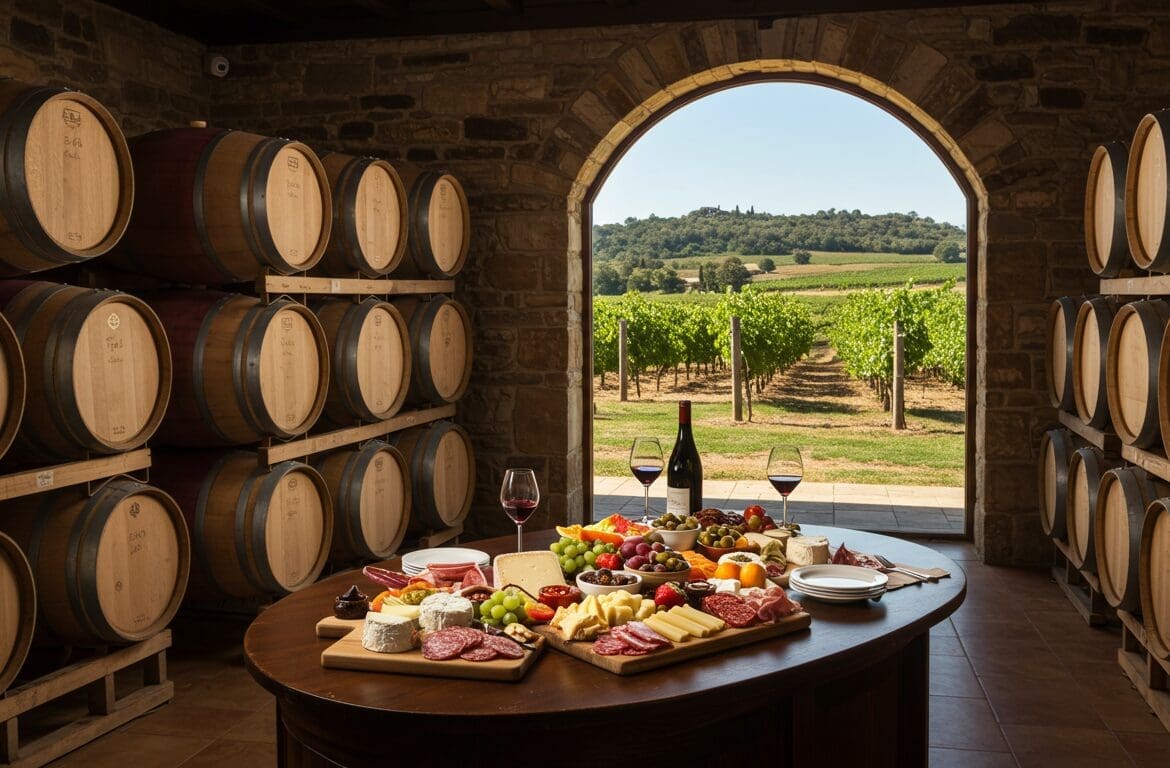
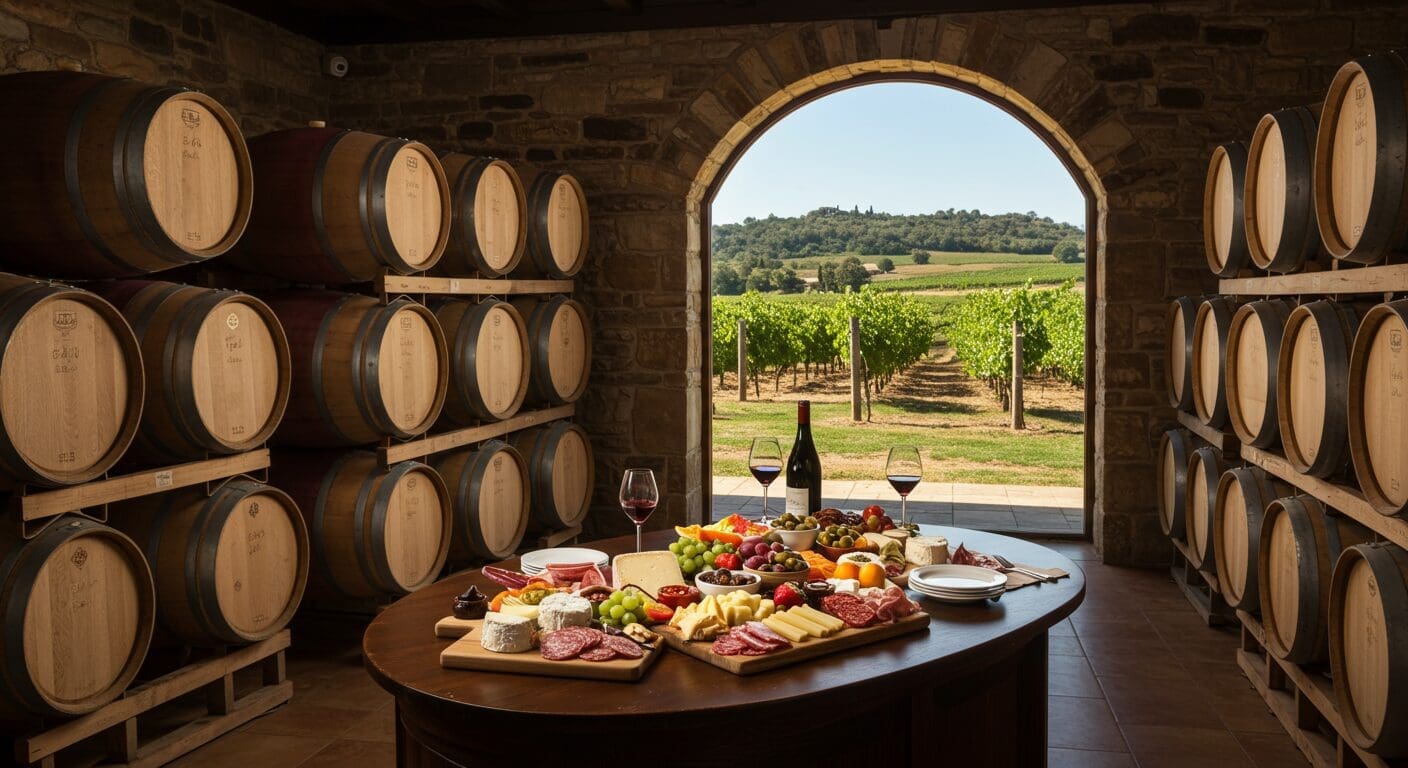
Croatia grows over three hundred indigenous grape varieties. Let that number sit for a moment. The country’s wine regions range from the cool-climate continental areas of Slavonia and the Zagorje to the warm coastal and island zones of Dalmatia and Istria, producing a range of styles that would be surprising even if you were expecting to be surprised. The international wine world is catching up, slowly, but the advantage for visitors right now is that extraordinary bottles are still available at prices that would be considered remarkable anywhere in Western Europe.
On the coast, the dominant red grape is Plavac Mali – a variety genetically related to Zinfandel, producing bold, tannic, high-alcohol reds that reward cellaring. The finest examples come from the Pelješac peninsula, particularly the appellations of Dingač and Postup, where vines cling to steep terraced slopes above the Adriatic. Dingač was Croatia’s first quality-controlled appellation and it remains the country’s most prestigious red wine zone. The wines can be muscular and demanding in youth but develop considerable complexity with age.
On the islands, the indigenous variety Pošip – grown primarily on Korčula – produces rich, full-bodied whites with a mineral edge that is genuinely distinctive. Grk, grown almost exclusively on the island of Korčula in the village of Lumbarda, is another indigenous white of real character. In Istria, Malvazija Istarska (Malvasia) is the dominant white – aromatic, textured, and utterly at home alongside a plate of locally caught fish or fresh pasta. The island of Hvar has been producing wine since Greek settlers arrived in the fourth century BC. One suspects they knew what they were doing when they chose the location.
Wine Estates and Producers to Visit
Croatia’s wine scene rewards those who make the effort to visit producers directly, and the good news for villa-based travellers is that many of the best estates welcome visitors by appointment and offer tastings, cellar tours and, in several cases, accommodation or dining experiences on site.
On the Pelješac peninsula, the concentration of quality Plavac Mali producers is such that a single afternoon’s driving can take in several excellent estates. The peninsula is narrow enough that you are rarely more than a few minutes from the sea, which helps with the heat of tasting in summer. Producers in the Dingač zone tend to operate more traditional operations – family-run, small-scale, occasionally housed in buildings that have seen better decades but produce wine that absolutely has not.
In Istria, the wine estate landscape is rather more polished – with several producers having invested significantly in visitor facilities alongside winemaking. The Istrian approach to wine tourism combines well with the region’s broader agritourism culture: it is entirely possible to spend a day moving between an olive oil producer, a winery and a truffle specialist without travelling more than twenty kilometres.
Slavonia, in eastern continental Croatia, is the place to explore Graševina – the white grape that dominates this region and produces everything from simple everyday whites to structured, age-worthy examples that bear little resemblance to the entry-level bottles that gave the variety its modest international reputation. Visit during harvest in September and October for the most atmospheric experience.
Olive Oil: The Quiet Obsession
Croatian olive oil has been winning international competitions with notable regularity, which comes as news to most people outside the Adriatic region, and as no news whatsoever to the producers themselves. Istria has emerged as a particularly acclaimed olive oil zone – its oils tend towards a grassy, peppery, intensely aromatic profile that serious olive oil enthusiasts find extremely compelling. Dalmatia, with its longer tradition of olive cultivation, produces oils that are perhaps rounder and more approachable, though the debate between advocates of each region has the quality of a long-running family argument that outsiders enter at their peril.
Several Istrian and Dalmatian producers offer estate visits and tastings – tasting quality olive oil is an education in itself, particularly when compared against the largely flavourless commodity oils that most people have been cooking with their entire lives. Many estates produce small quantities, sell direct and are genuinely delighted to receive visitors who take the product seriously. Buying olive oil directly from the producer, in the traditional squat dark bottle, and then finding creative ways to get it home in your luggage is one of the more worthwhile logistical challenges Croatia sets its visitors.
Food Markets: Where to Shop Like a Local
Croatia’s market culture is alive, local and entirely uncommercialized in a way that is increasingly rare in popular Mediterranean destinations. The markets here have not yet been curated for Instagram. They are for shopping. This is refreshing.
Zagreb’s Dolac market, operating on a raised square above the main street since 1930, is the city’s social and culinary heart. Farmers from the surrounding countryside bring seasonal produce, cheese, eggs, honey and flowers every morning, and the covered lower hall handles the fish and meat. Arriving early is advisable – not because things sell out, but because the morning light and the ritual of it is one of Zagreb’s genuinely great pleasures, and the coffee from a nearby café with a view over the market stalls is exactly the way to begin a day.
On the coast, Split’s Pazar market runs daily just outside the Diocletian Palace walls – a contrast of settings so extreme (Roman emperor’s retirement residence on one side, cauliflower and dried figs on the other) that it feels like an editorial decision rather than an accident of history. Island markets tend to operate on ferry-dependent schedules, typically twice weekly, and have an end-of-the-earth quality that is entirely charming.
Cooking Classes and Hands-On Experiences
Cooking classes in Croatia range from serious half-day immersions in regional technique to more social experiences built around market visits, wine and a long lunch. Both are valid. The choice depends largely on whether you want to learn or whether you want to eat well in good company – though the best operators tend to provide both.
In Istria, cooking classes focused on pasta-making and truffle preparation are widely available and tend to be genuinely instructive. The technique for making fuži or pljukanci by hand is one of those things that looks simple until a Croatian grandmother demonstrates it in twenty seconds flat and you realise you have been fundamentally overconfident. Classes based in private farmhouses or agriturismo properties tend to be more intimate and more memorable than those operating in formal school settings.
In Dalmatia, classes focused on peka cooking, brodetto preparation and the use of local herbs and wild ingredients connect visitors with the landscape in a way that is difficult to achieve otherwise. Several operators run market-to-table experiences in Split and Dubrovnik – meeting at the morning market, selecting ingredients with guidance, then cooking and eating together. Given the quality of what’s available at those markets, the results are reliably excellent.
The Best Food Experiences Money Can Buy
For the serious food traveller, Croatia offers a handful of experiences that belong in a different category entirely – the kind of day or evening that becomes the story you tell for the next ten years.
A private truffle hunt in the Motovun forest in October, followed by a truffle lunch prepared by a local chef using what was found, is exactly as extraordinary as it sounds. Booking this privately, rather than as part of a group tour, changes the experience considerably – pace, focus, and the conversation over the table are entirely different.
A private boat day with a Dalmatian captain who actually knows how to cook – stopping at a quiet bay to grill fish over a fire on the rocks, accompanied by local wine kept cold in the sea – is available to those who know to ask for it rather than accept the standard boat hire arrangement. It requires slightly more organisation and considerably more reward.
Private winery visits on Pelješac, particularly with producers who do not routinely open to the public, are achievable through good concierge contacts and local knowledge. Tasting through a serious vertical of Dingač in the producer’s own cellar, with the winemaker explaining each vintage, is the kind of experience that resets your expectations of what Croatian wine can be.
And then there is simply this: renting a villa with a good kitchen, visiting the local market each morning, cooking simply with extraordinary ingredients, and eating outside with people you like. Croatia rewards this approach more consistently than almost anywhere in the Mediterranean. The ingredients are that good. Occasionally the best food experience money can buy is the one that requires the least organisation.
For more on where to stay, travel tips and regional highlights, visit our full Croatia Travel Guide – and when you’re ready to find a base from which to explore all of this properly, browse our curated collection of luxury villas in Croatia, from Istrian farmhouses with their own olive groves to Dalmatian island retreats with direct sea access and a kitchen worthy of the market run you’ll be making every morning.