
Food & Wine in Paris
There is only one city on earth where an argument about the correct way to dress a salad can last forty-five minutes and be entirely riveting. Paris does not merely feed you – it educates you, seduces you, and occasionally makes you feel mildly ashamed of every meal you have eaten before. This is a city that has spent roughly eight centuries thinking, arguing, refining, and occasionally revolutionising the way the world eats. The result is a food culture of such depth and seriousness that even a simple ham sandwich – a jambon-beurre from a boulangerie – becomes, in the right hands, a small masterpiece of restraint. For the discerning traveller, food & wine in Paris is not a side note to the visit. It is, in every meaningful sense, the point.
Understanding Parisian Cuisine
Paris is not, strictly speaking, a regional cuisine in the way that Provence or Alsace is. It is something more interesting than that: a capital city that has always pulled the best of France towards it – the butter and cream of Normandy, the charcuterie of Lyon, the oysters of Brittany, the truffles of Périgord, the wines of Burgundy and Bordeaux – and made them its own. The result is a culinary identity that is simultaneously French and distinctly Parisian. It is simultaneously classical and contemporary, neighbourhood bistrot and temple of haute cuisine.
The foundational language of the Parisian table is classical French cooking: stocks reduced to silk, sauces built with patience, technique that is so thoroughly absorbed into the culture that even a neighbourhood café patron will look faintly pained if his steak frites fails to arrive with properly rendered, correctly seasoned pommes. That baseline of craft – invisible when it is working, instantly obvious when it is not – is what distinguishes eating in Paris from eating almost anywhere else.
In recent decades a younger generation of chefs, many trained in the classical tradition and then deliberately unshackling themselves from it, have redefined what Parisian cooking looks like. The result is a city with extraordinary range: from the old-guard grandeur of the grandes maisons to the intimate, no-reservations natural wine bars where the menu is written on a blackboard and changes at the chef’s whim. The discerning traveller, sensibly, eats at both.
Signature Dishes Worth Seeking Out
Paris has its own edible shorthand – dishes so embedded in the city’s identity that to visit without eating them is rather like going to the Louvre and skipping the ground floor. The soupe à l’oignon gratinée, slow-cooked until the onions become almost a caramel and finished with a raft of melted Comté, is a dish of profound simplicity and profound satisfaction. The steak tartare – raw, hand-cut beef seasoned with capers, shallots, mustard and egg yolk – is one of the great tests of a Parisian kitchen. Do it right and it is extraordinary. Do it wrong and the less said the better.
Duck confit, sole meunière browned in butter until it smells like a dream, blanquette de veau with its ivory sauce and tender vegetables – these are the dishes of the Parisian bistrot, the dishes that serious food writers have been declaring dead for thirty years and that continue, quietly, to be excellent. The croissant, of course – but only from a boulangerie that takes it seriously. You will know the ones by the queue.
At the other end of the spectrum, the city’s contemporary restaurants have given rise to a distinctly modern Parisian vernacular: plates that are small, precise, often Japanese-influenced in their restraint, rooted in French produce but speaking a more global language. Both traditions reward the curious eater. Paris is large enough and old enough to contain multitudes without contradiction.
Food Markets: Where Paris Actually Shops
If the restaurants are where Paris performs, the markets are where it lives. The city’s outdoor and covered markets are among the finest in Europe – a claim made of several European cities, but in Paris it happens to be true. The Marché d’Aligre in the 12th arrondissement is one of the most authentic: a sprawling, slightly chaotic mix of covered hall and outdoor stalls where the prices are honest and the produce is extraordinary. The Marché des Enfants Rouges in the Marais is the city’s oldest covered market, dating to 1615, and on a weekend morning it generates a concentrated chaos of Moroccan tagines, Japanese bento and French rotisserie that is quite something to navigate.
The Marché Raspail in the 6th runs a dedicated organic market on Sunday mornings that draws an almost comically earnest crowd of St-Germain residents discussing the provenance of their carrots. Worth attending without mockery – the produce genuinely is exceptional. Rue Mouffetard in the 5th is the kind of food street that people call touristy until they discover that Parisians shop there too. The cheesemongers, butchers and fishmongers are real, their stock is serious, and the experience of walking it on a Saturday morning with nowhere to be is one of the finer things a city can offer.
For those staying in a private villa, the markets open a different kind of Paris entirely – the city as it feeds itself rather than as it presents itself to visitors. There is real pleasure in returning home with a cloth bag of vegetables, a wedge of aged Comté and a bottle of something interesting from a caviste down the street.
Wine in Paris: What to Drink and Where
Paris is, above all, a wine-drinking city rather than a wine-producing one – though it does, charmingly, maintain its own tiny vineyard in Montmartre, the Clos Montmartre, which produces a few hundred bottles a year of a wine that is celebrated with great ceremony and described, diplomatically, as characterful. The vintage is auctioned every October. The wine is, by most accounts, principally of sentimental value.
The wines you will actually want to drink come, broadly, from Burgundy, the Loire, Bordeaux, and an increasingly influential natural wine movement that has its spiritual home in Paris’s bar scene. Burgundy’s Pinot Noirs and Chardonnays set the standard against which much of the world’s fine wine is measured – and in Paris, you can drink them at restaurants with cellars that would make a Burgundy domaine owner quietly jealous. The Loire offers the city’s most fascinating everyday drinking: mineral Muscadets, the Chenin Blancs of Vouvray, the grassy precision of a Sancerre or Pouilly-Fumé.
The natural wine bars – the caves à manger that have proliferated across the city’s hipper arrondissements – have changed the way a generation of Parisians drink. Low-intervention wines, often from small domaines working biodynamically or organically, poured by the glass alongside simple food in rooms where the décor is aggressively unfussy. Whether you find them revelatory or baffling probably says something about you. They are worth trying regardless.
For serious wine buying, the city’s specialist wine merchants are formidable. A good Paris caviste is worth cultivating: they know their domaines personally, they taste obsessively, and they will steer you towards bottles that no wine app or list would ever have surfaced. Treat them accordingly.
Wine Estates and Producers to Visit Near Paris
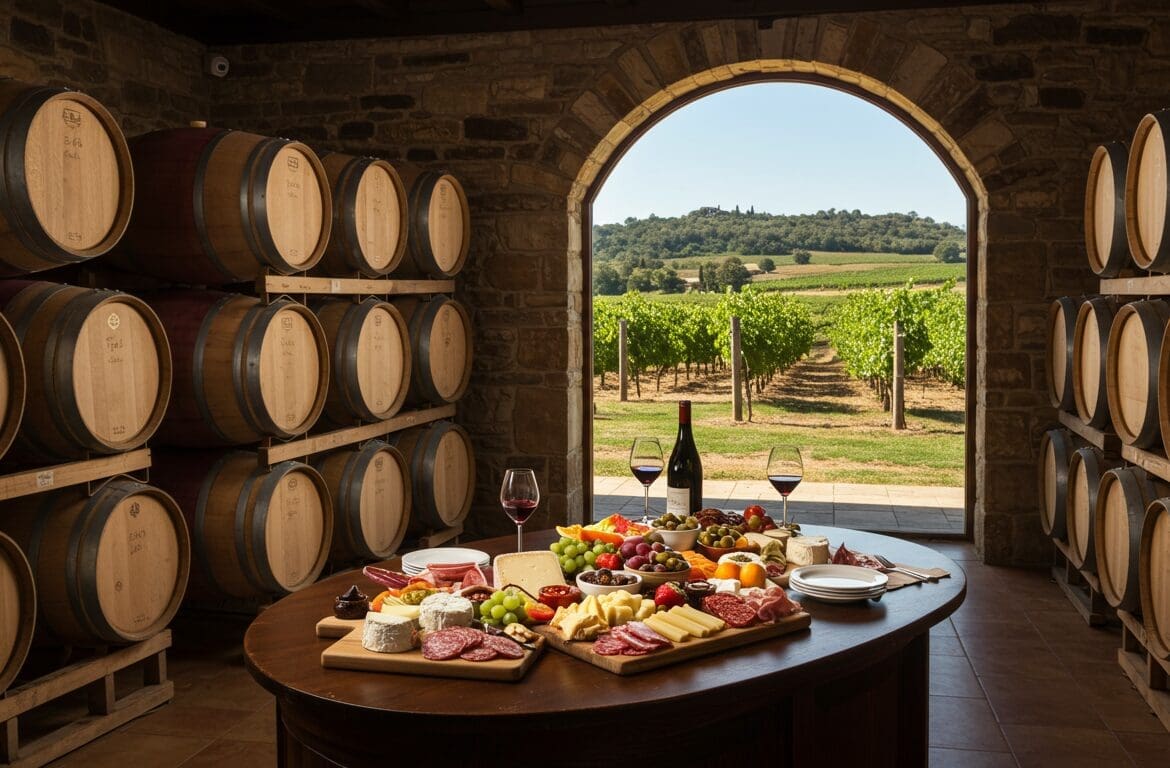
Paris sits at the northern edge of where serious viticulture is possible, but the surrounding regions reward exploration enormously. Champagne is barely ninety minutes by train – close enough for a day trip, though spending a night or two among the vines is rather better. The grande maison cellars of Reims and Épernay offer tours of extraordinary scale: kilometres of chalk tunnels, millions of bottles turning slowly towards their riddling racks. But it is the smaller grower-producers – the récoltants-manipulants who grow their own grapes and make their own wine rather than blending across regions – who offer the most genuinely illuminating visits. They are smaller, more personal, and their wines frequently surprise.
To the south, Burgundy is a three-hour drive that any serious wine traveller should make. The Côte de Nuits and Côte de Beaune, that impossibly narrow strip of limestone hillside running south from Dijon, contains some of the most celebrated vineyard land on earth. Many domaines receive visitors by appointment – and the appointment matters, because these are working farms with genuine hospitality rather than visitor centres. Beaune itself, with its Wednesday and Saturday market and its extraordinary collection of wine-focused restaurants, merits several days.
The Loire Valley, reachable in around an hour from Paris by TGV, offers a different register entirely: a gentle, château-dotted landscape producing wines of real elegance and variety. Touring the Touraine or Anjou with a good contact list and a car is one of the great French wine pleasures.
Cooking Classes and Culinary Experiences
For those who want to understand rather than merely consume, Paris offers cooking education of serious quality. The city’s culinary schools range from the iconic – Le Cordon Bleu, where Julia Child famously studied and which continues to offer shorter masterclass formats for non-professional visitors – to smaller, more intimate ateliers run by working chefs and food journalists who teach in their own kitchens. The latter tend to produce more immediately applicable results and are considerably better for conversation.
Patisserie classes deserve particular mention. The French pastry tradition – croissant, éclair, mille-feuille, tarte Tatin – is a discipline of precision and repetition, and watching a skilled pâtissier work is both humbling and instructive. Several Paris pastry schools offer half-day and full-day formats that are genuinely hands-on rather than demonstrative. You will not produce perfect croissants on your first attempt. This is entirely normal. You will eat them anyway.
Market visits combined with cooking classes – where the morning is spent shopping at a produce market with a chef, the afternoon in the kitchen, and the evening at the table with the results – are among the most complete food experiences the city offers. They are also, for those staying in a well-equipped villa, entirely replicable at home with the ingredients you have gathered and the techniques you have learned.
Truffles in Paris: Black Gold at the Table
Paris does not produce its own truffles – they come primarily from Périgord and the Vaucluse – but it eats them with a dedication that borders on religious. During the winter truffle season (roughly December through March for the black Périgord truffle, Tuber melanosporum), the city’s restaurants enter a kind of collective frenzy. Truffle menus appear. Truffle supplements are added to dishes at prices that require a steady constitution. The smell – that extraordinary, earthy, almost indecent smell – becomes a fixture in the dining rooms of the better addresses.
For the traveller who wants to trace the ingredient back to its source, the town of Sarlat in the Dordogne holds one of France’s most celebrated truffle markets in January and February, reachable by train or a scenic drive south from Paris. The Richerenches market in the Vaucluse, known as the “black diamond exchange,” is another – more wholesale in character, but extraordinary to witness. Truffle hunts with trained dogs can be arranged through specialist operators in both regions, and the experience of watching a Labrador or Lagotto Romagnolo pinpoint a truffle buried thirty centimetres beneath unremarkable-looking earth remains one of the most quietly thrilling things rural France has to offer.
Back in Paris, the Maison de la Truffe near the Madeleine is the city’s most celebrated truffle specialist – a shop, restaurant and truffle authority rolled into one address. If you are serious about the subject and in the city during season, it is not a place to skip.
The Best Food Experiences Money Can Buy
At the apex of Parisian dining sits a handful of restaurants that require advance planning, considerable expenditure, and the kind of appetite – intellectual and physical – that matches the ambition of the kitchen. The three-Michelin-starred grandes maisons of Paris represent cooking at the highest level of craft and seriousness: tasting menus that last four hours, wine pairings assembled by sommeliers who have spent careers building towards this, service that anticipates needs you did not know you had. These are not restaurants in the everyday sense. They are experiences of a particular kind – formal, considered, occasionally transcendent, occasionally slightly exhausting. Worth doing. Probably not on consecutive nights.
Below that altitude, Paris offers a middle ground of extraordinary quality: the one- and two-starred restaurants, the exceptional bistrots, the chef’s table experiences where you sit at the pass and watch the kitchen in organised motion. These often provide the most memorable meals – intimate, less ceremonial, closer to the actual work of cooking. A meal at a chef’s counter in Paris, watching dishes assembled with silent precision a metre from your face, recalibrates permanently what you expect of a restaurant kitchen.
For something entirely different, the private dining circuit – chefs who cook in clients’ homes, curated multi-course dinners in private spaces above the rooftops of the city, sommelier-led vertical tastings of grand cru Burgundy in an apartment with a Seine view – has become a genuine luxury category in Paris. For those in a well-appointed private villa, this format translates perfectly: a private chef, a carefully sourced wine selection, the city’s best produce, and a table entirely your own.
Cheese, Charcuterie and the Supporting Cast
No account of food & wine in Paris is complete without the fromage trolley – or, for those shopping independently, the city’s extraordinary fromageries. The master affineurs who age and select cheese are a particular Parisian institution. A good fromagerie will have sixty or eighty cheeses at varying stages of maturity, and the person behind the counter will have opinions about each of them. Camembert de Normandie (the real one, made from raw milk, not the factory version), aged Époisses, a ripe Vacherin Mont-d’Or in season, a properly made Roquefort with its ice-blue interior and salt-sharp finish – France’s cheese is diverse enough to constitute an education in itself.
The charcuterie tradition – pâtés, terrines, rillettes, the extraordinary variety of cured and cooked meats – runs parallel and is no less serious. A Parisian charcutier of quality is a craftsman, and his window display is worth pausing in front of. Combine a wedge of terrine de campagne, a handful of cornichons and a half-bottle of something Burgundian with a park bench on a spring afternoon, and you will have solved the picnic question permanently.
Plan Your Culinary Stay in Paris
The ideal base for a food-focused visit to Paris is not a hotel room with a minibar. It is a properly equipped private residence – a kitchen where the morning market haul becomes dinner, a dining room where a private chef can perform without restriction, a wine cellar (or a good caviste within walking distance) and enough space for a table of friends who take eating as seriously as you do. For that kind of visit, explore our collection of luxury villas in Paris – properties chosen with exactly this sort of travel in mind. For the broader shape of a Paris visit – what to see, where to stay, how to move through the city – our Paris Travel Guide covers the ground in full.
Paris will feed you well. It has had a very long time to practise.