
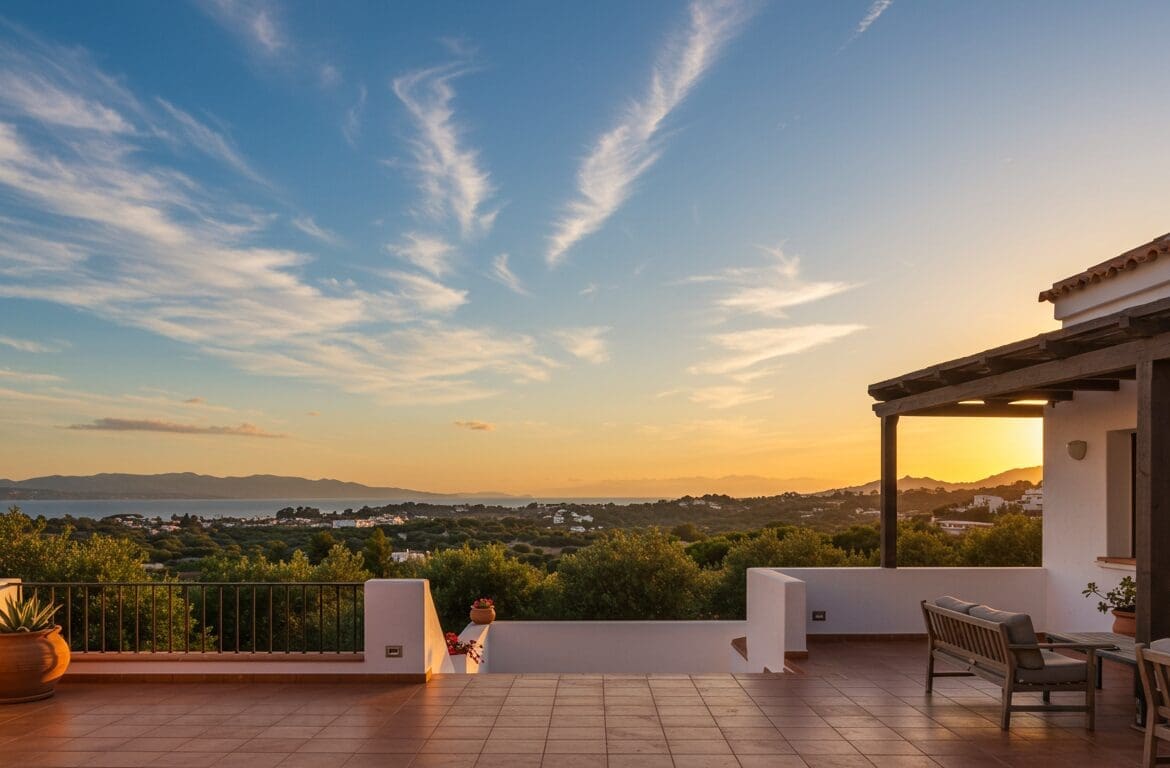
Best Time to Visit Faro District
The Algarve has a particular trick it plays on you. You arrive expecting the postcard – the orange cliffs, the sea so blue it looks digitally enhanced, the grilled fish that makes you question every meal you’ve eaten before – and then it delivers something more. A region that refuses to be just one thing. The Faro District stretches from the wild western Atlantic coast to the gentle lagoon world of the Ria Formosa, from ancient Moorish hilltop villages to whitewashed fishing towns that haven’t quite clocked that the rest of the world is in a rush. The question is not whether to come. The question is when – and the answer is more interesting than you might expect.
Understanding the Faro District’s Climate
The Faro District sits at the southern tip of Portugal, which means it enjoys more sunshine hours per year than virtually anywhere else in Europe – around 3,000, if you are the sort of person who counts. The climate is Mediterranean with a generous Atlantic influence: winters that are mild enough to feel vaguely embarrassed about, springs that bloom dramatically, summers that are long and reliably warm, and autumns that linger with a golden, unhurried quality that genuinely earns the word golden.
What distinguishes the region from, say, the Spanish costas is the variation within it. The western Algarve, around the Costa Vicentina, tends to catch more Atlantic wind and the odd dramatic cloud formation that would look at home on a Dutch Master painting. The central and eastern stretches, around Faro itself, Tavira and the Ria Formosa, are more sheltered, warmer and drier. Choosing your microclimate is part of the pleasure.
Average temperatures range from around 13-16°C in the depths of winter to a consistent 28-32°C in high summer. Rainfall is concentrated almost entirely between November and March. If you visit between May and October, you are statistically very unlikely to see rain. Statistically, of course, is doing a lot of work in that sentence, but the odds are genuinely in your favour.
Spring: March to May – The Insider’s Season
If there is a best-kept secret about the Faro District – and there are fewer of those every year – it is spring. March arrives with wildflowers covering the inland hills in sheets of yellow, white and purple, the kind of display that looks choreographed but is entirely accidental. Temperatures sit between 16°C and 22°C: warm enough to eat outside comfortably, cool enough to actually walk somewhere without immediately regretting it.
April and May ratchet everything up a notch. The sea begins to warm from its winter reset, reaching around 18-20°C by late May – bracing rather than brutal, and perfectly swimmable for anyone who doesn’t insist on bath-temperature water. The crowds are thin to moderate. You can park in Albufeira in April without experiencing what is technically classified as a psychological event. The beaches at Meia Praia, Praia de Faro and the quieter stretches along the Ria Formosa are almost entirely yours.
For couples and independent travellers, spring represents the most rewarding combination of good weather, accessibility and atmosphere the region offers. Restaurants are open, villas are available, prices are noticeably lower than July or August, and the pace of everything is simply more human. Families with school-age children face the obvious constraint of term time, but Easter holidays in late March or April offer a genuine window. Spring walking, cycling the Via Algarviana trail, and birdwatching in the Ria Formosa Natural Park – which hosts flamingos, spoonbills and a cast of migratory birds that would humble any ornithologist – all reach their annual peak.
Summer: June to August – The Main Event
High summer in the Faro District is not a secret. It hasn’t been since approximately 1975. The beaches fill, the villas book out, the prices climb, and the roads between Faro and Lagos develop a personality of their own between 5pm and 7pm. None of this changes the fundamental truth that this is also when the region is most gloriously, unambiguously itself.
June is arguably the most sophisticated summer month. The weather is reliably excellent – temperatures in the mid-to-high twenties – the sea has warmed to a genuinely inviting 22°C, and the full August intensity has not yet arrived. The Feira de São João in late June brings traditional festivals to several towns, with music, street food and the sort of cheerful communal chaos that is much better to stumble into than to plan for.
July and August are unambiguously peak season. Temperatures regularly reach 32-35°C inland, somewhat moderated on the coast. The beaches are busy. The popular restaurant terraces in Tavira and Lagos require reservations that a sensible person books well in advance – or simply accepts that eating at 7pm rather than 9pm has its own logic. For families, the long school summer holidays make this the only realistic option, and the region handles the season well: the water parks, boat trips along the Ria Formosa, sea caves tours near Lagos and dolphin watching excursions are all running at full capacity and for good reason. The Atlantic is warm enough for children to stay in it for unhealthy lengths of time, and the evenings are long, warm and unhurried in that particularly Portuguese way.
For villa stays specifically, summer is when the investment pays its most obvious dividends. A private pool, outdoor dining space and the ability to retreat from the sun on your own terms transforms the experience from holiday into something closer to a life, temporarily.
Autumn: September to November – The Connoisseur’s Choice
September is, by any honest reckoning, the finest month in the Faro District. The light changes to something richer and more forgiving. The sea reaches its annual peak temperature of 23-24°C – warmer than June, warmer than July, warmer than most people realise. The crowds retreat with the schools, the prices drop measurably, and the region exhales.
October carries much of September’s quality with a slight cooling that makes walking and cycling suddenly straightforward again rather than heroic. The Algarve International Circuit near Portimão hosts international motorsport events in autumn, and the region’s golf courses – some of the finest in Europe, arranged along the coast with a kind of architectural ambition that golfers find almost offensive in its generosity – come back into their own as the summer heat eases.
November marks the genuine transition. Temperatures drop to 18-20°C by day, cooler by night. Rain becomes possible again, though rarely sustained. The majority of beach-facing businesses begin to wind down, though the towns of Faro, Tavira, Loulé and Lagos retain their restaurants, bars and cultural life throughout the year. Loulé’s famous covered market – one of the most characterful in the Algarve – never closes, and the quieter pace of the town in late autumn is a different pleasure entirely from its summer self.
Autumn suits couples, solo travellers and anyone whose idea of a good holiday involves more wine, better conversations and fewer queues. It is also, quietly, the moment when the region’s food culture moves to the foreground: the seafood restaurants are no longer fighting for tables, the local chefs are cooking for people who want to eat rather than just to have eaten somewhere.
Winter: December to February – For Those Who Know
Visiting the Faro District in winter is not for everyone. It is, however, for someone, and that someone tends to be remarkably pleased with themselves about it. Daytime temperatures hover around 14-17°C – cold by local standards, genuinely mild by northern European ones. The winter sun has a clarity and angle that photographers find addictive. The beaches are almost entirely empty. The ancient town of Faro, with its walled old city, its cathedral and its bone chapel (which is exactly what it sounds like), reveals itself as a real place rather than a backdrop.
The Carnaval festivities in February – particularly in Loulé, which hosts one of the oldest and most exuberant in Portugal – bring genuine local colour and a celebratory energy that has nothing to do with tourism. The almond blossom, which arrives in January and February across the inland Algarve, transforms the landscape into something that requires an embarrassingly short description: it’s like snow, but warmer and more deliberate.
Golfers, walkers, cyclists and photographers all find winter in the Faro District genuinely rewarding. Villa prices are at their annual low. Some properties will be closed, particularly those without heating suited to cooler evenings – worth checking carefully when booking. But for those seeking genuine immersion in the region without the structural scaffolding of peak season tourism, winter offers something that summer simply cannot: the place as it actually is.
Shoulder Season: The Case for Visiting in May or September
If pressed for a single recommendation, the case for May or September is almost unanswerable. Both months offer weather that would be remarkable anywhere else in Europe – consistently sunny, comfortably warm, with the kind of evenings that stretch just long enough to feel indulgent. Both months offer prices 20-35% lower than peak summer. Both offer the full range of the region’s activities, restaurants and attractions operating without the friction of maximum occupancy.
The shoulder seasons also allow a more honest engagement with what makes the Faro District worth knowing. The Faro District Travel Guide covers the full depth of what the region holds – from the protected coastline of the Costa Vicentina to the salt pans and boardwalks of the Ria Formosa – and most of that is better experienced when you are not navigating it alongside everyone else who has arrived on the same flight from Gatwick.
For luxury villa stays in particular, the shoulder seasons represent the strongest value proposition. The quality of the properties does not change with the month. The privacy, the pool, the landscape outside the window – all exactly as the photographs suggest. The price is simply more accommodating, and the sense that the Algarve belongs, briefly, to you rather than to the collective is worth something that does not appear on any price list.
Faro District Events and Festivals by Season
The region’s cultural calendar rewards some advance research. In February, Loulé’s Carnaval is the most significant winter event: three days of elaborate floats, music and costumed revelry that draws participants from across Portugal. February also sees the almond blossom festival in the inland hills, a celebration that is part agricultural tradition and part excuse for the kind of outdoor market that sells things you didn’t know you needed.
Easter (moveable, late March to April) brings the Semana Santa processions to towns across the Algarve – formal, candlelit and genuinely moving in their quiet intensity. June’s Festa de São João animates multiple towns with music and street celebration. The Silves Medieval Fair in August – held in one of the Algarve’s most historically significant towns, with its vast red sandstone castle – reconstructs a medieval marketplace with an enthusiasm that is either admirable or slightly alarming, depending on your relationship with cosplay.
September and October bring the motorsport calendar to the Algarve International Circuit and the jazz and music festivals that tend to populate the autumn programme. December brings the Christmas markets to Faro and larger towns, modest by central European standards but warm, local and well-stocked with local ceramics, pastries and the kind of ginjinha that makes the walk back to the villa a little more optimistic than the walk there.
Who Should Visit When
Families with school-age children are effectively constrained to July, August and the Easter and half-term windows – which are genuinely excellent times to visit, whatever the reservations about crowds. The infrastructure for families is well developed, the weather is as reliable as weather gets, and children in the Algarve in summer tend to become the best versions of themselves. Long days, warm sea, unhurried evenings. It is hard to argue with.
Couples and adults travelling without children hold all the cards. The spring and autumn shoulder seasons offer the most rewarding overall experience – privacy, atmosphere, value and weather in an almost unfair combination. Winter suits those who want immersion over sunshine-maximisation, and who find an empty beach in January more appealing than a full one in August. This is a minority position. It is also not wrong.
Groups – whether celebrating a milestone, gathering for a golf trip or simply requiring a villa large enough to contain everyone comfortably – will find the shoulder seasons particularly well-suited. The logistics of large groups become considerably more manageable when the region is not at capacity, and the social landscape of a quieter Algarve – restaurants that welcome you rather than merely process you, towns that are still functioning as towns rather than tourist thoroughfares – suits the rhythms of group travel well.
When to Book a Luxury Villa in Faro District
The practical question of when to book deserves a direct answer. For July and August, particularly in larger or more sought-after villas, six to twelve months in advance is not excessive – it is simply realistic. The best properties in the Algarve are known quantities among people who have stayed in them before, and they rebook with a loyalty that is essentially flattering to the villas and slightly frustrating to everyone else.
For shoulder season stays, two to four months ahead is generally sufficient, with greater flexibility available at shorter notice. Winter and early spring offer the most availability at the shortest booking lead times, which suits those whose travel plans are more spontaneous or who have the flexibility to move quickly when the right property appears.
Whichever season you choose, the fundamental case for basing yourself in a private villa rather than a hotel remains constant: the freedom to eat breakfast at 11am on your own terrace, to swim at midnight if the mood takes you, to have the space to actually be somewhere rather than merely pass through it. In the Faro District, where the pace of life has a way of quietly readjusting your priorities, that matters more than it might sound.
Begin planning your stay with our collection of luxury villas in Faro District – curated properties across the Algarve, from coastal retreats on the Ria Formosa to inland estates with sea views that tend to stop conversations mid-sentence.