
Food & Wine in Faro District
Come October, something quietly extraordinary happens in the Algarve interior. The coastal crowds have thinned, the light has turned amber and long, and the air carries the faint sweetness of carob and wood smoke drifting down from the serra. The fig trees are heavy and the last of the summer tomatoes are being pressed into bottles. This is when Faro District reveals its true character – not as a beach destination with a pleasant hinterland, but as one of southern Europe’s most quietly serious food and wine regions. The coast is glorious, yes. But it is a table in a whitewashed village restaurant, with a plate of cataplana and a glass of cold Alentejano white, that tends to stop visitors completely in their tracks.
The Shape of the Cuisine
Algarvian cooking is, at its best, a masterclass in restraint. It does not shout. It works with what the land and sea provide, and it has been doing so for long enough that it has stopped needing to prove anything. The cuisine draws from three distinct geographies: the coast, the hills of the barrocal, and the scrubby, aromatic serra. Each produces a different larder, and the best cooking here moves fluently between all three.
From the sea comes an extraordinary abundance – clams, oysters from the Ria Formosa lagoon, cuttlefish, sea bream, red mullet and the barnacle-like percebes that cling to rocks and command prices that would make a sommelier wince. From the interior comes wild boar, rabbit, hare, and an assortment of dried sausages that smell of paprika and garlic and old stone farmhouses. And from the orchards and groves: almonds, carob, figs, oranges, and olive oil cold-pressed and green as glass. It is a region that was eating seasonally and locally long before either concept became fashionable. They did not need a name for it. It was simply how one cooked.
Signature Dishes Worth Travelling For
Cataplana is the dish most closely associated with this region, and with good reason. Named for the hinged copper clam-shaped vessel in which it is cooked, it is a slow-steam method that produces something between a stew and a braise – clams, pork or prawns, white wine, tomatoes, chouriço, peppers – deeply savoury and generous in a way that makes you want to eat it very slowly with good bread and no particular plans for the afternoon.
Percebes deserve a special mention. These goose barnacles, harvested from Atlantic rocks at considerable personal risk by divers who clearly feel the reward justifies the danger (it does), are eaten simply – steamed, with sea salt, perhaps a squeeze of lemon. They taste of the deep ocean. They are expensive and worth every cent. First-time tasters frequently describe the experience with the particular reverence usually reserved for revelatory moments.
Amêijoas à Bulhão Pato – clams steamed with garlic, olive oil, coriander and a splash of white wine – is another of the region’s great pleasures. Simple to describe, almost impossible to replicate at home with quite the same result. The clams from the Ria Formosa have something to do with it. The water, presumably. The terroir of shellfish is apparently also a real concept.
On the sweeter side, the Algarve’s almond and fig traditions produce confectionery of real distinction: Dom Rodrigos, made from egg yolks and almonds wrapped in silver foil; figos recheados, figs stuffed with almonds and chocolate; and the region’s many almond tarts, served warm with a bica of dense espresso. These are not afterthoughts. They are the point.
Wines and Wine Estates of Faro District
The Algarve produces wine across four DOC subregions – Lagos, Portimão, Lagoa and Tavira – and the quality trajectory over the past decade has been quietly impressive. This is not a region that rests on the celebrity of its more famous northern neighbours. It has simply got on with making better wine, which is arguably the more dignified approach.
The climate here is extreme by European wine standards – hot, dry summers and low rainfall – which produces wines of concentration and character. Negra Mole, Castelão and Aragonez are among the dominant red varieties, producing wines with dark fruit, warm spice and a structure that suits them to the region’s robust meat dishes. Whites and rosés, made from Arinto and Síria among others, have improved dramatically in recent years, with producers investing in cooler fermentation and more careful canopy management to preserve freshness and aromatic lift.
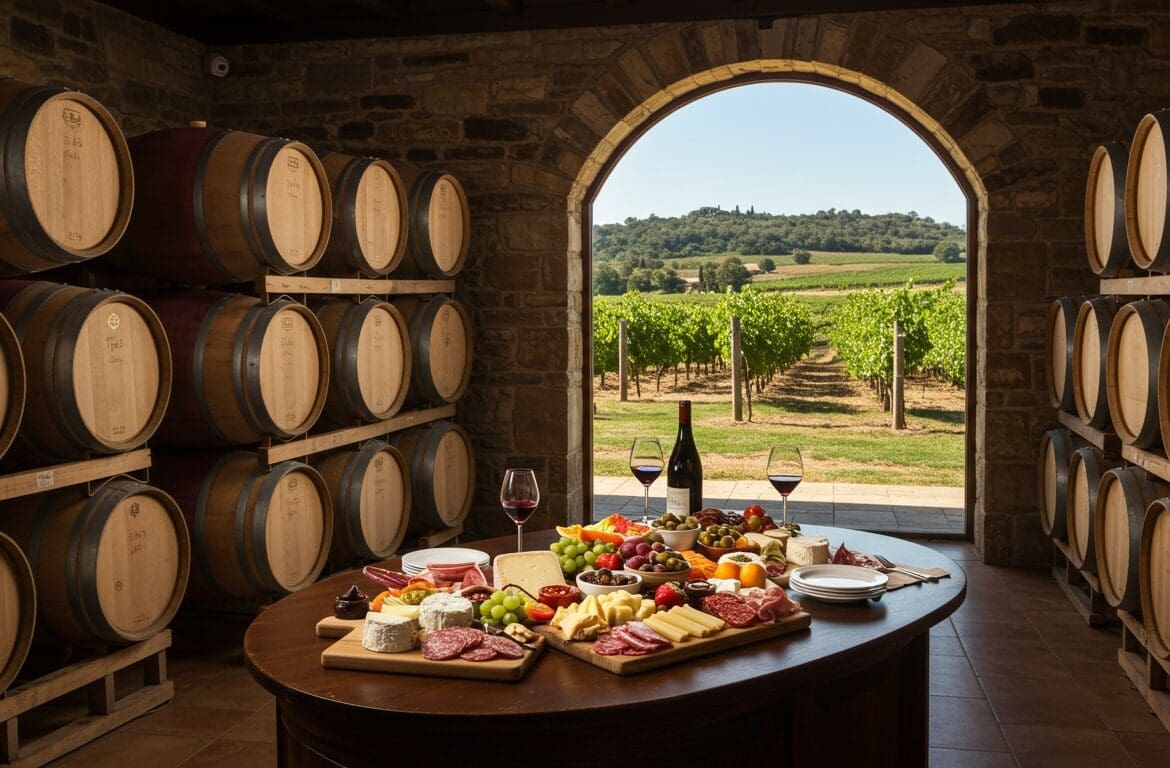
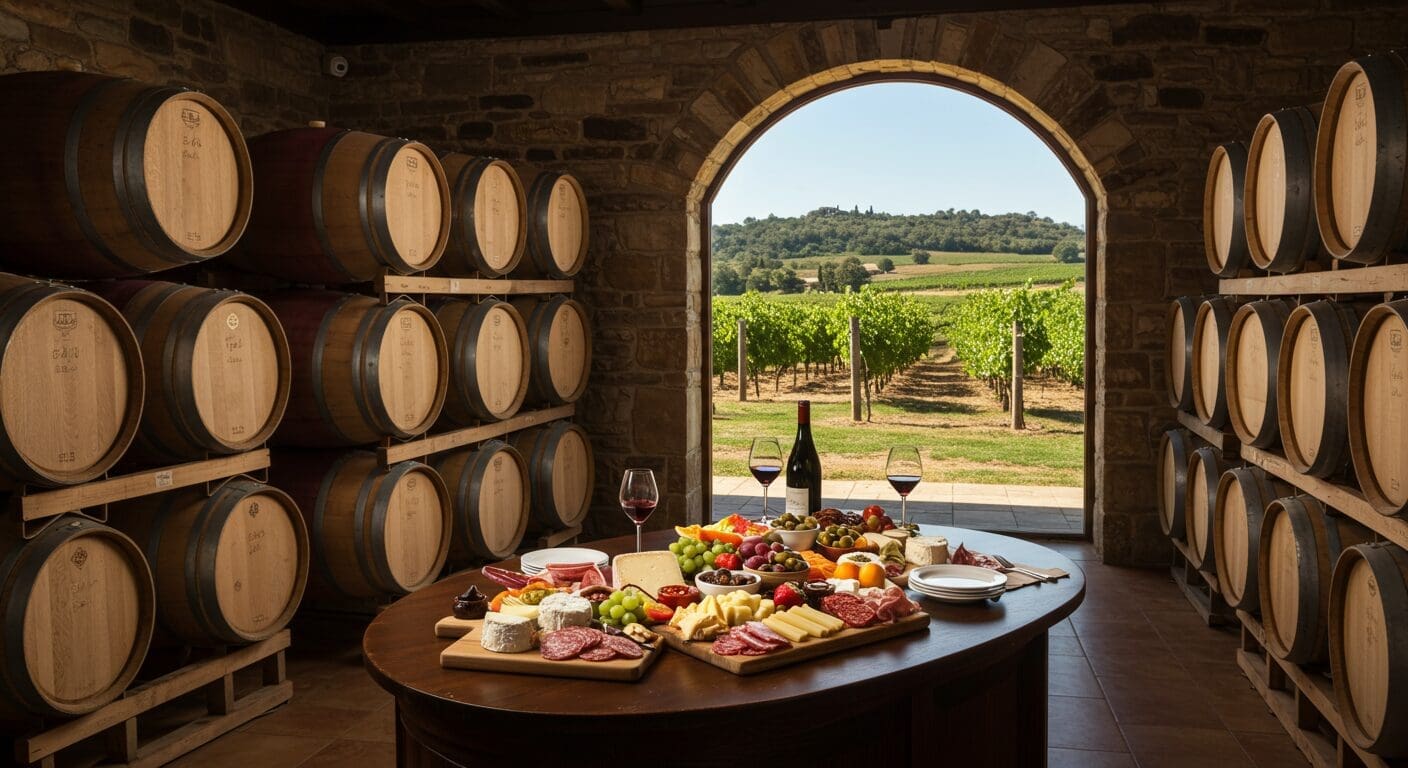
The wine estates of the Algarve are increasingly worth visiting in their own right. Quinta dos Vales, in the hills above Estômbar, is one of the region’s most compelling operations – an art-filled estate producing wines under winemaker Karl Heinz Stock that regularly overdeliver on expectations. The sculpture gardens alone justify the visit. Adega do Cantor, the winery associated with Sir Cliff Richard (yes, that one – his Vida Nova range is genuinely respected by people who had every intention of being snobbish about it), sits near Guia and welcomes visitors by appointment for tastings. Quinta da Penina and Quinta do Barranco Longo are also worth seeking out for estate visits and tastings.
A well-organised private wine tour through the interior, guided by someone who actually knows these estates and the people behind them, is one of the more rewarding half-days you can spend in the district. Many of our villa partners can arrange exactly this.
Food Markets and Local Producers
The mercados of the Algarve operate with a particular kind of organised cheerfulness. Arrive early, bring a bag, expect to spend more than you intended on things you did not know you needed. The Mercado Municipal de Loulé is the region’s finest indoor market – a Moorish-influenced building housing stalls selling local cheeses, smoked meats, fresh fish, seasonal produce, honey, and the kind of hand-labelled olive oil that arrives in your villa kitchen and quietly becomes non-negotiable. Saturday mornings here are a social event as much as a shopping trip.
The town of Tavira has its own covered market, slightly calmer and more locals-focused, where the fish section in the morning hours is a masterclass in what the Atlantic provides. Faro’s market near the waterfront is worth a visit for the atmosphere as much as the produce – the junction of local domestic life and the faint gravitational pull of the lagoon behind it.
For olive oil, the interior villages around São Brás de Alportel and Salir produce cold-pressed oils of real quality from centuries-old groves. Some estates offer visits and tastings – the combination of walking an ancient grove, understanding the harvest process and then tasting oil so fresh it is almost grassy is one of those experiences that recalibrates what you thought you knew about a kitchen staple. The Algarve’s olive oil does not have the international profile of Tuscany or Extremadura. It is, if anything, better for that.
Truffle Hunting and Wild Food Experiences
The Algarve is not the first region that springs to mind for truffle hunting, but the cork oak and cistus scrubland of the interior serra does harbour summer truffles – Tuber aestivum – and increasingly, specialist guides offer foraging experiences that combine truffle hunting with broader wild herb and plant identification. The density of aromatic herbs in this landscape – rosemary, thyme, lavender, wild fennel – makes even a walk with no particular culinary agenda smell extraordinary.
More broadly, foraging experiences in the serra offer encounters with wild asparagus, edible mushrooms (particularly in autumn), pine nuts, and the extraordinary carob – whose pods smell of chocolate and whose history in this region runs longer than the tourist trade by several centuries. Pairing a morning’s guided foraging with a private lunch cooked from what you have collected, in a farmhouse kitchen or at your villa with a local chef, is the kind of experience that tends to be described, afterwards, in very simple terms: “best meal of the trip.” Which is saying something, in a region that feeds people this well.
Cooking Classes and Culinary Immersion
Several operators around the Algarve offer cooking classes that go considerably beyond the “here is how to make pastéis de nata” tourist format, though there is nothing wrong with knowing how to make pastéis de nata. The more serious options focus on cataplana technique, traditional Algarvian seafood preparation, or the remarkable confectionery traditions of the eastern Algarve – the Dom Rodrigo, the marzipan fruits that were apparently smuggled out of convent kitchens by nuns who had better things to do than take vows of culinary silence.
Private classes, arranged through your villa concierge or directly with a local chef, allow for a more focused and personal experience – centred on dishes you actually want to cook, with market shopping included as part of the morning. The combination of a Loulé market visit followed by a private cooking class and then lunch at the table with good local wine is, frankly, a very good day by any reasonable measure.
The Best Food Experiences Money Can Buy
Some pleasures here require patience and a good contact. Others simply require a villa with the right concierge. The list of genuinely elevated food experiences in Faro District is longer than most visitors expect.
A private dinner at a wine estate, arranged after hours with a local chef and wines selected from the estate’s cellar, sets an immediate bar. So does a boat trip into the Ria Formosa at dawn to collect oysters and clams directly from the beds, returning to cook them on a beach with cold wine as the lagoon lightens around you. For the serious food traveller, a guided half-day with a local producer – an olive farmer, a cheesemaker, a carob cooperative – provides context that transforms every subsequent meal from pleasant to genuinely meaningful.
Michelin has been paying attention to this corner of Portugal. Several restaurants in the Algarve now hold stars or Bib Gourmand recognition, and the broader fine dining scene has matured considerably. That said, the most memorable meals in this region are often served in rooms with no particular design ambition, by families who have been cooking the same dishes for three generations and see no reason to change. The Michelin inspector presumably agrees. Even if they arrived in rental car, like everyone else.
For a broader introduction to this extraordinary destination – its history, towns, beaches and landscape – our Faro District Travel Guide covers the region in full.
Stay Among It All
The food and wine culture of Faro District is best experienced slowly, from a base that allows you to move through it at your own pace – a morning market here, an estate visit there, a long lunch that was supposed to be brief and became something else entirely. A private villa gives you the kitchen to bring your market finds home to, the terrace to open a local bottle on, and the space to let a day built around eating feel like exactly the right way to spend it.
Explore our collection of luxury villas in Faro District and find the right base for your own exploration of one of southern Europe’s most genuinely delicious corners.