
Best Time to Visit Florence: Month by Month Weather, Crowds & Tips
Best Time to Visit Florence: Month by Month Weather, Crowds & Tips
Florence has the particular gift of making you feel, within about forty minutes of arriving, that you have been failing at life by living anywhere else. The light here does something to stone that architects in other cities have spent centuries trying to replicate. The food is defiantly, brilliantly simple. The art is so concentrated that the Uffizi alone contains more masterpieces per square metre than most countries manage in total. But here is the thing about Florence that the glossy itineraries rarely admit: when you visit matters almost as much as the fact that you visit at all. The city in February, with fog curling off the Arno and virtually no queue at the Accademia, is a fundamentally different experience from Florence in August, when the Ponte Vecchio resembles a slow-moving queue for a theme park ride. Both have their merits. Mostly.
This guide works through the year month by month – the weather, the crowds, the festivals, the prices, and the honest truth about who each season actually suits. Consider it a conversation with someone who has been there in all of them.
Spring in Florence: March, April and May
Spring is, by almost universal agreement, the finest time to visit Florence – and the crowds have read the same reviews you have. March opens quietly, with temperatures climbing from around 10°C at the start of the month to a comfortable 15-16°C by the end. Rain is possible but rarely savage, and the city has a particular quality of light in early spring that painters have been chasing for six centuries. You begin to feel why.
April is where things get complicated. Easter brings significant crowds, a surge in prices, and the Scoppio del Carro – an extraordinary Easter Sunday tradition in which a cart filled with fireworks is detonated in Piazza del Duomo by a mechanical dove fired from the altar of the cathedral. It is as spectacular as it sounds, and the square will be absolutely rammed. If you are visiting over Easter, book everything months in advance. Everything.
May is widely considered the sweet spot of the Florentine calendar. Temperatures sit comfortably between 18-22°C, the gardens – including the Boboli and the Bardini – are in full flower, and the general atmosphere is one of civilised pleasure. Families do well in May, couples do well in May, and even larger groups find the city manageable. The Maggio Musicale Fiorentino, one of Italy’s oldest and most respected music festivals, runs through May and into June, filling the city’s theatres and concert halls with opera and orchestral performance. It is worth planning around.
Shoulder season note: the first two weeks of March and the last week of May offer genuine advantages – the weather is largely excellent and the tourist infrastructure has either not yet shifted into high gear or has not quite realised it needs to.
Summer in Florence: June, July and August
Let us be straightforward about August. Florence in August is hot – often oppressively so, with temperatures regularly reaching 34-36°C and an urban heat that the city’s stone streets and enclosed piazzas do absolutely nothing to dissipate. The crowds are at their annual peak in June and July before thinning somewhat in August, when the Florentines themselves have largely fled to the coast and a notable portion of local restaurants and shops close for the month. The city in August has a slightly surreal quality: thronged with tourists in the historic centre, oddly empty everywhere else.
That said, there are genuine pleasures in summer. The Estate Fiesolana festival brings open-air concerts and cinema to the ancient Roman theatre in Fiesole, just above the city – and an evening up there, with Florence spread out below you in the warm dark, is the kind of thing you describe to people for years. The Feast of St John the Baptist on 24th June, Florence’s patron saint’s day, brings spectacular fireworks over the Arno and the atmospheric Calcio Storico – a historical football game that is really more of a sanctioned brawl in sixteenth-century costume, and considerably more entertaining than it has any right to be.
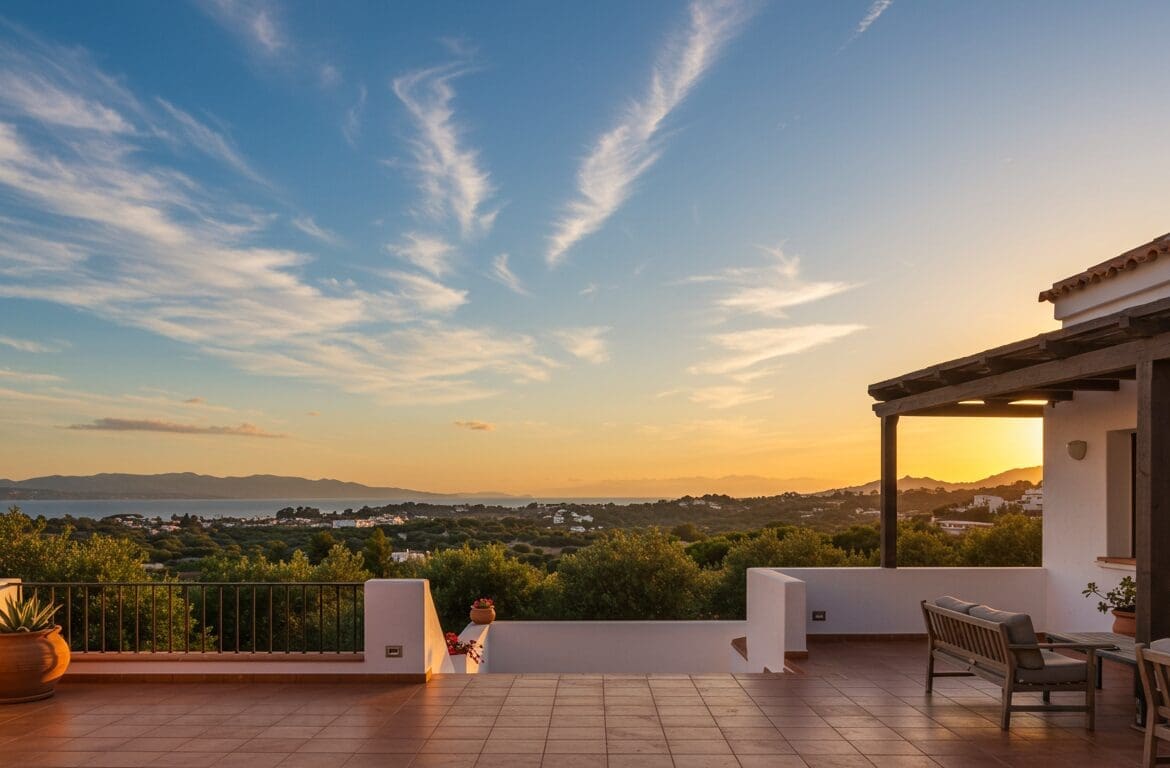
Summer suits those who want energy, late evenings, and don’t mind paying premium rates for the privilege. Villa accommodation – with private pools and the space to retreat from the heat – becomes less of a luxury and more of a practical necessity. Book well in advance. Prices peak from late June through July.
Who it suits: evening-lovers, festival-goers, and anyone whose children are restricted to school holidays. Who it doesn’t suit: anyone who wilts in the heat or believes museums should be entered without queuing for forty-five minutes.
Autumn in Florence: September, October and November
September is, quietly, the best-kept secret on the Florentine calendar. The summer crowds have thinned. The temperatures – typically 22-26°C in early September, dropping gracefully through October – are those of a benevolent Mediterranean autumn rather than the blast furnace of August. The restaurants are fully open, the local population has returned from the coast, and the city remembers what it is like to be itself rather than a backdrop for other people’s photographs.
The grape harvest is underway in the Chianti hills just beyond the city, and the olive harvest follows in October and November. Wine estates in the surrounding countryside open for tastings and events – if you are staying in a villa with any proximity to the Chianti Classico zone, the timing of an autumn visit is almost embarrassingly convenient. October’s temperatures (15-20°C) are ideal for walking, for the long lunches that Tuscan cuisine demands, and for spending an entire afternoon in the Uffizi without feeling that you are neglecting the sunshine.
November is the transition month. Rain increases, temperatures drop to 8-12°C, and the city takes on a more introspective mood. The tourist infrastructure scales back but doesn’t disappear. Prices drop noticeably. For a certain kind of traveller – one who prefers their Florence without commentary from strangers’ audio guides bleeding into the next room – November is deeply appealing. The city has a melancholy beauty in autumn mist that the Renaissance painters would have recognised immediately.
Autumn suits couples seeking atmosphere over activity, food and wine travellers, and anyone making a return visit who has already done the headline attractions in more forgiving conditions.
Winter in Florence: December, January and February
Florence in winter is underestimated to a degree that borders on the unfair. December opens with the city dressed for Christmas – markets around the Piazza Santa Croce, candlelit evening services in churches that are architectural wonders in their own right, the kind of festive atmosphere that doesn’t require artificial snow because the real thing occasionally obliges. Temperatures range from 5-10°C, which is cold but manageable with a decent coat. The week between Christmas and New Year sees a spike in visitors and prices; the first two weeks of December and the period from early January onwards are considerably quieter.
January and February are Florence’s off-season in the most honest sense. Average temperatures hover between 4-9°C. Rain is more frequent. Some smaller restaurants and hotels close for maintenance – though the major attractions, the galleries, the great churches, all remain open. And here is the case for this season, stated plainly: you can stand in front of Botticelli’s Primavera in the Uffizi with something approaching the contemplative solitude the painting was probably intended to inspire. That is not an experience reliably available in July.
Prices in January and February are at their annual low. Villa rates reflect the season. The city’s restaurants – those that remain open – are cooking for Florentines rather than for tourists, which tends to focus the mind wonderfully. February brings Carnevale, celebrated with more restraint than in Venice but with genuine local warmth, and the almond trees in the Boboli Garden begin to flower as early as mid-February – an early signal, to those paying attention, that spring is preparing to arrive.
Winter suits couples, independent travellers, and anyone whose primary interest is art, architecture, food and wine rather than sunshine. It also suits those who have been to Florence before and want to see beneath the surface.
Florence Event Highlights: What’s On Through the Year
A brief calendar of what to know before you book. The Scoppio del Carro takes place Easter Sunday in Piazza del Duomo – spectacular, crowded, unmissable if you can bear the crowds. The Maggio Musicale Fiorentino runs May to June for world-class opera and classical music. The Feast of St John the Baptist (24th June) brings the Calcio Storico and fireworks. Estate Fiesolana runs July to August with open-air events in Fiesole. The grape harvest across the Chianti hills takes place through September and October. Carnevale in February offers a more intimate alternative to Venice’s theatrical extravagance.
For a fuller picture of what Florence has to offer beyond the seasonal calendar – the neighbourhoods, the restaurants, the less-visited corners – the Florence Travel Guide covers the city in the depth it deserves.
So: When Should You Actually Go?
For the ideal balance of weather, open restaurants, manageable crowds and price, the honest answer is: the second half of April (avoiding Easter itself), all of May, all of September, and the first half of October. These windows offer Florence at or near its best without requiring the kind of advance planning usually associated with military logistics.
For those whose calendars are not their own – families with school-age children, those locked into summer or Christmas breaks – the answer is to book early, book the right accommodation, and build the heat or the cold into the experience rather than fighting it. A private villa with a pool in July is a different kind of trip to a boutique city stay in April, but it is not a lesser one. It simply requires a different approach.
For the genuinely adventurous, January and February remain the best-kept secret in Italian travel. But perhaps don’t tell too many people.
Where to Stay: Luxury Villas in Florence
However you time your visit, the right base transforms it. Florence and its surrounding hills offer some of the most exceptional private villa accommodation in Italy – properties that combine the city’s extraordinary architectural heritage with the space, privacy and comfort that make a trip genuinely restorative rather than merely impressive. Whether you are looking for a palazzo in the historic centre, a villa on the Fiesole hillside with views across the city, or a countryside estate within easy reach of the galleries and restaurants, the options repay careful consideration.
Browse our curated collection of luxury villas in Florence and find the property that suits both your party and the season you have chosen. Our team knows these properties personally and can advise on the timing, the logistics, and the small details that separate a good trip from an exceptional one.
What is the best month to visit Florence to avoid crowds?
September and early October are widely considered the best months for avoiding the peak summer crowds while still enjoying warm, settled weather. January and February are the quietest months of all, with significantly reduced visitor numbers and lower prices – ideal if your primary interests are art, food and atmosphere rather than sunshine. The first two weeks of March also offer a genuinely quiet window before spring tourism builds momentum.
Is Florence worth visiting in winter?
Yes – particularly for travellers whose focus is art, architecture and food rather than outdoor exploration. Florence’s world-class galleries and churches are open year-round, and in January and February you can experience them with a level of quiet contemplation that is simply not available in the summer months. Prices for accommodation are at their lowest, restaurant reservations are far easier to secure, and the city has a genuinely local atmosphere. Temperatures range from around 4-9°C, so a good coat is essential, but the cold is rarely severe.
When is Florence hottest and should I avoid visiting in August?
July and August are Florence’s hottest months, with temperatures regularly reaching 34-36°C and urban heat that can feel punishing in the historic centre. August also sees many local restaurants and shops close as Florentines head to the coast. That said, August is not without appeal – major festivals take place, evenings are warm and long, and villa accommodation with private pools makes the heat entirely manageable. If you must visit in summer, July tends to offer a better balance than August: the city is fully operational, the heat is significant but slightly less extreme, and the festive atmosphere around the Feast of St John (24th June) extends into early July.