
Florida Travel Guide: Best Restaurants, Activities & Luxury Villas
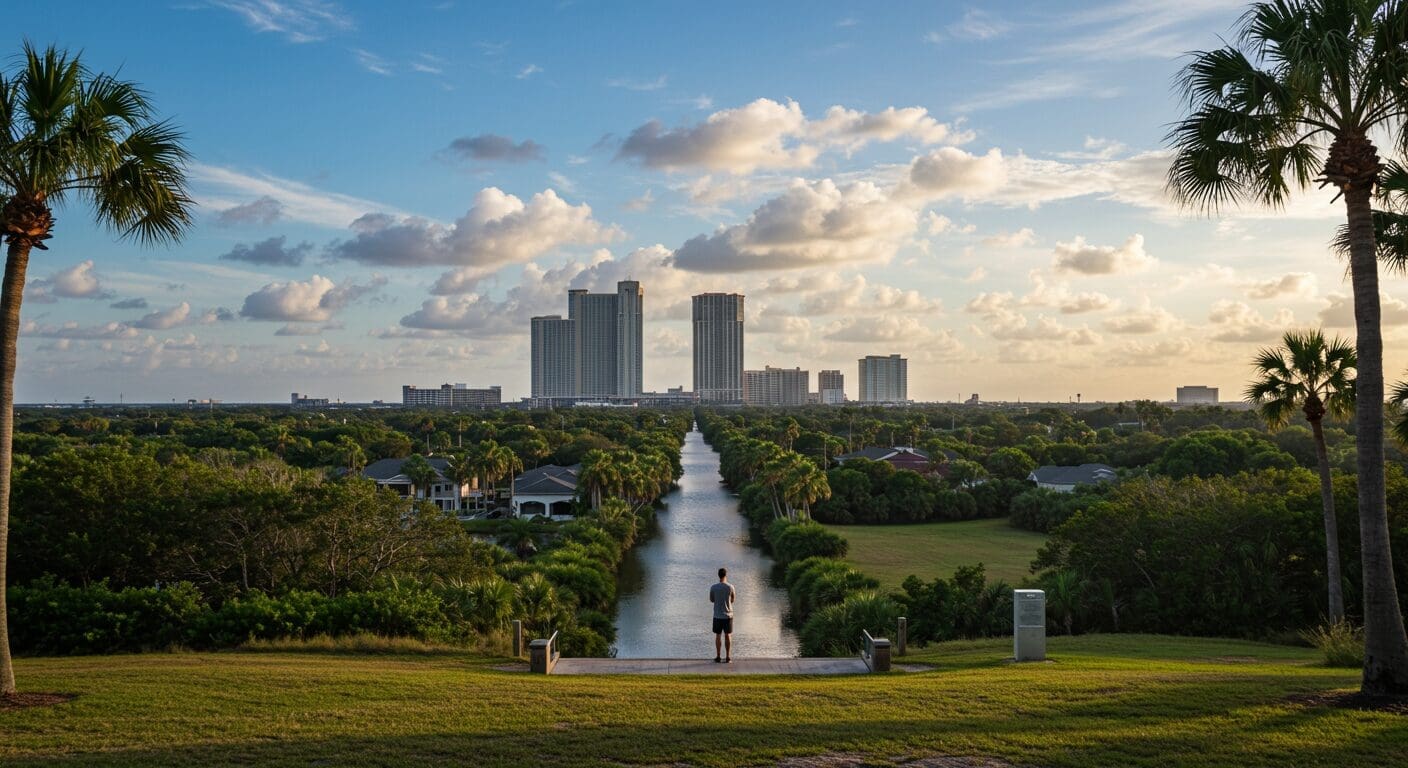
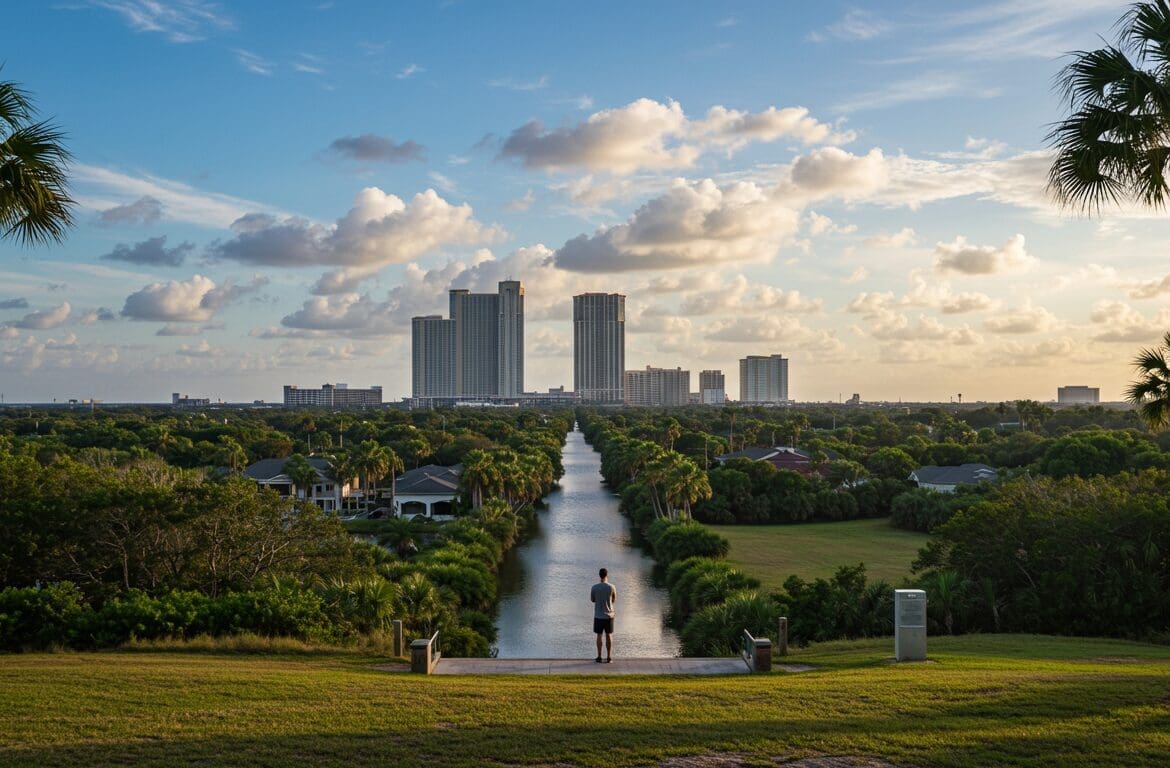
Florida is one of those places that arrives with a lot of baggage – and we don’t mean the matching luggage set on the carousel at Orlando International. It comes pre-loaded with associations: theme parks, retirees, alligators on golf courses, and a certain strain of chaotic news headline that has become its own cultural genre. All of which is real, and none of which tells the full story. Because once you get past the received wisdom and actually spend time here – really spend time, in the right places, at the right pace – Florida reveals itself as something far more interesting and far more beautiful than its reputation suggests. The light alone is worth the flight. That particular quality of subtropical brightness, bouncing off water at every turn, turning the sky shades of pink and violet each evening that would look overwrought in a painting. Florida is a place that rewards those willing to look past the obvious. And for villa travellers in particular, it rewards very handsomely indeed.
Why Florida for a Luxury Villa Holiday
The short answer is space. The more complete answer involves space, warmth, water access, and a villa market that has evolved – particularly around areas like the Gulf Coast, the Florida Keys, and the Orlando corridor – into something genuinely world-class. Florida’s villa rental infrastructure is among the most sophisticated in the United States, which is saying something for a country this size.
What a private villa gives you in Florida that a hotel simply cannot is the full, unhurried use of that extraordinary landscape. A private pool under the Florida sun, a shaded terrace from which to watch pelicans conduct their ungainly dives, a dock where you can have a morning coffee while a heron stands six feet away regarding you with magnificent indifference. Hotels have pools, yes – usually shared with forty-seven other guests and accompanied by poolside music that was never anyone’s first choice. A villa is something else entirely.
There is also the practical case. Florida is a large state – roughly the size of England, which surprises people – and having a well-positioned villa as a base means you can move through the landscape on your own terms. You are not beholden to shuttle schedules or checkout times. The kitchen is yours. The terrace is yours. The evenings, which in Florida are quite genuinely spectacular, are entirely yours.
And then there is the sheer variety. Gulf Coast villas with direct beach access. Keys properties perched over turquoise flats where the water changes colour by the hour. Waterfront homes in the Miami area with boat docks and rooftop terraces. Orlando-area estates with games rooms, home theatres, and enough bedrooms to house an extended family without anyone needing to negotiate over the bathroom. The breadth of the market means there is something for almost every kind of traveller, at almost every scale of ambition.
The Best Regions in Florida for Villa Rentals
Florida is not one destination – it is several, stacked together and held in place by the warm Atlantic and Gulf waters on either side. Understanding which region suits you is the most important decision you will make before you book anything.
The Gulf Coast – running from Naples in the south through Fort Myers, Sarasota, and up toward Tampa Bay – is where you find the white-sand beaches that appear in the photographs. The Gulf side is calmer, warmer, and shallower than the Atlantic coast, which makes it exceptional for families and for those whose idea of a beach day involves actual relaxation rather than battling surf. Naples and Sarasota, in particular, have a quietly sophisticated quality to them – good restaurants, strong arts scenes, and a residential wealth that has attracted serious villa architecture. Sarasota has a particular charm: a city that takes its cultural life seriously, with a thriving arts calendar and a food scene that has grown significantly over the past decade.
The Florida Keys are in their own category altogether. This improbable string of islands connected by a single highway stretching 113 miles south-southwest from Miami feels like nowhere else in the country. The light is extraordinary – flat and bright, reflected endlessly off the water. The pace is slow in a way that feels earned rather than affected. The snorkelling and diving are world-class, the fishing is legendary, and the sunsets over the Gulf side are the kind of thing people move here for and never quite get over. Key West at the end of the chain is its own character entirely: literary, eccentric, and extremely well-acquainted with rum. Villas in the Keys tend to be on the water, often with private docks, and the experience of waking up to that particular turquoise nothing is, frankly, difficult to beat.
The Miami area offers something different again – urban energy combined with extraordinary natural setting. Miami Beach, Coral Gables, Coconut Grove, and the upper keys bring a sophistication and cultural intensity that sets them apart from the rest of Florida. Villa rentals here tend to be architectural statements: mid-century modern properties, contemporary waterfront homes with infinity pools, design-led spaces in quiet residential streets. For those who want their villa holiday to include serious restaurant evenings, gallery visits, and the ability to walk to a cocktail bar, this is the region.
The Orlando area has perhaps the largest and most developed villa market in the entire state, driven initially by families wanting more space and privacy during theme park visits but having evolved into something much broader. The villas here – particularly in communities like Reunion Resort or Windsor Hills – can be genuinely spectacular, with private pools, spa facilities, home cinemas, and resort-level amenity access. Orlando itself is more interesting than its theme-park reputation suggests, with a growing independent food and arts scene, though the primary draw remains the sheer critical mass of entertainment options in the surrounding area.
When to Visit Florida
Florida’s climate is honest about its extremes in a way that its tourism marketing sometimes is not. The state divides roughly into two seasons: a warm, dry winter (roughly November through April) and a hot, extremely humid, frequently stormy summer. The sweet spot for most visitors – particularly those coming from the United Kingdom or northern Europe – is December through April, when temperatures sit comfortably in the low-to-mid twenties Celsius, the humidity is manageable, and the afternoon thunderstorms that characterise summer are largely absent.
January and February can occasionally surprise visitors from warmer climates with cooler evenings – not cold by any England standards, but cool enough that a villa with a heated pool becomes a rather sensible choice. March brings spring break, which transforms certain coastal areas – particularly Fort Lauderdale, Panama City Beach, and parts of Miami Beach – into something considerably louder and more crowded than their usual selves. If you are not twenty-two years old, plan accordingly.
Summer in Florida is an exercise in commitment. The heat from June through September is serious and sticky, the hurricane season (officially June through November, peaking August to October) requires attention, and the afternoon storms are reliable enough to plan around. That said, the summer also brings lower prices, emptier beaches, and a certain local authenticity that the winter crowds displace. If you are comfortable with heat and flexible about afternoons, it has its own rewards. September and October are perhaps the riskiest months in terms of weather uncertainty and are worth approaching with appropriate travel insurance and a philosophical disposition.
Getting to Florida
Florida is extremely well-connected internationally, which is one of the less-celebrated reasons it works so well as a villa destination. Orlando International Airport handles an extraordinary volume of transatlantic traffic, with direct flights from major UK and European airports year-round. Flight times from London sit at around nine hours – long enough to justify the journey, short enough not to be punishing. Miami International is equally well served and is the natural entry point for Keys and South Florida visits. Tampa International, often overlooked, is a superb airport (efficient, well-organised, and relatively calm by American standards) and sits ideally for Gulf Coast destinations.
Once in Florida, a hire car is not optional – it is infrastructural. The state is built around the automobile in a way that has never fully apologised for itself, and trying to navigate the Gulf Coast or the Keys without one would be an exercise in frustration. The roads are generally good and traffic, outside Miami and Orlando’s urban arteries, is manageable. The drive down the Overseas Highway to Key West along US-1 is one of the great American road experiences – forty-two bridges, blue water on both sides, and an increasing sense that you are leaving the mainland behind in more than just the geographic sense.
Food & Wine in Florida
Florida’s food culture has evolved considerably and unevenly, which makes it genuinely interesting to navigate. At one end of the spectrum you have the tourist strips of International Drive or Clearwater Beach, where the dining options are largely functional. At the other end you have something much more compelling: a state whose proximity to the Caribbean, Central and South America, and the Atlantic and Gulf fisheries has produced a culinary culture that is distinctive, diverse, and, at its best, quite brilliant.
The seafood is the starting point and it is excellent. Stone crab claws – available fresh from October through May – are a Florida institution worth planning a visit around. The season’s opening is treated with something approaching reverence by those who know. Grouper, snapper, mahi-mahi, and Florida lobster (smaller and sweeter than their Maine cousins) appear on menus throughout the state, and when they are sourced properly and treated simply, they are outstanding. Key West is particularly good for seafood, as you would hope given its position at the end of a fishing archipelago.
Miami’s food scene stands apart from the rest of the state – a city that has always eaten well and now eats exceptionally. The influence of Cuban cuisine is everywhere and runs deep: not the watered-down version but the real thing, with proper ropa vieja, arroz con pollo, and Cuban sandwiches pressed in places that have been doing exactly this for decades. The Design District and Wynwood have attracted serious restaurant talent, and the city’s position as a gateway to Latin America means an extraordinary breadth of regional cuisines represented with genuine authenticity.
Wine is not Florida’s native strength – the climate is not suited to viticulture, and the local wine scene reflects this honestly. But the cocktail culture is exceptional: the mojito in Miami, the frozen drinks in Key West, and the farm-to-glass craft cocktail movement that has taken hold in Sarasota and St. Petersburg. Florida craft beer has also grown significantly, with Tampa in particular developing a brewery scene worth exploring.
Culture & History of Florida
Florida’s history is older and more layered than the Disney billboard on I-4 might suggest. The state was inhabited for at least twelve thousand years before European contact, with the Calusa, Timucua, and Apalachee peoples developing sophisticated civilisations that the Spanish, arriving in 1513 with Ponce de León and his probably-mythological Fountain of Youth quest, would substantially disrupt. Florida passed between Spanish and British control multiple times before becoming a US territory in 1821 and a state in 1845. The Seminole Wars – three of them, stretching across much of the nineteenth century – were among the longest and most costly conflicts between the United States government and Native American nations, and the Seminole Tribe of Florida today remains one of the few tribes never to have signed a peace treaty with the federal government. That is a history worth knowing.
Culturally, Florida’s contributions are frequently underrated. The state produced some of the most significant moments of the American civil rights movement – the Tallahassee bus boycott in 1956, the sit-ins in Tallahassee and Jacksonville. It gave the world the Kennedy Space Center and the American space program’s most defining moments. Zora Neale Hurston was born in Notasulga but raised in Eatonville, Florida – the first incorporated African-American municipality in the country – and the literary tradition of Florida runs deep and strange, from Hurston through Harry Crews and Carl Hiaasen, whose novels function, among other things, as a reliable guide to what Florida is actually like when nobody is performing for the cameras.
Sarasota has the Ringling Museum – a genuinely world-class art collection housed in a Venetian Gothic palace built by the circus magnate John Ringling, which is one of those sentences only Florida could produce. Miami has the Bass Museum, the Pérez Art Museum Miami, and the Wolfsonian, which has one of the finest collections of design and decorative arts in the country. St. Augustine, in the north of the state, is the oldest continuously inhabited European-established settlement in the continental United States and carries that history with considerable atmospheric weight.
Activities Across Florida
The water defines what Florida is for active travellers, and the options across it are extraordinary. Snorkelling and diving the Florida Reef – the third-largest coral reef system in the world, running along the Keys – is a genuinely bucket-list experience, and one that carries some urgency given the reef’s vulnerability to warming water temperatures. The diving sites range from accessible shallow-water reefs to deliberate wrecks, including the USS Spiegel Grove, sunk intentionally to create an artificial reef and now covered in remarkable marine life.
Kayaking through the mangrove tunnels of the Everglades or the Ten Thousand Islands area off the Gulf Coast is one of the more quietly transcendent things you can do in Florida. The landscape is primordial and disorienting – a flat world of water, light, and improbable bird life. The roseate spoonbill, which looks like something designed by committee after a long lunch, is found here in numbers. So are manatees, which are Florida’s great gift to the concept of gentle giants.
For those whose idea of activity runs more to the terrestrial, Florida golf is exceptional. The state has more golf courses per capita than almost anywhere else in the country, and the quality at the top end – Seminole Golf Club near North Palm Beach, TPC Sawgrass in Ponte Vedra Beach (home of The Players Championship) – is genuinely world-class. TPC Sawgrass’s 17th island hole is one of the most photographed golf holes on earth and, by most accounts, one of the most nerve-inducing.
Cycling in Florida deserves more attention than it typically receives. The Keys have the Overseas Heritage Trail, which runs 106 miles along former railway beds and offers the most extraordinary cycling scenery you will find at sea level. Sanibel Island, on the Gulf Coast, has an extensive off-road cycle path system and is additionally famous for shell collecting in a way that becomes faintly competitive once you are there.
Family Holidays in Florida
Florida is, by most objective measures, the family holiday destination of the United States. The infrastructure for travelling with children is so well-developed that it occasionally feels like the entire state was designed backwards from the question of what a ten-year-old might enjoy. Which, in certain areas, is essentially true.
The theme parks around Orlando represent the most concentrated entertainment offering on the planet: Walt Disney World (four theme parks, two water parks, and a shopping district the size of a small town), Universal Orlando (now spanning three parks including Epic Universe, which opened in 2025 and immediately became one of the most talked-about theme park developments in a generation), SeaWorld, and a constellation of water parks. Done well – which is to say, with good accommodation, realistic expectations about queuing, and a villa to retreat to each evening – a theme park visit with children is a genuinely joyful experience. Done badly, it is an expensive study in exhaustion. The villa makes the difference.
Beyond Orlando, Florida’s beaches are exceptional for families: the calm Gulf waters are ideal for young children, the marine life offers constant entertainment, and activities like paddleboarding, snorkelling, and kayaking scale down to younger ages with minimal fuss. Dolphin sightings on boat trips are almost guaranteed along the Gulf Coast – one of those wildlife encounters that remains reliably thrilling regardless of how many times you have seen it.
The practical side of family travel in Florida is straightforward: car hire is easy, the roads are well-signed, supermarkets are large and well-stocked, and the general attitude toward travelling families is warm and accommodating. The American restaurant culture of unlimited refills and portions designed for competitive eaters is, to be honest, more comprehensible when you have teenagers to feed.
Practical Information for Florida
The currency is the US dollar, accepted everywhere with an enthusiasm that will remind you this is a country that takes commerce seriously. Tipping culture is embedded and significant: 20% in restaurants is the standard, with 18% considered the acceptable floor, and service industry workers depend on gratuities in a way that makes cultural confusion on this point somewhat costly for them. Uber and Lyft operate extensively in urban areas, but as noted, a hire car is essential outside the cities.
Florida operates on Eastern Time (EST/EDT), five hours behind the United Kingdom in summer and six in winter – which means early morning calls home and the rather pleasing ability to watch British news before most Americans are awake. The electricity standard is 110-120V with American-style flat two-pin plugs; European adaptors are widely available at airports and supermarkets. Healthcare in the United States is, as is widely understood, expensive and complex: comprehensive travel insurance is not optional, it is fundamental.
Mobile phone coverage is generally excellent throughout the state, though it can thin out in the more remote Everglades areas and on some of the smaller Keys. Water is safe to drink from the tap, though the taste varies significantly by area – bottled water is widely available and inexpensive. Florida is, broadly speaking, very accessible for visitors with mobility requirements, having had ADA compliance requirements for long enough that the infrastructure is well established.
One note on wildlife that visitors sometimes underestimate: Florida has alligators, and they inhabit most bodies of freshwater, including retention ponds, decorative lakes, and the waterways around villa developments. They are not generally dangerous if treated with sensible respect and distance – the key rule being never to feed them and never to approach them near water’s edge. The alligator on the golf course is a local amenity, not an invitation. This will make sense when you see one.
Luxury Villas in Florida
The luxury villa market in Florida has matured into something genuinely exceptional – a breadth and depth of property that can match almost any vision of what a private villa holiday should be. Whether that vision involves a Gulf-front property where the sliding doors open directly to a white-sand beach, a Keys home on stilts over turquoise water with a private dock and a kayak, a Miami architectural statement with rooftop terrace and city views, or an Orlando estate large enough to host three generations in comfortable parallel – the Florida market delivers it, and delivers it at a standard of finish and amenity that has risen consistently over the past decade.
The private pool, in Florida, is not a luxury addition – it is the natural centrepiece of the villa experience. Heated where necessary, overlooking water where possible, and shaded by palm or frangipani where the afternoon sun requires management. Evenings on a Florida villa terrace, with the temperature dropping graciously and the sky making its nightly production of colour, are among the more persuasive arguments for this style of travel. You are not in a hotel corridor. You are not sharing a sun lounger schedule. You are, in the fullest sense, in your own piece of Florida – which turns out, in the right circumstances, to be quite a remarkable place to be.
Explore our full collection of luxury villas in Florida with private pool and find the perfect property for your next escape.
What is the best region in Florida for a villa holiday?
It depends largely on what you want from the trip. The Gulf Coast – particularly the Naples, Fort Myers, and Sarasota areas – offers the finest beaches, calm warm waters, and a relaxed sophisticated atmosphere that suits couples and families equally well. The Florida Keys deliver something more unique: water-surrounded properties with private docks, extraordinary snorkelling and diving, and a pace of life that has genuine restorative qualities. Miami and South Florida suit those who want urban energy alongside private luxury – architectural villas, excellent restaurants, and cultural depth. The Orlando corridor is the natural choice for families planning theme park visits, with a villa market that has evolved far beyond its origins to offer genuinely high-specification properties with exceptional amenity. If forced to choose a single region for a first-time villa visitor, the Gulf Coast around Sarasota or Naples offers the broadest appeal: beautiful beaches, good food, a warm and unpretentious atmosphere, and villa stock that has reached a very high standard.
When is the best time to visit Florida?
For most international visitors, particularly those travelling from the UK or northern Europe, the period from mid-November through April represents the optimal window. Temperatures are warm but not oppressively humid, typically in the low-to-mid twenties Celsius, and the afternoon thunderstorms that characterise the summer months are largely absent. December through February offers reliable sunshine with occasionally cool evenings – comfortable villa pool weather during the day, pleasant terrace evenings. March is excellent on the Gulf Coast and in the Keys but can be crowded in certain coastal areas during spring break. If budget is a consideration, May and early June offer a transitional period with lower prices and manageable conditions before the full summer humidity arrives. September and October are the months to approach with most caution: peak hurricane season, high humidity, and a level of weather unpredictability that requires both good travel insurance and flexibility. The summer months (June through August) have their advocates – prices are lower, certain beaches are quieter, and the afternoon storms, while reliable, are usually brief and dramatic rather than day-ruining.
Is Florida good for families?
Honestly, yes – with some caveats. Florida offers more family-focused activity per square mile than almost anywhere else in the world. The theme parks around Orlando are the obvious draw, and when managed well – with a private villa as your daily retreat rather than a hotel corridor – the experience can be genuinely magical rather than merely expensive and exhausting. Beyond Orlando, the Gulf Coast beaches are ideal for children: calm shallow water, safe swimming, and marine life encounters (dolphins, manatees, sea turtles) that are reliably thrilling. The practical infrastructure for family travel is excellent: car hire is simple, supermarkets are large and well-stocked, and Americans have a broadly positive attitude toward travelling children that makes day-to-day logistics easier than in many destinations. The villa itself is the key advantage for families: private pool, space for children to decompress after high-stimulation days, a kitchen for early dinners and breakfast flexibility, and the ability for adults to have actual evenings once younger travellers are asleep. The one honest caveat is budget: Florida can be an expensive family destination, particularly around theme parks where the ancillary costs accumulate with impressive speed. Plan carefully, choose your villa well, and it repays the investment considerably.
Why choose a luxury villa in Florida over a hotel?
The case for a villa in Florida is stronger than almost anywhere else, for a specific reason: the landscape here is best experienced from within it rather than from a hotel room overlooking it. A waterfront villa with a private pool, a dock, or direct beach access gives you a relationship with the Florida environment – the light, the water, the wildlife, the extraordinary evenings – that a hotel, however well-appointed, cannot replicate. A hotel gives you a room. A villa gives you a home in the landscape. For families, the practical advantages are significant: space for children to move freely, a kitchen that means you are not dependent on restaurants for every meal, a private pool that doesn’t require the 7am towel-on-sunlounger negotiation. For couples, the privacy and intimacy of a villa – particularly a Keys or Gulf Coast property where the nearest neighbour is at a comfortable distance – creates a quality of holiday that is simply different in kind from shared resort living. And for groups travelling together, a villa allows everyone to gather under one roof, share meals, and spend evenings together without the dispersal that hotels inevitably create. Florida’s villa market has reached a standard of finish and amenity – outdoor kitchens, home cinemas, spa facilities, concierge services – that means you are not trading down from a luxury hotel. In most cases, you are trading considerably up.