
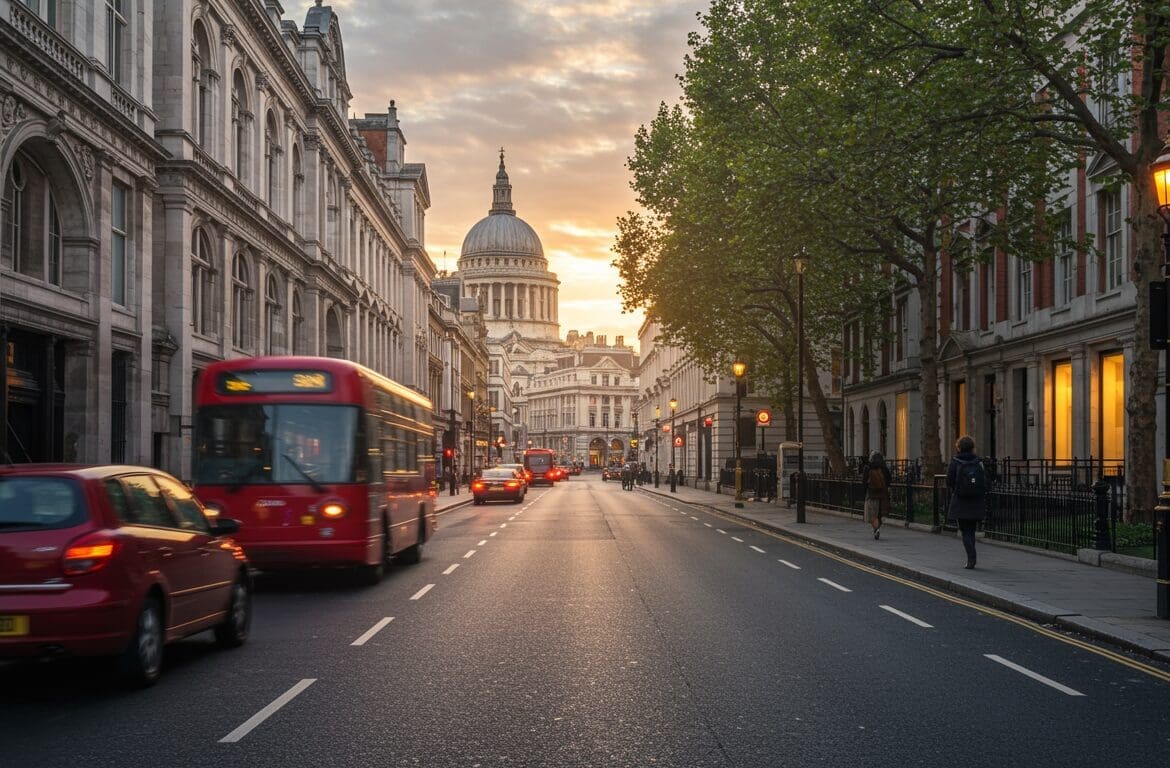
Greater London Travel Guide: Best Restaurants, Sightseeing & Luxury Villas
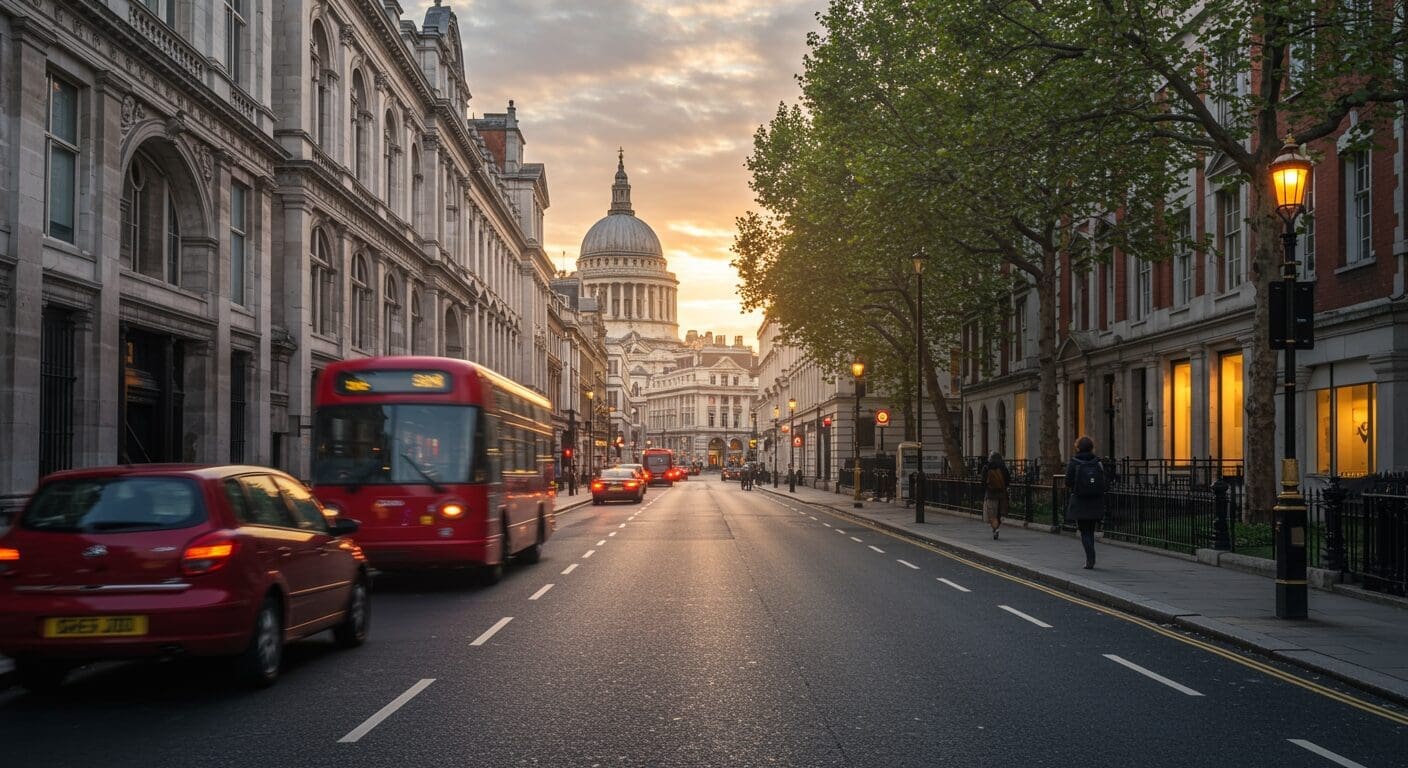
There is a particular quality to London in autumn that travel writers have been failing to adequately describe for centuries, so one more attempt won’t hurt. The plane trees shed their bark in great peeling patches, like the city is quietly refreshing itself. The parks turn amber and rust. The light, when it arrives, arrives sideways – golden and conspiratorial, illuminating things it ignores the rest of the year. Londoners, accustomed to being underwhelmed by their own city, suddenly remember why everyone else keeps showing up. This is the season when the city stops performing and starts simply being – and what it is, beneath the tourist maps and the double-deckers and the extraordinary quantity of Union Jack merchandise, is one of the most layered, alive, and quietly brilliant places on earth. A luxury holiday in Greater London is, in almost every meaningful sense, not a holiday at all. It is an education. A provocation. Occasionally a very good meal.
Getting to London Without the Faff (or the Heathrow Queues)
Greater London is served by six airports, which sounds like abundance until you are stuck in traffic on the M25 wondering if you have accidentally driven into a car park. Heathrow remains the main international hub – vast, occasionally chaotic, and yet undeniably efficient once you know how to move through it. Take the Elizabeth line directly into central London: it is fast, frequent, and represents one of those rare moments when British infrastructure genuinely delivers. From Paddington to the heart of the city in under thirty minutes. Remarkable.
Gatwick, to the south, is the second-largest option and connects well to Victoria via the Gatwick Express – forty-five minutes if the gods are smiling. London City Airport is the insider’s choice for those arriving from European financial centres: it sits a short DLR ride from Canary Wharf and Shoreditch, and the terminal is small enough that you can be in a taxi before your luggage has had a chance to get lost. Stansted and Luton serve the budget carriers and require either patience or a very good book on the coach.
Once in the city, the question of getting around is essentially a question of commitment. The Tube is the spine of the city – ancient, warm in summer, reliably interesting in terms of fellow passengers. Black cabs are the luxury option: no app required, infallible knowledge of the city, and drivers who will either ignore you completely or tell you everything you need to know about local politics. Both are valid outcomes.
A City That Eats Extraordinarily Well (and Knows It)
Fine Dining
London’s restaurant scene has spent the last decade quietly dismantling the received wisdom that this is a city that does things properly everywhere except at the table. The city now has more Michelin stars than almost anywhere outside France and Japan – and more importantly, it has a depth of genuinely exciting cooking that no star count can fully capture.
In Mayfair, Row on 5 on Savile Row is the kind of restaurant that makes you wish you had a more sophisticated vocabulary for describing food. Every dish, every experience, every ingredient arrives with a story – and the stories are brilliant. Named the best meal of 2025 by multiple critics, it is the only restaurant on London’s most famous tailoring street, and it wears that distinction with real intelligence. The attention to detail is frankly alarming. In the best possible way.
Also in Mayfair, Lillibet’s has done something that Mayfair restaurants notoriously struggle with: it has created a glamorous setting with genuine soul. Restaurateur Ross Shonhan – the mind behind Bone Daddies and former executive chef at Nobu – has built a seafood restaurant that packed out from its earliest days for very good reason. Order the coal-roasted oysters. David Ellis of The Standard gave it five stars, and he is not easily impressed.
Over in Farringdon, Bouchon Racine is widely considered the finest French bistro in the city – which is saying something given that this city has been trying to do French restaurants properly for about a hundred and fifty years. The room is lived-in and seductive. Everything on the menu feels designed to be dunked or glugged. Getting a reservation requires persistence – but this is exactly the sort of restaurant that rewards it.
Where the Locals Eat
At Borough Market, Oma has already established itself as a serious destination. David Carter – the chef behind Smokestak and Manteca, two of London’s most beloved restaurants – has turned his attention to something broadly Greek, then took that Greek foundation and let it roam: across the Ionian islands, through the Levant, into the Balkans, with what appears to be a South American detour somewhere along the way. The salt cod xo with labneh is considered by many to be the best dip in London. Start with a clementine gimlet and surrender to wherever the menu takes you.
Borough Market itself remains one of the great food experiences of any European city – chaotic on a Saturday morning, genuinely extraordinary in its range. Come early, come hungry, and resist the urge to photograph everything before eating it.
Hidden Gems Worth Seeking Out
Belly Bistro was named the best new restaurant of 2025 by Time Out, and the praise is entirely deserved. This Filipino restaurant is pure, joyful, ambitious cooking – tempura cod pandesal, smoked aubergine with bagong shrimp paste, smoked trout kinilaw that riffs brilliantly on the idea of ceviche. Every dish is indeed photogenic, but the rarer achievement is that everything tastes as good as it looks. A combination less common than it should be. London’s Filipino food scene has been quietly building for years; Belly Bistro is its most vivid expression yet.
The Neighbourhoods That Actually Make London London
Greater London covers more than six hundred square miles and contains within it dozens of distinct villages, towns, and urban ecosystems, each with its own character and its own idea of what a good Saturday looks like. The mistake most visitors make is treating it as a single, unified place. It is not. It is a federation of neighbourhoods held together by the Tube map and a shared talent for queuing.
Mayfair remains the spiritual home of luxury in the city – Berkeley Square, the Connaught, the galleries of Cork Street, the tailors of Savile Row. It is discreet and expensive and very good at both. Neighbouring Marylebone has become one of London’s most liveable urban villages: independent shops on Marylebone High Street, the Wallace Collection tucked away behind it, restaurants of real quality, and a pace of life that feels almost manageable by London standards.
Shoreditch and Hackney represent a different register entirely – east London at its most energetic, where galleries, markets, coffee shops with very specific opinions about extraction methods, and restaurants of genuine ambition share streets with warehouses and Victorian terraces. Notting Hill delivers its particular fantasy of whitewashed townhouses and Portobello Road on a Saturday morning. Chelsea is quietly magnificent if you can afford the parking. Greenwich, out to the east, offers the National Maritime Museum, the Observatory, and the particular pleasure of standing on a meridian line and feeling vaguely significant.
For the serious luxury holiday in Greater London, the triangulation of Mayfair, Marylebone, and Belgravia covers an enormous amount of cultural, culinary, and retail ground within a walkable area – which in London counts as something close to a miracle.
What to Actually Do (Beyond Standing in Front of Famous Things)
London’s great advantage as a destination is that the ratio of genuinely worthwhile things to do is extraordinary, and most of the best of them are free. The National Gallery on Trafalgar Square contains one of the finest collections of European painting in the world and charges absolutely nothing for the privilege of walking through it. The Tate Modern on the South Bank has transformed a former power station into one of the world’s leading contemporary art museums. The Victoria and Albert Museum is, for anyone with an interest in design, craft, or the decorative arts, close to paradise. All free. London’s public generosity in this regard is remarkable and rarely sufficiently celebrated.
The South Bank walk – from Westminster Bridge past the Tate Modern, Borough Market, and down toward Tower Bridge – is one of the finest urban walks in Europe. It requires no planning, no booking, and no budget. On a clear autumn day, with the Thames doing its grey-green thing beside you and St Paul’s visible across the water, it is quietly magnificent.
For theatre, the city’s offering is essentially unmatched outside of New York. The West End carries the major productions; the National Theatre on the South Bank is one of the finest theatrical institutions in the world; and the smaller houses – the Almeida, the Donmar, the Bush – regularly produce work that ends up in the conversation for years afterward. Book ahead. Always book ahead.
Kew Gardens deserves more attention than it gets from first-time visitors who are busy ticking off the Tower of London. The Royal Botanic Gardens cover three hundred acres and contain within them glasshouses, ancient trees, a treetop walkway, and a general sense of calm that feels almost miraculous given that you are fifteen minutes from Heathrow’s flight path.
Active London: Where to Work Off the Bouchon Racine
Greater London is considerably more active than its reputation for rain and sitting in pubs might suggest. The Royal Parks – Hyde Park, Regent’s Park, Richmond Park, Hampstead Heath – form a network of green space that makes cycling and running genuinely pleasurable. Hyde Park alone covers three hundred and fifty acres, and the cycle hire scheme means you can be pedalling through it within minutes of arriving in Mayfair.
The Thames itself is an underused amenity. Stand-up paddleboarding has taken hold on various stretches of the river, and kayaking tours offer an entirely different perspective on the city’s skyline – one that makes you realise how much of London’s grandeur is best understood from the water. Several operators run dawn rowing sessions on the Thames, which requires either genuine dedication or the inability to sleep past five in the morning. Both demographics are well catered for.
Hampstead Heath has some of London’s finest open-water swimming in its three ponds – men’s, women’s, and mixed – which operate year-round and attract a community of regulars who treat cold water as a lifestyle choice rather than a punishment. For those who prefer their exercise to involve a racket, the city has tennis courts in most of its parks, and the All England Club at Wimbledon is worth a visit even in the months when no one is hitting balls at it.
Further out, the Surrey Hills – technically on the edge of Greater London’s orbit – offer serious road cycling and mountain biking terrain, along with walking routes that feel nothing like a city is close by. Box Hill is a classic climb that appears in the 2012 Olympic road race and has been punishing recreational cyclists ever since.
Bringing Children to London Without Losing Your Mind
London is, somewhat against its own buttoned-up reputation, an excellent city for children. The Natural History Museum in South Kensington is essentially a cathedral built for the specific purpose of making nine-year-olds feel something. The dinosaur skeleton in the entrance hall still delivers. The Science Museum next door is hands-on, chaotic in the best sense, and has enough interactive exhibits to absorb small people for a full afternoon.
The British Museum draws families from across the globe, and for good reason. Free entry and more than eight million objects means there is something for every age and every interest – the Egyptian mummies alone tend to hold attention for longer than most adults would expect. The Rosetta Stone, the Parthenon sculptures, the Lewis chessmen: the density of genuinely significant objects is remarkable. Plan to spend two to three hours, and identify the café early.
The Harry Potter Studio Tour in Watford – just outside central London – requires advance booking and considerable stamina, but delivers on its promises for families with any attachment to the books. Kew Gardens works beautifully for younger children, particularly in combination with a picnic. The Sky Garden, the London Eye, and the cable car across the Thames at Greenwich all offer the kind of elevated perspective that children tend to find genuinely thrilling.
Staying in a private villa for a luxury holiday in Greater London with children transforms the logistics entirely. A proper kitchen means breakfast on your own schedule. Outdoor space means somewhere for children to exist between activities. Multiple bedrooms mean that adults can have a conversation after nine in the evening. These are not small things.
A City Built on History That Hasn’t Finished Being Made
London is two thousand years old, which sounds like a fact until you actually stand in it and feel it. The Romans founded Londinium on the north bank of the Thames in approximately 43 AD. The medieval city grew around St Paul’s. The Great Fire of 1666 destroyed most of it and Christopher Wren rebuilt the cathedral that defines the skyline. The Victorian era added the grand railway termini, the museums of South Kensington, and the sewers – the sewers, it should be said, being one of the genuinely great achievements of Victorian engineering, even if they feature in fewer guidebooks than Buckingham Palace.
The British Museum holds within it one of the most significant collections of human history ever assembled. The Tower of London – part medieval fortress, part royal palace, part prison, part treasury – tells about nine hundred years of English history across a relatively compact site. The Museum of London Docklands charts the city’s complex relationship with trade, empire, and the river.
For architecture, the range is extraordinary: Inigo Jones in the seventeenth century, Wren in the late seventeenth, Soane in the early nineteenth, and then the extraordinary contemporary work of the Shard, the Gherkin, the Walkie-Talkie – a skyline that argues with itself productively. The Barbican Centre, built on a bomb site in the 1960s and 70s, is a brutalist estate and arts complex that has been unfashionable and then fashionable again so many times that it has effectively transcended the concept of fashion altogether.
The festivals and cultural calendar are dense year-round: the Proms in summer, the Frieze art fairs in October, the London Film Festival in the autumn, the Chelsea Flower Show in May. There is always something happening. The city does not really believe in quiet periods.
Shopping in London: From Savile Row to Portobello Road
Greater London is one of the world’s great shopping cities, and the range is genuinely staggering – from bespoke Savile Row tailoring to Portobello Road on a Saturday morning, where you will either find a Victorian oil painting for forty pounds or an extraordinarily well-priced piece of genuine junk. Both outcomes are part of the experience.
Bond Street and its surroundings represent the luxury end of the spectrum: Cartier, Chanel, Céline, and every other major European house has a presence here. Dover Street Market, in the same neighbourhood, is where fashion becomes something more interesting – a concept store that manages to be genuinely curated rather than merely expensive. The department stores deserve mention: Selfridges on Oxford Street for the food hall and the fashion floors; Harrods in Knightsbridge for the sheer spectacle of it, even if you leave without buying anything; Liberty on Great Marlborough Street for the print fabrics that have been produced there since 1875 and remain genuinely covetable.
For something more local and specific: the antique dealers of Bermondsey Market at dawn on a Friday morning (where, famously, the best pieces disappear before most people have had breakfast); the independent bookshops of Bloomsbury; the cheese and charcuterie of Neal’s Yard Dairy in Covent Garden; the bespoke shoemakers of Jermyn Street. What to bring home? A proper piece of tailoring, a Liberty print, a wedge of Montgomery Cheddar wrapped in waxed paper. All of these will serve you considerably better than a miniature red telephone box.
The Practical Stuff (Read Before You Arrive, Not After)
Currency is pounds sterling. While London accepts contactless payment almost everywhere – including, blessedly, the Tube – it is worth having a small amount of cash for market stalls, some of the older pubs, and the occasional parking situation that will test your patience regardless of how you pay for it.
Language is English, technically, although London contains within it speakers of over three hundred languages and manages to conduct itself in most of them with admirable fluency. The city is well-equipped for international visitors; language barriers are rarely the obstacle.
Tipping is expected at restaurants – typically ten to fifteen percent, though many bills now include a service charge that you are entitled to remove if the service has been genuinely poor. Taxi drivers expect a round-up. Bar staff in pubs do not, as a rule, expect tips in the way that restaurant servers do, though offering to buy someone a drink is considered entirely acceptable.
The best time to visit for a luxury holiday in Greater London is broadly April through June and September through November. Spring brings the parks into full colour and the days are long without the heat and tourist density of high summer. Autumn offers the best light, the most vibrant cultural calendar, and a general sense that the city is doing its best work. Summer is busy – genuinely busy – but the long evenings are remarkable, the parks are magnificent, and outdoor dining becomes briefly, gloriously possible. Winter has its own appeal: the Christmas lights of Mayfair and Carnaby Street, the ice rinks, the specific pleasure of a warm pub when it is cold outside.
Safety is generally excellent by the standards of a major world city. Use common sense in the usual ways. The Tube is safe. The city is well-lit and well-policed. The primary risk London poses to visitors is financial, and that is entirely manageable with a degree of advance planning.
Why a Luxury Villa in Greater London Changes Everything
Hotels have their place. But there is a particular quality to staying in a private residence in London – a townhouse in Kensington, a Georgian property in Marylebone, a converted space with a private garden in Notting Hill – that a hotel suite, however generously appointed, cannot replicate. Space, first of all: the ability to move between rooms without negotiating a corridor. Privacy: breakfast at your own table, evenings that end when you decide they end. And something less tangible but equally real – the sensation of actually inhabiting a neighbourhood rather than observing it through a hotel lobby window.
The luxury villas greater london offers through Excellence Luxury Villas span the full range of the city’s finest residential areas. Properties with private gardens for summer evenings. Fully staffed townhouses for those who want the hotel experience without the hotel. Discreet, architecturally significant spaces that give you a version of London that most visitors never encounter – not because it is hidden, but because they never thought to look for it.
London rewards this kind of immersion. The best version of this city is the one you build yourself: a restaurant reservation made three weeks in advance, a morning in a neighbourhood you have never visited, an afternoon in a museum followed by a very good dinner. A private villa gives you the base from which to do all of this without the friction. It gives you a home in one of the world’s great cities. And that, ultimately, is rather the point.
Browse our private luxury rentals in Greater London and find the property that fits the version of London you want to experience.
More Greater London Travel Guides
What is the best time to visit Greater London?
April through June and September through November are the sweet spots. Spring brings the parks into bloom and the days lengthen noticeably. Autumn delivers the finest light, the richest cultural calendar – Frieze, the London Film Festival, the Proms winding down – and a city that feels at its most alive. Summer is high season: busy, warm, and with evening light that lasts until nine or ten, which makes everything feel more generous. Winter has genuine magic, particularly around Christmas, but comes with shorter days and the occasional reminder that London’s weather is not always its strongest selling point.
How do I get to Greater London?
Greater London is served by six airports. Heathrow is the primary international hub, connected to central London via the Elizabeth line (Paddington in under thirty minutes). Gatwick serves a wide range of international and European routes, with the Gatwick Express to Victoria taking around forty-five minutes. London City Airport is the most central and efficient option for European arrivals, with a short DLR connection into the city. Stansted and Luton primarily serve budget carriers. Once in the city, the Underground is the most efficient way to move around, with black cabs the more comfortable and occasionally more entertaining alternative.
Is Greater London good for families?
Extremely. The Natural History Museum, the Science Museum, and the British Museum are all free and all excellent for children of varying ages. Kew Gardens, the Harry Potter Studio Tour in Watford, the London Eye, and the Tate Modern’s interactive spaces add further options. The city’s parks – Hyde Park, Regent’s Park, Richmond Park – provide genuine outdoor space. Staying in a private villa rather than a hotel makes the family logistics considerably easier: a kitchen for breakfast, outdoor space, and multiple bedrooms mean that holidays with children can involve a degree of flexibility that hotel stays rarely allow.
Why rent a luxury villa in Greater London?
Space, privacy, and the experience of actually living in one of the world’s great cities rather than passing through it. A private townhouse in Marylebone or Kensington gives you a base that no hotel suite can match: a proper kitchen, a private garden, the ability to come and go on your own schedule without negotiating a lobby. Many of Excellence Luxury Villas’ Greater London properties come with staff, concierge services, and the kind of discreet, residential luxury that allows you to experience the city as its residents do. For longer stays, for families, or for groups travelling together, the villa model is simply a more civilised way to be in London.