Food & Wine in Ile-de-France
There is a particular smell to a Paris morning that nobody quite manages to bottle and sell, though not for lack of trying. It is butter, specifically – the kind being coaxed into a hot pan at five in the morning in a boulangerie that has been doing exactly this since before your grandparents were born. Croissant dough laminated to the point of architectural implausibility, the faint ghost of coffee drifting through a cracked kitchen door, cold air off the Seine cutting through all of it. This is how Ile-de-France announces itself at the table. Not with fanfare. With a pastry.
Most people treat the region as a staging post for Paris itself, which is understandable and also a little unfortunate. Beyond the boulevards and the bistros lies one of France’s most quietly serious food cultures – a region that feeds the country in every sense, from the bread basket of the Beauce plains to the champagne-adjacent vineyards of its eastern edges to the truffle-dark kitchens of its starred restaurants. If you have arrived here expecting croissants and a glass of something red, you will not be disappointed. But there is considerably more going on, and it rewards curiosity.
For those planning a full introduction to the region, our Ile-de-France Travel Guide covers the wider landscape in detail. Here, we are interested in what ends up on the plate.
The Regional Cuisine: What Ile-de-France Actually Tastes Like
Ile-de-France is not a region that shouts about itself. It does not have a single emblematic dish the way Alsace has choucroute or Brittany has its crepe. What it has instead is something more interesting: a cuisine of accumulation. Centuries of being the seat of French power meant that the best ingredients from every corner of the country – and beyond – found their way to these kitchens. The result is a table that is urbane, technically demanding, and occasionally very good at making the simple look effortless.
The classics deserve proper respect. Boeuf bourguignon in its Ile-de-France iteration tends toward refinement rather than rusticity – less farmhouse, more first floor of a classic Haussmann apartment. Sole meunière, that elemental combination of butter, lemon, and fish that the French execute with a serenity that suggests it costs them nothing, remains a benchmark dish. Canard à l’orange, though associated now with something of a retro reputation, appears in serious restaurants in forms that make the accusation of kitsch entirely unfair.
The region’s market gardens have always mattered too. Historically, the area around Paris – particularly Versailles and Argenteuil – supplied the city with vegetables of serious quality. Asparagus from Argenteuil, once considered among the finest in France, has something of a revival in season. The Brie-de-Meaux that takes its name from the town of Meaux, just east of the capital, is one of the great raw-milk cheeses of the world – soft enough that it requires a spoon if properly ripe, and serious enough that the appellation is legally protected. Buy it at a proper fromagerie. The supermarket version is a different creature entirely.
Markets Worth Arriving Early For
The French relationship with markets is not casual. It is more like a standing appointment with someone you deeply respect and would never dream of keeping waiting. In Ile-de-France, the standard of the covered and open-air markets is, frankly, inconvenient for anyone trying to stick to a budget or a diet.
The Marché d’Aligre in the 12th arrondissement operates on a frequency that feels almost aggressive – open most mornings, sprawling across both a covered hall and an open-air section, and populated by the kind of vendors who have been selling to the same families for thirty years and will tell you so. The Marché Bastille on the Boulevard Richard Lenoir – Thursdays and Sundays – is larger, more photogenic, and correspondingly more attended by people photographing rather than buying. Arrive at nine, not eleven.
Beyond Paris proper, the market at Versailles is often overlooked by visitors who have spent their morning at the palace and their afternoon in a taxi home. It is a mistake. The produce here is exceptional, the atmosphere considerably more local, and the cheese situation alone justifies the detour. For those staying in the Marne valley or further east, the Marché de Provins – accompanying the historic medieval town – offers a more manageable, less competitive alternative with excellent local honey and charcuterie.
One principle worth holding: always buy more cheese than you think you need. You will not regret this. You may regret the opposite.
Wine in Ile-de-France: A Story of Resurrection
The wine history of Ile-de-France is both longer and more complicated than most people expect, which is part of what makes it interesting. Before phylloxera devastated European viticulture in the late nineteenth century, the Paris Basin was one of the most productive wine regions in France. Then came the blight, then came urbanisation, and the vineyards retreated until there were almost none left within what most people would consider reasonable distance of the city.
The current picture is rather more encouraging. A movement of small, serious producers has been quietly rebuilding the tradition of Ile-de-France wine over the past two decades. These are not wines designed to compete with Burgundy. They are wines designed to be drunk in their place – light, mineral, often made from Pinot Noir or Chardonnay, with a freshness that makes sense against the regional food.
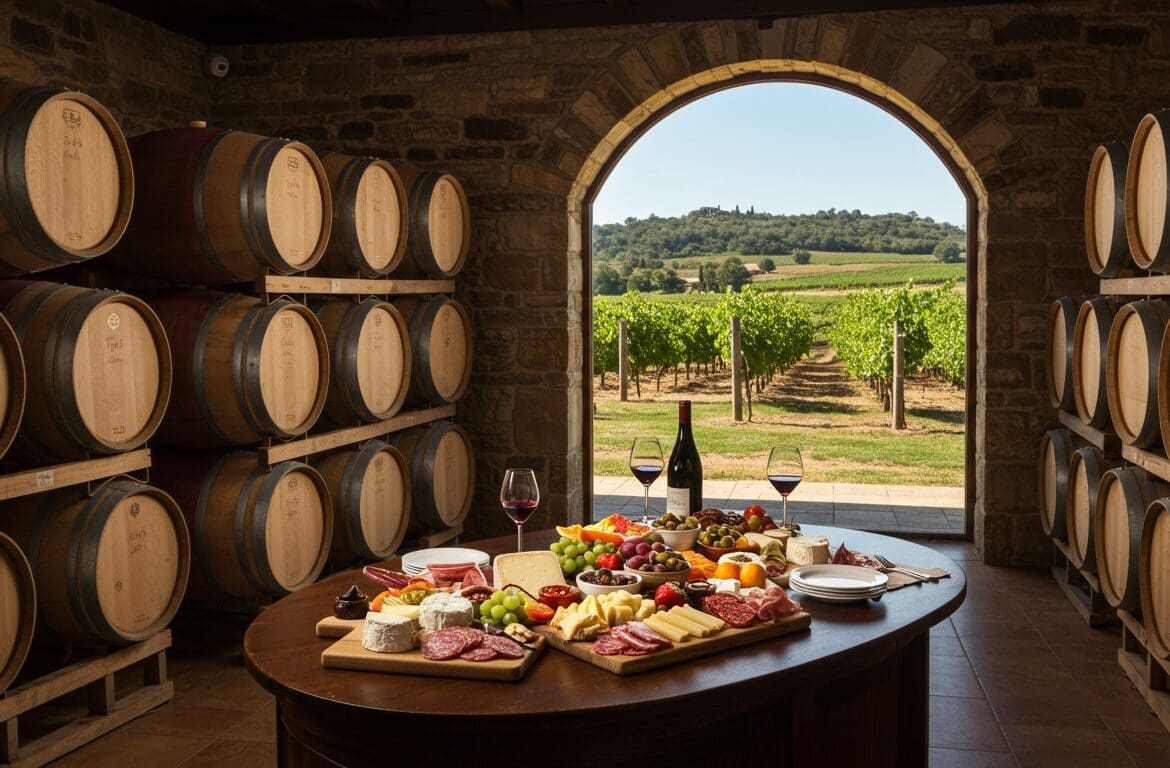
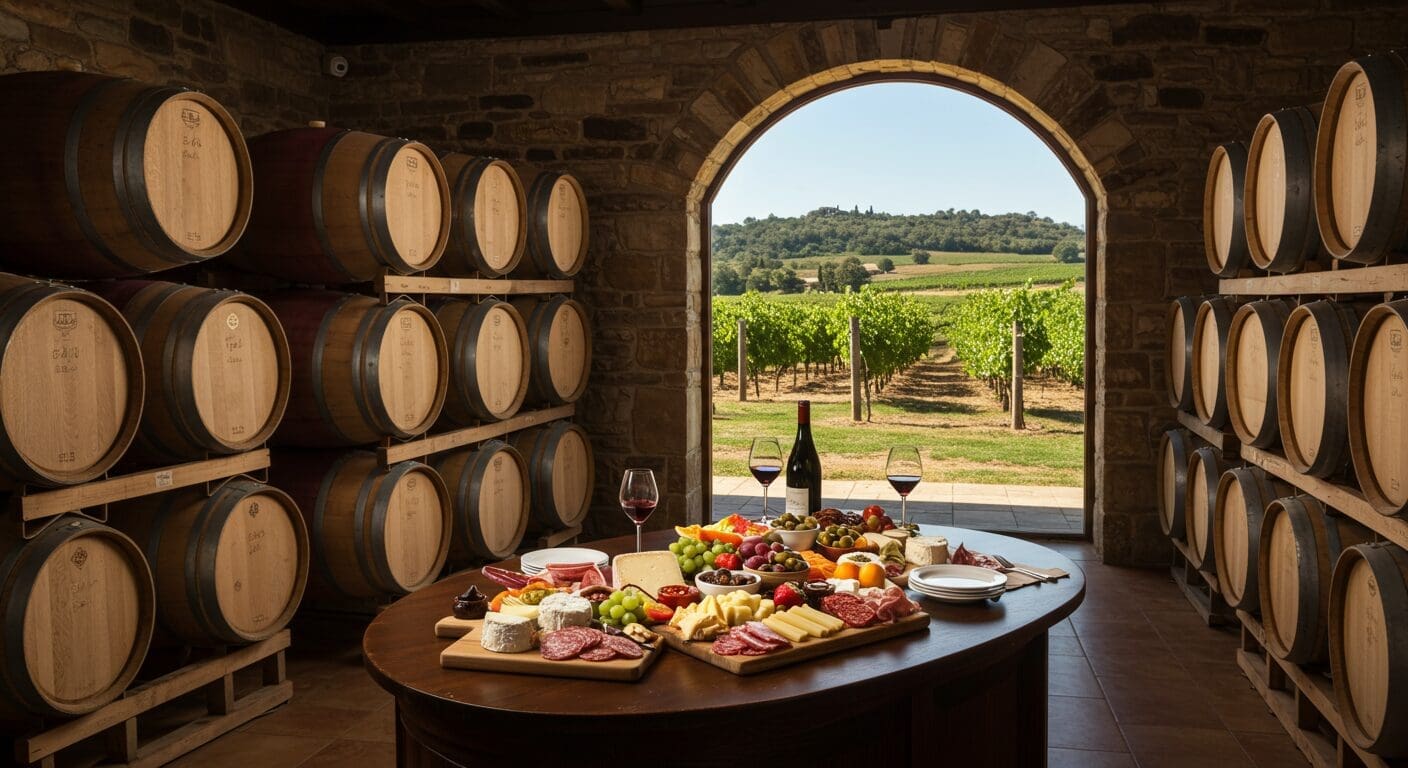
The Coteaux du Gâtinais and the southern edges of the region toward Fontainebleau are where most of this activity is concentrated. Visiting a small producer here is a particular pleasure – these are not the vast Bordeaux châteaux with armies of marketing staff and tasting rooms designed to part you from significant sums. They are working farms and converted barns where the winemaker is very likely also the person handing you a glass, and where the conversation tends to be worth having.
The Montmartre vineyard – the Clos Montmartre – produces wine from its steep Paris hillside plot each October in a harvest that is equal parts genuine winemaking and joyful civic theatre. The resulting bottles are auctioned rather than sold commercially, which spares everyone from having to form an opinion about them.
Truffles, Honey, and the Luxury Larder of the Ile-de-France
Ile-de-France does not have the black truffle volumes of the Périgord or the white truffle drama of Alba, but it is not without its subterranean pleasures. The forests of Fontainebleau and the woodlands to the south of the region produce truffles – primarily tuber aestivum, the summer truffle – that are quietly hunted by those who know where and when to look. This is not information that is freely shared. It rarely is, anywhere in France.
For the visiting traveller, the approach of choice is to engage a specialist guide or book through one of the private estates that offer seasonal truffle hunts as part of a wider food experience. These tend to be half-day affairs combining a woodland walk with a trained dog (never a pig, despite what people seem to believe) and a cooking demonstration that ends with truffle scrambled eggs or a risotto that will recalibrate your sense of what eggs are capable of. The correct response to this experience is quiet wonder followed by the purchase of a small quantity of truffle salt or oil to take home, knowing full well it will not recreate the experience.
The honey of Ile-de-France is, perhaps surprisingly, considered among France’s finest. Urban beekeepers on Parisian rooftops and rural apiaries in the Seine-et-Marne and Val-de-Marne departments produce honey with a floral complexity that reflects the extraordinary botanical variety of the region – from linden blossom to chestnut to wildflower meadow. At markets and specialist food shops you will find producers who can tell you which flowers went into a specific batch with the kind of precision more usually associated with single-origin coffee.
Cooking Classes and Culinary Experiences
The luxury end of culinary education in Ile-de-France is genuinely impressive, and the options range from grand institutional credentials to intimate private instruction in ways that suit very different temperaments. Le Cordon Bleu Paris, the institution that introduced Julia Child to French cooking and to herself in equal measure, offers demonstration classes and hands-on workshops that can be booked individually without committing to a diploma. The experience is considered and professional, the kitchens are exactly as well-equipped as you would expect, and the results – croissants, sauces, pastry work – are considerably better than anything you will manage at home for at least a year.
For something more personal, private cooking classes with chefs in their own kitchens or in villa settings are increasingly available throughout the region. These tend toward a market-first approach: the morning is spent at a local marché selecting ingredients, the afternoon in the kitchen with a glass of wine and a serious knife, and the evening eating what you have made with a degree of satisfaction that is, frankly, disproportionate to the difficulty of what was actually produced. Nobody corrects you on this. That is part of the service.
For those interested in patisserie specifically – the art form that Paris effectively invented and continues to take very seriously – there are specialist workshops from macarons to mille-feuille that can occupy a morning in a manner that feels both luxurious and productive. A rare combination.
The Best Food Experiences Money Can Buy
There is a particular category of food experience in Ile-de-France that sits beyond the merely excellent and enters territory that requires some advance planning and, yes, a degree of financial commitment. The three-starred restaurant table is one of them. Paris has more Michelin three-star restaurants than any other city in the world – including establishments that have held the distinction for so long that they have become part of the civic architecture. A dinner at one of these is not simply a meal; it is an exercise in understanding what French culinary ambition, at its summit, actually looks like. The tasting menus run long and the wine lists run to volumes that could furnish a small library. Come hungry. Come early. Come without a specific time you need to be anywhere by.
Versailles and its surrounding estates offer private dining experiences in settings of genuine grandeur – former hunting lodges, converted orangeries, private gardens of the kind of scale that makes you recalibrate your understanding of the word “garden.” These experiences, typically arranged through specialist concierge services or high-end travel agencies, can be combined with a private tour of the palace or the Petit Trianon and end around a table set for eight or ten in a room that most visitors will never see. This is the most deliberate possible way to spend an evening in Ile-de-France, and it is difficult to argue against it.
For those staying in a private villa – which remains the optimal base for experiencing Ile-de-France at leisure – bringing the experience home via a private chef for an evening is an option that consistently overdelivers. A good private chef in this region will arrive with market produce, an opinion about wine, and the quiet efficiency of someone who has done this many times and enjoys it, which in combination produces evenings that are rather better than any restaurant, simply by virtue of ending when you decide they end, in rooms you have made temporarily your own.
A Final Word on Eating Well Here
The best food experiences in Ile-de-France share a quality that is difficult to name precisely but easy to recognise: they do not try too hard. The great bistro in a Paris side street does not need to explain itself. The market vendor who hands you a slice of Brie does not require you to appreciate it in any particular way. The winemaker pouring you something from the current vintage over a kitchen table is simply doing what he does. There is an ease to all of it that is the product of very long practice and a culture that has decided, quite sensibly, that food is important and life is short and the two things should spend as much time together as possible.
That is, when you strip it back, what food and wine in Ile-de-France is really about. Not performance. Pleasure, conducted with a certain precision, and available to anyone patient enough to seek it out properly.
If you are planning a trip and want to experience the food, markets, and wine of Ile-de-France from your own private base, explore our collection of luxury villas in Ile-de-France – properties chosen for their location, quality, and the kind of flexibility that makes every meal, market visit, and vineyard afternoon feel entirely effortless.
What is the most iconic food of Ile-de-France?
Brie de Meaux is arguably the most celebrated regional food product – a raw-milk cheese with a protected designation of origin, produced in the Seine-et-Marne department east of Paris since at least the eighth century. Beyond cheese, the region is defined less by a single dish and more by the quality of its classical French cooking: sole meunière, boeuf bourguignon, expertly made pastry, and the full range of Parisian market produce including exceptional asparagus and honey.
Does Ile-de-France produce its own wine?
Yes, though it is a relatively small and little-known production compared to France’s major wine regions. A revival of winemaking in Ile-de-France over the past two decades has produced a growing number of small, quality-focused estates, particularly in the south of the region around Fontainebleau and in the Gâtinais area. Varieties include Pinot Noir and Chardonnay, typically producing lighter, fresher styles suited to the regional cuisine. The famous Clos Montmartre vineyard in Paris also produces wine annually, auctioned at the October harvest festival.
What are the best food markets to visit in Ile-de-France?
The Marché d’Aligre in the 12th arrondissement is one of Paris’s finest and most authentic, open most mornings with both covered and open-air sections. The Marché Bastille on Boulevard Richard Lenoir operates on Thursdays and Sundays and is among the largest in the city. Beyond Paris, the market at Versailles is consistently excellent and considerably less crowded than the palace itself suggests it might be, while the market at Provins offers a more relaxed experience with outstanding local produce including honey, charcuterie, and seasonal vegetables.