
Best Restaurants in Los Angeles County: Fine Dining, Local Gems & Where to Eat
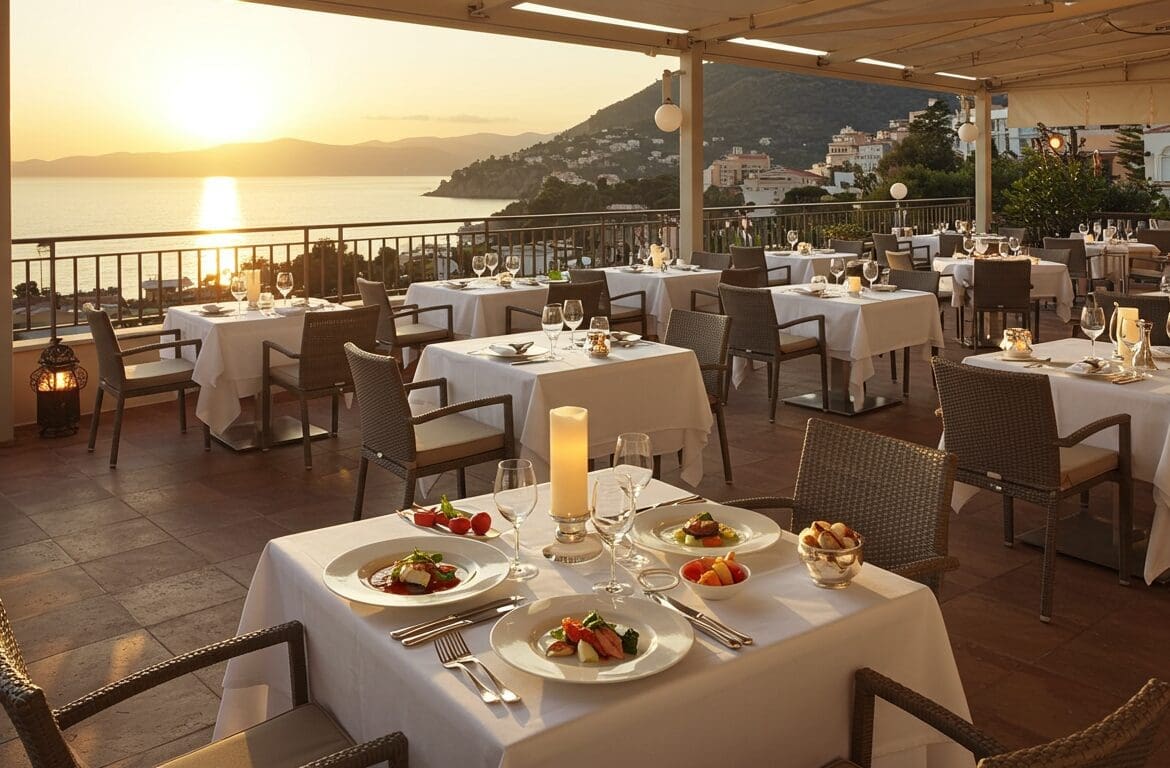
There is a specific hour in Los Angeles – somewhere between five-thirty and seven in the evening – when the light turns the colour of a perfectly rested negroni and the entire city seems to lean back in its chair. The smell of charcoal drifts through open kitchen windows. Somewhere nearby, someone is pressing tortillas by hand. A wine list is being studied with the concentration usually reserved for legal documents. This is Los Angeles doing what it does best: feeding people extraordinarily well, and making the whole enterprise look completely effortless.
Understanding where to eat in Los Angeles County is itself a kind of education. This is a city of fifty cuisines operating at once, where a Michelin three-star tasting menu and a life-changing fish taco can exist within three miles of each other, and both will expect you to have done your research before arriving. The best restaurants in Los Angeles County span fine dining, local gems, and where to eat across a sprawling, endlessly surprising geography – from the Arts District to the Pacific coast, from Mid-Wilshire to South LA. The task is not finding somewhere good to eat. The task is narrowing it down.
This guide does that narrowing for you.
The Fine Dining Scene: Michelin Stars and Serious Kitchens
Los Angeles spent years being slightly patronised by the food establishment – treated as a city of beautiful salads and celebrity sightings rather than serious cooking. The Michelin Guide’s arrival and subsequent expansion has done something useful: it has confirmed in writing what locals already knew. This city has extraordinary fine dining, and the chefs operating at its highest levels are doing work that stands comparison with anywhere in the world.
The clearest example is Providence, the seafood-focused institution on Melrose Avenue that in 2025 earned its third Michelin star – joining a very short list of restaurants in California operating at that level. Chef-owner Michael Cimarusti and co-owner Donato Poto have spent over two decades building something that feels genuinely irreplaceable: an eight-course dinner menu priced at $375 that showcases the West Coast’s marine larder with a precision and artistry that does not feel like showing off. Santa Barbara spot prawns, steelhead trout from the Quinault River in Washington – the sourcing reads like a love letter to the Pacific. The room is polished without being stiff, and the service has the quality that distinguishes great hospitality from mere professionalism: it makes you feel as though the entire evening was arranged specifically for you.
Then there is Somni, in the West Hollywood and Beverly Hills corridor, which has also achieved three Michelin stars and operates in an entirely different register. Set within a serene courtyard that feels genuinely removed from the surrounding city, Somni under chef Aitor Zabala is a deeply personal experience – transportive, emotive, rooted in his Catalan heritage and his evident affection for Southern California’s produce. The format is an intimate chef’s table, the philosophy is rigorous, and the result is a meal guests tend to talk about for some time afterwards. Book early. Book very early.
Holbox: The Most Interesting Restaurant in South Los Angeles
One of the genuine pleasures of eating in Los Angeles is discovering that some of the most serious cooking in the county happens in rooms that would not pass muster as a setting for a conventional fine dining review. Holbox, tucked inside Mercado La Paloma at 3655 S. Grand Avenue in South Los Angeles, is proof of this. Chef Gilberto Cetina – a 2025 James Beard Awards semifinalist for Outstanding Chef – has built something Michelin itself described as “a distinctively Angelino phenomenon.” The 2024 California guide awarded it a star, the Los Angeles Times named it Restaurant of the Year in 2023, and Yelp users have collectively written over one thousand five-star reviews. The market setting means you can order from a walk-up counter, which feels improbable given the quality of what arrives.
The cooking is coastal Mexican seafood paired with farm-fresh California produce – a combination that sounds simple and tastes extraordinary. For those who want the full experience, a nine-course tasting menu is available on Wednesday and Thursday evenings. The contrast between the setting and the ambition is not a quirk; it is precisely the point. Holbox is Los Angeles at its most itself: democratic, diverse, and quietly world-class.
Bestia and the Arts District: Where Energy Is Part of the Dish
If Holbox represents Los Angeles’s underdog narrative, Bestia in the Arts District represents its other great food story: the restaurant that somehow lives up to a decade of relentless praise. Open since 2012, Bestia has accumulated the kind of critical attention that usually causes the original magic to curdle slightly. It has not. The oven-blistered pizzas, the indulgent handmade pasta, the wood-grilled hunks of meat – they remain, as a food critic once noted, close to perfect. The industrial-chic dining room in a converted Downtown warehouse bounces noise off brick walls in a way that should be exhausting and somehow is not.
Particular mention must go to the housemade salumi boards, which are assembled with a jeweller’s eye and the kind of cured meat knowledge that most Italian grandmothers would find excessive. The spectacle of servers pouring wine through hollowed-out beef bones directly into diners’ mouths is either a wonderful piece of theatre or a step too far, depending on your constitution. Either way, it is the sort of thing that only happens in Los Angeles and that you will definitely tell people about.
Reservations are essential and should be secured as far in advance as the booking system allows. Walk-ins exist in theory.
Oaxacan Cooking and Local Gems Worth Seeking Out
Los Angeles’s Mexican food landscape is deep and varied in ways that genuinely reward exploration beyond the obvious. Guelaguetza, on West Olympic Boulevard in Koreatown, is the kind of place that earns its reputation not through hype but through decades of unwavering quality. The family recipes have not been adjusted for an audience unfamiliar with Oaxacan cuisine; the imported ingredients remain authentic; and the result is what many food writers have described as one of the finest regional Mexican restaurants not just in Los Angeles but in the entire country. Live music accompanies most meals, and it is not unusual to see tables of diners simply get up and dance. This is not a curated experience. It is just what happens.
The menu focuses on Oaxacan staples: tlayudas topped with black beans, asiento, and your choice of protein; memelas; and – most critically – multiple types of mole, each deeply different in character and complexity. Order the mole negro if it is available. It rewards attention.
Beyond these anchors, Los Angeles County has a dense network of neighbourhood restaurants operating at a level that would be celebrated in most other cities and is simply taken for granted here. The San Gabriel Valley is home to some of the finest Chinese and Taiwanese cooking outside of Asia. Boyle Heights has birria and tacos de canasta that require no further recommendation than the length of the queue. The Westside has a cluster of excellent Japanese restaurants – sushi counters, ramen shops, izakayas – that reflect the city’s large and food-serious Japanese community. None of these places advertise in the way that flashier establishments do. You find them by asking the right people, or by wandering with intent.
Beach Clubs, Casual Dining, and the Malibu Question
The coastal stretch of Los Angeles County requires its own approach to eating. Malibu’s restaurant scene has long operated on the logic that exceptional views justify variable food – a business model that has served it well enough but which is starting to be challenged by genuinely good kitchens appearing alongside the ocean. The Nobu Malibu sits on the Pacific Coast Highway and remains a reliable option for its black cod with miso and its reliable star-adjacency, which you may find you care about more or less depending on the day.
For beach-adjacent eating that does not require a mortgage, the casual end of the Santa Monica and Venice dining scenes is genuinely strong. The farmers’ market on Wednesday mornings at Santa Monica’s Arizona Avenue is a useful orientation point for understanding what is in season and therefore what to order in any decent restaurant that week. Oysters, grilled fish, ceviche prepared with citrus from the Central Valley – the Pacific Coast sensibility runs through the best casual dining in this part of the county.
A word on brunch: Los Angeles is devoted to the practice in a way that borders on religious, and the queues outside certain weekend brunch spots move with the urgency of devotional pilgrimage. If you have flexibility, eat weekday breakfasts and avoid the ritual entirely. Your time is worth more than that.
Food Markets and Eating in the Spaces Between Restaurants
The Grand Central Market on Broadway in Downtown Los Angeles is the most obvious starting point for market-based eating in the county, and its reputation is deserved. Open since 1917, it functions as both a working neighbourhood market and a destination in its own right, with a range of vendors spanning the traditional – Mexican food stalls serving pozole and carnitas – to the more recent arrivals bringing egg sandwiches and artisanal coffee into the conversation. The light inside is warm and slightly golden regardless of the hour, and the noise is a useful reminder that food is, at its best, a communal rather than solitary experience.
Mercado La Paloma in South Los Angeles – home to Holbox – operates on a smaller scale but with no less character. The emphasis is on Latin American cooking, and the combination of a genuine neighbourhood market feel with a Michelin-starred restaurant sharing the same floor plan is exactly the kind of thing that should not work and absolutely does.
The Original Farmers Market at Third and Fairfax, despite its tourist footfall, retains a genuine charm and serves as an excellent introduction to the county’s produce culture. The vendors selling stone fruit and citrus from California’s Central Valley alone justify a visit in summer.
What to Drink: Wine, Cocktails, and the California List
California wine is, naturally, well represented on most serious wine lists in Los Angeles County, and the best restaurants approach this with rigour rather than regional loyalty. Burgundy-style Pinot Noir from the Sta. Rita Hills, Chardonnay from Sonoma Coast producers working in a leaner European style, and skin-contact wines from natural producers in the Central Coast have all found enthusiastic audiences in the city’s better wine programmes. Providence’s list is extensive and thoughtfully assembled; Bestia’s is excellent and skews Italian in ways that suit the kitchen.
The cocktail scene is particularly strong. Los Angeles bartenders have a relationship with citrus that is almost philosophical – the proximity to extraordinary lime and lemon orchards means that a good margarita here is a different drink from the same thing made elsewhere. The mezcal selection at most decent bars has expanded enormously over the past five years, and Mexican spirits more broadly – sotol, raicilla, bacanora – are increasingly available for those who want to explore beyond tequila.
As for the natural wine movement: it has been enthusiastically adopted in Los Angeles, and the quality ranges from genuinely excellent to genuinely challenging. Trust your server’s recommendation in the better establishments. They know which bottles are which.
Reservation Tips: Navigating the Booking Reality
The practical truth about eating in Los Angeles County’s best restaurants is that spontaneity is a strategy that works for approximately the bottom third of the dining hierarchy. Somni and Providence operate on booking windows that open weeks in advance and fill within hours. Bestia’s reservations release on a rolling basis and disappear quickly. Holbox’s tasting menu on Wednesday and Thursday evenings should be secured well ahead of any visit.
Resy and Tock are the dominant booking platforms for the restaurants in this guide. Some establishments still operate through OpenTable. A small number – mainly at the more casual end – do not take reservations and operate on a walk-in or call-ahead basis, and those queues are genuinely worth joining when the restaurant warrants it.
For those staying in a private villa, it is worth noting that a good concierge or villa manager with local connections can occasionally access reservations that the general public cannot. This is one of the less-discussed advantages of travelling well. The other advantage is having somewhere quiet to return to after a nine-course meal.
Speaking of which: if you are visiting Los Angeles County for any length of time, there is a strong argument for basing yourself in a luxury villa in Los Angeles County rather than a hotel – not least because the best villas come with private chef options, which allows the county’s extraordinary produce and seafood to come to you on the evenings when you simply cannot face another reservation battle. It is a very acceptable way to spend a Tuesday.
For a broader orientation to the county – beaches, culture, neighbourhoods, and how to navigate the sprawl with something approaching grace – the Los Angeles County Travel Guide is the place to start.