
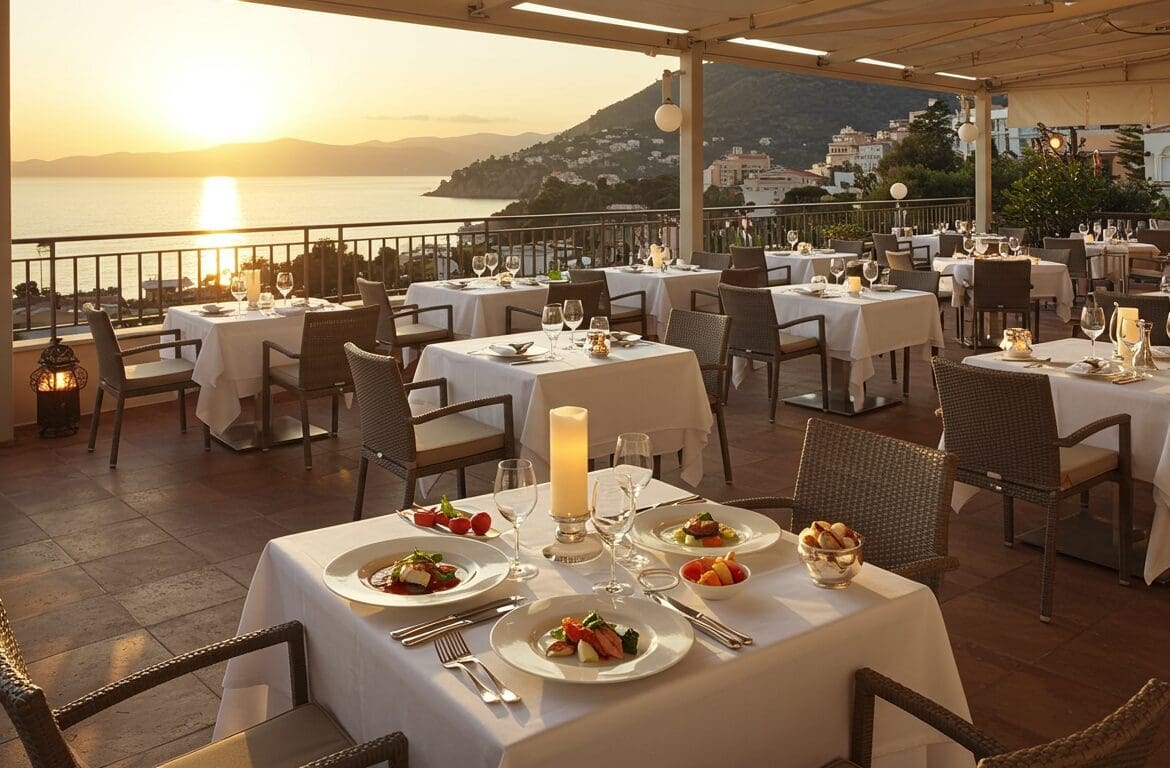
Best Restaurants in Marbella: Fine Dining, Local Gems & Where to Eat
Here is what most guides about eating in Marbella consistently miss: the city has two completely separate food cultures operating in parallel, and most visitors only stumble into one of them. There is the Marbella of the beach clubs, the ceviche towers, and the magnum bottles arriving to a soundtrack of deep house. And then there is the Marbella of the old town – narrow whitewashed streets, no menus in English, and locals who have been ordering the same dish at the same table for thirty years. The food in the second Marbella is often better. It is certainly cheaper. And the people watching, frankly, cannot be touched. This guide covers both worlds, plus everything in between – because the best restaurants in Marbella span fine dining with Michelin credentials, honest Spanish cooking that asks nothing of you, and seafood so fresh it barely qualifies as cooking at all.
The Fine Dining Scene: Michelin Stars and Dani García’s Marbella
It would be difficult to write seriously about fine dining in Marbella without spending some considerable time on Dani García, the Andalusian chef who has, over the past two decades, essentially redrawn the city’s culinary map. García grew up in Marbella and has never quite left – which is fortunate for everyone who eats here.
His flagship, Tragabuches, is the place to start if you want to understand what modern Andalusian cooking can be at its most ambitious. Housed in a traditional cortijo with interiors that balance rustic beams against sleek contemporary design, it is a restaurant that knows exactly what it is doing. The menu reads like a love letter to the region written in a very confident hand: ham croquettes served with liquid olives, oxtail cannelloni with Pedro Ximenez sauce, John Dory with ajoblanco emulsion. These are not fusion experiments – they are deeply Spanish dishes pushed into new territory with real precision. Book well ahead. This is not a walk-in situation.
For pure theatre around the grill, LEÑA Marbella – also García’s – delivers something different entirely. Located within the Puente Romano complex, this is a modern steakhouse in the truest sense: open flame, exceptional cuts, a sleek room that manages to feel both casual and considered. It scores a 9.2 out of 10 in aggregated reviews, which is the kind of number that tends to attract the sort of people who travel specifically to eat. The meat is the point here. Everything else – the wine list, the bread, the service – is very good, but the meat is the point.
Then there is Lobito de Mar, the third corner of García’s Marbella triangle and the one dedicated entirely to the sea. The cooking is innovative and intensely Spanish – not the cod-and-chips-adjacent seafood you find at tourist-facing restaurants along the port, but dishes that taste like someone who genuinely cares about the Mediterranean has been thinking about them carefully. The presentation is considered without being precious about it, and the atmosphere has that particular warmth that well-run Spanish restaurants do better than almost anywhere else in Europe.
Skina: Two Michelin Stars in a Room That Seats About Thirty People
If LEÑA is Marbella showing off, Skina is Marbella being quietly brilliant in a way that surprises people who were not expecting it. This is a two Michelin star restaurant operating out of a dining room so small and unassuming that first-time visitors occasionally walk past it twice. Barcelona-born chef Jaume Puigdengolas runs a kitchen that produces no tricks, no bravado, no elaborate theatre – just the best available produce cooked with the kind of intelligence that only looks effortless once you have spent years getting it right.
The menu changes constantly, which means even regular visitors – and Skina has many – will encounter something new on each visit. This is partly creative restlessness and partly a genuine commitment to seasonality. Whatever is best right now is what you will eat. The result is a meal that feels alive in a way that fixed-menu restaurants, however accomplished, sometimes do not. Booking is not just advisable; it is essentially mandatory. The dining room is limited, the reputation is considerable, and the reservation calendar moves fast.
Casanis Bistrot: The Old House That Gets Everything Right
Not every exceptional meal in Marbella involves a tasting menu and a sommelier with strong opinions. Casanis Bistrot is proof of this, and it is the kind of restaurant that earns its place on a list like this not through spectacle but through sustained, unfussy excellence. The building is 150 years old – a country house with wooden beam ceilings, terracotta flooring, and a leafy courtyard terrace that is exactly as good as it sounds. The menu draws on French, Belgian, and Spanish traditions without being confused about any of them, and every vegetable on the plate has come from the restaurant’s own organic garden.
This is the kind of detail that gets mentioned in passing but matters quite a lot in practice. Food grown close to the kitchen tastes different – not as a philosophical position but as a straightforward culinary fact. Order the fish, take the seasonal salad, sit outside if the evening permits it. Casanis is one of those restaurants that becomes a reference point: the place you recommend to friends, then find yourself slightly annoyed when they enjoy it as much as you did.
Beach Clubs and Casual Dining: Sun, Sand, and Actually Good Food
Marbella’s beach club scene has a reputation – deserved in some respects, exaggerated in others – for prioritising atmosphere over cooking. The better ones have quietly stopped accepting this trade-off. Along the Golden Mile and the stretch towards Puerto Banús, you will find beach clubs where the ceviche is genuinely well-made, the grilled fish has been chosen with care, and the paella – if you order it early enough, because good paella requires advance notice and most kitchens will tell you so – rewards the patience required.
The key rule: eat early or eat late. The midday rush at any beach-facing restaurant in high season is a test of character that most dishes fail. Arrive at 1:30pm before the crowds or at 3:30pm after them, and you will eat considerably better. Local knowledge, freely given.
For something more relaxed and entirely without the DJ, the chiringuitos – small beachside bars serving fresh fish and cold beer in surroundings that make no aesthetic claims whatsoever – remain some of the most honest eating in the region. Nobody is performing here. The fish came out of the sea this morning. That is the whole pitch, and it is sufficient.
The Old Town: Hidden Gems and Local Trattorias
Marbella’s casco antiguo is where the city keeps its better secrets. The Plaza de los Naranjos – the orange tree square that every guidebook photographs and every visitor eventually finds – is surrounded by restaurants of varying quality, but step one or two streets back and the picture changes considerably. Small family-run restaurants operate here on the basis that if the food is good enough, people will find them. They are correct.
Look for places with handwritten menus, no photographs of the dishes, and a reasonable amount of noise coming from inside. These are reliable indicators. Order the gazpacho, which in Andalusia is a serious dish eaten cold and made with real tomatoes and actual care – not the thin, vinegary liquid served in too many places elsewhere. Order the grilled sardines if they are on the menu. Order the jamón if the leg behind the bar looks well-used. These are the dishes that have made this region’s food culture worth travelling for, and they do not require a tasting menu format to deliver.
Food Markets and Where to Graze
The Mercado Municipal de Marbella is the place to spend a morning if you want to understand what local cooking is built on. Produce stalls, fish counters, small bars serving coffee and something fried – this is not a curated food market experience designed for tourists. It is a working market where people shop, which makes it considerably more interesting. The fish selection alone is an education in what the Mediterranean actually provides when it is not being filtered through a restaurant menu.
For something more social, the evening tapas circuit through the old town requires no particular plan – only a willingness to walk slowly, look through open doors, and sit down when something looks right. Marbella does not have a rigid tapas culture in the way that Granada does (where a drink still sometimes arrives with food automatically – a custom that feels, elsewhere, like it should be mandatory law), but the small bars near the old town offer cañas and plates of cured meat and fried fish in an atmosphere that costs almost nothing and delivers rather a lot.
Wine, Sherry, and What to Drink
Andalusia’s contribution to wine culture is, historically, sherry – a category that most of the world dramatically underestimates and that deserves serious attention if you have not given it yet. A well-chilled fino or manzanilla with a plate of jamón or fried fish is one of the more straightforward pleasures available in this part of Spain. Order it in the old town bars and it will cost almost nothing. Order it in the right restaurant and it will be poured with the kind of reverence usually reserved for grand Burgundy.
For table wine, the local Málaga wine region produces some genuinely interesting bottles – particularly the sweet Málaga wines made from Moscatel and Pedro Ximenez grapes, which are excellent with dessert or, frankly, instead of it. The fine dining restaurants – Skina and Tragabuches especially – maintain wine lists that extend well beyond Andalusia, and the sommeliers at both are worth talking to if you are open to being pointed somewhere unexpected.
Reservation Tips: The Practical Business of Actually Getting a Table
Marbella in July and August operates at a level of demand that rewards forward planning considerably. Skina, with its limited dining room and two Michelin stars, should be booked as far in advance as possible – weeks rather than days. Tragabuches and LEÑA are somewhat easier but not effortlessly so in peak season. Lobito de Mar and Casanis are popular enough that a same-day booking on a Saturday night in August is an optimistic enterprise.
The practical advice: book the serious restaurants before you book the flights. It is a reasonable priority inversion. For everything else – the old town spots, the chiringuitos, the market bars – the system is more forgiving, and half the pleasure is in the unplanned discovery. Not everything needs a reservation. Some of the best meals in this city happen because you walked past a door that looked right and went in. Keep that option available.
If you are staying in a luxury villa in Marbella, the private chef option removes the reservation question entirely for certain evenings – and there is something to be said for a meal at your own table overlooking the sea, prepared with the same local produce that the best restaurants are using, at a pace entirely your own. It is not a replacement for Skina or Tragabuches. It is a different kind of evening, and on the right night, it is the better one.
For everything else you need to know about the city before you arrive, the full Marbella Travel Guide covers the territory in considerably more detail.