
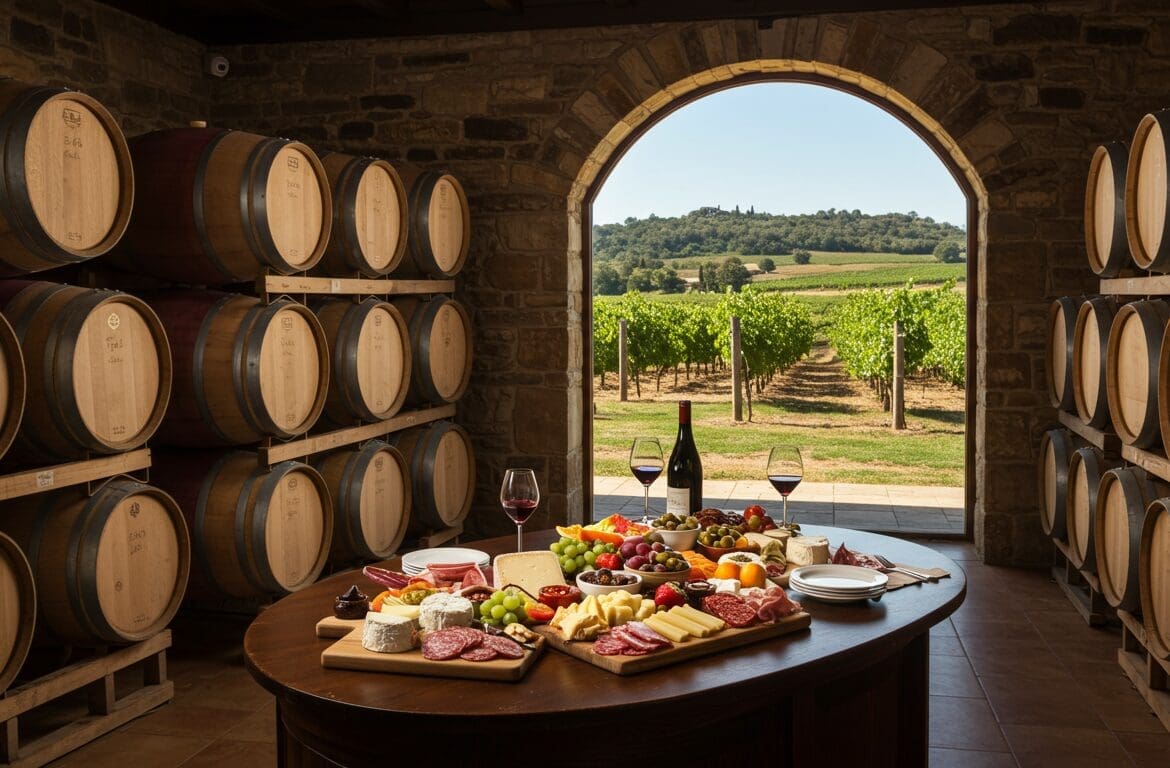
Marbella Food & Wine Guide: Local Cuisine, Markets & Wine Estates
Come to Marbella in late September and you will catch the Costa del Sol at something close to its best self. The crowds have thinned, the light has turned that particular shade of amber that photographers quietly plan their careers around, and the restaurants – freed from the tyranny of peak-season queues – are doing their finest work. The air smells of warm jasmine and grilled fish, and somewhere, inevitably, someone is opening a very cold bottle of Manzanilla at eleven in the morning and looking entirely justified in doing so. This is when you understand that Marbella is not simply a resort. It is a place with a genuine food culture, one that rewards the curious traveller considerably more than it rewards the person who orders a club sandwich by the pool and calls it a day.
This Marbella food and wine guide covers the regional cuisine, the local producers, the markets, the wine estates, and the experiences worth spending serious money on. Consider it your permission slip to eat and drink your way through one of Andalusia’s most compelling corners. For broader planning, our Marbella Travel Guide covers everything from where to stay to what to do when you’ve finished your third glass of local rosé.
Understanding the Regional Cuisine: Andalusian at its Core
Marbella sits within the culinary universe of Andalusia, a region that has been feeding people exceptionally well since long before anyone thought to build a marina or a golf course here. The cooking is defined by a few inviolable principles: exceptional raw ingredients treated with respect, olive oil used with magnificent generosity, and the sea taken seriously in a way that landlocked cuisines never quite manage.
The signature dish of the broader coastline is espetos de sardinas – fresh sardines threaded onto bamboo skewers and grilled over an open fire of olive wood, typically on the beach itself, in wooden shacks called chiringuitos that look precarious but have been feeding locals for generations. There is a ritual to eating espetos: you lean forward, you accept that butter won’t feature, and you acknowledge that this is one of the finest things the Mediterranean has to offer. Simplicity as sophistication. Marbella understands this.
Cold soups are another pillar of the local table. Gazpacho needs no introduction, but its cousin ajoblanco – a white, almond-based cold soup finished with grapes and a thread of olive oil – is the one worth seeking out. It is subtler, more complex, and considerably less photographed, which is usually a good sign. Fritura malagueña, a mixed fry of small fish and seafood in the lightest possible batter, is another essential – order it at the bar, eat it standing up if you have to, and don’t look for a knife and fork.
Local Wines: The Málaga Wine Revival
The wines of Málaga province have an interesting story to tell, one that was nearly lost entirely. For much of the twentieth century, the region’s winemaking collapsed under the weight of tourism monoculture – why tend vines when you can build apartment blocks? But in the past two decades, a quiet, determined revival has been underway, and the results are genuinely worth paying attention to.
The province produces wines under two denominations: D.O. Málaga and D.O. Sierras de Málaga. The former covers the region’s celebrated sweet and fortified wines – dense, complex, made primarily from the Moscatel and Pedro Ximénez grape varieties. These range from delicate golden Moscatels with citrus blossom and apricot notes to the almost treacle-dark Málaga Virgen, which is the kind of wine you sip slowly beside a fire and take seriously. The latter denomination – Sierras de Málaga – covers the dry table wines that have driven the revival, including some excellent reds from Syrah, Cabernet Sauvignon and the indigenous Romé grape, along with fresh, mineral-edged whites.
The mountain village of Ronda, about an hour’s drive from Marbella, has emerged as the epicentre of this new wave. The Serranía de Ronda sits at altitude – some vineyards reach 800 metres – which gives the wines an intensity and freshness that coastal growing could never produce. Several estates here are producing work of real distinction, and a day trip to explore them is, frankly, time well spent.
Wine Estates to Visit Near Marbella
The wine estates of the Serranía de Ronda make for one of the most rewarding excursions available to food-focused visitors to Marbella. The drive alone – through the limestone mountains of the interior, past white villages that cling to hillsides with what looks like architectural stubbornness – is worth the journey. Arriving at a winery with a view over ancient vines and a glass of something cool in hand is, however, considerably better.
Estates in the Ronda appellation generally offer visits by appointment, with tastings of their dry table wines as well as their sweet Málaga styles. Look for producers working with indigenous varieties alongside international grapes – the most interesting bottles tend to come from those who have resisted the temptation to simply replicate what Bordeaux does, and instead asked what this particular land wants to produce. Some estates offer private tours with winemaker-led tastings, paired lunches, and guided walks through the vineyard. For a group staying in a private villa, arranging a dedicated estate visit with a sommelier guide and a hamper of local produce for the journey home is the kind of afternoon that people mention in conversation for years.
Closer to the coast, smaller producers in the hills behind Marbella and Estepona are also worth investigating – ask at a quality local wine shop, as the best finds tend not to advertise heavily. Unsurprisingly, the wines that are hardest to find are often the ones most worth finding.
Food Markets: Where Marbella Actually Shops
Markets tell you more about a place than any restaurant ever will, because restaurants are constructed experiences and markets are simply life, happening in public. Marbella’s market culture is lively, local, and largely ignored by visitors who sleep through the early hours. This is their loss.
The Mercado Municipal de Marbella in the old town is the anchor of local food shopping – a covered market where fishmongers lay out the morning’s catch with the sort of theatrical pride that suggests they know exactly how good it is. The fish here is as fresh as coastal markets get: whole dorada, fat gambas, pulpo that glistens under the lights, small clams that will become almejas a la marinera within the hour. The vegetable stalls are equally serious, piled with tomatoes that actually taste of something, peppers in several colours, bundles of wild herbs from the mountains behind the coast.
The weekly street markets – held in different areas of Marbella and its surrounding municipalities on different mornings – lean more towards general merchandise but still yield good finds: local honey, dried ñoras peppers, jars of preserved vegetables, and the occasional artisan producer selling something quietly excellent from a folding table. Arrive early. The best of everything goes first, and the people who know this are there by eight.
Olive Oil: The Liquid Gold of the Interior
Andalusia produces somewhere in the region of half the world’s olive oil. This statistic is remarkable. What is equally remarkable is that most visitors to the Costa del Sol never think about it once. The hills of Málaga province are covered in olive groves – ancient, gnarled trees growing in thin soil on steep slopes, tended by families who have been doing this work for centuries – and the oil they produce is some of Spain’s finest.
The variety to look for in this region is Hojiblanca, a robust, slightly peppery oil with genuine character. At its best, freshly pressed in November and December, it is vivid green, intensely grassy, with a back-of-the-throat warmth that tells you the polyphenols are doing something useful. Several producers in the hills behind Marbella and towards Antequera offer estate visits, where you can see the pressing process, taste oils at different stages of production, and leave with bottles that bear little resemblance to anything you will find in a supermarket.
Cooking with the local oil, simply and generously, is one of the great pleasures of renting a private villa with a proper kitchen. Pan con tomate – a ripe tomato rubbed onto good bread, finished with Hojiblanca oil and a pinch of salt – requires approximately four minutes to make and is one of the best things you will eat in Spain. Do not be deceived by its simplicity. That would be an error of judgement.
Cooking Classes and Culinary Experiences
For travellers who want to bring something home beyond a tan and a very good wine merchant’s phone number, cooking classes in Marbella and the surrounding area offer a meaningful way into the local food culture. The most worthwhile experiences tend to combine a market visit with a cooking session – you shop for the ingredients, you learn the technique, you eat what you’ve made. It is more involving than a restaurant dinner and, often, considerably more memorable.
Classes run by local chefs cover the fundamentals of Andalusian cooking: cold soups, the perfect fritura, traditional slow-cooked dishes like rabo de toro (oxtail braised with Málaga wine until it falls from the bone in a manner that makes grown adults emotional). More specialist sessions focus on tapas technique, or on the use of local olive oils, or on the Moorish-influenced cooking of the region – the almonds, the spices, the interplay of sweet and savoury that runs through so much of Andalusian food history.
Private classes, arranged for a villa party, are available through a number of operators, and these are worth the investment. Having a local chef arrive at your villa, take over the kitchen for an afternoon, and teach your group to make ajoblanco and espetos before sitting down to eat the results is – quietly, genuinely – one of the finest things you can do with a Tuesday afternoon in the south of Spain.
Truffle Hunting and Artisan Produce Experiences
While the truffle hunting heartlands of Spain are principally in Castellón, Teruel, and the Iberian interior, the broader region around Málaga is increasingly home to smaller-scale foraging experiences that tap into the wild larder of the Andalusian countryside. The mountains behind the Costa del Sol – the Sierra Bermeja, the Serranía de Ronda – support a rich ecosystem, and guided foraging walks with a local expert offer access to wild mushrooms, herbs, and seasonal produce that rarely makes it into the commercial food chain.
In autumn particularly, the forests yield interesting things: various edible fungi, wild rosemary and thyme growing between rocks, aromatic plants that local cooks have used for centuries and that no upmarket grocer in London has yet rebranded and sold in a linen bag. Combining a foraging walk with a lunch prepared using the morning’s harvest, at a rural estate or finca in the hills, is an experience that sits at the intersection of gastronomy and landscape – and is considerably more interesting than another afternoon on the beach, however good that beach may be.
The Best Food Experiences Money Can Buy in Marbella
Marbella has the infrastructure for serious luxury dining. The Golden Mile and Puerto Banús area support restaurants that attract chefs of genuine calibre, and the town’s long history as a destination for wealthy Europeans means that the dining scene caters to high expectations. But the best experiences are often not the most obvious ones – the places where the tables are bare marble and the waiter has exactly the right amount of attitude are often outperformed by a chiringuito on the beach with sand between the chairs and espetos on the fire.
Private dining at a villa, catered by a skilled local chef and matched with wines selected by a sommelier, is an experience that justifies itself from the first course. Having full control of the menu, the timing, the table, and the atmosphere – without a neighbouring table listening to your conversation or a sommelier who materially benefits from your choice of the second-most-expensive bottle – is a different thing entirely from restaurant dining. It is the natural extension of staying in a private villa, and the logistics are entirely manageable with the right local contacts.
Beyond private dining, consider: a dawn fishing trip with local fishermen followed by a breakfast of the morning’s catch cooked on the quayside; a private tour of a Ronda wine estate followed by a winemaker’s lunch in the cellar; a day at a working olive oil finca during harvest season, pressing oil and eating lunch in the grove. These are the experiences that Marbella doesn’t always shout about, but they are there, and they are the reason that food-focused travellers return.
Where to Stay for the Ultimate Culinary Marbella Experience
The connection between where you stay and how well you eat is, in Marbella, remarkably direct. A private villa with a serious kitchen, a terrace large enough for a dinner party, and proximity to the old town market is not simply accommodation – it is the infrastructure for a genuinely food-centred trip. Breakfast made with market produce, lunches assembled from the best of the day’s shopping, evening meals that are either prepared privately or precede a short walk to a restaurant where you have a reservation rather than a queue – this is how Marbella is best experienced.
For those who take both their food and their comfort seriously, our collection of luxury villas in Marbella offers a range of properties suited to gastronomic travel: well-equipped kitchens, outdoor dining spaces designed for long evenings, and the space and privacy that allow a chef’s visit or a catered dinner to feel like something genuinely special rather than a slightly awkward performance. Browse the collection and consider the kitchen as carefully as you consider the pool. In Marbella, you will use both.