
Food & Wine in Paris
First-time visitors to Paris make the same mistake, reliably, every single time. They spend three days eating at restaurants within a five-minute walk of their hotel, declare the food “a little disappointing actually,” and fly home having consumed nothing more adventurous than a croque monsieur that had been sitting under a heat lamp since Tuesday. Paris does not reveal itself to the passive traveller. It rewards the curious one – the person willing to cross an arrondissement for the right boulangerie, to stand at a zinc bar at noon with a glass of Burgundy and a plate of rillettes, to understand that in this city, eating well is not an indulgence. It is simply what people do. Food and wine in Paris is not a tourist activity. It is the infrastructure of daily life. And once you understand that, everything changes.
Understanding Parisian Cuisine – More Regional Than You Think
Paris is not, technically speaking, a regional cuisine destination in the way that Lyon or Bordeaux is. It is a city that has spent several centuries absorbing the best of everywhere else in France and presenting it as its own. This is not theft. It is curation at the highest level.
That said, there are dishes and dining traditions that belong unmistakably to Paris. The classic bistro repertoire – steak frites with a béarnaise that costs more in butter than most people’s entire grocery shop, blanquette de veau slow-cooked until it achieves something close to transcendence, soupe à l’oignon gratinée that was invented to soak up the excesses of les Halles market workers and has since been adopted by everyone – these are the foundation stones of Parisian eating. Then there is the charcuterie tradition: pâté en croûte, terrines of every persuasion, head cheese presented without apology. Parisians have always been matter-of-fact about the whole animal. The city’s brasseries, many of them grand 19th-century rooms all mirrored walls and leather banquettes, specialise in seafood towers that arrive like an architectural installation – oysters, langoustines, sea urchin, whelks, and something small and mysterious in the corner that the waiter will not quite explain. You eat it anyway. It is delicious.
The city also benefits enormously from its proximity to the Île-de-France’s market gardens, Normandy’s dairy farms and apple orchards, and Brittany’s coastline. The ingredients arriving in Paris kitchens every morning are, in many cases, among the finest in the country. The chefs know it. They rely on it.
The Wine to Drink – and the Wine to Know
Wine in Paris is, depending on your perspective, either wonderfully democratic or dangerously seductive. You can drink exceptionally well at a neighbourhood wine bar for the price of a cocktail in London. You can also, if you are not careful, find yourself three bottles into a Pomerol on a Tuesday afternoon with no particular plans for the evening. Both are valid life choices.
The wine bars – or caves à vins – that have transformed Parisian drinking culture over the past two decades tend to favour natural and biodynamic producers, often from less fashionable appellations. This is not snobbery in reverse. It is genuine curiosity about what happens when skilled winemakers work with minimal intervention. You will encounter Beaujolais that bears no resemblance to the Beaujolais Nouveau of your parents’ dinner parties, Loire Chenin Blancs of startling complexity, orange wines from Alsace, and Jura whites – particularly Savagnin – that taste like nothing else in the world and will either become an obsession or remain a mystery. Either is fine.
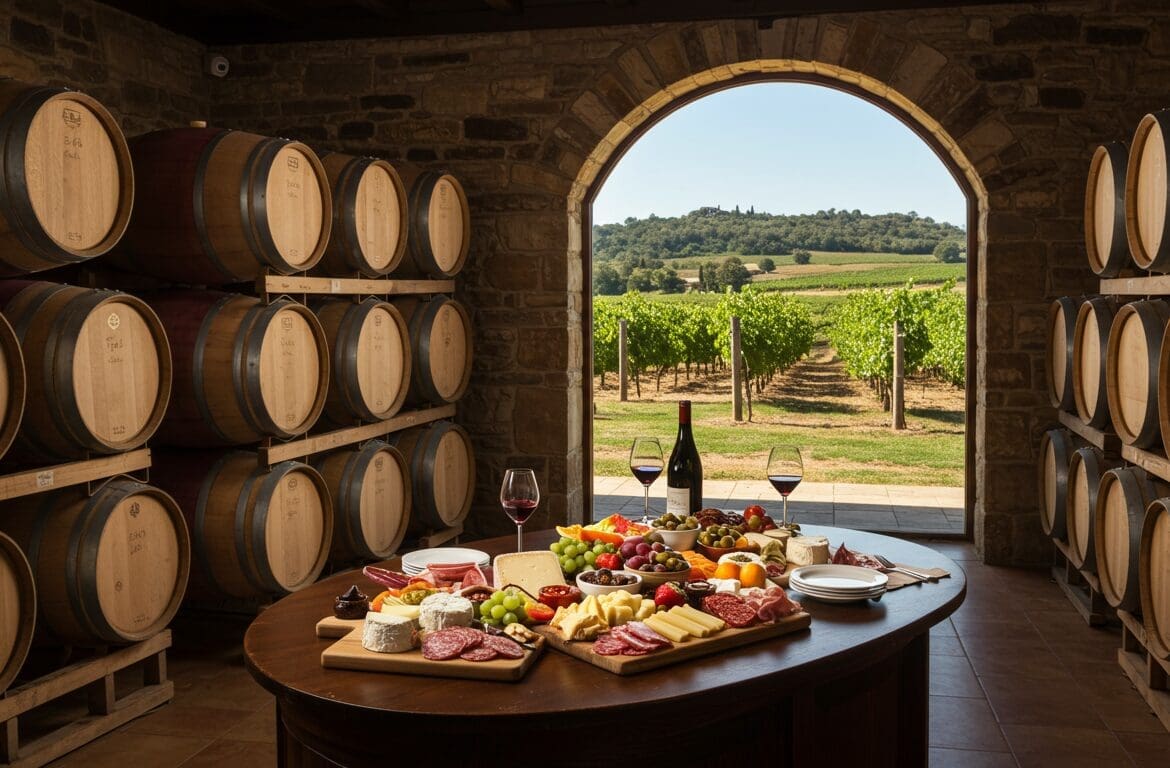
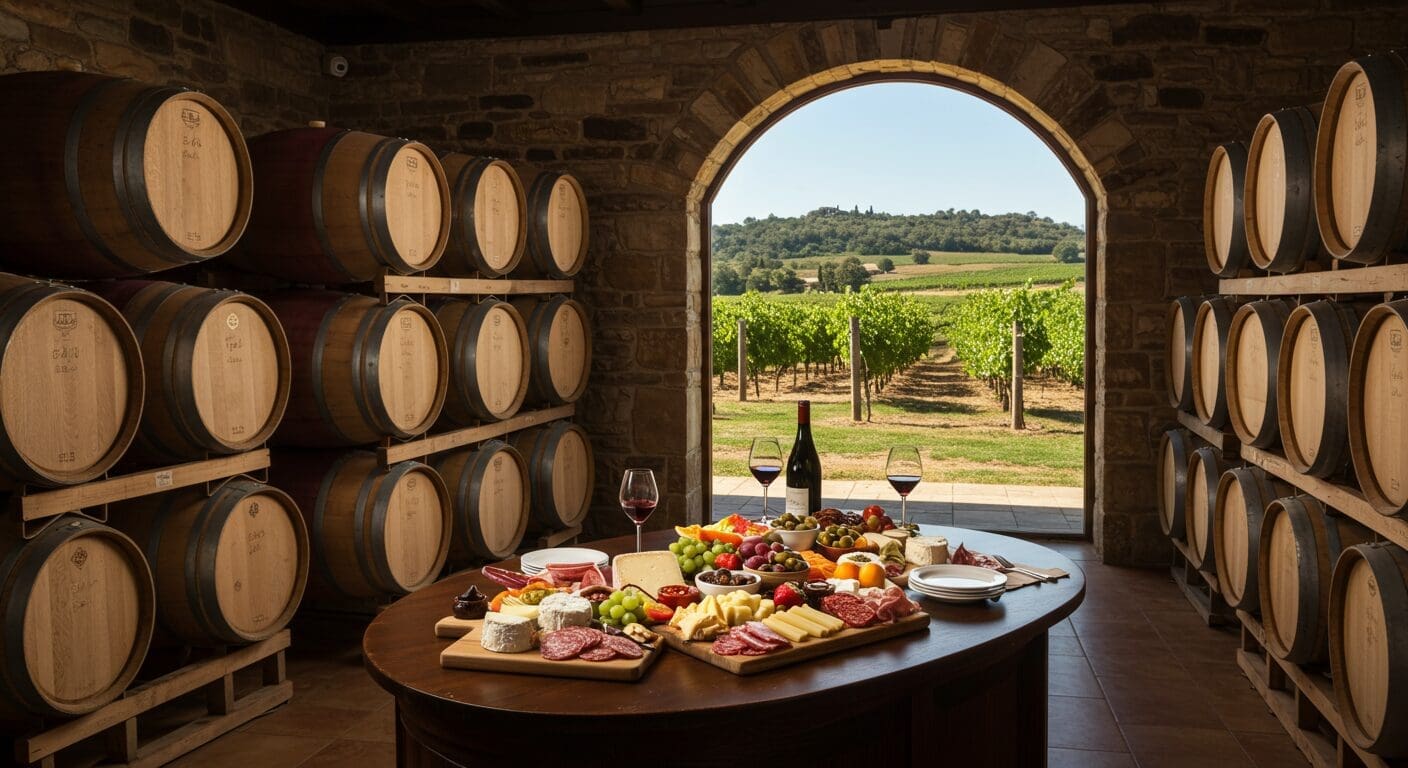
For classic appellations, the Burgundy producers represented on serious Paris wine lists read like a who’s who of the Côte de Nuits and Côte de Beaune: Domaine de la Romanée-Conti at the absolute apex (prices that require a moment of quiet reflection), alongside producers like Rossignol-Trapet, Roulot, and Lafon for those who prefer their Burgundy exceptional but not requiring a second mortgage. Bordeaux is well represented too, though the smarter Paris sommeliers will steer you towards the Right Bank – Saint-Émilion, Pomerol – if you want complexity without the price premium of the grand Médoc châteaux.
Champagne, of course, is its own category. In Paris, it is consumed with a casualness that takes some adjustment. Ordering a glass of Champagne at midday is not considered eccentric. It is considered efficient.
Wine Estates and Producers Worth Visiting
Paris itself does not produce wine – a geographical reality that the city has accepted with characteristic grace, simply importing the best of everyone else’s instead. But the regions within striking distance offer some of the great wine tourism experiences in Europe, and staying in Paris with day trips in mind is a genuinely rewarding strategy.
Champagne is the obvious starting point. The drive from Paris to Épernay takes under two hours, and the town’s Avenue de Champagne is one of those places that makes you feel simultaneously underdressed and under-funded. The grandes maisons – Moët & Chandon, Perrier-Jouët, Pol Roger – offer cellar tours of varying depth and theatre, but the more interesting visits are often with the smaller récoltant-manipulant producers in the surrounding villages, growers who make wine from their own grapes and approach Champagne with the same terroir-focused rigour you would find in Burgundy. These are not always easy to access independently, which is where a specialist wine travel concierge earns their fee.
Burgundy, two hours south by TGV, is the other pilgrimage destination. The Côte d’Or’s famous villages – Gevrey-Chambertin, Vosne-Romanée, Meursault, Puligny-Montrachet – are close together and navigable in a long day, though it would be a crime to rush them. Domaine visits require advance planning and, for the most sought-after producers, a level of connection that goes beyond a polite email. For luxury travellers, working with a curated wine experience company is the practical solution – they have the relationships, the language, and the ability to open doors that remain firmly closed to the uninitiated.
Paris Food Markets – Where the City Actually Shops
The food markets of Paris are not designed for tourists. This is precisely what makes them so good. The vendors are not performing authenticity for your camera. They are selling food to people who will cook it for dinner, which means standards are kept ruthlessly high by daily commercial pressure rather than editorial recommendation.
The Marché d’Aligre, in the 12th arrondissement, is one of the city’s most democratic and least manicured markets – a covered hall surrounded by open-air stalls selling fruit, vegetables, and a remarkable quantity of things pickled, cured, or preserved in ways that reward the adventurous. Marché Bastille, running along the Boulevard Richard Lenoir on Thursdays and Sundays, is larger and more varied: cheese vendors with selections that would embarrass most specialist shops, fish stalls with produce that arrived this morning, butchers who regard a request for a particular cut as a creative challenge rather than an inconvenience.
In the 7th arrondissement, the Marché Saxe-Breteuil operates beneath the shadow of the Eiffel Tower with an almost theatrical elegance – fine produce, impeccable presentation, and prices that reflect the postcode. For the ultimate indoor market experience, head to the Grande Épicerie de Paris on the Rue de Sèvres, which is less a supermarket than a considered argument for the proposition that grocery shopping can be a meaningful leisure activity. The cheese and charcuterie counters alone will account for thirty minutes of your day. Budget accordingly.
Cooking Classes and Culinary Experiences in Paris
The cooking class industry in Paris ranges from the genuinely excellent to the deeply cynical, and there is no particular correlation between price and quality. What separates the worthwhile from the theatrical is usually this: are you actually cooking, or watching someone else cook while holding a glass of wine? Both experiences have their place, but you should know which one you are paying for.
At the serious end, the Cordon Bleu continues to offer short-format masterclasses alongside its professional programmes – technically rigorous, conducted in proper kitchen conditions, with instruction that assumes you can follow a recipe without being told where the oven is. For a more intimate and personal experience, private lessons with working chefs – arranged through concierge services or specialist culinary tourism companies – can be structured around specific techniques or dishes. Learning to make a proper beurre blanc, or to debone a whole duck without losing your composure, in a professional kitchen with a patient and skilled instructor, is one of those experiences that actually changes how you cook at home. It is a more useful souvenir than a decorative tin of biscuits.
Market-to-table experiences – where the class begins with a guided market visit before moving to the kitchen – are particularly good in Paris because the markets are so good. Understanding what to buy, how to select it, and what to do with it creates a coherent narrative around the food that a purely kitchen-based experience cannot replicate.
Truffles in Paris – The Black Diamond on Every Serious Table
Paris does not grow truffles. The Périgord does, and so does Provence, the Vaucluse in particular – the truffle capital of France is arguably Richerenches, a small village that holds a Sunday morning market between November and March where transactions are conducted with the quiet intensity of a currency exchange. Paris, however, is where truffles come to perform.
During the truffle season – roughly November to March for the prized black Périgord truffle, Tuber melanosporum – the city’s serious restaurants undergo a kind of collective delirium. Menus reorganise themselves around the ingredient. Supplements appear. A scrambled egg dish that costs forty euros and contains approximately three grams of truffle will, despite everything, be worth it. The truffle’s capacity to transform simple things – eggs, pasta, potato – into something that smells like the forest floor in the very best possible sense is one of gastronomy’s genuinely irreducible pleasures.
For those who want to see truffle hunting in its natural habitat, the regions south of Paris – the Dordogne, the Lot, northern Provence – offer organised hunts with trained dogs during the season. These are available through specialist operators, and a morning spent watching a Lagotto Romagnolo work through an oak grove before breakfast is, it must be said, a more vivid and memorable way to understand where the thing on your plate actually comes from than reading about it in a guide.
The Best Food Experiences Money Can Buy in Paris
The phrase “money can’t buy” is, in Paris, almost never true. It can buy a great deal. What it cannot do is substitute for taste and discernment, which is why throwing money at food experiences indiscriminately is not the same as eating extraordinarily well.
At the apex of the formal dining landscape, Paris has more three-Michelin-star restaurants than any city outside of Tokyo – a fact delivered without gloating, simply as context. Dining at this level – at houses like Le Grand Véfour, Guy Savoy, Le Cinq at the Four Seasons George V, or Pierre Gagnaire – requires advance booking that borders on strategic planning, a willingness to surrender an entire evening to the experience, and a relationship with service that is professional, highly choreographed, and occasionally more intense than some people’s marriages. The food, when everything is working, can be genuinely moving. This is not hyperbole. It is what happens when someone spends a career thinking about a single plate of food.
Below that altitude, the city’s tier of sophisticated bistronomy – technically accomplished, ingredient-led cooking without the formality and price of the grandes maisons – offers some of the best value in luxury dining anywhere. Chefs who trained in the great kitchens and then opened their own smaller rooms have created a category of restaurant that is, for many visitors, the defining Parisian food experience: unhurried, personal, intellectually engaged with what is on the plate.
Private dining experiences – a chef cooking in your villa, a tailored tasting menu built around your preferences, a wine dinner guided by a Master of Wine – are increasingly the choice of travellers who want the quality without the reservation obstacle course. A private dinner in a well-equipped Paris villa kitchen, with a chef sourcing from that morning’s market, is a different kind of exceptional. Quieter. More personal. No one will make you feel underdressed.
For something uniquely Parisian, a guided evening at one of the city’s great caves à vins – tasting through a curated flight of bottles with someone who actually knows what is in them – is both educational and deeply pleasurable. This is the kind of evening that produces genuine wine knowledge, not just wine confidence, which is rarer and considerably more useful.
Paris rewards those who engage with it seriously. Its food and wine culture – layered, regional, historically informed, and perpetually evolving – is one of the most sophisticated on earth. Experiencing it properly is not about spending more. It is about knowing where to look, and having the time to look properly. That, above everything, is the luxury.
For the ideal base from which to explore all of it, browse our collection of luxury villas in Paris – private, well-located, and equipped for exactly this kind of trip. For a broader overview of the city, our Paris Travel Guide covers everything from arrival to arrondissement.