
Best Restaurants in Peloponnese & Ionian
Best Restaurants in Peloponnese & Ionian
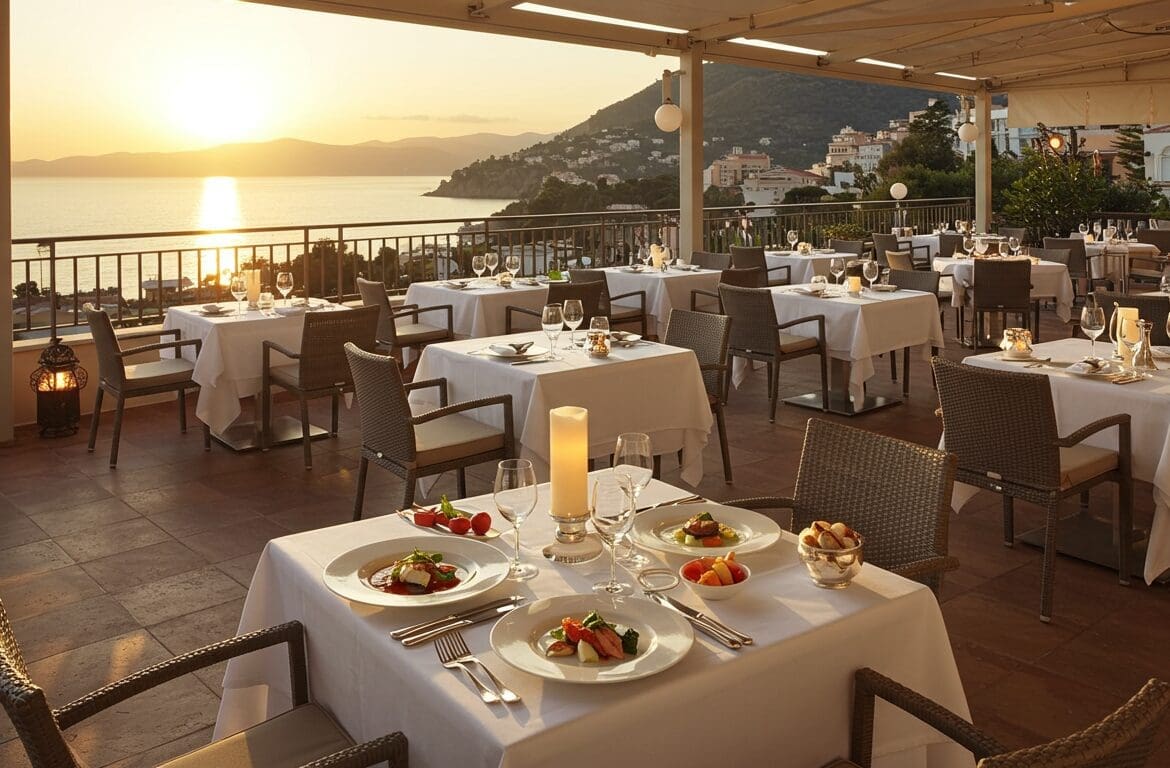
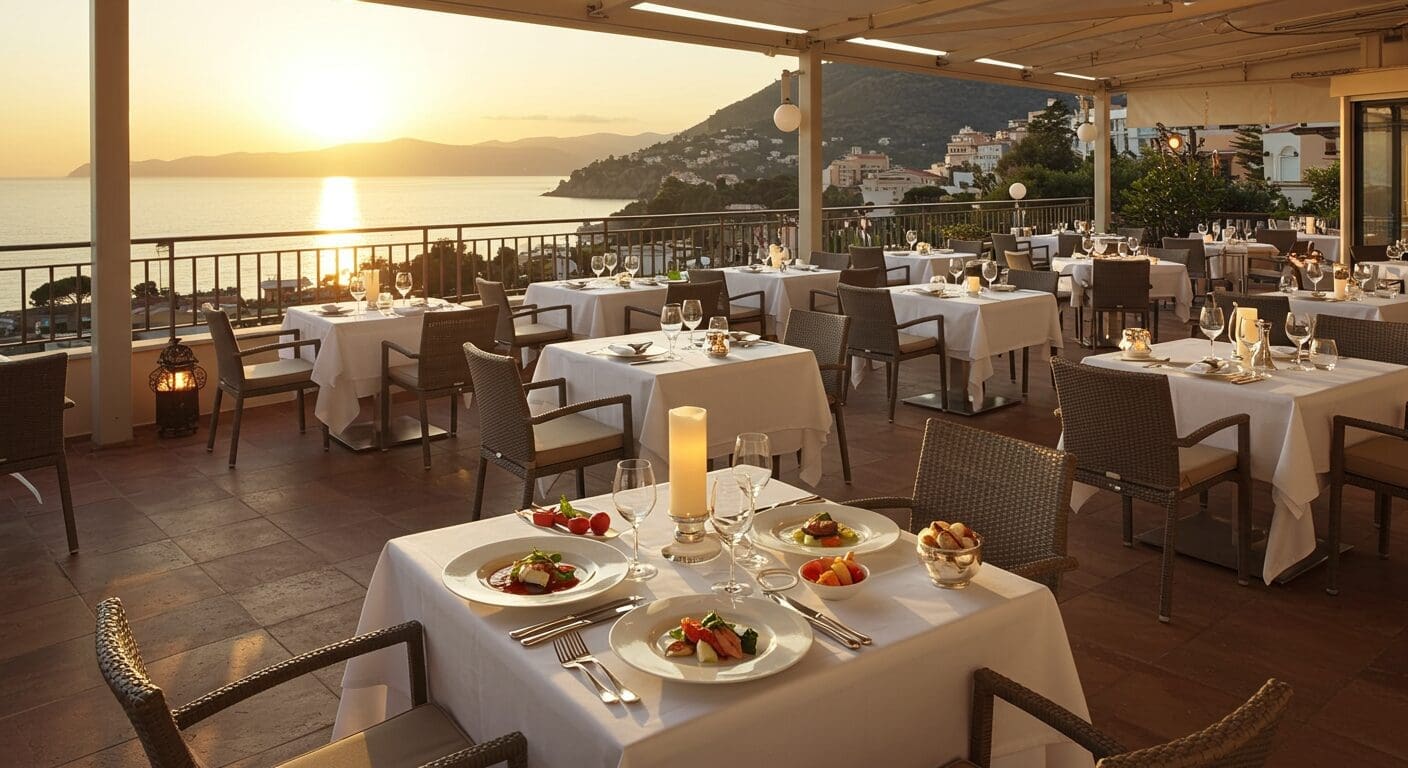
It is late afternoon and the light has gone that particular shade of gold that only happens here, the kind that makes even a glass of tsipouro look like something worth photographing. You are sitting at a table close enough to the water to hear it, a carafe of chilled Moschofilero in front of you, a plate of something involving grilled octopus and wild capers on its way. The waiter is unhurried. You are unhurried. The distant mountains of the Peloponnese have turned the colour of bruised figs. This, you think, is precisely why you came. The food, it turns out, had very little to do with luck and everything to do with knowing where to look.
The Peloponnese and Ionian Islands offer one of the most quietly serious food destinations in the Mediterranean – and one of the least talked about, which suits those in the know perfectly well. From Michelin-starred kitchens rewriting what Greek cuisine can be, to vine-shaded family tavernas where the menu is essentially whatever came off the boat this morning, this is a region where eating well is not a pursuit. It is simply the default setting. This guide covers the best restaurants in Peloponnese & Ionian across every register – fine dining, hidden gems, beach eating, food markets, wine, and the dishes you genuinely should not leave without trying.
Fine Dining: Where the Peloponnese Gets Serious
The arrival of Costa Navarino on the Messinian coast changed things considerably. What was once a quietly beautiful stretch of olive groves and bay has become the address in the Peloponnese for destination dining – and two restaurants in particular have set a new benchmark for the region.
Paráfrasi by CTC is perhaps the most intellectually interesting restaurant currently operating in the Peloponnese. The name means “paraphrase,” which turns out to be the perfect word for what Michelin-starred Chef Alexandros Tsiotinis is doing here. He holds a Michelin star earned at CTC Urban Gastronomy and has carried that authority to Navarino Dunes, where he has created something he calls a “neo-taverna” – though it is unlike any taverna you have ever sat in. Traditional recipes are not simply updated; they are examined, questioned, and then rebuilt using exceptional ingredients sourced from small-scale local producers. The result is food that feels simultaneously ancient and entirely new. Order the tasting menu if you are serious. You are here, aren’t you?
Just along the bay at W Costa Navarino, Parelia takes a different approach – one that is no less accomplished. Chef Nikos Billis has built the menu around the exceptional seafood of Navarino Bay, and the setting does its share of the work: tables close to the water, service that is warm without being theatrical, and a notable number of dishes finished tableside by the kind of expert team that makes the whole thing feel like a performance you did not realise you were watching. If you are going to eat fish in the Peloponnese at the higher end of the register, this is where to do it.
Between these two, Costa Navarino alone justifies a serious detour. That a resort has produced two restaurants of this quality is either remarkable or entirely expected, depending on how you feel about ambition meeting landscape.
The Best Restaurants in Town: Nafplio, Kalamata and Beyond
Away from the resort coast, the Peloponnese does its best eating in its towns – and Nafplio, arguably the most beautiful small city in Greece, is the place to start. 3SIXTY Grill Dining & Wine Bar has earned its reputation as Nafplio’s top dining destination through a combination of premium grilled meats, assured Greek cooking, and what is genuinely one of the better wine lists in the region. The Peloponnese produces some serious wine – more on that shortly – and 3SIXTY takes it properly seriously, pairing a cellar of local and international bottles with cocktails that suggest someone in the kitchen has taste beyond the grill. Located in the Old Town, it is the kind of place that rewards dressing up for, even slightly.
In Kalamata – a city whose name the world knows almost entirely because of its olives, which is fine but does rather undersell the rest of it – Kardamo has been a reliable pleasure since 2013. Near the Railway Station Square, it occupies that satisfying middle ground between traditional and contemporary Greek cooking, where the kitchen clearly knows the rules and has decided to push at them gently rather than ignore them entirely. The grilled green beans with carob rusks and feta cheese cream is the kind of dish that makes you realise how much thought is hiding inside apparently simple ingredients. The handmade cheese pie with local cheeses and caramelised leeks is the kind of dish that makes you order it twice. The atmosphere is warm and unhurried, and the service has that quality of genuine friendliness that cannot be trained and should not be taken for granted.
The Ionian Islands: Kefalonia and the Art of the View
Cross to the Ionian and the culinary character shifts – the Italian influence creeps in, the olive oil gets even better if you can imagine such a thing, and the setting for dinner tends to involve either a harbour or a castle. Sometimes both.
Il Borgo Restaurant on Kefalonia manages the castle with considerable style. A short walk from St. Georges Castle and about fifteen minutes from Argostoli, it sits on a vine-covered terrace with views over the coastline and the ancient fortress that are, frankly, difficult to improve upon. The menu covers good ground – chicken Il Borgo, grilled salmon, moussaka, a pasticcio that takes the Ionian’s Italian inheritance seriously – and the atmosphere is reliably romantic in a way that does not require any particular effort from the diner. It serves breakfast, lunch and dinner, which makes it the kind of place you could theoretically visit three times in a day. We would not judge you.
Beyond Il Borgo, Kefalonia rewards exploration. The harbour towns of Fiskardo and Assos have small restaurants that operate on the principle of doing very little, very well – fresh fish, good bread, local wine, a table outside. The Ionian islands generally have not over-developed their food scenes, which is either frustrating or a relief depending on what you came for.
Tavernas, Hidden Gems and the Pleasure of Getting Lost
The best meal you will eat in this region may not have a website. It may not have a sign you can read. It will almost certainly have a cat somewhere in the vicinity. The village taverna – functioning across the Peloponnese in a form that has not changed enormously in decades – remains one of the most reliable dining experiences in Europe, operating on a refreshingly simple model: cook what is good today, charge what is fair, stay open as long as people are eating.
In the Mani – the extraordinary middle finger of the Peloponnese, dramatic and a little forbidding in the best way – small restaurants in villages like Areopoli and Kardamyli serve slow-cooked lamb and pork with local greens and rough local wine that you will remember more vividly than some Michelin meals. The Mani has its own food culture, influenced by the isolation of its history, and it is worth seeking out.
In the Argolid – the area around Nafplio and Mycenae – tavernas near the archaeological sites tend toward the tourist end of the spectrum, which is a polite way of saying order carefully. Step one street back from the main drag anywhere and the quality improves sharply. This is a rule that applies across Greece and should be tattooed somewhere accessible.
On Zakynthos and Lefkada in the Ionian, waterfront restaurants in the smaller villages – away from the main tourist strips – offer some of the most characterful eating in the islands. Follow the boats rather than the signs.
Beach Clubs and Casual Dining by the Water
The beach club has arrived in the Peloponnese and Ionian in a form that is considerably more civilised than its Mykonos cousin. The emphasis here is on food and setting rather than spectacle, which is either a sign of maturity or a reflection of the clientele. Probably both.
Costa Navarino’s beach facilities include casual dining options where the quality of ingredient remains constant even if the dress code has been quietly abandoned. On the Ionian islands, beach tavernas on quieter stretches – Kefalonia’s Myrtos beach area, the calmer coves of Lefkada – serve grilled fish and cold beer in settings that remind you why you chose this part of the world over somewhere with better infrastructure.
For the more composed beach club experience, look to the resorts around Navarino Bay and the better hotels of Kefalonia and Zakynthos, where poolside and beachside menus have been taken seriously by people who understand that a mediocre lunch ruins a good afternoon.
Food Markets and Where to Find the Best Local Produce
The Peloponnese is, agriculturally speaking, exceptional. It produces some of the finest olive oil in the world – Kalamata oil and the single-estate oils of the Mani are the ones to find – alongside honey, figs, citrus, and a variety of cheeses that the rest of the world has only vaguely begun to notice. The weekly markets in Kalamata, Nafplio and Sparta are the places to spend a purposeful morning. Kardamyli’s small market is worth the visit if you are in the Mani.
On Kefalonia, the central market in Argostoli carries excellent local produce including the island’s celebrated Robola grapes (more on those shortly) and the honey for which the island is justly admired. On Corfu – the northernmost of the Ionian islands – the Old Town’s covered market is a serious institution, carrying kumquat products, local olive oils and spices with an Italian accent that reflects the island’s Venetian past.
Buy the olive oil. Buy more than you think you need. The customs allowances are more generous than you remember and you will use all of it.
What to Order: Dishes Worth Seeking Out
Across the region, certain dishes define the table in ways worth knowing before you sit down. In the Peloponnese, slow-cooked lamb with kritharaki (orzo pasta baked in the meat juices) is the Sunday standard and it is impeccable when done properly. Fava – the split yellow pea purée that is not lentil soup regardless of what it looks like – appears everywhere and should be ordered everywhere. Pasteli, the sesame and honey bar that predates recorded confectionery history, is worth eating for its simplicity alone.
Seafood demands attention: grilled red mullet (barbounia), sea bream and cuttlefish in ink are the things to pursue at any taverna near the water. In the Ionian, sofrito – a Corfiot dish of veal cooked slowly in garlic and white wine – is one of those regional recipes that makes you wonder why it has not spread further. The answer, of course, is that it travels badly. All the best things do.
At the finer end, watch for creative treatments of Mani olive oil, dishes involving local cheeses like graviera and manouri, and any dessert involving Corinthian currants, which are smaller and more intense than raisins and have been exported from this coast since antiquity. Some things do not need improving.
Wine and Local Drinks: What to Pour
The Peloponnese is one of Greece’s most important wine regions and considerably undervalued by the international market, which is excellent news for anyone drinking it here. The Nemea appellation produces Agiorgitiko – a red grape of genuine depth and structure that pairs with grilled meat in a way that feels predetermined. It is the grape on every serious wine list in the region and the one to ask about when the carafe option presents itself.
Moschofilero from Mantinia is the white to pursue: aromatic, crisp, floral in a way that is dry rather than sweet, and structurally perfect for fish and seafood. If you drink nothing else at lunch beside the sea, let it be this.
On Kefalonia, the Robola grape produces a white wine of mineral austerity that is among the most distinctive in the Ionian – a wine that tastes specifically of its place in a way that is increasingly rare. Seek out single-estate bottles from the Robola Cooperative of Kefalonia.
For spirits, tsipouro – the Greek pomace spirit – is the local digestif of the Peloponnese and should be treated with appropriate respect after dinner. Ouzo functions better at lunch with mezedes than it does in any other context, whatever the tourist bars might suggest. And on Corfu, the kumquat liqueur is the kind of thing you will either love immediately or politely finish once. Both outcomes are acceptable.
Reservation Tips: How to Eat Well Without Disappointment
For the finer restaurants – Paráfrasi by CTC and Parelia at Costa Navarino in particular – reservations are not optional in high season. Book well in advance, especially for July and August when the resort operates at capacity and tables at the signature restaurants are genuinely limited. The concierge at Costa Navarino can assist guests; for independent travellers, book directly and book early.
3SIXTY in Nafplio is worth a reservation for weekend evenings, when the Old Town fills considerably. Kardamo in Kalamata is a smaller operation and benefits from a call ahead.
Il Borgo on Kefalonia operates across all three meal services but dinner on the terrace in summer is the one to secure. The view at sunset requires no further argument.
For village tavernas and beach restaurants, the walk-in culture remains intact and should be embraced. Half the pleasure of eating in a Mani village is sitting down somewhere you did not plan. Arriving early – before eight in the evening – generally ensures a table anywhere without the anxiety.
One practical note: many of the finest tavernas close between October and April, particularly on the smaller islands. High season runs May through September with July and August being the most compressed. If you are travelling outside this window – and the shoulder seasons here are genuinely beautiful – call ahead before making plans around a specific restaurant.
The Table is Set
Eating well across the Peloponnese and Ionian is not difficult. It requires only attention: to what is local, what is seasonal, what the boat brought in this morning, and which of the tables outside has the better angle on the evening light. The region is generous with all of these things. The culinary scene here – from the considered ambition of Michelin-starred kitchens at Costa Navarino to the perfectly grilled fish on a harbourside terrace in Fiskardo – represents some of the most rewarding eating in the Mediterranean. It is simply a matter of showing up hungry and curious, which, if you have read this far, you clearly are.
For those who want to take this further, the natural next step is to base yourself in a luxury villa in Peloponnese & Ionian – many of which offer private chef options that bring the region’s ingredients directly to your table. It is, to be honest, a rather persuasive argument for staying in for dinner. Occasionally.
For broader context on the region – from where to stay to what to do beyond the table – the full Peloponnese & Ionian Travel Guide covers everything you need to plan a trip worth taking seriously.
Do I need to book restaurants in advance in the Peloponnese and Ionian Islands?
For fine dining restaurants – particularly Paráfrasi by CTC and Parelia at Costa Navarino – advance reservations are essential in high season (July and August). For popular town restaurants like 3SIXTY in Nafplio or Il Borgo on Kefalonia, booking a day or two ahead for dinner is strongly recommended in summer. Village tavernas and casual beach restaurants generally operate on a walk-in basis, though arriving before 8pm gives you the best chance of securing a good table without planning ahead.
What are the best local dishes to try in the Peloponnese and Ionian Islands?
In the Peloponnese, slow-cooked lamb with orzo, fava (split yellow pea purée), grilled red mullet (barbounia), and dishes featuring local graviera and manouri cheeses are essential. In the Ionian, sofrito – a Corfiot dish of veal cooked slowly with garlic and white wine – is the regional signature worth seeking out. Kalamata olives and the single-estate olive oils of the Mani are worth buying to take home, alongside local honey and Corinthian currants. For wine, Nemea’s Agiorgitiko red and Mantinia’s Moschofilero white are the regional bottles to know.
Is there Michelin-starred dining in the Peloponnese?
Yes. Paráfrasi by CTC at Costa Navarino in Messinia is led by Chef Alexandros Tsiotinis, who has held a Michelin star since 2021. The restaurant operates as a creative neo-taverna, reimagining traditional Greek recipes using exceptional local ingredients from small-scale producers. It represents the most ambitious fine dining currently available in the Peloponnese and is well worth the journey to the Navarino Dunes. Reservations should be made as far in advance as possible, particularly for the summer season.