
Best Time to Visit Pollença: Month by Month Weather, Crowds & Tips
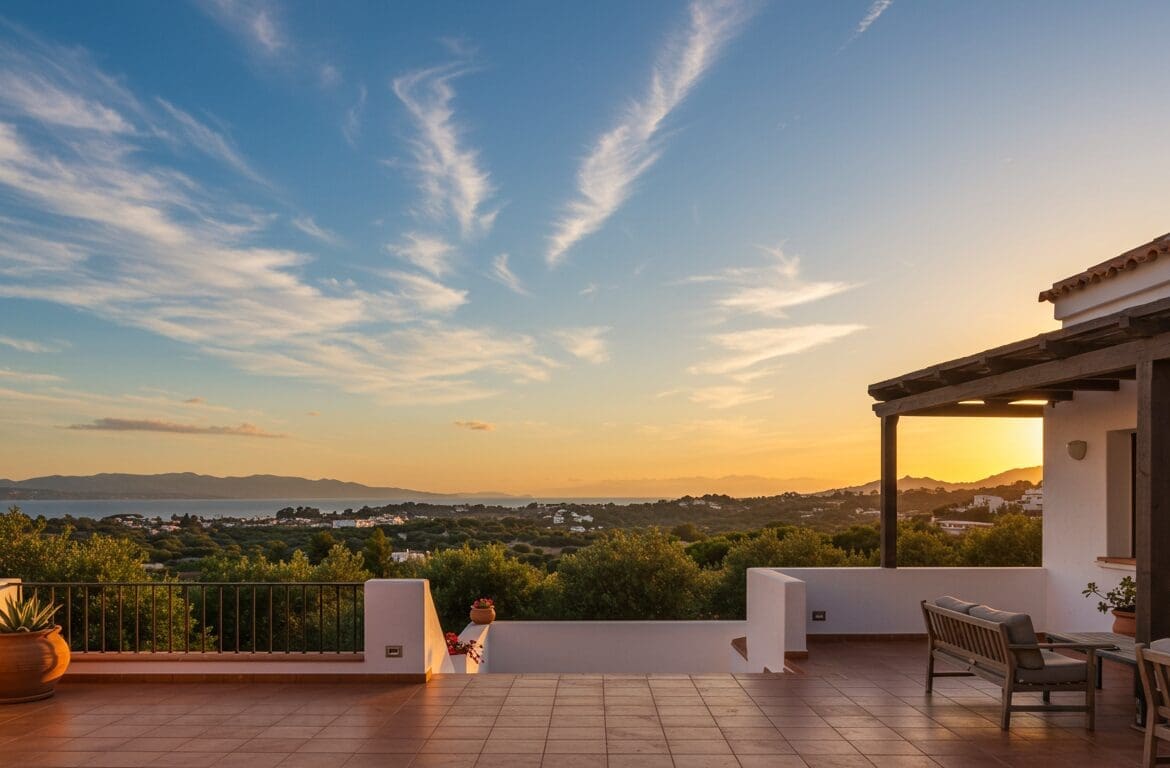
There is a particular quality to the light in Pollença in late September – a low, golden angle that turns the stone of the old town the colour of warm honey and makes even the most unsentimental traveller reach for their camera. The summer crowds have largely retreated to wherever they came from, the restaurant tables have space again, and the Tramuntana mountains that frame the town have lost their heat haze. The locals reappear on the terraces as if they’ve been in hiding, which, frankly, they have. This is Pollença at its most itself – and knowing when to arrive is half the art of travelling well.
Whether you’re planning a family villa holiday, a slow couple’s retreat or a group escape from the everyday, timing your visit to this corner of northern Mallorca changes everything: the price, the pace, the mood of the place. What follows is an honest, month by month account of what to expect – weather, crowds, events and the unvarnished truth about each season. For the full picture on where to eat, what to do and how to get around, our Pollença Travel Guide covers everything else.
Spring in Pollença: March, April & May
Spring arrives early in Pollença and does so without any particular drama – one week there’s a chill in the air and the next the almond blossom is doing its thing and you’re sitting outside in a light jacket with a glass of local white wine, wondering why you ever go anywhere else in March.
Temperatures in March hover between 10°C at night and 16°C in the daytime – cool enough to hike comfortably, warm enough to eat outside at lunch. By May, you’re looking at daytime highs around 22-24°C with long, clear days and the kind of air quality that makes the Tramuntana feel three-dimensional. Rainfall is occasional but not oppressive, and the landscape is impossibly green – a version of Mallorca most visitors never see because they arrive in July when everything has bleached dry.
Crowds are minimal in March, building gently through April and becoming noticeable by the second half of May. Easter week (Setmana Santa) is the one significant exception – Pollença’s Holy Week processions are among the most atmospheric in Mallorca, drawing visitors from across the island. The Davallament on Good Friday evening, a candlelit procession down the famous 365-step Calvari staircase, is genuinely moving. Worth planning around rather than avoiding.
For villa rental, spring represents excellent value – particularly March and early April when prices sit well below peak and availability is generous. This is the ideal season for active travellers, couples who walk and cycle, and anyone who finds August’s heat more endurance sport than holiday. Families with school-age children may find term time restricts them, but for those with flexibility, spring is among the most rewarding times to visit.
Summer in Pollença: June, July & August
Let’s be straightforward about summer in Pollença: it is hot, it is busy, and if you’re arriving in August expecting to have the Plaça Major to yourself, you will be disappointed in the way that anyone is disappointed when reality fails to match a fantasy. That said, summer here is genuinely wonderful if you approach it with the right expectations and the right villa.
June is the sweet spot of the summer season – temperatures in the mid-to-high 20s, the sea warm enough to swim in, the restaurants fully open but not yet at capacity. Daylight stretches past 9pm. Life moves onto terraces and pool decks. This is the Pollença of long evenings and unhurried dinners, and it rewards those who book early.
July and August bring serious heat – regularly 32-35°C in the daytime – along with the full weight of the high season. The weekly Sunday market in the Plaça Major becomes a navigational challenge. Road parking near the town becomes a competitive sport. Prices for villas reach their annual peak, and the most sought-after properties book up months in advance, sometimes a full year ahead.
And yet: the sea at Port de Pollença is warm and clear, the evenings are electric with activity, and there’s something to be said for experiencing a place at its most alive. Families with school holidays to work around will be here in number, and the resort infrastructure – boat hire, watersports, beach bars – is at full operation. Groups celebrating something tend to love it. Just book everything – villas, restaurants, activities – well in advance.
The Pollença Music Festival, held throughout July and into August, brings classical performances to the atmospheric cloister of Sant Domingo. It’s been running since 1962 and has earned its reputation. An evening concert there is worth factoring into your itinerary regardless of when you visit.
Autumn in Pollença: September & October
September is, without much competition, the best month to visit Pollença. The sea temperature peaks – often reaching 26-27°C – even as the air begins to soften from August’s intensity. Daytime highs sit at a civilised 27-29°C early in the month, easing to 23-25°C by early October. The light changes in a way that is difficult to describe without reaching for the word “golden”, so let’s just say it and move on.
The crowds thin noticeably after the first week of September as European school terms begin. Villa prices drop, tables reappear at popular restaurants without a reservation, and the town rediscovers its rhythm. Locals who spent August largely indoors emerge into the cooler evenings. The whole place exhales.
October continues this trajectory – still warm enough for the pool, still reliably sunny, but with occasional autumn showers that tend to arrive dramatically and depart just as fast. The landscape starts to recover from the summer drought. Hiking conditions become excellent again. This is prime territory for couples, for anyone who works remotely and wants longer stays, and for travellers who have done August Mallorca and know there is a better way.
The Fira d’Octubre, Pollença’s traditional autumn fair, brings the town together in a way that feels genuinely local rather than staged for visitors. If you happen to be here for it, you’ll see a side of Pollença that doesn’t make it onto Instagram quite as readily.
Winter in Pollença: November, December, January & February
Winter in Pollença is a different proposition entirely – and an honest one. This is not a destination that pretends to be a year-round warm-weather resort. November and February bring temperatures that range from 8°C at night to around 15°C in the day. It rains. The Tramuntana occasionally receives snow on its higher peaks. A fair number of restaurants close or reduce hours. The beach bars at Port de Pollença pack up their sun loungers and wait.
And yet there is a compelling case for the off-season visit, particularly for a certain kind of traveller. The town in winter is authentically itself – no queues, no parking chaos, no competition for anything. The old town feels genuinely inhabited rather than consumed. You can walk the Calvari steps in near-solitude, take a coffee in the Plaça Major without elbowing anyone, and explore the surrounding countryside with the trails almost entirely to yourself.
Villa rental in winter represents extraordinary value – some properties drop to a fraction of their August rates, and minimum stay requirements are often relaxed. For remote workers, writers, or anyone who needs to actually think without distraction, a winter month in Pollença is a quietly excellent idea. December brings Christmas decorations and a local warmth that feels earned. January and February suit the truly independent traveller who doesn’t require a beach umbrella to be happy.
It bears saying that not everything closes. Year-round restaurants and bars serve the local community. The weekly market continues. The Calvari is always there. The mountains don’t go anywhere.
Quick Season Comparison: Who Should Visit When
Spring (March – May): Best for hikers, cyclists, couples seeking value and quiet. Excellent villa availability and pricing. Easter week worth seeking out. Not ideal for those requiring pool-warm sea temperatures.
Early Summer (June): The intelligent family choice. Warm, swimmable, busy but manageable. Book villas at least three to four months ahead. Excellent all-round balance of activity and atmosphere.
High Summer (July – August): For families bound by school holidays and groups who want full resort energy. Book twelve months ahead for premium villas. Accept the heat and the crowds as part of the experience rather than impediments to it.
Autumn (September – October): The connoisseur’s window. Best sea temperatures, best light, best value after August, best overall balance. Suits almost everyone. Particularly good for couples, slow travellers and those returning for a second or third visit.
Winter (November – February): For independent travellers, remote workers, villa seekers after extraordinary value, and anyone who finds the idea of Pollença without the crowds quietly appealing. Know what you’re coming for and you won’t be disappointed.
Practical Booking Advice
For luxury villa rental specifically, the most important rule is simple: the best properties go first. Properties with private pools, panoramic Tramuntana views and premium locations in the old town or the surrounding countryside are booked – in high season – as early as twelve months in advance by repeat visitors who already know what they want. If you’re targeting July or August, January is not too early to be looking. If September is your window, the preceding spring is when to act.
Shoulder season – specifically June and September – offers the most genuine balance of quality, value and availability. You’ll find the full range of properties on the market at prices that feel considerably more reasonable than their August equivalents, and you won’t be competing with every other discerning traveller in northern Europe for the same week.
Whatever month you choose, Pollença rewards the traveller who plans ahead and travels slowly. It’s a town built for lingering – for morning walks before the heat arrives, long lunches, evening paseos through the old town. A week here is the minimum. Two weeks is better. You’ll understand why when you arrive.
Browse our collection of luxury villas in Pollença to find the right property for your season and travel style – from hilltop retreats with mountain views to elegant town houses in the heart of the old town.