
Pollença Travel Guide: Where to Stay, Eat & Explore in Luxury
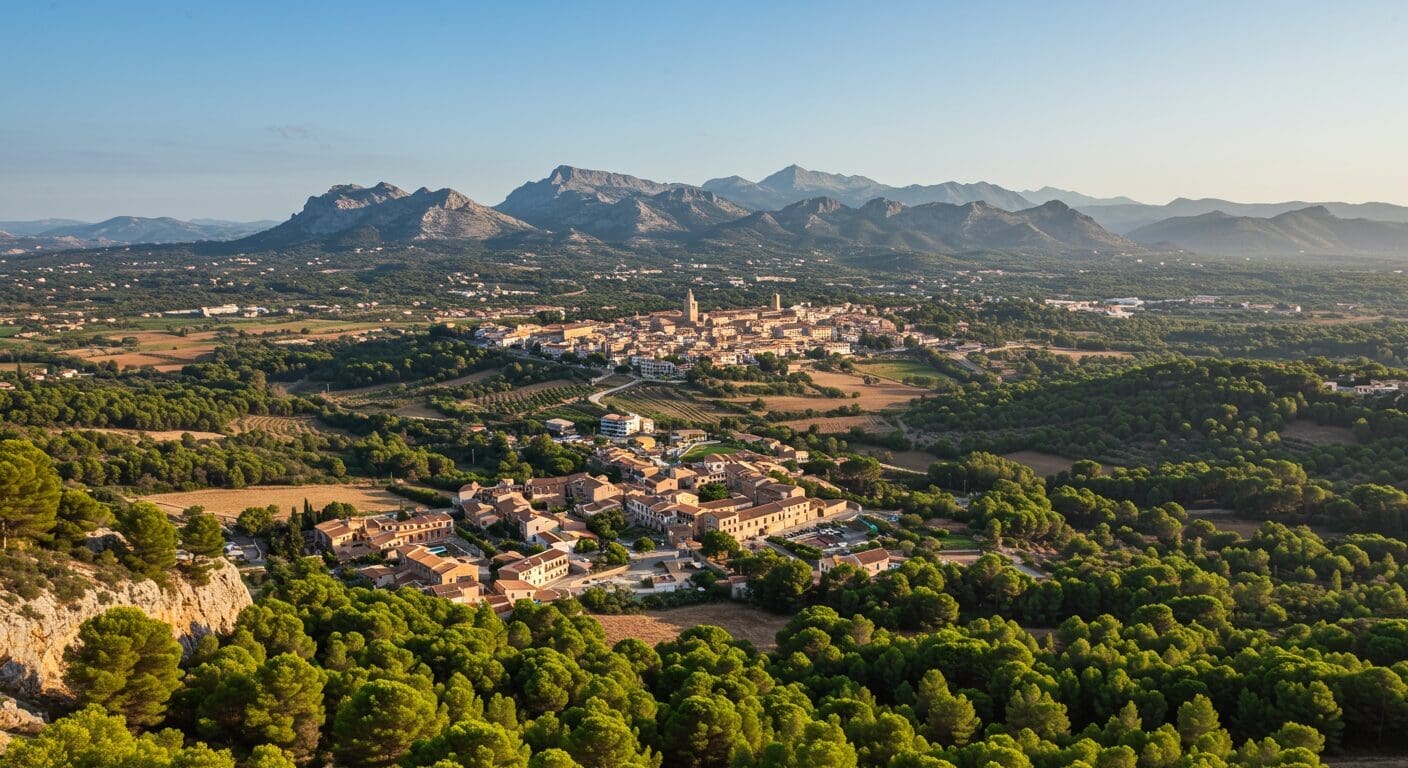
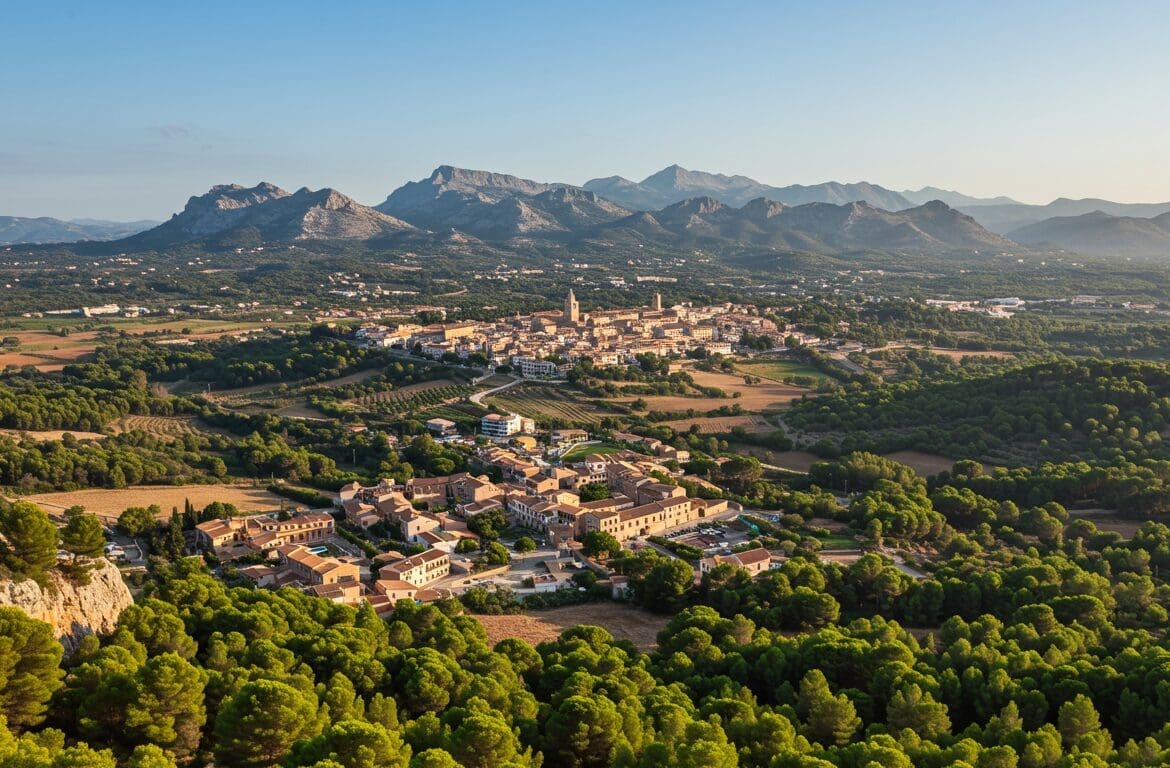
It is seven in the morning and the light on the Tramuntana mountains is doing something that should probably be illegal. You are sitting on a terrace somewhere above the town, a coffee in hand that arrived without you quite asking for it, and below you Pollença is waking up in the unhurried way that only very old, very confident places do. The bells of the church toll the hour. A cat picks its way across the square. The mountains, bone-dry and bone-coloured in August, have gone a shade of apricot that would embarrass a painter. This is the north of Mallorca – the part that the island’s admirers tend to keep to themselves, as if sharing the information might somehow ruin it. It would not, of course. But you understand the impulse entirely.
Pollença is one of those rare places that manages to be genuinely lovely without trying very hard, and that suits a particular kind of traveller perfectly. It draws couples marking the anniversaries that actually matter – the tenth, the twenty-fifth, the ones where you want a place that will do the work for you. It works beautifully for families who want privacy over pool parties, who’d rather have their own terrace and a chef on call than fight for sunloungers. Multi-generational groups find it here too – grandparents who can walk at their own pace through market day, teenagers who can be deposited on a paddle board at Port de Pollença and forgotten about for several productive hours. Remote workers have discovered the north’s reliable connectivity and extraordinary light, and are now the quietly smug occupants of many a hilltop villa. And the wellness-focused, the ones who’ve had enough of spa hotels and want to hike the Tramuntana before breakfast and float in their own pool afterwards – Pollença is, rather wonderfully, built for all of them.
Getting to the Most Beautiful Corner of Mallorca Without the Fuss
Palma de Mallorca Airport (PMI) is the gateway, and from most of northern Europe it is a refreshingly short hop – just over two hours from London, under two from Paris, a little over two from Frankfurt. Direct routes operate year-round from most major hubs, and during the summer months the frequency is almost embarrassing. There is genuinely no excuse for not coming.
From the airport to Pollença is approximately 65 kilometres, and the drive north through the interior of the island is, depending on your disposition, either a pleasure or a preview of what the next week will feel like. The Tramuntana mountains rise on your left and the road narrows as it approaches the north. Allow around an hour, slightly more if you’re stopping for a photograph you’ll never quite capture. Private transfers are the sensible choice – they can be arranged through your villa concierge and are worth every euro, particularly on arrival when the last thing you want is the minor theatre of hiring a car at the airport. That said, having a car in Pollença is genuinely useful. The town’s attractions and the surrounding villages are spread out in a way that rewards independent exploration, and the roads, though occasionally agricultural in their ambitions, are perfectly manageable.
Taxis operate in the area, and the local bus service – EMT Mallorca – connects the main towns if you’re feeling admirably public-spirited. But for a luxury holiday in Pollença, most guests find that a hired car, collected on day two once the journey has been slept off, is the optimal arrangement.
Where to Eat in Pollença: From Michelin-Recognised to Market Morning
Fine Dining
The standard-bearer, and the one that requires no further argument, is 365 Restaurant at Son Brull Hotel & Spa. Michelin has assigned it three red knife-and-fork symbols – the guide’s way of saying that this is not merely good but rather exceptional – and under Chef Andreu Segura, the kitchen makes a convincing case for Mallorcan cuisine as something worth travelling specifically to eat. The philosophy is one of radical locality: most ingredients come from the hotel’s own farm estate, which means the menu shifts with genuine seasonal honesty rather than the performed seasonal honesty you find elsewhere. There are several menus, including a vegetarian option, and the result is cooking that tastes like it has something to say. This is the restaurant for the night you want to remember. Book ahead. Dress as if you mean it.
Where the Locals Eat
Celler El Molí is the kind of restaurant that rewards the traveller who pays attention to where the locals actually go rather than where the guidebooks point. The name gives away the setting – a traditional Mallorcan celler, or wine-cellar style restaurant, with the atmosphere of somewhere that has been feeding people well for a long time and sees no reason to change. Mediterranean cuisine, mid-range prices, and a room that hums with the particular contentment of a town eating its own food. It holds a 4.6 on TripAdvisor with close to eight hundred reviews, which is the kind of consistent score that suggests reliability rather than a lucky week.
Q11 Restaurant, positioned next to the main church on the town square, splits its identity between gastro restaurant and wine shop in a way that works rather better than it sounds. The selection of fine wines is serious, the Mediterranean cooking is fresh and elegantly executed, and the location means you can watch the square do its evening thing while deciding between a third glass of local white and the responsible option. Nearly a thousand TripAdvisor reviews and a 4.5 rating suggest others have been making the same pleasant calculation.
Hidden Gems Worth Seeking Out
R3spira sits in the historic heart of town, not far from the museum, and serves Italian-inspired dishes to a loyal mix of tourists and residents who have quietly adopted it as their own. The terrace extends onto the main square, which makes it the kind of spot where an hour can become three without any particular incident causing it. With a 4.6 rating from over four hundred reviews, it is the sort of place that earns its following through consistency and warmth rather than novelty.
For something with a more polished feel, La Placeta Restaurante offers a clean-lined modern interior alongside an outdoor terrace that earns its use of the word luxurious – a term usually applied by restaurants to mean “we’ve added cushions”. The risottos and paellas here are what people come back for, and TheFork users have consistently placed it among the town’s most popular dining destinations. A 4.3 across nearly six hundred reviews reflects a place that delivers reliably and without drama, which is, frankly, what you want on holiday.
The Landscape That Makes the North Worth the Drive
Pollença sits at the feet of the Serra de Tramuntana, the mountain range that runs down the spine of Mallorca’s northwest coast and which UNESCO saw fit to designate a World Heritage landscape in 2011. It is not a subtle landscape. The mountains are the kind that require you to stop what you’re doing and simply look at them for a moment – serrated limestone peaks, olive groves clinging to terraced hillsides, the occasional ancient stone wall suggesting centuries of extremely determined agricultural effort.
The town itself occupies an inland position, which surprises some visitors expecting a seaside resort. It is, instead, a genuinely historic Mallorcan town – ochre stone buildings, narrow lanes, a central square that has been the social centre of the community for centuries. It takes about twenty minutes to walk everywhere and about twenty years to feel like you’ve properly understood it.
Port de Pollença, the town’s coastal counterpart, sits a few kilometres away around the bay. It has a long, shallow beach that is particularly well-suited to families, a promenade lined with restaurants and bars, and the relaxed energy of a resort that has been doing this long enough to have got quite good at it. The bay itself is one of the most sheltered on the island, which makes it ideal for paddleboarding, kayaking, and the kind of gentle sailing that reminds you why sailing exists.
Further around the coast, Cap de Formentor is the island’s northeastern tip and one of the most dramatic pieces of coastline in all of Spain. The road that winds out to the lighthouse is equal parts terrifying and magnificent, and the views from the cape on a clear day include a horizon that seems unreasonably far away. Access to the cape road is restricted during peak summer months, but shuttle buses run from Port de Pollença, which is either a sensible conservation measure or a magnificent inconvenience, depending on your outlook.
Inland, the villages of Campanet, Sa Pobla, and the walled town of Alcúdia are all within easy reach. Alcúdia in particular rewards a morning’s exploration – Roman walls, a well-preserved old quarter, and a Tuesday and Sunday market that pulls the entire surrounding region in its direction.
Things to Do in Pollença That Will Actually Make the Trip
The most iconic activity in the town requires nothing more than a pair of legs and a willingness to commit. The Escala del Calvari – the 365 steps of the Calvari staircase – rises from the town centre to a small chapel at the summit, lined with ancient cypress trees that create a corridor of green shade even in the height of summer. The climb is steady rather than brutal, the views from the top across the rooftops and out towards the bay are considerable, and the sense of having earned your morning coffee on the way back down is very real. The steps have been climbed every Good Friday for centuries as part of the Via Crucis procession – one of Pollença’s most atmospheric traditions and worth timing a visit around if culture is your thing.
The town’s weekly Sunday market is among the best on the island – a sprawling, unhurried affair that fills the streets around the church with local produce, craft goods, textiles, and the full cast of north Mallorca on its day off. Come early, bring cash, and allocate more time than you think it will take. It always takes longer. This is not a complaint.
Out on the bay, water-based activities are comprehensively catered for. Sailing charters operate from Port de Pollença and range from a half-day excursion to a multi-day voyage around the island’s northern coastline – a perspective on the Tramuntana that you genuinely cannot get from land. Paddleboard and kayak hire is available at multiple points along the waterfront, and the calm, shallow water of the bay makes it accessible enough for children and beginners while still offering enough scope to make a day of it.
For the culturally inclined, the Museu de Pollença occupies a former convent in the town centre and holds a collection of local art and historical artefacts that tells the story of the town with considerably more nuance than most civic museums manage. The building alone is worth the entrance fee.
Adventure in the Tramuntana: Hiking, Cycling and Getting Properly Lost
The Serra de Tramuntana is the reason serious outdoor enthusiasts make specifically for the north. The hiking is legitimate – the long-distance GR-221 trail runs through the range and can be walked in sections or, for the genuinely committed, in its entirety over several days. Shorter routes from Pollença itself lead into the hills above the town, and a predawn start to catch the sunrise from the upper paths is one of those experiences that sounds like effort but arrives as reward.
Road cycling has become enormous in Mallorca over the past decade, and the roads of the north are considered among the best on the island. The climbs are real climbs, the descents are correspondingly exhilarating, and the network of quiet inland roads connecting the northern villages is as good as it gets in Mediterranean cycling. Rental and guided rides are available in both Pollença town and Port de Pollença, and several operators offer GPS-guided routes for independent exploration.
Sea kayaking around the cape and the sea caves along the northern coastline is spectacular – particularly in early morning before the day’s breeze picks up. Snorkelling in the clear water off the less-visited rocky coves is the kind of activity that requires no skill and delivers unreasonable pleasure. Scuba diving is available through operators in the port, with sites including wrecks, reef systems, and underwater rock formations that the Tramuntana seems to continue below the surface.
For those who prefer their adventure at a measured pace, horse riding through the agricultural land behind the town offers a very different angle on the same landscape, and several fincas in the area operate guided rides with guides who know which tracks lead somewhere and which ones very much don’t.
Pollença with Children: Why Families Come Back Year After Year
The north of Mallorca has been attracting family holidays for decades, and Pollença’s particular appeal for families comes down to a combination of factors that are individually good and collectively rather excellent. The beach at Port de Pollença is shallow, calm, and long enough that children can cover considerable distance without getting into difficulty – a quality that parents of small swimmers will appreciate more than they expected. The bay is protected from Atlantic swell, which means the water stays flat and the anxiety levels stay low.
The town itself is the right size for children to explore with gradually increasing independence as the holiday progresses – a quality of place that hotel complexes simply cannot replicate. There is a central square where they can run while you sit, a market to excite them, and the Calvari steps to tire them out. The activities available – paddleboarding, snorkelling, kayaking, horse riding, cycling – span the full age range without condescension.
The private villa with pool dimension of a Pollença family holiday changes the equation significantly. Mealtimes happen when your family is hungry rather than when the restaurant service says so. Naps happen without being timed around hotel schedules. Teenagers have their own space. Toddlers have a safe, private garden. The pool becomes the centrepiece of the holiday in a way that a shared hotel pool, with its sun-lounger politics and its competing demands, simply cannot. Families who have tried both rarely go back to hotels voluntarily. (The hotels have noticed.)
History, Culture and the Town That Refused to Be Ordinary
Pollença has been inhabited since prehistoric times, though it was the Romans who established Pollentia – their town on the island – in the vicinity, and whose legacy includes a remarkably preserved amphitheatre near modern Alcúdia. The Moors occupied the island for three centuries before the Christian reconquest of the thirteenth century, and the layers of those histories are visible in the architecture, the landscape management, and the food.
The town developed its cultural identity with unusual vigour. The Pollença Music Festival, established in 1962, takes place each July and August in the cloister of the former convent – an open-air setting that manages to be both atmospheric and acoustically functional, which is rarer than you’d think. International musicians and orchestras come specifically for it, and tickets should be secured well in advance if you’re visiting during the festival period.
The Good Friday Via Crucis procession, in which a figure representing Christ is carried down the 365 steps of the Calvari by torchlight while hooded penitents process in silence, is one of the most quietly powerful religious ceremonies in the Balearics. It is observed rather than performed, and the effect on those who witness it – regardless of their own beliefs – tends to be considerable.
Local artists have long been drawn to the quality of light in the north, and the Museu de Pollença holds work that demonstrates why. The Anglada Camarasa collection is the highlight – the Catalan painter spent the final decades of his life in Pollença and produced some of his most important work here, seduced, like so many before and after him, by those Tramuntana colours.
Shopping in Pollença: What to Bring Home and Where to Find It
The Sunday market is the obvious starting point and the most enjoyable shopping experience the town offers. Local olive oil, which is produced in the Tramuntana with genuine craft, is one of the few food souvenirs that justifies the effort of transporting it home in luggage. Mallorcan sobrassada – the cured, spiced sausage that is to the island what prosciutto is to Parma – is another, though airline policies on cured meats vary with a capriciousness that is almost artistic. Ceramics, textiles, and handmade goods from local artisans are better value at the market than in the town’s boutiques, and the quality is considerably more variable, which is part of the pleasure.
The town centre has a respectable scattering of independent boutiques selling clothes, homewares, and local craft items, and the standard is generally higher than you’d find in the coastal resorts further south. The art galleries around the main square are worth browsing – the tradition of artists settling in Pollença has left a legacy of working studios and commercial galleries with genuine work by local painters rather than the decorative maritime scenes that constitute most resort gallery output.
For something with longevity, Mallorcan pearls – the cultured freshwater variety produced principally in Manacor, on the other side of the island – are available throughout Mallorca and make a considered rather than merely impulsive purchase. The craft pottery of the region, with its characteristic terracotta glazes and functional forms, travels well and looks better at home than you’d expect.
Practical Things Worth Knowing Before You Go
Spain uses the euro, and Pollença is well served by ATMs in the town centre. Most restaurants and shops accept card payments, though a small amount of cash is useful for the market and for tips. Tipping is not compulsory in Spain in the way it has become in parts of the United Kingdom or the United States – rounding up or leaving five to ten percent at restaurants is appreciated, but the elaborate guilt of American tipping culture has not yet arrived and long may that continue.
The language is Catalan – specifically Mallorquín, the island’s own variant – alongside Spanish. Most people working in hospitality speak English to a high standard, and French and German are widely spoken in the north. Learning a few words of Spanish, or indeed Mallorquín, is received with warmth disproportionate to the effort involved.
The best time to visit for a luxury holiday in Pollença is May, June, or September. The weather is warm without the August intensity (which can be genuinely oppressive in the middle of the day), the crowds are manageable, the restaurants have tables, and the landscape is either in spring flower or in the amber tones of late summer harvest. July is beautiful but increasingly busy. August is peak season in every sense – prices are highest, availability is tightest, and the roads around Cap de Formentor are a parking lot. October is underrated: warm sea, golden light, and the quiet satisfaction of having the place largely to yourself.
Water in Mallorca is technically safe to drink from the tap but often tastes of its journey – most visitors and residents use filtered or bottled water. Sun protection is serious business here from May onwards; the Mediterranean light flatters the landscape and punishes the inattentive. Healthcare provision on the island is good, with the main hospital in Inca and a health centre in Pollença town.
Why a Luxury Villa in Pollença Is the Only Way to Do This Properly
There is a version of a Pollença holiday that involves a hotel room, a shared pool, and breakfast at a fixed time. It is a perfectly adequate version. And then there is the villa version, which is something else entirely.
Luxury villas in Pollença range from elegant townhouses in the historic centre to vast finca estates on the hillsides above the bay, with private pools that look out over a view the hotels would charge approximately twice as much for a fraction of. The space that a well-chosen villa provides is not merely physical – though the physical part matters, particularly for families and groups – it is psychological. The freedom to eat when you want, to swim at midnight, to have a kitchen that can handle a proper Sunday lunch, to receive guests without disturbing anyone else’s holiday. A villa has a rhythm that is entirely your own, and after forty-eight hours in one, the idea of a hotel corridor becomes quietly absurd.
For groups and multi-generational families, the arithmetic of a luxury villa quickly becomes compelling. A six-bedroom property with a private pool, outdoor dining, a games room, and on-site staff divides into a per-person cost that compares favourably with equivalent hotel rooms – while offering space, privacy, and facilities that no hotel would replicate at the price. Separate wings or annexes in larger properties mean that three generations can share a holiday without sharing a bathroom queue.
For couples on milestone trips, the intimacy of a private villa – your own pool terrace, a concierge who arranges the sunset sailing charter and the table at 365 Restaurant and the morning yoga instructor – is considerably more romantic than a hotel corridor at two in the morning, however good the thread count.
Remote workers have found in Pollença’s luxury villas an unlikely paradise. Connectivity across the north has improved dramatically, with many premium properties now offering fibre connections or Starlink satellite broadband that handles video calls and large file transfers without the anguish of hotel WiFi. A dedicated workspace, reliable internet, and a pool for the hours between calls – it is not the worst office arrangement ever devised.
Wellness-focused guests find that a villa with its own pool, outdoor space, and proximity to the Tramuntana delivers more genuine restoration than any spa hotel itinerary. Morning hikes, private yoga on the terrace, evenings that end with dinner cooked from local market produce rather than a restaurant menu – the pace of recovery is entirely self-determined, which is rather the point.
Excellence Luxury Villas offers a carefully curated collection of properties across the north, from intimate two-bedroom retreats to grand estate villas sleeping twenty. The concierge team knows the region with the kind of specificity that comes from actually being there – who to call for a private boat, which restaurant will hold a table on a Saturday in August, which trail offers the best Tramuntana sunrise. Browse our full collection of luxury villas in Pollença with private pool and find the property that matches the particular version of this holiday you have in mind.
More Pollença Travel Guides
- Best Restaurants in Pollença: Fine Dining, Local Gems & Where to Eat
- Pollença Food & Wine Guide: Local Cuisine, Markets & Wine Estates
- Pollença with Kids: The Ultimate Family Holiday Guide
- Best Time to Visit Pollença: Month by Month Weather, Crowds & Tips
- Pollença Luxury Itinerary: The Perfect 7-Day Guide
- Romantic Pollença: The Ultimate Couples & Honeymoon Guide
What is the best time to visit Pollença?
May, June and September are the sweet spot. The weather is reliably warm – typically 24 to 28 degrees – the sea is swimmable, and the town is busy without being overwhelmed. July is excellent but increasingly crowded. August delivers the full Mediterranean summer but also peak prices, traffic on the Cap de Formentor road, and the sense that rather a lot of northern Europe has had the same idea at the same time. October is genuinely wonderful for those who can travel outside school holidays – the light is extraordinary, the sea retains its warmth well into the month, and Pollença reverts to something closer to its natural self. Easter week, if you’re interested in local culture, is one of the most atmospheric times of year for the Via Crucis procession on Good Friday.
How do I get to Pollença?
The nearest airport is Palma de Mallorca (PMI), which receives direct flights from most major European cities year-round, with significantly increased frequency from April through October. From the airport, Pollença is approximately 65 kilometres to the north – around an hour by private transfer, which is the recommended option on arrival. Car hire is available at the airport and is practical for exploring the region independently; many villa guests arrange a private transfer from the airport and collect a hire car from Pollença town the following day. The drive north through the interior of the island is itself rather good.
Is Pollença good for families?
Exceptionally so, and for reasons that hold up across different ages. The beach at Port de Pollença is shallow, calm, and long – ideal for younger children and confident for nervous ones. The range of water-based activities on the bay suits children from around six upwards. The town itself is the right size for families to move around independently without anxiety. And the private villa model – which dominates family holidays in the north – means meals on your timetable, a private pool, outdoor space for children to use freely, and the absence of shared facilities politics. Families with children spanning toddler to teenager consistently find Pollença works for all of them simultaneously, which is rarer than it sounds.
Why rent a luxury villa in Pollença?
Because the space, privacy and freedom a villa offers changes the nature of the holiday entirely. A luxury villa in Pollença gives you a private pool in a setting that hotels charge a premium to approximate, the ability to eat and swim on your own schedule, staff – concierge, chef, housekeeper – at a ratio that no hotel matches, and a home that reflects the architecture and character of the region rather than an international hospitality template. For families, the logistics of meals, naps and competing preferences become irrelevant. For couples, the intimacy is genuine rather than manufactured. For groups, the per-person cost of a well-chosen villa compares favourably with equivalent hotel rooms while offering incomparably more space. The villa simply fits the holiday rather than the other way around.
Are there private villas in Pollença suitable for large groups or multi-generational families?
Yes, and this is one of the north’s genuine strengths. The villa inventory across Pollença and its surroundings includes properties sleeping from four to twenty-plus, with larger estates frequently offering separate guest annexes, multiple pool areas, and enough outdoor space to allow three generations to share a holiday without feeling that they’re sharing a holiday. Purpose-built multi-generational properties typically include features like ground-floor bedrooms with accessible bathrooms for older guests alongside spaces that work for teenagers and young children. A dedicated concierge team can advise on which properties best match the specific dynamics of a large group – because a property that works brilliantly for ten adults on a friends’ trip is not necessarily the same one that works for four adults, four teenagers and two under-fives.
Can I find a luxury villa in Pollença with good internet for remote working?
Increasingly, yes. Connectivity in the north of Mallorca has improved substantially, and many premium villa properties now offer fibre broadband connections or Starlink satellite internet that handles video conferencing and large file transfers comfortably – the kind of performance that makes working from a terrace overlooking the Tramuntana a genuine operational choice rather than an optimistic experiment. When enquiring about specific properties, it is worth specifying your requirements – upload speeds for regular video calls, whether a dedicated workspace is available, and whether the connection is consistent across the property including outdoor areas. Our concierge team can advise on which properties have been specifically verified for remote working use.
What makes Pollença a good destination for a wellness retreat?
The combination of landscape, pace and infrastructure makes it genuinely well-suited to wellness-focused travel rather than merely aspirationally so. The Tramuntana offers hiking and walking of real quality at every level, from gentle morning walks above the town to full-day ridge routes. The bay provides paddleboarding, sea swimming and kayaking within minutes of most properties. The pace of life in the town is unhurried in a way that is structural rather than performed – this is simply how the north operates. At the villa level, properties with private pools, outdoor yoga spaces, and access to in-villa wellness services – massage therapists, yoga instructors, nutritional chefs – allow a genuinely personalised programme. Son Brull’s spa is available to non-residents for treatments. And the quality of local food, built around olive oil, fresh fish, seasonal vegetables and Mallorcan wine, supports the whole endeavour rather than undermining it.