
Best Restaurants in Southern Aegean
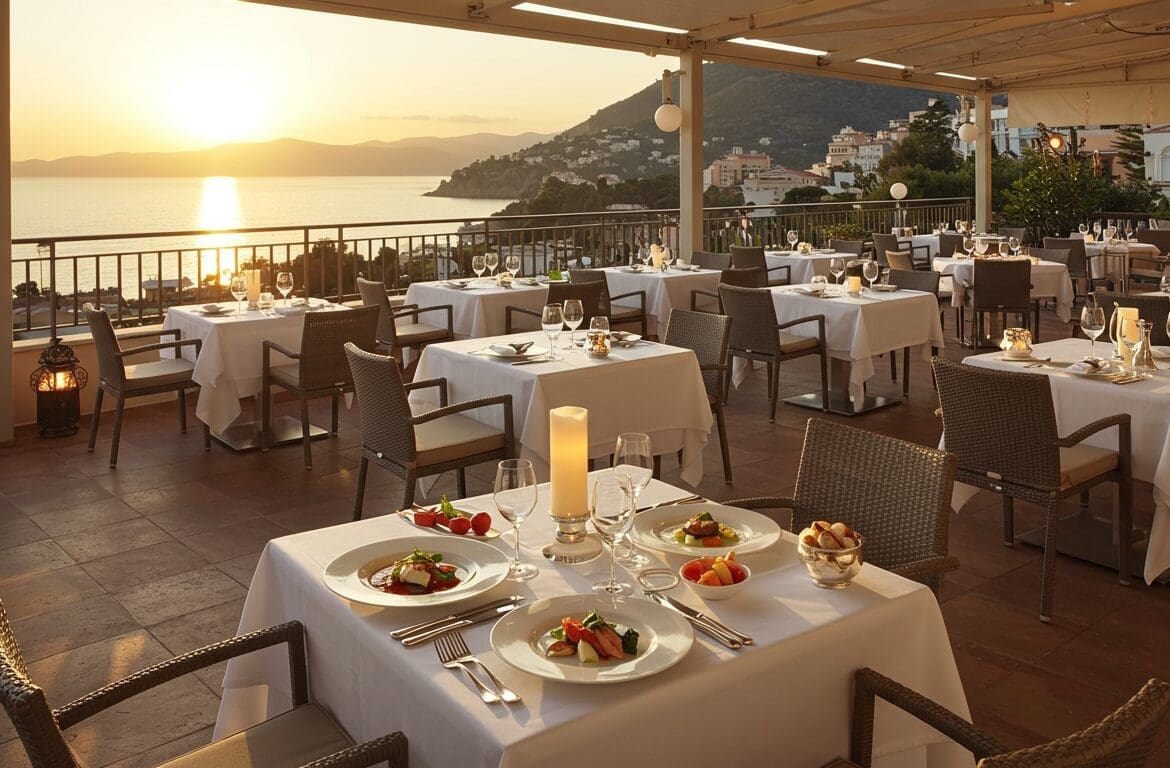
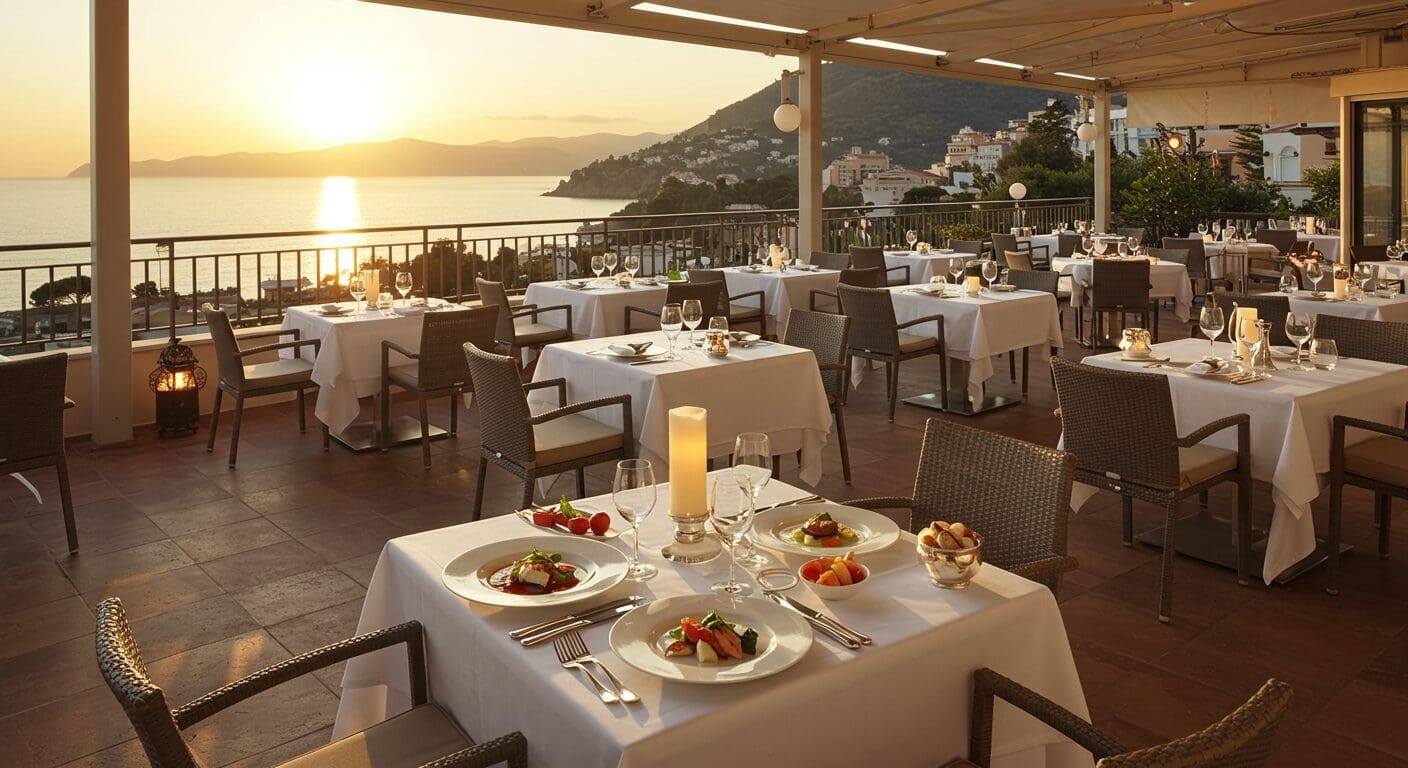
First-time visitors to the Southern Aegean arrive expecting the food to be an afterthought. They’ve booked for the sunsets, the whitewashed walls, the photographs they’ve already mentally framed. The food, they assume, will be decent taverna fare – grilled fish, a Greek salad, something involving feta – consumed mainly as fuel between swims. They are, to put it gently, wrong. The Southern Aegean – spanning the Cyclades islands of Santorini, Mykonos, Paros and Naxos, across to the Dodecanese archipelago of Rhodes and Kos – has quietly, persistently, become one of the most serious dining destinations in the Mediterranean. The chefs here are not cooking for tourists. They are cooking to prove something. And they have largely succeeded.
What follows is a guide to eating well across this remarkable stretch of the Greek islands – from Michelin-calibre fine dining to the kind of waterside taverna where the fish was breathing this morning – along with everything worth knowing before you sit down.
The Fine Dining Scene: Southern Aegean Restaurants at Their Best
The best restaurants in the Southern Aegean have arrived at a particular kind of culinary ambition: rooted in the Aegean larder, technically rigorous, but never cold or showy. This is not food that wants to intimidate you. It wants, instead, to make you feel the landscape on a plate.
Selene in Fira, Santorini, is where this story begins in earnest. Founded forty years ago by Giorgos Hatzigiannakis as a quiet champion of Santorinian produce, it has entered what many would argue is its most compelling chapter under the direction of Michelin-starred chef Ettore Botrini – one of the most significant figures in modern Greek cuisine. The setting alone earns a moment of silence: an 18th-century Catholic monastery in the heart of Fira, where stone walls and candlelight create the kind of atmosphere that makes even pragmatic people feel poetic. But it is the food that justifies the reservation. Botrini’s menu moves through the island’s culinary history with real intelligence – locally sourced, seasonally precise, and executed with the kind of care that makes each dish feel considered rather than constructed. The lobster dish, in particular, has become the stuff of genuine legend among guests. “Hands down the best lobster dish I have ever had” is not a sentence people deploy lightly. The sommelier team runs exclusive thematic wine tastings that are worth attending as a standalone experience. Selene is the benchmark. Everything else is in conversation with it.
In Oia, perched at the edge of the caldera in what might be the most demanding setting in which any chef has ever tried to concentrate, Elements at Canavas Oia Epitome manages to hold its own against the view. Executive Chef Tassos Stefatos has built three distinct tasting menus – “Taste the World,” “Taste Greece,” and “Taste the Nature” – each running to nine courses and each reflecting a different facet of his culinary thinking. This is not a menu designed to cover all bases. It is a chef making a clear argument, three different ways, and inviting you to choose your side. The sunset framing is, of course, extraordinary. Worth noting, though: the food would still be worth the visit in a windowless basement. The view is a bonus, not the point.
At Vezene Santorini, housed within the Cavo Tagoo Hotel with the caldera spread out below, the cooking takes a different and equally compelling direction. The centrepiece of the restaurant is the Hestia – a custom-built, three-metre open fire with multiple cooking levels, designed to handle everything from Aegean lobster and crayfish to well-rested côtes de bœuf and roasted lamb with equal authority. Fire cooking, done properly, requires a particular kind of technical confidence: too much heat and you’ve destroyed something expensive; too little and you’ve wasted everyone’s time. Vezene gets it right. The result is food that feels elemental rather than theatrical – a word the restaurant itself uses, describing its cuisine as “modern but with a primitive elegance.” That is not marketing copy. It is an accurate description.
On Mykonos, Yēvo represents a quieter, more contemplative form of fine dining in an island not always associated with quiet contemplation. Chef Aggelos Bakopoulos cooks in a style that is best described as deeply considered – shrimp kissed with pistachio and bitter greens, beef slow-cooked and softened with Cycladic herbs and potatoes, two seasonal menus that leave space between dishes for something approaching reflection. The restaurant’s design mirrors the food: clean lines, elemental and spare. The service moves with the kind of unhurried precision that speaks of a kitchen at ease with itself. Yēvo is the sort of place you tell people about in careful, specific terms. The kind where you remember individual bites weeks later.
Tavernas and Local Dining: Where the Regulars Eat
For all the ambition of the fine dining scene, some of the most honestly pleasurable eating in the Southern Aegean happens in places without a tasting menu, a reservation requirement, or a wine programme written by a sommelier with a philosophy. The region’s tavernas – many of them family-run for generations – operate on a different logic entirely: good fish from nearby water, vegetables from nearby earth, and very little standing between ingredient and plate. This is not a lesser form of cooking. It is a different one, and it deserves equal respect.
On Naxos, arguably the most underrated island in the Cyclades for food, the combination of fertile land, excellent cheese, and the island’s own distinctive PDO products – Naxian potatoes, graviera, kitron liqueur – means that even a modest taverna is working with exceptional raw material. Seek out places where the menu is written by hand or recited verbally, where the owner’s family appears at some point during the meal, and where the raki arrives without being asked. These are reliable indicators that you are in the right place.
Paros, similarly, rewards those willing to walk slightly away from the port. The island has a culinary culture that takes its fish seriously and its octopus very seriously – dried on lines outside taverna doorways in a manner that is either atmospheric or alarming depending on your disposition. Order the octopus grilled, with a glass of whatever white the house recommends. This is not the moment for deliberation.
Rhodes, in the Dodecanese, brings a layered history to its food – Ottoman, Italian, and Byzantine influences visible in the spicing, the pastry traditions, and the meze culture. The old town of Rhodes is worth exploring for its food alone, though selective navigation is required. The most-photographed restaurants are not always the most interesting ones. As a rule: if the menu has photographs of the dishes, keep walking.
Beach Clubs and Casual Dining
The Southern Aegean has refined the beach club to a particular art form. This is partly a Mykonos invention – the island has been perfecting the format since before it became globally synonymous with it – but the model has spread across the Cyclades and Dodecanese with varying degrees of success.
At their best, the beach clubs here offer something genuinely good: fresh seafood, local wine, salt-air and shade, the particular pleasure of eating well while technically still in your swimwear. The cooking at the top end is not casual in any meaningful sense – it simply happens to be served closer to the water. Grilled octopus, fried courgette flowers, tuna tartare, whole fish cooked simply with lemon and olive oil – these are the dishes that work in this context, and the better establishments know it.
The Aegean’s beach club culture does have a tendency toward the theatrical – DJs before noon, bottle service at 11am, influencers doing things to their food that have nothing to do with eating it. The trick is finding the places that take the food as seriously as the atmosphere. They exist. Ask your villa manager. They will know which is which.
Hidden Gems and Off-the-Radar Dining
The most consistently rewarding eating experiences in the Southern Aegean often come from the least likely directions. A family home on Folegandros that opens its terrace for dinner twice a week. A fisherman on Sifnos who grills his morning catch for anyone who asks politely. A bakery in a Naxos village that produces tiropita at 7am using cheese made the previous afternoon.
Sifnos, in particular, has a food culture disproportionate to its size. The island has been a serious culinary destination within Greece for decades – famous for its chickpea soup, revithada, slow-cooked overnight in ceramic pots in the cooling embers of a wood oven. This is food rooted in patience and technique, and finding a version made properly – not for tourists, but because it has always been made this way – is worth the ferry crossing on its own.
The Dodecanese island of Kos has a tendency to be underestimated in food terms. It should not be. Alongside the expected seafood, the island’s interior produces exceptional honey, herbs, and vegetables. A meal that begins with local honey over strained yoghurt and ends with grilled fish bought from the morning market represents some of the best value eating in the entire Aegean.
Food Markets and Produce Worth Knowing
The Southern Aegean’s food markets are less dramatic than those of mainland Greece, but they reward the attentive visitor considerably. The morning markets in Rhodes Old Town offer a glimpse into the island’s produce culture – local citrus, dried herbs, cured fish, and pastries that reflect the island’s layered culinary history in a single tray.
On Naxos, the shops in Chora sell the island’s own graviera cheese, a PDO product with a nutty depth that holds its own against any European equivalent. Take some home. Regret nothing. Naxian potatoes – genuinely celebrated within Greece for their flavour, a consequence of the island’s volcanic soil – also appear in the market and deserve more attention than they typically get from visitors focused on the ceramics and jewellery.
Santorini’s produce is extraordinary for different reasons. The island’s volcanic terroir produces cherry tomatoes, white aubergines, and the fava bean – a yellow split pea, not the broad bean of the same name elsewhere – that are fundamentally different in character from their mainland equivalents. Any restaurant worth visiting on the island will be using them. Any market worth visiting will be selling them.
What to Drink: Wine, Spirits and the Local Argument
Santorini Assyrtiko deserves its reputation. Grown in the island’s distinctive basket-trained vines – a technique developed to protect against the Aegean wind – it produces a white wine of extraordinary mineral intensity, high acidity, and genuine complexity. It is not cheap. It is worth it. Wineries including Domaine Sigalas and Estate Argyros offer cellar visits for those who want to understand what they’re drinking before they drink it, which is always a reasonable position.
Beyond Assyrtiko, the Aegean wine map rewards exploration. Paros produces red wines from the Mandilaria grape that are deeply coloured and structured – serious bottles that most wine tourists overlook in favour of the more famous Santorini whites. The wines of Rhodes, both white and red, are similarly undervalued on the international stage.
Ouzo is the correct aperitif. It is not optional. Order it with ice, a small glass of cold water alongside, and whatever meze arrives with it. This is not a concession to local colour. It is simply the best way to begin a meal in this part of the world. Tsipouro – the grape pomace spirit common across Greece – is the correct digestif. Kitron, the lemon liqueur of Naxos, is the correct moment of sweet punctuation between the two. Follow this sequence and you will feel very well indeed by the time the bill arrives.
Reservation Tips for Dining in the Southern Aegean
The fine dining establishments of Santorini and Mykonos fill months in advance during peak season – July and August, specifically. Selene, Elements, and Yēvo should all be reserved as early as the booking window allows, which for some properties opens in spring. Waiting until you arrive and hoping for a table at Selene on a July Saturday evening is an optimism that deserves to be gently discouraged.
For the beach clubs, particularly on Mykonos, reservations are increasingly necessary even for lunch. The better establishments manage their covers carefully, which is worth respecting rather than resenting – it means your experience will be proportionately better than it would be in a space managing twice the guests.
The opposite logic applies to tavernas. Arriving early – 7pm rather than 9pm – often yields the best tables, the most attentive service, and occasionally the opportunity to see what the kitchen has made before the evening rush depletes the options. In Greece, eating at 7pm marks you as either a tourist or someone who has read a guide. In this case, being the latter is the better version of the former.
Shoulder season dining – May, June, September, October – is categorically different in character. The crowds thin, the chefs are less stretched, the pace slows. Some of the finest meals eaten across the Southern Aegean happen in September, when the summer heat has broken, the light has turned golden and specifically cinematic, and the kitchens are cooking with the confidence of a long season behind them.
Dining From Your Villa: The Private Chef Option
For those staying in a luxury villa in the Southern Aegean, the option of a private chef represents something the restaurant circuit cannot quite replicate: exceptional food on your own terms, at your own pace, with the caldera or the Aegean or the olive groves as backdrop and no reservation required. Many of the villas available through Excellence Luxury Villas include this service, or can arrange it – allowing guests to eat as well as anywhere on the island without leaving the terrace. On certain evenings, particularly as the sun drops into the sea and the light turns that specific shade of amber, this is not the compromise option. It is the best one.
For broader context on planning your time across these islands – activities, transfers, where to stay, and what not to miss – the Southern Aegean Travel Guide covers the full picture in the depth it deserves.