
Family Guide to Spain
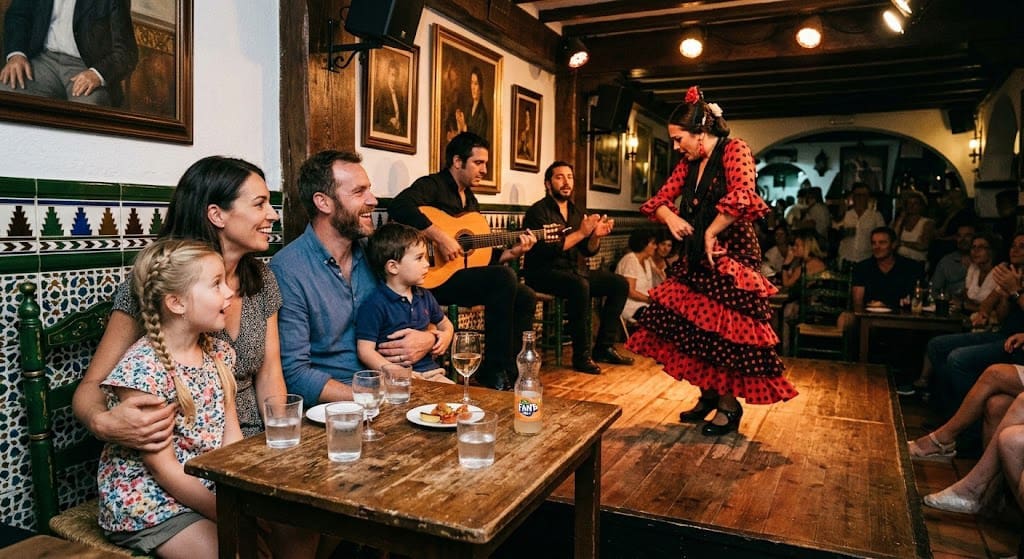
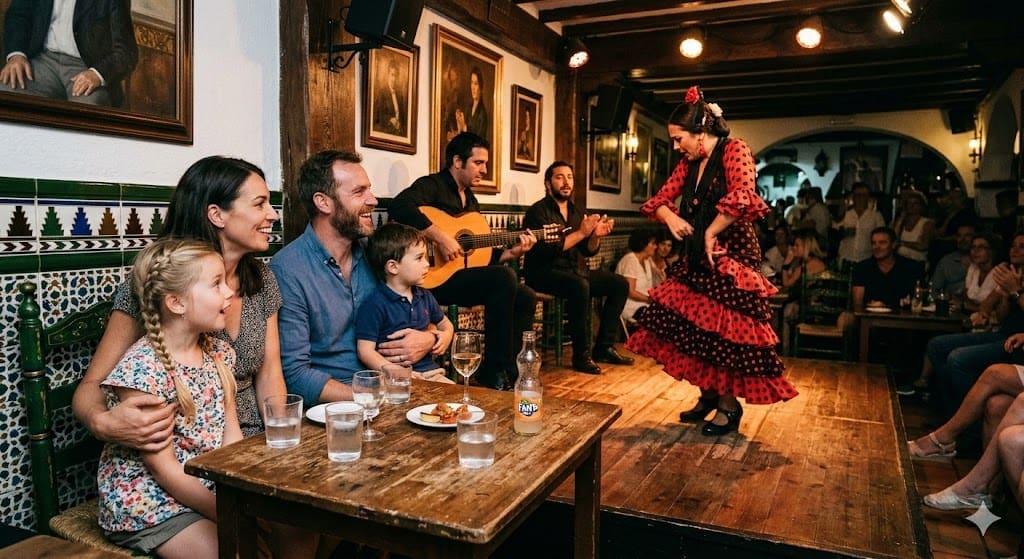
There are destinations that tolerate children, and there are destinations that seem to have been specifically engineered for them. Spain belongs emphatically to the second category – and then some. What it has that nowhere else quite manages is the rare combination of a culture that genuinely loves children (not just accommodates them), a climate that cooperates for most of the year, food that appeals to even the most architecturally conservative eight-year-old, and enough variety – beaches, mountains, cities, history, theme parks, flamenco shows – to keep every generation of the same family meaningfully occupied at the same time. France has the food. Italy has the art. The Caribbean has the beaches. Spain, quietly and without making a fuss about it, has all of these things plus the kind of late-night outdoor dining culture that means your children are actually welcome at 9pm in a restaurant, rather than merely being endured.
Why Spain Works So Well for Families
The Spanish relationship with family life is not a marketing position – it is a lived reality. Children in Spain are brought to dinner, to bars, to local fiestas, to Sunday afternoon paseos. They are not whisked away at sundown to the designated kids’ area. This means that travelling with children here does not require constant logistical apology. You will not feel like the person who brought a dog to a dinner party.
Practically speaking, Spain has the infrastructure to match. There are world-class international airports serving virtually every corner of the country – from Malaga and Alicante in the south to Barcelona and Bilbao in the north. Flight times from the UK sit between two and three hours depending on where you’re headed, which is precisely the window where children are still manageable and adults have not yet entirely lost the will to holiday. The road network is excellent, the weather broadly reliable from April through October, and the sheer size of the country – often underestimated by first-timers – means there is always somewhere new to discover, regardless of how many times you have been before. For the full landscape of what’s possible across the country, our Spain Travel Guide is worth reading before you plan in earnest.
The Best Regions for a Family Holiday in Spain
Spain is not one country so much as several distinct ones sharing a border – which is actually rather useful when you are planning a family trip, because it means you can calibrate precisely what kind of holiday you want.
The Costa Brava in Catalonia offers something that the more developed coastlines of the south have largely traded away: dramatic cliff-backed coves, clear water, and a sense that you have not entirely arrived at the same beach as thirty thousand other people. The water quality here is consistently excellent, the scenery is genuinely arresting, and the proximity to Barcelona gives older children and teenagers an urban counterweight to all that sea air. Girona, medieval and walkable, is an easy day trip and the kind of place that makes teenagers momentarily forget they were unimpressed.
The Balearics – Mallorca, Menorca, Ibiza and Formentera – are the perennial choice for good reason. Mallorca in particular has honed the art of the family holiday across decades without losing its identity. The north of the island, around the Serra de Tramuntana, bears almost no resemblance to the package-holiday south, and the beaches of the east coast – Cala Agulla, Cala Mesquida, Cala Mondragó – are the sort of places that genuinely stop you mid-stride. Menorca, quieter and more circumspect, is ideal for families who want space and calm. Its protected coastline means the beaches are some of the least developed in the Mediterranean.
Andalusia, in the south, operates on a different register entirely. The coast is warm, the culture is rich, and the cities – Seville, Granada, Córdoba – deliver the kind of formative experiences that stay with children long after the tan has faded. The Alhambra palace in Granada is one of those rare sights that works for every age group; the sheer improbability of it tends to disarm even the most screen-addicted twelve-year-old.
Beaches and Outdoor Activities for Families
Spain’s coastline runs to over 8,000 kilometres, which means the question is less “are there good beaches?” and more “which type of beach do you actually want?” For families with young children, the sheltered coves of the Balearics are hard to beat – shallow entry, calm water, and relatively modest crowds outside of August. For teenagers who want to do something with their holiday rather than simply lie down during it, the north offers surf schools along the Basque coast and the Atlantic-facing beaches of Galicia. San Sebastián’s La Zurriola beach has a long-established surf culture and the kind of backdrop – a handsome nineteenth-century city on a horseshoe bay – that gives the whole thing an almost unfair level of atmosphere.
Inland, the possibilities are broader than many families realise. The Pyrenees offer walking, mountain biking and white-water rafting depending on the season, and the national parks of Andalusia – the Sierra Nevada, the Coto Doñana – provide wildlife encounters that no theme park can replicate. Birdwatching in the Doñana, which is one of Europe’s great wetland reserves, is particularly rewarding if you have children with a genuine interest in the natural world (and occasionally even if you do not).
For guaranteed child approval, Port Aventura World near Tarragona is the country’s flagship theme park and by any measure one of the best in Europe – the combination of thrill rides, immersive theming, and a dedicated water park makes it the kind of day that exhausts everyone in the most satisfying possible way. Ferrari Land, attached to the same complex, has the fastest vertical accelerator in Europe, which tends to resolve all debates about where to go next.
Eating Out With Children in Spain
The Spanish approach to food – communal, leisurely, and centred on sharing – translates remarkably well to family dining, even with very young children. Tapas culture is, when you think about it, practically invented for people who cannot agree on what to order. Small plates arrive continuously, everyone picks at what they want, and no one has to have a conversation about whether the eight-year-old is going to eat the fish.
Spanish cuisine has the additional advantage of being broadly legible to children who have been raised on Mediterranean food at home. Patatas bravas, pan con tomate, tortilla española, ham croquetas, grilled fish, good bread – these are not challenging propositions. Even the most committed beige-food devotee tends to find something acceptable. Paella, properly made and shared at a long outdoor table on a Sunday afternoon, is one of those meals that somehow encapsulates an entire holiday.
Most Spanish restaurants do not operate a distinct children’s menu in the way that British or American establishments do – which is arguably a form of respect rather than an oversight. The assumption is that children eat what everyone else eats, in smaller quantities. In practice, kitchens are almost universally willing to prepare simple pasta or grilled chicken for younger guests if asked. The later eating culture – lunch at two, dinner at nine – can require some adjustment, particularly for families with toddlers, but a large lunch followed by a pool-side nap tends to solve the timetable problem rather elegantly.
Practical Tips by Age Group
Toddlers and Young Children (0-5)
Spain is well-suited to very young children, though some practical preparation helps. The heat in July and August in Andalusia and the interior can be intense – temperatures regularly exceeding 38°C – and shade is not always abundant on urban streets. The Balearics and the Costa Brava are more manageable in high summer for families with babies or toddlers. Travelling in June or September gives you the warmth without the full weight of summer, and the beaches are markedly less crowded.
Pharmacies (farmacias) in Spain are plentiful and well-stocked, and Spanish pharmacists have a commendable tendency to actually engage with your problem rather than directing you to a website. Nappies, formula, and sun cream are widely available. Car hire companies can provide child seats but booking these in advance – and confirming the booking more than once – is strongly advisable. Spain drives on the right, the roads are generally excellent, and the toll motorways are worth the modest cost in terms of speed and stress reduction.
Primary-Age Children (6-11)
This is arguably the sweet spot for a Spanish family holiday. Children of this age are old enough to engage properly with the culture – a flamenco show, a cathedral, a market – and young enough to find the beach endlessly sufficient entertainment. History becomes accessible: the Roman ruins at Italica near Seville, the ancient streets of Toledo, the cave paintings of Altamira – Spain has the kind of layered history that turns a family trip into an accidental education.
Activities like kayaking around the coves of Menorca, snorkelling in the clear water of the Balearics, or horse riding through the Andalusian countryside tend to land well with this age group. Many resort areas run children’s sailing schools during the summer. The key is having a base – ideally a villa with a pool – that gives you flexibility to alternate between structured outings and unstructured days when the agenda is simply the water.
Teenagers (12+)
Teenagers, who can be a demanding audience at the best of times, generally find Spain more than sufficient. The combination of good food, beautiful coastline, genuine city culture, and the possibility of watersports, surfing or cycling tends to address the fundamental teenage requirement of having something to actually do rather than being taken to look at things.
Barcelona, in particular, operates well for teenage travellers. The Barri Gòtic, the Sagrada Família, Montjuïc, the beach – the city is walkable, visually relentless, and has a street food and market culture that teenagers engage with naturally. San Sebastián is another strong option: the food scene is extraordinary even by Spanish standards, the old town is compact and compelling, and the surf beaches on either side of the city provide daily purpose. The Basque Country more broadly has a distinct cultural identity that rewards curious teenagers rather more than many generic sun-and-sand destinations.
Why a Private Villa Transforms a Family Holiday in Spain
There is a version of the family holiday in Spain that involves a hotel – morning buffets, negotiating pool lounger positions at 7am, restaurant dinners where the children are audible to the entire terrace, and the general low-level logistical friction of moving a family of four through a shared building. And then there is the villa version, which is a different holiday entirely.
A private villa with a pool in Spain resolves most of the structural tensions of travelling with children at a single stroke. The pool is yours – no negotiation required. Mealtimes happen when your family actually wants them to happen rather than when the restaurant opens. Naps can be taken without reference to hotel housekeeping. Teenagers can occupy a different floor. Toddlers can be managed in a private garden without performing the experience for an audience.
In practical terms, Spanish villas for families tend to offer exceptional value relative to equivalent hotel accommodation – particularly when you factor in meals, which can be largely self-catered without effort given the quality of Spanish produce. Local markets, bakeries and food shops make provisioning a pleasure rather than a chore. A morning visit to a market, returning with Iberian ham, local cheeses, fresh bread, good olive oil and a pile of tomatoes for pan con tomate, followed by lunch beside the pool – this is not a compromise on the luxury holiday. It is, for many families, the point of it.
Villas also offer space in the way that hotels rarely can – multiple bedrooms, outdoor dining areas, private terraces, often gardens or access to the surrounding countryside. For families travelling with grandparents or multiple generations, a villa is not just more comfortable but structurally more sensible: everyone has their own space, comes together around a shared table at mealtimes, and disperses again without anyone having to pretend they’re enjoying the same things at the same time. This is, quietly, one of the more underrated achievements of a good villa holiday.
Spain’s villa stock is varied and broadly excellent. The Balearics have some of the finest rural fincas in the Mediterranean – converted farmhouses with character, space, and the kind of stone-walled gardens that make a swimming pool feel like a genuinely civilised amenity rather than a hotel add-on. Andalusia offers everything from whitewashed cortijos overlooking olive groves to sleek modernist properties on the edge of the sea. The Costa Brava has cliff-top villas with direct sea access. Whatever the brief, Spain has the property to meet it.
Getting the Most From Your Family Holiday in Spain
A few practical notes that make the difference between a good trip and a genuinely great one. Book August travel early – the country fills up in ways that can surprise even experienced travellers. June and September are often the better months: reliably warm, meaningfully less crowded, and with the added advantage that Spanish school children are either still in class or already back in it, which has a noticeable effect on beach density.
Learn a handful of Spanish phrases. The Spanish are not habitually forgiving of linguistic laziness in the way that some tourist economies have become – not rudely, but there is a warmth and a different quality of interaction available to those who make the attempt. Children who learn to say gracias and buenos días tend to find that doors – figurative and occasionally literal – open more readily.
Build in unstructured time. The instinct when travelling with children is to fill every day with activities, which invariably produces a itinerary that exhausts everyone and pleases no one. The Spanish afternoon – long lunch, pool, rest, recovery – is a cultural institution for excellent reasons. Adopt it. The monument will still be there tomorrow.
If you are ready to find the right base for your family in Spain, explore our curated collection of family luxury villas in Spain – properties chosen for space, character, and the specific requirements of travelling with children at the luxury end of the market.