
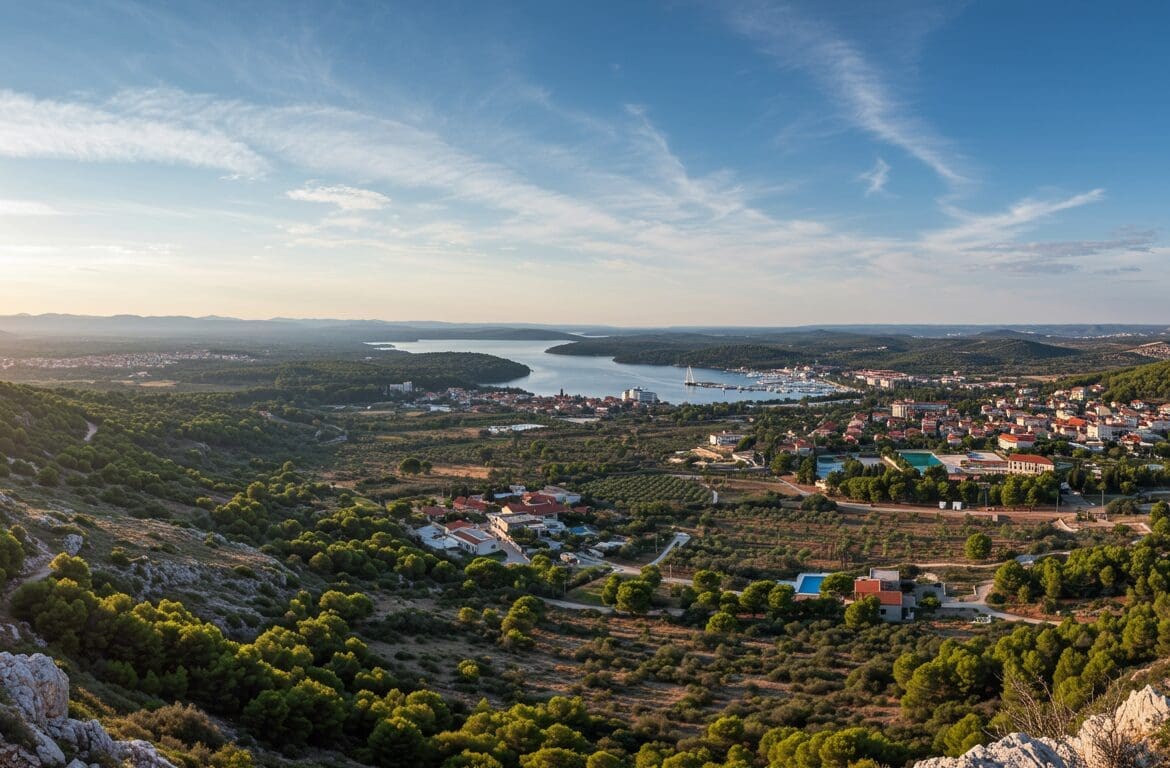
Split-Dalmatia County Travel Guide: Best Restaurants, Activities & Luxury Villas
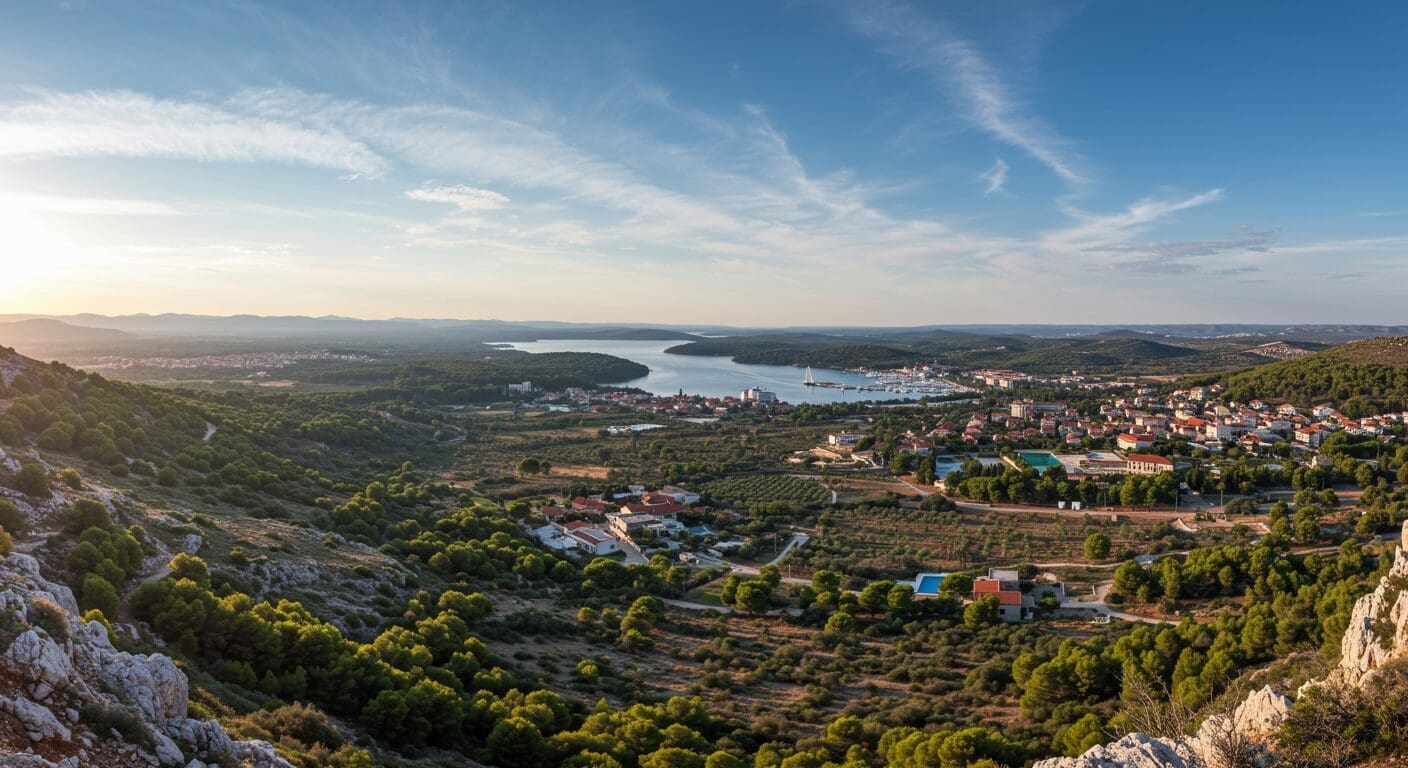
Here is a mild confession: Split is not the discovery you think it is. Roughly two million tourists pass through Diocletian’s Palace every summer, cruise ships queue in the harbour like buses at a depot, and the old town’s marble streets have been polished to a high sheen by thirty years of international sandals. And yet – and this is the part the brochures never quite explain – Split-Dalmatia County remains, despite all of that, genuinely extraordinary. The county stretches from one of Europe’s most compelling cities all the way down to the remote Makarska Riviera, takes in three inhabited island groups, and contains more Roman ruins, medieval watchtowers, and secret coves than any reasonable person could explore in a fortnight. The trick is not to avoid the crowds – it’s to know where they don’t go. That’s what this guide is for.
Getting Here Without the Journey Becoming the Holiday
Split Airport – officially Resnik Airport – sits about 25 kilometres west of the city centre, near Trogir, which is either convenient or inconvenient depending on which direction you’re heading. It receives direct flights from most major European hubs year-round, with the summer schedule expanding to something resembling a small hub airport. British Airways, easyJet, Ryanair, Croatian Airlines and a dozen others compete for your custom. From the United Kingdom, flight times hover around two and a half hours – not long enough to watch a film, which is either a blessing or a minor inconvenience depending on your relationship with airline entertainment.
Taxis and private transfers from the airport are plentiful and relatively affordable by western European standards. If you’re arriving at a villa with a large group, a pre-arranged minibus transfer is worth every kuna – sorry, every euro; Croatia adopted the euro in January 2023, which surprised precisely no one except possibly a handful of corner-shop owners who’d accumulated a lot of small change. The drive down the coast to anywhere along the Makarska Riviera takes between 45 minutes and an hour and a half, depending on summer traffic, which can be punishing in July and August.
For getting around the county itself, a hire car is genuinely useful, particularly if you’re staying in a villa outside Split or on the islands. The coastal roads are spectacular – narrow, winding, and occasionally shared with a very confident local driver who has clearly memorised every bend since childhood. Ferries run frequently between Split and the islands of Brač, Hvar, Šolta and Vis, and the catamaran services are fast enough to make island-hopping a realistic day-trip proposition rather than an expedition.
Where to Eat in Split-Dalmatia County – and Why It Actually Matters
Fine Dining
The dining scene in Split has undergone a quiet but decisive transformation over the past decade, moving from reliable-if-uninspired seafood restaurants to something considerably more interesting. The Michelin Guide noticed. So did Gault & Millau. If you care about what you eat – and if you’re staying in a luxury villa in Split-Dalmatia County, there’s a reasonable chance you do – this is a county that now rewards serious culinary attention.
Konoba Fetivi is regularly cited as the best restaurant in Split for seafood, and having eaten there, it’s not a difficult claim to defend. The family behind it has been in the region for 300 years – which gives the phrase “local knowledge” a certain weight – and it shows in details that matter: the daily fresh catch specials change because the catch changes, the olive oil is small-batch and homemade, and the bread arrives warm from the oven. Michelin recommends it. Make a reservation. Don’t attempt to walk in during August and expect to be seated without one.
Restoran Dvor occupies a century-old garden facing the islands of Brač and Šolta, and the Adriatic view across the terrace is the sort of thing that makes you put your phone down and simply look. The kitchen is run by Hrvoje Zirojević, named Gault & Millau Croatia’s chef of the year in 2019, and his modern Dalmatian cooking – seasonal, precise, rooted in local produce – justifies the accolades without leaning on them. The tuna cannelloni is a dish worth planning around.
ZOI occupies one of the more dramatic restaurant settings in the country: a terrace built into the actual walls of Diocletian’s Palace, right on the edge of the Riva, with sea views through ancient stone. The food is elegant without being theatrical – tuna tartare with citrus, slow-cooked veal with seasonal vegetables, Adriatic seafood handled with the restraint that confident cooking requires. The wine list is deep and well-chosen. ZOI holds a Michelin recommendation and deserves it.
Where the Locals Eat
The konoba – a traditional Dalmatian tavern, somewhere between a family kitchen and a restaurant – is where the county really lives. These are rarely signposted, often run by three generations of the same family, and tend to serve whatever was good at the market that morning. The menus can be brief to the point of monosyllabic, which is usually a very good sign. Grilled fish, peka (slow-cooked meat or seafood under a bell-shaped lid buried in embers), local wine poured from unlabelled bottles – this is Dalmatian eating at its most honest.
In Split itself, the daily marenda – a traditional mid-morning meal somewhere between breakfast and lunch, a concept so sensible it’s remarkable the rest of the world hasn’t adopted it – is a ritual worth observing. Head into the streets just off the main tourist drag and look for somewhere with steamed mussels or bean stew on a handwritten board. Order the local plavac mali. Sit. This is not a rush.
Along the Makarska Riviera, the beach restaurants that look merely functional from the road often produce extraordinary simple grilled fish. The trick is arriving before the kitchen closes at two in the afternoon, a custom enforced with a firmness that suggests the chef has other plans.
Hidden Gems Worth Seeking Out
Šug, tucked just off the main tourist paths on Tolstojeva Street in Split, is the kind of place that regulars tend to be quietly possessive about. Run by chefs Duje Kanajet and Mateo Kordić, it strikes that rare balance between casual and genuinely polished – a Michelin-listed restaurant that doesn’t feel like one, in the best possible sense. The daily-changing marenda is excellent, the seafood stews are robust and deeply flavoured, and the menu changes with honest commitment to what’s actually fresh.
In Trogir – the medieval island city 27 kilometres up the coast from Split, and a UNESCO World Heritage Site of considerable charm – Franka has been quietly transforming the town’s culinary scene since opening in 2021. Owners Dajana and Damir Civadelić designed the menu around roughly 20 dishes that sit at the intersection of Dalmatian tradition and modern sensibility: beetroot and truffle risotto, eggplant carpaccio, black risotto that only appears when the cuttlefish is actually at the market. With only 50 seats in a courtyard setting and a daily menu that follows the fish market rather than the calendar, this is the kind of restaurant that makes you want to come back the following evening.
The Shape of the County – What You’re Actually Looking At on the Map
Split-Dalmatia County is larger and more varied than most first-time visitors expect. It runs from just north of Split all the way south to the Makarska Riviera and beyond, encompasses a long stretch of the Dalmatian coast, and claims three island groups – the Split Archipelago (including Brač, Šolta and the islands around Split), the Hvar and Vis archipelago, and the Lastovo archipelago at the southern end. The county covers roughly 14,000 square kilometres in total, about a third of which is sea. This is important context. When people say they’re “going to Dalmatia,” they might mean a great many different things.
Split itself sits at the county’s geographical and cultural heart – a city of around 170,000 people built around, through and occasionally on top of a Roman emperor’s retirement palace. Diocletian retired here in 305 AD, and people have essentially been building their lives inside his walls ever since. The old town is extraordinary: not a museum piece but a living neighbourhood where people dry laundry between 1,700-year-old columns and argue about parking in the shadow of a baptistery that used to be Jupiter’s temple.
Heading south from Split, the Makarska Riviera is the county’s beach heart – a 60-kilometre stretch of coast backed by the dramatic grey bulk of the Biokovo mountain range, with towns like Makarska, Brela, Baška Voda and Tučepi arranged along it like beads on a particularly scenic string. Brela has been called one of the most beautiful beaches in Europe, an accolade that has predictably brought more visitors than Brela might ideally prefer.
The islands are their own world. Brač is large and self-sufficient, home to the famous Zlatni Rat beach and some of the finest stone in the Mediterranean – white limestone from Brač quarries was used in Diocletian’s Palace, and reportedly in the White House, a fact the island mentions with some frequency. Hvar, just to the south, has become synonymous with Adriatic glamour – yacht parties, lavender fields, fortress views – and handles its fame with varying degrees of grace. Vis, further out and closed to foreign visitors during Yugoslav times until 1989, has the quality of a place that hasn’t quite decided whether it wants to be discovered or not. The answer, for discerning visitors, is obvious.
Things to Do in Split-Dalmatia County – Beyond the Palace Tour
The palace tour is worth doing. That’s not in question. But Split-Dalmatia County has enough to occupy a fortnight of serious exploration, and the visitor who arrives believing they’ve come for a beach holiday often discovers they’ve actually come for something considerably more layered.
In Split, start with the palace – but don’t start with a guided group tour if you can possibly avoid it. Walk the lanes alone in the early morning, before the cruise passengers arrive, when the light is low and the cats (and there are many cats) have not yet been disturbed. The Peristyle square, the Vestibule, the Cathedral of Saint Domnius (which is Diocletian’s original mausoleum, a detail of magnificent historical irony) – these are better without commentary. The Archaeological Museum, a short walk from the old town, houses the finds from the palace excavations and various other Dalmatian digs, and is one of those museums that actually rewards its entrance fee.
Trogir is an easy day trip – 27 kilometres up the coast, connected by local bus or a pleasant drive – and its medieval core, barely changed since the 13th century, is one of the most complete examples of Romanesque-Gothic architecture in Central Europe. The Cathedral of St Lawrence contains a portal by the master sculptor Radovan, carved in 1240, that repays careful attention.
Island-hopping requires planning but yields the best rewards. A day on Hvar town – the harbour, the fortress above, a glass of local wine at an outdoor table while watching the superyacht parade – is one of the essential Adriatic experiences. A day on Vis, particularly in Komiža or at the Blue Cave on nearby Biševo, is something quieter and stranger and arguably more memorable.
The Biokovo Nature Park, rising behind the Makarska Riviera to nearly 1,800 metres, has a glass-bottomed Skywalk platform that projects over the mountain’s edge – terrifying and spectacular in equal measure, with views across to Italy on a clear day. The national park designation means the mountain has been largely spared the development that has colonised the coast below it.
Into the Water and Up the Rock – Adventure on the Dalmatian Coast
The Adriatic is warm, clear, and genuinely inviting from late May through October – water temperatures that reach 26°C in August make the sea less a backdrop and more the main event. Sailing is the activity most closely associated with the Croatian coast, and for good reason. The combination of sheltered channels between the mainland and the islands, reliable summer winds, and an extraordinary density of harbours and anchorages makes this one of the finest sailing regions in Europe. Charter companies operate out of Split and offer everything from bareboat charters to fully crewed gulet experiences – the gulet being a wooden motor-sailing vessel of Turkish origin that has become the luxury floating villa of the Adriatic.
Diving around the islands – particularly around Vis and Biševo, and along the outer edges of the archipelago – reveals an underwater world of reasonable drama. The Blue Cave at Biševo produces its famous electric blue light only when the conditions are right (morning, sun at the correct angle, not too many boats queuing) which adds an element of genuine unpredictability to the visit. Wreck diving, sea caves and underwater walls are all within range of Split-based operators.
Kayaking the coastline, particularly around the quieter islands and along the stretches of coast between Makarska Riviera villages, is one of those activities that looks like mild exercise and turns out to be a meditative experience. Hire a double kayak, find a cove that doesn’t appear on any map, and pretend you discovered it. Nobody will judge you.
Kitesurfing has established itself at several locations along the coast, with the Pelješac Peninsula (technically in the neighbouring Dubrovnik-Neretva County but easily accessible) hosting some of the better conditions. Closer to home, the winds around the southern tip of Brač and along the Makarska Riviera attract a committed community of windsurfers and kiteboarders. The hiking trails on Biokovo range from accessible walks with extraordinary views to serious technical ascents – the marked trails are well maintained and the views, frankly, justify the effort.
Rock climbing has been quietly established on the limestone cliffs above the coast – particularly around Omiš, where the Cetina River canyon creates dramatic vertical terrain. The canyon also offers white-water rafting that is considerably more exciting than it looks in the photographs.
Why This Works Exceptionally Well for Families
Split-Dalmatia County has a quality that genuinely matters for travelling with children: it is varied enough that everyone in the family can find something they want to do, and scaled sensibly enough that none of it requires a three-hour transfer to reach. The beaches on the Makarska Riviera are shallow, clean, and calm – the gradual shelving of pebble and rock into clear turquoise water being considerably safer for small children than the pounding Atlantic surf of, say, the south-west of England.
The islands are particularly good for families – the lack of heavy traffic on Brač and Šolta, the freedom of small harbour towns where children can roam with relative safety, the novelty of a ferry crossing that takes twenty minutes and somehow still feels like a proper adventure. The Roman palace in Split appeals to children more reliably than most ancient history, largely because it’s an actual town full of actual people rather than a roped-off ruin. Diocletian’s story – emperor who retired early to grow cabbages in his enormous palace – has a relatable quality that other historical narratives lack.
The private villa advantage is significant for families. A villa with its own pool removes the daily logistics of getting to and from a beach, creates a space where children can run around without the social pressure of a hotel pool’s unspoken hierarchy, and provides a kitchen for the inevitable evening when someone under eight decides they don’t want fish after all. Evening meals at the villa, with local market produce and a long table and the kind of wine that tastes better when you’re on holiday, are often the memories that outlast any individual excursion.
A County Written in Stone – History, Culture and Tradition
The history of this coastline is complex, layered, and – once you start pulling at the threads – impossible to stop thinking about. Greeks established settlements here in the 4th century BC, followed by Romans, followed by various Slavic and Frankish peoples, followed by the Venetians who ruled much of the coast for several centuries and left behind their characteristic architectural fingerprints: bell towers, loggias, elaborate cathedral portals. The Austro-Hungarian Empire managed the region for nearly a century before the Yugoslav period, which ended in the 1990s in ways that are still within living memory for many residents.
This layering is visible in the built environment in ways that are unusual even by European standards. In Trogir, Roman foundations support Venetian palaces. In Split, medieval lanes run through a Roman emperor’s retirement complex. On Hvar, a Renaissance theatre – one of the oldest in Europe, built in 1612 and still occasionally in use – sits inside a fortress that predates it by centuries.
The traditional music and culture of Dalmatia is built around klapa singing – unaccompanied male choral music that UNESCO added to its Intangible Cultural Heritage list in 2012. The sound is polyphonic, intense, and deeply strange if you encounter it unexpectedly in a konoba at midnight. Several summer festivals celebrate klapa across the county, most notably the International Festival of Dalmatian Klapa in Omiš in July.
The Biokovo Ethnological Collection in Makarska documents the traditional pastoral life of the mountain communities behind the Riviera – an often-overlooked aspect of a region most visitors experience only from sea level. The island of Vis, with its particular history of military isolation and Italian cultural echoes, has a character distinct from the mainland coast that rewards slower exploration.
What to Bring Home That Isn’t a Fridge Magnet
The local olive oil – particularly from Brač and Hvar, where the olive varieties are different from those of the Italian and Spanish producing regions – is genuinely exceptional and not widely exported. A bottle of well-sourced Dalmatian olive oil is one of those food gifts that actually justifies the luggage space, which cannot be said for most holiday food souvenirs.
Local wine deserves serious attention. The plavac mali grape – a close relative of Zinfandel, as DNA testing eventually confirmed – produces big, dark, tannic reds that age well and remain largely unknown outside Croatia. Postup and Dingač wines from the Pelješac Peninsula are the most celebrated, but smaller producers on Hvar and Vis produce bottles that you will not find at home. The wine merchant near Split’s Green Market is a good starting point for a conversation that may result in more bottles than your hold luggage will accommodate.
Handmade lace from Hvar – specifically from the Benedictine nuns of the Convent of St Clare, who have been making agave-thread lace for centuries in a technique unique to the island – is UNESCO-listed and genuinely beautiful. It is not cheap. It is also not a fridge magnet.
Lavender products from Hvar, the lavender capital of the Adriatic, range from the genuinely high-quality (essential oils, dried flowers, small-batch soaps) to the aggressively branded tourist version (everything else). The distinction is usually visible at twenty paces. In Split’s Green Market and the smaller market stalls in Makarska town, local herb and spice mixtures, fig preserves, honey from the island hinterlands, and small bottles of homemade rakija (the local fruit brandy, with which Dalmatians will toast literally any occasion) make good, honest, non-embarrassing things to bring home.
The Practical Stuff – What You Actually Need to Know
Croatia uses the euro since 2023, which removes the confusion of the kuna but not, regrettably, the confusion of summer crowds. Tipping is customary but not obligatory – rounding up the bill or leaving 10% is appreciated and normal. The official language is Croatian, which is spoken with a Dalmatian accent that locals are quietly proud of and other Croatians occasionally tease them about. Almost everyone in the tourism industry speaks excellent English, often German and Italian as well.
The best time to visit Split-Dalmatia County depends heavily on what you want from it. July and August are peak season – warm, crowded, and alive with energy, but also requiring advance planning for everything from restaurant reservations to ferry bookings. June and September offer most of the warmth with measurably fewer people – water temperatures in September remain above 22°C, and the light in the late afternoon is extraordinary. May is the locals’ favourite month, warm enough to swim for the brave and uncrowded enough to feel like you’ve found something not everyone knows about yet. (They know about it. They’re just not there yet.)
The Bura wind, a cold dry north-easterly, occasionally descends from the Dinaric Alps in autumn and winter with considerable force – memorable if you’re in a well-situated villa, less comfortable on an open ferry. The Jugo, a warm southerly, brings humidity and a change in mood that Dalmatians attribute to a great many things, including questionable decision-making. Take these local weather phenomena seriously and plan outdoor activities accordingly.
Croatia has a well-developed healthcare system and is genuinely safe for travellers. EU citizens benefit from reciprocal healthcare arrangements; others should carry appropriate travel insurance. The coastal roads are good but narrow in places, and mobile data coverage is reliable throughout the county. Water from the tap is drinkable and, in many places, notably good.
The Case for a Luxury Villa in Split-Dalmatia County – and It’s a Strong One
A hotel in Split during peak season is a particular kind of experience: small room, window onto a courtyard, breakfast buffet where the eggs have been waiting for you since dawn, the sound of other people’s children in a pool that is simultaneously too large for the space and too small for the guests. This is not a criticism of any specific property. It is the structural reality of hotel accommodation in a city that receives two million visitors through a relatively small historic core.
The alternative – a luxury villa in Split-Dalmatia County – is not merely a nicer version of the same thing. It is a fundamentally different way of being somewhere. A private villa with its own pool and direct sea access, set into the hillside above the Makarska Riviera or occupying a quiet position on the edge of a Brač village or perched on the waterfront outside Trogir, gives you the region on your own terms. You swim when you want. You eat what the market produced that morning, cooked as you like it, at a long table with everyone you’ve brought with you. The sunset from your own terrace doesn’t require a reservation or a drinks minimum.
Excellence Luxury Villas has more than 27,000 properties worldwide, with a significant collection along this coast that ranges from contemporary architectural statements with infinity pools over the Adriatic to restored stone farmhouses in the Dalmatian hinterland with fig trees, herb gardens and a particular quality of evening quiet that you will find yourself thinking about long after you’ve returned to ordinary life. The villas along the Makarska Riviera offer direct beach access and Biokovo mountain views simultaneously – a combination that shouldn’t work but absolutely does. Those on Brač and Hvar place you within walking distance of the sea and the kind of small-town evening ritual – the korzo, the slow evening promenade along the harbour – that reminds you what unhurried feels like.
Whether you’re planning a multi-family group holiday, a romantic week with nowhere specific to be, or simply the kind of restorative break where the highest daily ambition is deciding which olive oil to try on breakfast, there is a villa in this county that fits. Browse our full collection of luxury holiday villas in Split-Dalmatia County and find the one that makes sense for the kind of holiday you actually want to have.
More Split-Dalmatia County Travel Guides
What is the best time to visit Split-Dalmatia County?
June and September offer the most balanced experience – warm enough to swim comfortably, with sea temperatures above 22°C in September, and considerably fewer people than the July-August peak. May has a devoted following among those who know the region well: uncrowded, lush, and warm enough for most outdoor activities. If you want guaranteed heat, the full beach experience and don’t mind planning everything in advance, July and August deliver – just book restaurants, ferries and villas well ahead of time.
How do I get to Split-Dalmatia County?
Split Airport (Resnik) is the main entry point, receiving direct flights from most major European cities year-round, with the schedule expanding significantly in summer. Flight time from the UK is approximately two and a half hours. The airport sits around 25 kilometres west of Split city centre, close to Trogir. Pre-arranged private transfers are the most comfortable option, particularly for larger groups or if you’re heading directly to a villa further down the coast. Car hire is available at the airport and is recommended if you plan to explore the county independently.
Is Split-Dalmatia County good for families?
Yes, genuinely so. The Makarska Riviera beaches are calm, clean and shallow – well suited to children. The islands, particularly Brač and Šolta, are low-traffic and relaxed in a way that feels genuinely safe for families. Split’s Roman palace is surprisingly engaging for children. A private villa with a pool transforms the daily logistics considerably – no fighting for sun loungers, no restaurant negotiations at 7pm when everyone is hungry and sunburnt. The ferry crossings to the islands count as activities in themselves, which buys goodwill from children of almost any age.
Why rent a luxury villa in Split-Dalmatia County?
Because the county rewards the kind of slow, unhurried exploration that a hotel timetable actively resists. A private villa gives you a base from which to move at your own pace – morning swims before the beaches fill up, long lunches with local market produce, evenings on a private terrace watching the light change over the Adriatic. For groups and families, the economics and the experience both improve significantly: shared space, a proper kitchen, no lobby, no key card, no breakfast cut-off at 10am. In a county this varied and this beautiful, having a home here rather than a room in it is the right instinct.