
Thailand, Asia Food & Wine Guide: Local Cuisine, Markets & Wine Estates
The first thing most visitors get wrong about eating in Thailand is ordering pad thai. Not because it isn’t good – it is, and there’s no shame in it – but because it represents roughly one percent of what Thai cuisine has to offer, and an alarming number of people spend an entire fortnight treating it as a nutritional cornerstone. Thailand has one of the most complex, regionally diverse, and frankly thrilling food cultures in the world, and to understand it properly you need to stop thinking of it as a single cuisine and start thinking of it as four or five entirely distinct ones that happen to share a passport. This Thailand, Asia food and wine guide exists to point you somewhere more interesting than the tourist menu at a beachfront restaurant – and ideally, into the kind of eating experience you’ll be describing to friends for years.
Understanding Regional Thai Cuisine: Why Where You Are Matters Enormously
Thailand’s geography dictates its flavour map with impressive authority. The north, centred on Chiang Mai, is a landlocked world of mountains and Burmese and Lao influences. Here the cuisine is earthier, less sweet, more reliant on fermented pastes and bitter herbs. Khao soi – a coconut curry noodle soup topped with crispy fried noodles – is the north’s gift to the world, and if you eat it properly made, once, you will understand why people move to Chiang Mai for a month and then quietly never leave. Nam prik ong, a minced pork and tomato dip eaten with raw vegetables and sticky rice, is another northern staple that rewards those who stray from the obvious.
Move south and the food sharpens. Southern Thai cuisine is where the chillies are genuinely trying to hurt you, the coconut milk runs rich and fragrant, and the seafood arrives at your table with a directness that only hours of transit can explain. Massaman curry originates in the south with its Persian and Indian trading influences, warm with cinnamon and cardamom. Kaeng tai pla – a fierce, pungent fish kidney curry – is not for the timid, but it is absolutely for the curious. The central plains around Bangkok deliver the glossy, balanced flavours most associated with Thai cooking internationally: green curry, pad krapow (stir-fried basil and pork), tom yum goong. Precise, brilliant, and absolutely worth eating properly at least once.
The northeast – Isan – is arguably the region that rewards the most adventurous palate. Som tum (green papaya salad) in its proper Isan form comes with fermented crab and fish sauce of considerable intensity. Larb – a minced meat salad sharp with lime, fish sauce, toasted rice powder and herbs – is the dish that defines the region. Isan food is predominantly eaten with sticky rice, rolled into small balls and used to scoop up food. Once you understand this, you begin to understand everything else.
The Best Food Markets in Thailand: Where the Real Education Happens
Markets are where Thai food makes the most sense. Not the night markets pitched at tourists with their obligatory mango sticky rice stations and illuminated signs, but the morning markets where the city feeds itself before the sun gets serious about the heat. Chiang Mai’s Warorot Market – known locally as Kad Luang – is a multi-storey sensory education in northern Thai ingredients: dried spices, cured meats, northern sausages, sacks of dried chilies in seventeen varieties that all look identical until they are very much not. The flower market beside it operates through the night and into the early morning hours, which is either enchanting or alarming depending on your relationship with early starts.
In Bangkok, Or Tor Kor Market near Chatuchak is where the city’s top chefs and food-conscious home cooks shop. The produce quality is exceptional – durian here is sold with the kind of reverence other markets reserve for truffles, carefully graded and priced accordingly. (The smell remains a matter of ongoing negotiation between those who love it and those who would prefer it was kept outside.) Bangkok’s floating markets, meanwhile, are a complicated subject. Damnoen Saduak is largely theatrical at this point; Amphawa is more authentic and considerably more worth your morning. The canal-side food stalls there do grilled seafood over charcoal as the boats pass, which is the kind of experience that makes you wonder why you ever eat indoors.
In the south, Phuket Town’s Sunday Walking Street market is where local vendors sell everything from grilled satay to kanom jeen – fermented rice noodles with curry – in the old Sino-Portuguese quarter. The architecture is genuinely interesting, which is lucky, because it gives you something to look at while you work out what to eat next.
Thai Wine: The Part Nobody Expects
Thailand makes wine. This surprises a significant number of people, and usually prompts the kind of polite scepticism that the country’s winemakers have spent the last three decades quietly and methodically dismantling. Thailand is a tropical wine producer, which means it operates under conditions that conventional viticulture wisdom would consider entirely hostile – high humidity, two growing seasons, and heat that makes Bordeaux look like a refreshing alternative. And yet.
The vineyards that matter in Thailand sit mostly in the elevated regions of Khao Yai in Nakhon Ratchasima province and along the Chao Phraya Delta. Khao Yai, a three-hour drive northeast of Bangkok and now a UNESCO World Heritage area, has become the country’s most credible wine region – a place where altitude and a cooler dry season make serious winemaking possible. The wines are not trying to be French. They are tropical, forward-fruited, with a character entirely their own, and the better producers are making bottles that hold their own in any conversation about emerging wine regions globally.
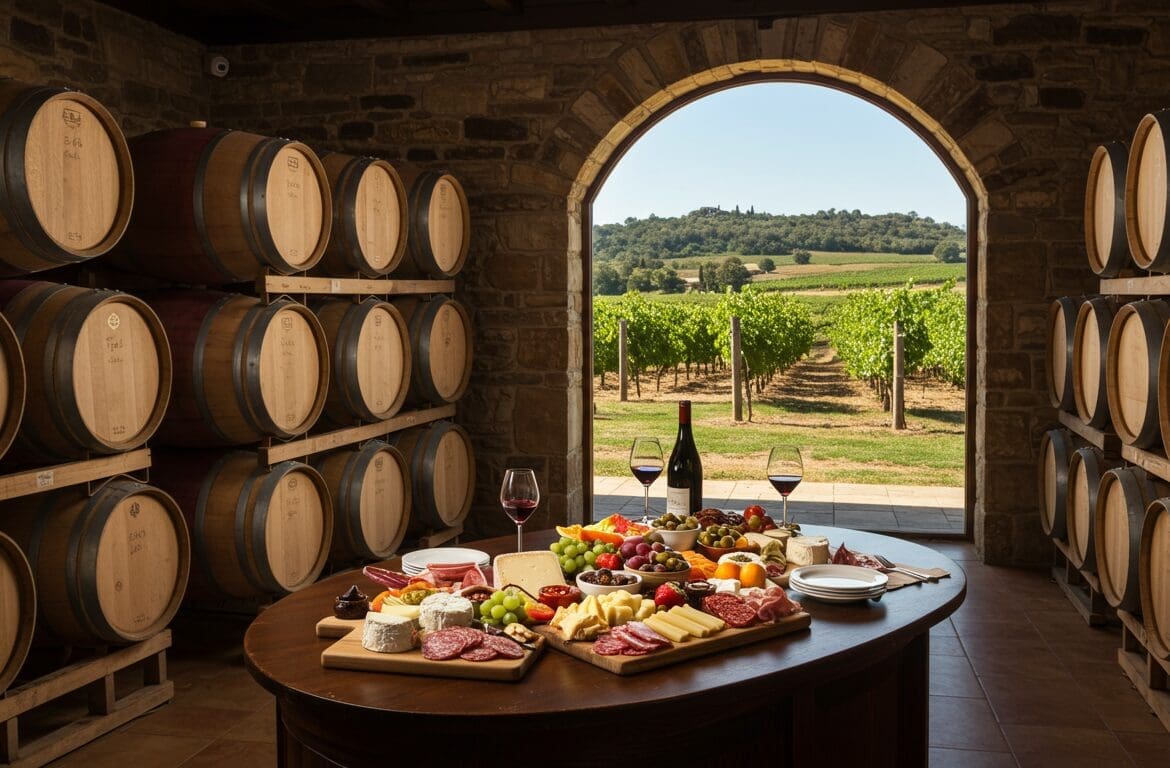
GranMonte Estate is the winery most likely to genuinely impress a sceptical wine lover. A family operation producing Syrah, Viognier, Muscat and other varietals from their Khao Yai estate, GranMonte has won international recognition and offers estate visits, tastings and vineyard tours that pair the wines with Thai food in ways that reveal both at their best. Their Syrah in particular has the kind of peppery dark fruit that makes you reconsider every assumption you walked in with. PB Valley Khao Yai Winery – one of Thailand’s oldest wine estates – offers a more accessible entry point into the region, with expansive grounds, a wine museum and guided tastings in a setting that feels genuinely bucolic. Nearby, Silverlake Vineyard near Pattaya offers a different proposition: a lakeside estate where the scenery and the experience take precedence over the complexity of the wine, and there is absolutely nothing wrong with that on a warm evening.
Wine Estates to Visit: A Day in Khao Yai
Dedicating a day – or ideally two nights – to the Khao Yai wine region makes excellent sense for the kind of traveller who likes their luxury to have an intellectual component. The area combines a national park of considerable drama, cooler temperatures than Bangkok, and a cluster of estates that have turned wine tourism into something genuinely sophisticated. GranMonte’s cellar door experience involves seated tastings with food pairing, guided vineyard walks and the opportunity to meet the winemakers. It is the sort of afternoon that passes without you noticing. PB Valley’s grounds are large enough to explore properly, and the surrounding forest makes the estate feel properly remote in a way that is immediately restorative. The drive itself from Bangkok, through the hills and into the plateau, is worth doing slowly.
Beyond Khao Yai, the Chao Phraya River basin south of Bangkok hosts several smaller estates producing wines under the broader Hua Hin Hills designation. This is a younger, more experimental wine territory – lighter in infrastructure, more raw in ambition, and interesting for exactly those reasons. Village Farm and Winery in the Hua Hin area offers tours and tastings set against a landscape of rolling vineyards that few visitors to Thailand’s beaches ever think to seek out.
Cooking Classes Worth Your Time
The cooking class has become something of a rite of passage for visitors to Thailand, which means the quality varies enormously – from genuinely transformative half-day experiences to glorified tourist theatre where you stir a pre-assembled curry paste and receive a certificate. The difference is almost entirely in the sourcing and structure.
The best classes begin in a market. Chiang Mai is the acknowledged capital of serious Thai cooking education, and several schools here take the market visit seriously rather than treating it as a photo opportunity. A class that walks you through ingredient sourcing, explains the difference between the dozens of available basil varieties (Thai basil, holy basil and lemon basil are not interchangeable, a fact many recipes choose not to mention), and then guides you through four or five dishes with proper technique is an investment that pays dividends in your own kitchen for years. In Bangkok, classes pitched at a higher level – smaller groups, professional chef instruction, focus on one regional cuisine rather than a Greatest Hits approach – are increasingly available and worth seeking through your villa concierge. Southern Thai cooking classes in Phuket and Koh Samui tend to focus on curry paste preparation and seafood, which makes sense given the context, and the better ones use locally caught ingredients that arrive that morning.
The Best Food Experiences Money Can Buy in Thailand
If budget is not the constraining factor, Thailand’s luxury food landscape has matured considerably over the last decade. Bangkok now holds multiple Michelin stars and a global restaurant reputation that extends well beyond the obvious. Gaggan – the progressive Indian restaurant that consistently topped Asia’s 50 Best Restaurants before its reinvention – brought global attention to Bangkok’s ability to support genuinely serious dining. Nahm, serving traditional Thai cuisine from a historically rigorous perspective, demonstrated that the country’s own food culture could command a fine dining setting without apology. Bo.lan operates on a similar philosophy: slow food, heritage varieties, sustainable sourcing, and dishes that reconstruct Thai cuisine’s historical complexity rather than streamlining it for international palates. A dinner here is not a greatest hits show. It is, occasionally, an argument. A very good one.
For the most money-no-object food experience in Thailand, consider a private dinner arranged through a specialist operator or your villa team: a personal chef, a market visit that morning, a menu built around what was best that day, served on a terrace with a view of whichever part of Thailand you happen to be occupying. This is not a concept that needs further embellishment. It is simply the best way to eat, anywhere.
Private river boat dining in Bangkok – arranging a dinner cruise on a traditional vessel with a personal chef and a curated menu of regional dishes – is another category of experience that rewards the effort of organisation. The city seen from the water at night, with a plate of crab fried rice and a glass of GranMonte Syrah in hand, is the kind of evening that recalibrates your sense of what travel can actually feel like.
Street Food as Fine Dining: The Case for Eating Seriously at Low Tables
One of the great democratic pleasures of Thailand is that some of the country’s most technically accomplished food is served from carts, under plastic canopies, at plastic tables with the occasional sticky laminated menu. Bangkok has Michelin-starred street food vendors – something that caused considerable global excitement and prompted a minor cultural conversation about what a Michelin star actually means. Jay Fai, a single operator in a hairnet and safety goggles working over high flames in a narrow Bangkok shophouse, has been preparing crab omelettes and dry boat noodles of extraordinary precision for decades. The queue is long. It is worth it. These are the non-negotiable facts.
For the luxury traveller who values the experience but prefers to arrange it with a degree of curation, food-focused private tours of Bangkok’s street food neighbourhoods – Yaowarat (Chinatown), Banglamphu, Silom – offer a way to eat at the best spots with someone who knows which cart is worth the detour and which vendor has been doing the same dish for forty years. The food itself remains as it is. The context simply becomes slightly more intentional.
A Note on Tropical Fruit, Which Deserves Its Own Section
No food guide to Thailand does its job without a serious conversation about fruit. The range, quality and sheer variety of tropical fruit available here – from rambutan to mangosteen, longan to sala, tamarind to the full spectrum of banana varieties – is one of the country’s most underrated pleasures. Mango in its proper Thai form – with sticky rice and sweetened coconut cream, the mango at peak ripeness and slightly warm from sitting in the afternoon – is one of those dishes that makes you briefly melancholy about every mango you have eaten anywhere else. Durian, if you approach it with curiosity rather than apprehension, reveals itself as a genuinely complex flavour experience. It smells of something that does not bear repeating in a luxury travel guide. It tastes of something else entirely. The distinction matters.
For the full fruit experience at the luxury level, arranging a private visit to a fruit farm in the fruit-growing regions of the east – Chanthaburi, famous for durian and mangosteen – or the north, where highland strawberries and temperate-climate produce add variety to the tropical range, gives a depth of engagement with Thai food culture that most travellers entirely miss.
Planning Your Culinary Trip to Thailand
For a full picture of how to structure your visit around Thailand’s food and wine culture, including the best regions to base yourself, the seasonal considerations that affect what’s available and when, and the practical detail that makes the difference between a good trip and an exceptional one, our Thailand, Asia Travel Guide covers the broader destination in the depth it deserves.
The key practical points: the cool season from November to February is the best time for Khao Yai wine country and for Chiang Mai market visits without the weight of the heat. Songkran in April offers extraordinary food festival culture alongside the water festival chaos. The mango season peaks between March and June, which is reason enough to time a visit accordingly. Book cooking classes at the better schools well in advance – they fill up, especially the serious ones with small group sizes.
If you are staying in a villa – which is the most sensible way to do Thailand properly, since it gives you a kitchen, a team, and the flexibility to eat how and when you choose – the experience of having ingredients sourced from a morning market and cooked to order by a private chef is one of those quietly life-improving discoveries that luxury travel occasionally delivers. It is not the same as a restaurant. It is better, in ways that are difficult to fully explain until you have done it.
To explore the best properties for a food-focused stay in Thailand, browse our collection of luxury villas in Thailand, Asia – each carefully selected for the quality of its location, its facilities, and its ability to place you precisely where the best of Thailand’s food culture can be accessed, savoured, and remembered.