
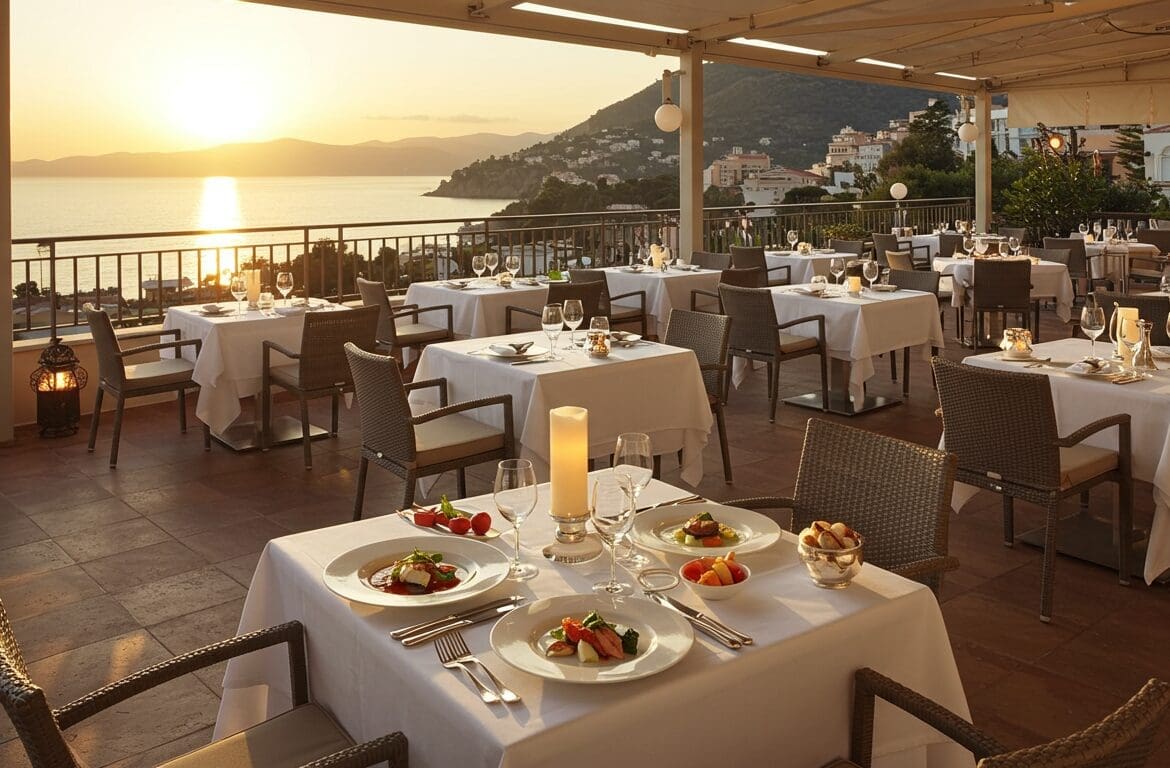
Best Restaurants in Western Cape: Fine Dining, Local Gems & Where to Eat
There is a moment, usually somewhere between your second glass of Stellenbosch Chenin Blanc and a plate of something you did not expect to be this good, when you realise that the Western Cape does not merely have a food scene – it has an argument. A serious, unhurried, quietly confident argument that this particular corner of southern Africa belongs in the same conversation as Lyon, Copenhagen, or the Napa Valley. The ingredients are extraordinary, the winelands are twenty minutes from the city, the ocean is close enough to supply the kitchen before lunch, and the chefs here have stopped looking outward for validation. They stopped needing to some time ago.
Whether you are staying in Cape Town itself, exploring the Winelands around Franschhoek and Stellenbosch, or lingering along the Atlantic Seaboard with a view that keeps making you forget what you were saying, the question of where to eat in the Western Cape is one of the more delightful problems you will encounter. This guide cuts through the noise.
For the full picture of what this region offers beyond the table, start with the Western Cape Travel Guide – it is worth the read before you arrive.
The Fine Dining Scene: World-Class and Unapologetically So
The Western Cape does not have Michelin stars – Michelin has not yet extended its guide to South Africa – but do not let that technicality mislead you. The absence of a red book is an administrative detail rather than a culinary verdict. Several restaurants here rank on the World’s 50 Best and its associated lists, and the standard of cooking at the top end is, on any objective measure, exceptional.
FYN Restaurant in Cape Town is where you start. Located on the fifth floor of an inner-city building, with views over the city that reward the lift ride alone, FYN has appeared in the top 100 of the World’s Best Restaurants list for three consecutive years – including 2025. Chef Peter Tempelhoff weaves together African culinary traditions with Japanese technique and philosophy in a way that sounds, on paper, like a concept pitch, and tastes, on the plate, like a revelation. The tasting menu is the only way to do it. Clear an evening, loosen your schedule, and let it unfold.
La Colombe, set on the Silvermist wine estate in Constantia, is a name that regulars say with a particular kind of reverence – the tone people use when they are not entirely sure they deserve to have eaten there. Also on the World’s Best Restaurants list for 2025, La Colombe serves an eleven-course tasting menu that arrives on handcrafted ceramics designed individually for each dish. Some courses are finished at the table. The wine pairing is optional in the sense that skipping it is technically possible. It is presented with the kind of care and considered detail that makes you slow down involuntarily. A choice of main course keeps the experience from feeling entirely prescribed – a thoughtful touch.
Foxcroft in Constantia occupies an interesting position in the Cape Town dining landscape: it is where fine dining stops performing and starts behaving like itself. Open for breakfast, lunch, and dinner, unpretentious in atmosphere, with views of the Constantia mountains doing their best work in the background, it offers an ever-changing tasting menu with regular, reduced, and plant-based variations. The price point is, by the standards of comparable cooking, remarkable. It is the kind of restaurant that makes you write slightly embarrassing things in your travel notes.
The Winelands Table: Stellenbosch and Beyond
The Winelands are not merely a destination for wine, despite what the name suggests with some emphasis. The dining around Stellenbosch, Franschhoek, and Paarl has its own identity – estate restaurants, farm-to-table cooking, long lunches that begin at noon and end when the light changes.
Good to Gather in Stellenbosch earned the top spot on the Dineplan Reviewers’ Choice Awards 2025 – a peer-reviewed ranking drawing on more than 6.4 million bookings and the opinions of thirty million real diners over the award period. That is a significant mandate. This is not a restaurant that relies on a tasting menu format or theatrical presentation. It earns its place through consistency, generosity, and the kind of cooking that makes guests come back within the same trip. In a region not short of excellent restaurants, finishing first in a list voted on by actual customers rather than judges with clipboards means something particular.
Franschhoek – styled, self-consciously, as the food and wine capital of South Africa – is worth at least a full day of eating. The village has more serious restaurants per square metre than almost anywhere in the country. Estates such as Babylonstoren offer their own dining experience, with produce pulled from the working farm garden just metres from the kitchen. It is the kind of place that makes the concept of food miles feel genuinely personal rather than performative.
When eating in the Winelands, the rule of thumb is simple: go local, go seasonal, and book in advance. These restaurants fill up. Particularly in summer, particularly on weekends, and particularly when the Cape Town food press runs one of its periodic pieces about how everyone should be eating here.
Local Gems and Hidden Finds: Where the City Eats
Ouzeri in Cape Town’s City Bowl is the kind of restaurant that earns loyalty rather than merely attention. It has been recognised by the 50 Best Discovery platform – no small thing – and what makes it genuinely interesting is the combination of Greek and Cypriot cooking with native Western Cape ingredients. Chef Nic Charalambous works from family recipes passed down by his Cypriot grandparents, which gives the food a specificity and honesty that is easy to taste and harder to define. Indigenous South African ingredients find their way into dishes rooted in the eastern Mediterranean. It should not work as neatly as it does. It works very neatly indeed.
Beyond the headline names, Cape Town’s neighbourhoods reward exploration on foot. De Waterkant, Woodstock, and the Gardens area all have pockets of excellent informal dining – the kind of places that do one or two things exceptionally well and do not particularly need to be in any guide. Ask your villa concierge, or ask the person at the bar who looks like they eat out often. They always know.
The Bo-Kaap, Cape Town’s historic Malay quarter, is essential for anyone with even a passing interest in Cape Malay cuisine. This is cooking with centuries of history behind it – spiced, fragrant, layered, and nothing like what most visitors expect. Bobotie, bredie, and koeksisters are the entry points. Follow your nose from there.
Beach Clubs and Casual Coastal Dining
The Atlantic Seaboard does casual dining with the same energy it brings to everything else – which is to say, with considerable style and a studied air of not trying too hard. Camps Bay, Clifton, and Bakoven all offer seafood in settings where the view is doing approximately forty percent of the work on your behalf. That is not a criticism. The sunsets over the Atlantic here are the kind of thing that makes otherwise articulate people resort to photographs.
The V&A Waterfront has a reputation, not entirely undeserved, for being a tourist-facing development where quality gets diluted by footfall. This is partially true. But it also contains some genuinely good dining, particularly at the upper end, and the harbour setting at dusk has a particular energy that the more discerning neighbourhoods cannot quite replicate. Choose carefully, book ahead, and avoid anywhere with a laminated menu displayed on a board outside.
Along the Garden Route – if your Western Cape itinerary extends beyond the peninsula – the fishing towns of Knysna and Hermanus offer excellent fresh seafood in settings that feel entirely removed from the city. Oysters from the Knysna Lagoon are not to be missed. They arrive with the confidence of something that has nowhere better to be.
Food Markets: Eating the Western Cape Informally
The Oranjezicht City Farm Market, held on weekends at the V&A Waterfront and at its Granger Bay home during the week, is the closest Cape Town comes to a serious food market in the European tradition – and it is very good indeed. The produce is local, the vendors know their product, and the prepared food stalls represent some of the more interesting informal eating in the city. Arrive early. The parking situation does not improve with time.
The Neighbourgoods Market in Woodstock operates on Saturday mornings and has been a Cape Town institution long enough to have survived the cycle of being discovered, overcrowded, slightly declined, and re-embraced. The food offering is broad – artisan bread, charcuterie, Asian street food, coffee roasters who take themselves completely seriously – and the atmosphere is reliably good. It is where Cape Town comes to eat breakfast on a Saturday and feel pleased with itself.
In the Winelands, farm stalls along the R44 and the Franschhoek Wine Route are worth stopping at without a plan. Jams, olives, charcuterie, estate wines sold at cellar prices, the occasional unexpectedly good cheese. These are the purchases that survive the journey home.
What to Order: The Dishes That Define the Western Cape
Cape Malay cuisine is the foundation – aromatic, slow-cooked, historically layered. Bobotie is the national dish by consensus: spiced minced meat baked with an egg custard topping, served with turmeric rice and a chutney that varies by household. Order it at least once. Order it again somewhere else and note the difference.
Braai is not merely a cooking method here – it is a social contract. Slow-grilled lamb, boerewors (a coiled, spiced sausage of considerable character), and sosaties (skewered meat, marinated in Cape Malay spice blends) are the standards. A proper braai lunch on a summer Sunday somewhere in the Winelands is one of the better arguments for extending your trip.
Fresh seafood is non-negotiable. Kingklip, a firm white fish from the cold Atlantic waters, appears on almost every menu worth your attention. West Coast rock lobster – locally called crayfish – is seasonal and extraordinary when handled simply. Snoek, a firm, oily local fish, is often smoked and appears in pâtés and spreads that make excellent market purchases.
For something sweet, malva pudding – a dense, warm, caramel-soaked sponge of Afrikaner origin – is the dessert the Western Cape does best. It is not subtle. It is not trying to be.
Wine and Local Drinks: The Other Reason to Be Here
The Winelands produce wine across the full spectrum, but the varieties that have staked the region’s global claim are Chenin Blanc and Pinotage. Chenin Blanc in the Western Cape ranges from bone-dry and mineral to rich and textured – it is one of the most versatile whites in the world and it is grown here in extraordinary volume and quality. Pinotage, a South African cross between Pinot Noir and Cinsaut, has had a complicated public image over the years. The serious versions, from producers in Stellenbosch and Swartland, are worth revisiting with an open mind.
The Swartland – north of Cape Town, drier and less manicured than the Winelands proper – has become the most interesting wine region in the country over the past decade. Natural wine pioneers, old-vine Chenin and Grenache, and a general atmosphere of principled independence from fashion make it essential for any serious wine traveller.
Beyond wine: Rooibos-based cocktails appear on the better menus and are worth exploring. Craft beer has arrived in Cape Town with the usual energy, and the local gin scene – particularly those using fynbos botanicals – produces some genuinely distinctive spirits. A fynbos gin and tonic on a Camps Bay terrace at five in the afternoon is not the worst thing you can do with a Tuesday.
Reservation Tips: How to Actually Get a Table
The short version: book early, be specific, and take confirmation emails seriously. Cape Town’s top tables – FYN, La Colombe, Foxcroft, Ouzeri – fill weeks in advance during peak season (November through March). The same applies to the Winelands on weekends year-round.
Dineplan is the dominant booking platform for South African restaurants and is easy to navigate. Most fine dining establishments also accept direct reservations by email, which is worth trying for parties of four or more. For tasting menu restaurants, dietary requirements should be communicated at booking – not on arrival. The kitchen will thank you.
Lunch is often the better value meal at the top restaurants. Some offer shorter or reduced menus at lunch that represent genuinely good value compared to the evening tasting experience. At an estate like La Colombe or a Winelands property, lunch also has the considerable advantage of leaving you in a wine region with the afternoon ahead of you. The logistics, as it were, suggest themselves.
If you are staying in a luxury villa in Western Cape, the private chef option transforms the equation entirely. Several of the region’s finest culinary talent work privately, and having a chef source ingredients from the Oranjezicht market or a Stellenbosch farm and cook for your table – on your terrace, with your chosen wines, at your own pace – is an experience that no restaurant, however excellent, can quite replicate. It is also, it should be said, a very civilised way to end an evening of Winelands exploring without the question of who is driving becoming anyone’s problem.
Do any restaurants in the Western Cape have Michelin stars?
Michelin has not yet published a guide for South Africa, so no Western Cape restaurant technically holds a Michelin star. However, this is a geographical gap in the Michelin programme rather than a reflection of quality. FYN Restaurant and La Colombe both appear on the World’s Best Restaurants list for 2025, and the standard of cooking at the top end of the Cape Town and Winelands dining scene is comparable to starred restaurants in Europe. Judge by reputation, not by the absence of a guide that simply has not arrived yet.
When is the best time to visit the Western Cape for food and wine tourism?
The Western Cape is rewarding year-round, but the peak dining and wine season runs from November through March when the weather is warm, the estates are in full operation, and the food markets are at their most vibrant. Harvest season in the Winelands (roughly February to April) is particularly atmospheric, with cellar door tastings and estate lunches in excellent form. Shoulder season – April through May and September through October – offers slightly easier restaurant bookings and cooler, very pleasant weather. Avoid the major South African school holidays if you prefer a quieter experience.
Is it easy to eat well in the Western Cape on dietary restrictions?
Generally, yes – and the fine dining restaurants in particular handle dietary requirements with considerable care. Foxcroft explicitly offers plant-based tasting menu variations, and most of the top establishments in Cape Town and the Winelands are experienced with vegetarian, vegan, and gluten-free diets. The key is to communicate restrictions clearly at the time of booking rather than on arrival – tasting menu kitchens work days in advance and will always produce a better result with advance notice. Markets and casual dining options tend to be naturally varied and accommodating.