
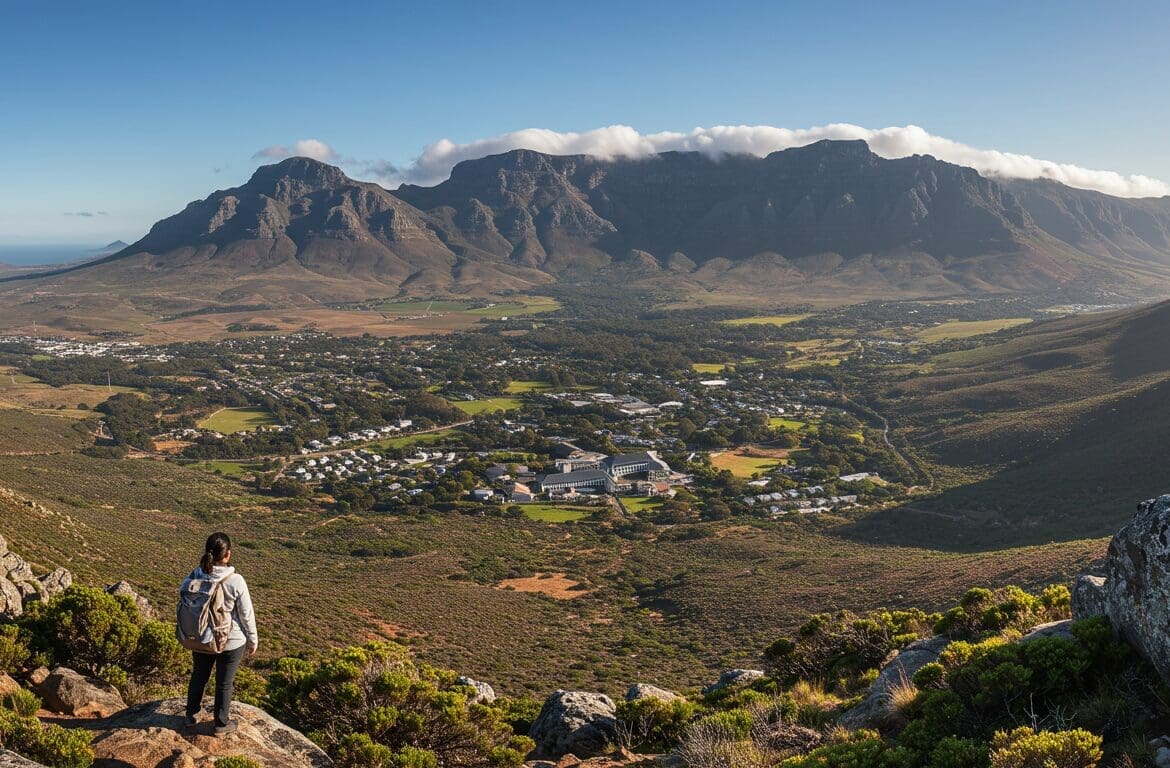
Western Cape Travel Guide: Where to Stay, Eat & Explore in Luxury
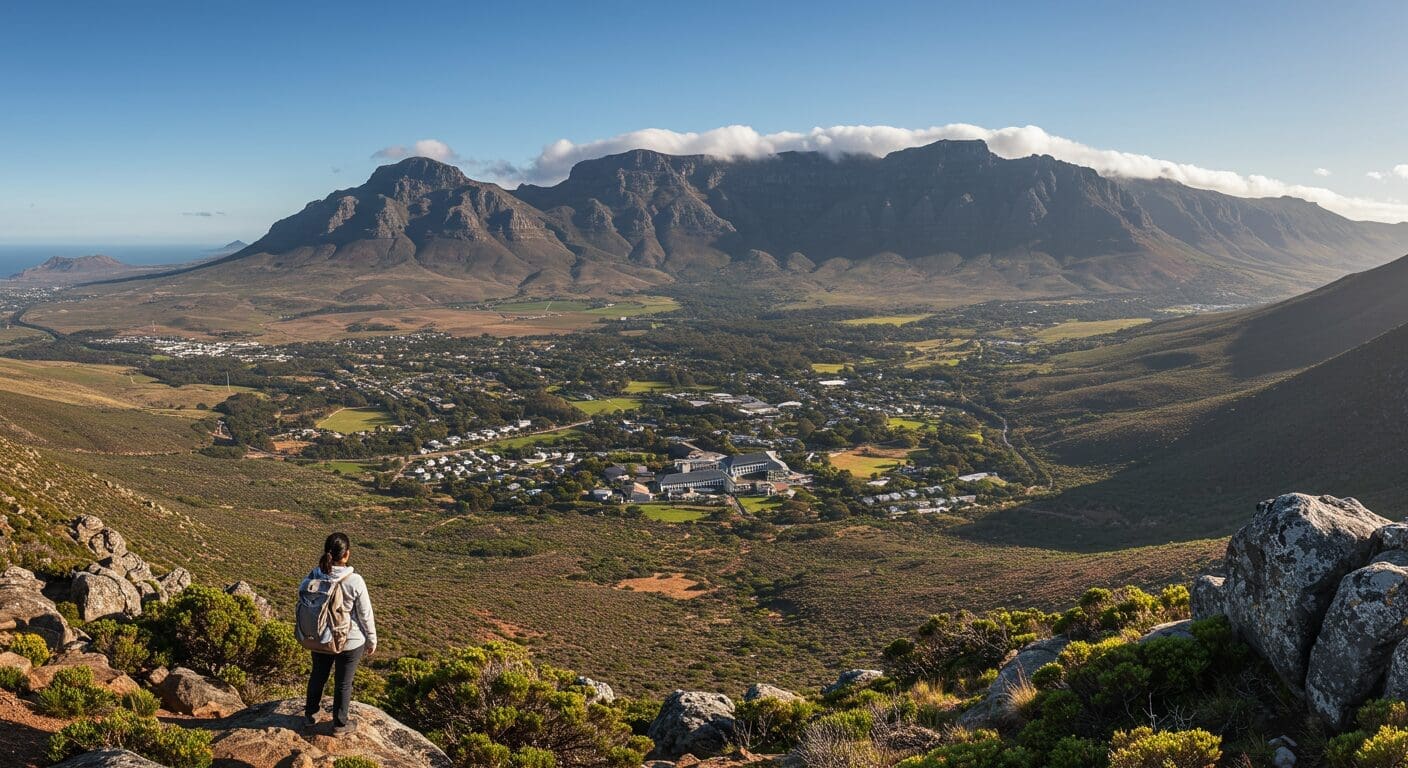
First-time visitors to the Western Cape almost always make the same mistake: they think Cape Town is the Western Cape. They book five nights in the city, squeeze in a wine-tasting day trip to Stellenbosch, and fly home convinced they’ve seen it. They haven’t. What they’ve done is eat the amuse-bouche and missed the entire meal. The Western Cape is a region of almost absurd geographical variety – mountain ranges that drop straight into the Atlantic, ancient winelands that predate the American constitution by decades, coastal wilderness so empty and so loud with wind and seabirds that the city feels like a distant rumour. Cape Town is a magnificent entry point. It is not the destination. The destination is everything that radiates outward from it.
Understanding this changes how you plan entirely, and it also clarifies exactly who the Western Cape is best suited for – which turns out to be rather a lot of people, provided they come with the right expectations. Couples marking a significant anniversary or honeymoon will find it almost unfairly romantic: mountain light at dusk, wine estates with centuries of history, private villa pools that seem to overlook the end of the world. Families seeking genuine privacy away from hotel lobbies and their associated noise will discover that a well-chosen private villa here offers something few other destinations can match at the price point – space, seclusion, a private pool, and enough activities to keep children genuinely engaged for a fortnight. Groups of friends looking to share something extraordinary – a wine tour, a braai under the stars, an itinerary that nobody has to compromise on – tend to find the Western Cape converts them on arrival and haunts them afterward. Remote workers who’ve exhausted their tolerance for Bali and Lisbon will find connectivity has improved dramatically in recent years, with many luxury properties offering reliable fibre or Starlink alongside views that make answering emails feel less punitive. And for those pursuing something slower – wellness, restoration, genuine quiet – the combination of outdoor movement, excellent food, and the particular quality of light in the Cape winelands does something that’s difficult to describe and very easy to feel.
Getting Here Is Easier Than You Think (and the Arrival Makes It Worth Every Hour)
Cape Town International Airport (CPT) is the primary gateway to the Western Cape, and it handles long-haul traffic with more grace than its size might suggest. Direct flights operate from London Heathrow with British Airways and South African Airways in roughly eleven hours – which, given what awaits on the other side, feels like a reasonable transaction. Connections from major European hubs including Amsterdam, Frankfurt, and Zurich are frequent, and travellers from the United States typically connect through London, Amsterdam, or Johannesburg.
George Airport, on the Garden Route, serves as an alternative arrival point for guests heading to the eastern stretches of the Western Cape – Knysna, Plettenberg Bay, the Wilderness – and is served by domestic flights from Johannesburg and Cape Town. If your villa is in the Hemel-en-Aarde Valley or the Overberg, it’s worth factoring this in rather than spending three hours on the N2 after a long-haul flight.
Within the region, a rental car is the single best decision you will make. The road infrastructure across the Western Cape is, by African standards, exceptional – well-signposted, largely well-maintained, and passing through landscapes dramatic enough to make the driving itself part of the experience. The R44 between Stellenbosch and Franschhoek alone justifies having a vehicle. For airport transfers to villa properties, private car services are widely available and highly recommended – Cape Town traffic operates on its own philosophical timeline, and arriving in your own time, in a comfortable car, sets the right tone from the outset.
One of the World’s Great Food Destinations, Quietly Getting Better Every Year
Fine Dining
The Western Cape’s fine dining scene has moved well beyond the phase where “good for Africa” was considered adequate praise. It is now simply good, full stop – world-class in ways that surprise people who haven’t been paying attention, and that delight people who have.
FYN Restaurant in Cape Town has now appeared on the World’s Best Restaurants list for three consecutive years, which at this point has stopped being a surprise and started being an expectation. Set on the fifth floor of an inner-city building, it blends African culinary identity with Japanese technique in a way that sounds like it shouldn’t work and absolutely does. The tasting menu moves with unusual coherence – each course feels purposeful rather than performative, which is rarer than it should be at this level. Book weeks in advance. It will be worth the planning.
La Colombe, in the serene green fold of Constantia, offers an eleven-course tasting menu that has been described by those who’ve experienced it as a series of artworks – each course considered, carefully presented, and carrying genuine intention. It too appears on the World’s Best Restaurants 2025 list, making Cape Town one of the few cities outside the traditional European and East Asian axes to have multiple entries at that level. The Constantia Valley setting adds something: lunch here, surrounded by vineyards with the mountain behind you, achieves a particular quality of contentment.
In Franschhoek, Haute Cabrière deserves a pilgrimage. A family-owned winery with documented history stretching back to 1694 – three years before the Acts of Union transformed the United Kingdom and over a century before most New World wine regions existed – it combines a serious cellar with a restaurant and terrace that makes use of its extraordinary position in the valley. The wines are the point, but the food keeps up.
Where the Locals Eat
Cape Town’s Bree Street is the informal beating heart of the city’s food culture – a stretch of restaurants, wine bars, and casual eateries that manages to feel genuinely local even as it’s become internationally known. Chef’s Warehouse here – Liam Tomlin’s long-standing Cape Town institution – serves a concept of global tapas that has been running long enough that it no longer needs to explain itself. The quality simply continues, consistently, in that quietly confident way that characterises places that know exactly what they are. The format is sharing-plate, the atmosphere is animated, and the wine list rewards attention.
The Old Biscuit Mill in Woodstock hosts the Neighbourgoods Market on Saturday mornings, which draws the kind of crowd that makes it worth arriving early – local producers, serious coffee, prepared food from across the culinary spectrum, and the particular social energy of Cape Town on a weekend morning. It’s the kind of market that makes you reconsider your entire relationship with supermarkets.
In the winelands, wine estates increasingly double as lunch destinations of serious quality – the format of a long estate lunch with a bottle from the cellar, ideally on a terrace with mountain views, has become one of the Western Cape’s defining pleasures. Not every estate does it well, but the ones that do create afternoons that are very difficult to leave.
Hidden Gems Worth Seeking Out
Good to Gather in Stellenbosch took the top position in the 2025 Dineplan Reviewers’ Choice Awards – South Africa’s most credible restaurant ranking because it’s based on real verified diner reviews across more than 6.4 million bookings, not industry insiders voting for each other. It is the kind of recommendation that carries actual weight. The cooking here is rooted in quality produce and honest technique, and the atmosphere feels like somewhere the local community genuinely values rather than somewhere that exists to impress visitors. Both things, it turns out, can be true.
Seek out the smaller farm stalls along the roads between Stellenbosch and Franschhoek for cheese, charcuterie, and preserves made in quantities too small to export and therefore only available to those physically present. This is one of the advantages of having a villa with a proper kitchen.
A Region That Contains Multitudes – and Several Entirely Different Holidays
The Western Cape stretches from the dramatic Atlantic coastline north of Cape Town down through the Cape Peninsula, east along the Garden Route to Plettenberg Bay, and inland through the winelands of Stellenbosch, Franschhoek, and Paarl. Understanding that these are not interchangeable – that they offer genuinely different experiences – is the key to planning well.
Cape Town itself occupies one of the world’s great natural settings. Table Mountain, Devil’s Peak, and Lion’s Head form an improbable backdrop to a city of roughly four million people – a city of neighbourhoods with distinct personalities, a waterfront that’s been better executed than most, and a food and arts culture that punches significantly above its weight. The V&A Waterfront area, the Bo-Kaap with its brightly painted houses and Cape Malay heritage, the galleries and coffee shops of De Waterkant, the long Atlantic seaboard stretching through Sea Point and Clifton to Camps Bay – the city rewards wandering.
The Cape Winelands – Stellenbosch, Franschhoek, Paarl, and the emerging Swartland – represent something different again: a landscape of extraordinary agricultural beauty, with mountains, oak-lined streets, and wine estates that have been refining their craft for three and a half centuries. Franschhoek in particular has the quality of a small French town that took a wrong turn and ended up in the most beautiful valley in southern Africa. It did not object.
The Garden Route, stretching from Mossel Bay to Storms River, offers yet another register – one of coastal forest, lagoons, whale watching at Hermanus in season, and a pace of life that is noticeably slower and, depending on your disposition, either restorative or maddening. The Hemel-en-Aarde Valley near Hermanus has also emerged as a serious wine destination in its own right, particularly for Pinot Noir and Chardonnay in a cooler coastal climate.
The Overberg and West Coast extend the geography further, offering whale watching of world-class quality at Hermanus (particularly August to November), wildflower seasons in Namaqualand that attract visitors from across the globe, and a particular quality of wide, unhurried landscape that reminds you how large and quiet the country actually is.
What to Do When You’re Not Eating or Drinking (and There Will Be Time)
The sheer range of activities available across the Western Cape is one of its most significant advantages as a luxury holiday destination – it can genuinely be different things for different members of the same travelling party. On any given day, one person can be in a spa, another cycling wine routes, a third in a cooking class learning the principles of Cape Malay cuisine, and the fourth on a whale watching boat. Nobody has to compromise. This is underrated.
Table Mountain is the iconic experience, and justifiably so. The Aerial Cableway – rotating cars that give every passenger a 360-degree view on the way up – is the most accessible route, and on a clear day delivers views across the Cape Peninsula, both coastlines, and out to the horizon that genuinely stop conversation. Those inclined to earn the view can hike several well-marked routes to the summit, with Platteklip Gorge being the most popular and Skeleton Gorge offering something wilder through the Kirstenbosch gardens. Lion’s Head, meanwhile, has become the city’s favourite sunrise hike – a circular route with some optional scrambling that rewards early risers with the city and both oceans laid out below them in the morning light.
Wine touring across Stellenbosch, Franschhoek, and Paarl is, for many visitors, the defining pleasure of a Western Cape holiday. The Franschhoek Wine Tram – a hop-on, hop-off tram and bus system that circuits the valley’s estates – strikes the right balance between organised and relaxed. Private guided wine tours offer a more curated experience and the significant advantage of not having to drive.
Whale watching at Hermanus requires only finding a stretch of clifftop path between August and November, when southern right whales arrive in Walker Bay in numbers large enough that the town employs an official whale crier. The position is exactly as whimsical as it sounds. The whales, however, are serious.
The Cape of Good Hope, at the southwestern tip of the Peninsula, merits a half-day. The combination of dramatic coastline, resident wildlife including Cape mountain zebra, ostrich, and baboons (keep windows closed; they are experienced thieves), and the symbolic weight of being at the meeting point of two oceans creates something memorable. Boulder’s Beach near Simon’s Town, home to a resident African penguin colony, sits on the same Peninsula drive and provides one of those wildlife encounters that works on everyone – children, adults, people who claim not to be sentimental about animals.
For Those Who Like Their Holidays to Have a Slight Edge of Adrenaline
The Western Cape’s topography – mountains dropping to ocean within kilometres – creates ideal conditions for adventure sports of both the vertical and horizontal variety, and the industry supporting them is well-developed, safety-conscious, and used to handling guests for whom this will be a first.
Tandem paragliding from Signal Hill or Lion’s Head requires no prior experience and delivers a perspective on Cape Town’s geography that even habitual city residents say recalibrates their sense of the place. Your instructor handles everything; you contribute the willingness to run off a mountain and trust the physics. The flight over the city and Atlantic Seaboard, with the mountain above and the bowl of Camps Bay below, is – to use a word that appears nowhere else in this guide – extraordinary.
Shark cage diving at Gansbaai, approximately two hours from Cape Town along the coast, offers a close encounter with great white sharks in their natural environment that has no real equivalent in adventure tourism. The Dyer Island area, nicknamed “Shark Alley,” supports one of the highest concentrations of great whites in the world. The experience involves a boat transfer to the site, briefing on protocol, and then the choice of how close you want to be. Most people choose very close. Most people are simultaneously glad they did and slightly disbelieving afterward.
Surfing is excellent along several Western Cape breaks – Muizenberg on False Bay is the traditional learners’ beach, with consistent small waves and a large community of instructors, while more experienced surfers gravitate toward the Atlantic side at places like Kommetjie and Long Beach. Mountain biking trails exist throughout the Winelands, with routes threading through vineyards and along mountain passes. The Cape Epic, held annually in the Western Cape, is considered one of the world’s most demanding mountain bike stage races – though watching it from a wine estate terrace is also a viable option.
Kitesurfing at Langebaan Lagoon, on the West Coast north of Cape Town, benefits from the reliable summer south-easterly winds (known locally as the Cape Doctor, for reasons that become obvious when it blows) and the flat water of the lagoon. Lessons for beginners are widely available, and the setting – a large turquoise lagoon inside a national park – would be worth visiting regardless.
Why Families Find the Western Cape Unexpectedly Easy
The Western Cape tends to overdeliver for families, partly because its range of activity is so wide that finding things everyone wants to do is genuinely straightforward, and partly because the luxury villa model here is particularly well-suited to travelling with children. A private villa with its own pool removes the central anxiety of the hotel holiday – the shared spaces, the early breakfast slots, the negotiation of others’ schedules. Children swim when they want to. Adults sit around the pool not performing relaxation for a public audience. Meals happen when hunger dictates. It is a different rhythm, and most families discover they prefer it after about forty-eight hours.
Beyond the villa, the Western Cape offers child-appropriate experiences that don’t condescend. The African penguin colony at Boulders Beach is genuinely captivating for children in the way that only live animals can be. Kirstenbosch National Botanical Garden has a Boomslang canopy walkway that moves through the forest canopy and satisfies the desire for elevation in a manageable way. The Two Oceans Aquarium at the V&A Waterfront is consistently well-regarded, with a kelp forest tank and shark exhibits that hold attention effectively. The Cape of Good Hope drive doubles as a wildlife-spotting exercise – ostriches, baboons, and zebra visible from a normal car on a normal afternoon.
The food culture’s emphasis on outdoor dining, sharing plates, and long lunches tends to suit travelling families well – children in the Western Cape restaurant scene are generally accommodated with genuine warmth rather than the polite tolerance they receive in some more formal destinations. The winelands estates, in particular, have figured out that a family spending the afternoon at a table on a terrace represents significant revenue and should be made comfortable accordingly.
Three and a Half Centuries of History in a Landscape That Remembers Everything
The Western Cape’s history is complex, sometimes uncomfortable, and entirely essential to understanding the place you’re in. The Cape was settled by the Dutch East India Company in 1652 as a provisioning station – the halfway point on the spice route from Europe to the East Indies – and the layered colonial history that followed over the next three and a half centuries shaped everything from the architecture to the cuisine to the demographics of the city and region you see today.
The Cape Malay community, descended largely from slaves and political exiles brought from Indonesia and other parts of the Dutch colonial network, gave the city the Bo-Kaap neighbourhood – those brightly painted houses on the slope below Signal Hill – and Cape Malay cuisine, which remains one of the most distinctive and underappreciated cooking traditions in the world. Bobotie, bredie, koeksisters, and the spice vocabulary of a culture that maintained its identity across centuries of displacement are worth understanding as more than items on a menu.
The Apartheid Museum in Johannesburg provides the most comprehensive account of South Africa’s twentieth century, but Cape Town’s own District Six Museum is a moving and meticulously assembled record of the forced removals that cleared a vibrant mixed-race neighbourhood in the 1970s – a neighbourhood whose residents have still not fully returned to the land from which they were displaced. It is not cheerful. It is necessary.
Robben Island, visible from the V&A Waterfront, where Nelson Mandela spent eighteen of his twenty-seven years of imprisonment, operates as a museum guided largely by former political prisoners. The experience is unlike any other museum visit – the guides speak with personal authority that no interpretive panel can replicate. Book ahead; the boat trips operate on limited schedules and are frequently sold out.
On a lighter register, the Dutch Cape architecture of the winelands – whitewashed gable-fronted manor houses set against mountain slopes – represents one of the most beautiful vernacular building traditions in the Southern Hemisphere. Estates like Boschendal, whose manor house dates to 1812, combine architectural heritage with functioning winery and restaurant in a way that makes history pleasurable rather than dutiful.
The arts scene in Cape Town has grown significantly in the past decade, with the Zeitz Museum of Contemporary Art Africa (Zeitz MOCAA) – installed in the converted grain silos at the V&A Waterfront – providing a world-class permanent collection focused on contemporary African art in a building that is itself worth the visit. The Cape Town International Jazz Festival, held annually in March or April, is one of Africa’s largest music festivals and draws international performers alongside the city’s considerable homegrown talent.
What to Buy and Where to Find It
The Western Cape is a genuinely good place to shop, which is not true of every beautiful destination, and the range runs from the immediately practical to the seriously considered.
Wine is the obvious choice and the most satisfying one – bottles from small-production estates that don’t export, at prices that make European visitors do small recalculations in their heads, are available directly from the cellar across the winelands. The Swartland revolution in natural and minimal-intervention winemaking has produced a generation of producers whose work is increasingly hard to find outside South Africa, which makes buying direct both sensible and slightly urgent.
The Cape Town City Bowl and surrounds host several design and craft destinations worth navigating toward. The Old Biscuit Mill in Woodstock – already mentioned for its Saturday market – also houses permanent design studios and galleries. Neighbourgoods Market is the weekly version of what Woodstock does well: local, handmade, considered. Church Street in the city centre has antique dealers with genuinely interesting stock – colonial-era furniture, silver, African art and artefacts that have been circulating long enough to have some provenance.
For wearable items, South African-designed clothing and leather goods offer value that remains compelling despite the rand’s fluctuations, and the craft tradition in beadwork, ceramics, and textile is strong enough to produce objects that look right in a properly furnished home rather than languishing in a drawer as souvenirs. The craft markets at Greenmarket Square in the city centre carry mixed quality, but patience and selective attention are rewarded.
Rooibos tea, South Africa’s distinctively earthy caffeine-free offering from the Cederberg mountains, travels exceptionally well and is available in quality grades that bear no relationship to the supermarket boxes sold in the England. Biltong – cured, dried meat that is a South African staple – is, technically, not legal to bring back into most countries, a fact that stops almost nobody.
The Things Worth Knowing Before You Arrive
The South African rand makes the Western Cape extremely good value for visitors from the United Kingdom, Europe, and the United States – a fact that becomes apparent within hours of arrival and does not stop being pleasant. World-class restaurant meals, excellent wine, and luxury accommodation cost a fraction of equivalent quality in London or New York. This is not a secret, but it is consistently more pronounced than visitors expect.
The best time to visit depends, as it usually does, on what you’re here for. The Western Cape has a Mediterranean climate – warm, dry summers from November to February, with January and February being the peak tourist months and also the most reliably hot. March, April, and early May offer exceptional conditions: the tourist crowds thin, the summer heat moderates, and the winelands transition into harvest season, when the vineyards take on their autumn colouring and the estates are producing the year’s vintage. September and October bring the wildflowers to the West Coast and the first whale arrivals to Hermanus. The winter months (June to August) bring rain and cooler temperatures, but also dramatic light, low prices, and a quieter, more authentic version of Cape Town that residents rather enjoy.
Safety is a topic that every Western Cape travel guide handles awkwardly, so: be sensible. Cape Town has neighbourhoods that are genuinely unsafe and others that are entirely fine for visitors navigating them thoughtfully. The tourist-facing areas – the V&A Waterfront, the City Bowl, the Atlantic Seaboard, the winelands – are well-frequented and generally safe. Avoid displaying expensive items unnecessarily, don’t walk in poorly lit areas at night in unfamiliar neighbourhoods, and take the same precautions you’d take in any major city. Guests staying in private villas outside the city will find this considerably simpler – the gated nature of most luxury villa properties and their locations in residential or rural areas remove most of the practical complexity.
Tipping is standard and expected: ten to fifteen percent in restaurants, a standard amount per bag for hotel porters, and similar conventions to most international destinations. Tap water is safe to drink in Cape Town – the city’s post-drought water management has been impressive – and Afrikaans and English are both widely spoken across the Western Cape, with most visitor-facing businesses operating fluently in English.
Electricity runs at 220-230V with a distinctive three-round-pin South African plug type – adaptors are available at the airport and widely sold, though bringing one from home is tidier. The time zone is SAST (UTC+2), which puts it two hours ahead of London in winter and one hour ahead in summer, and makes communication with European and UK clients relatively painless for remote workers.
Why a Private Villa Is the Only Sensible Way to Experience This Region
There is a version of the Western Cape holiday that involves a five-star hotel in Cape Town, a transfer to a wine estate hotel in Franschhoek, and a sunset cocktail on a terrace shared with forty other people in similar linen. It is perfectly pleasant. It is not, however, this region at its best.
The best version involves a private villa – on the Atlantic Seaboard above Camps Bay with direct ocean views, or on a working wine estate in the Stellenbosch hills, or in a whitewashed property in Franschhoek within walking distance of the village, or on a clifftop above the Garden Route with the forest on one side and the Indian Ocean on the other. The variety of luxury villa Western Cape properties on offer spans these scenarios and considerably more: from contemporary glass-and-steel architecture designed around the view, to restored historic Cape Dutch manor houses with formal gardens, to relaxed coastal retreats where the design decision was clearly to get out of the landscape’s way and let it do the work.
The private pool, in this context, is not a luxury extra – it’s the feature that makes the whole thing work. The Western Cape summer is warm enough that swimming becomes a daily activity, and the difference between a pool shared with hotel guests and a pool that is simply yours – yours before breakfast, yours at midnight, yours whenever the mood arrives – is not a small one. Families in particular understand this distinction immediately.
For groups, the villa model enables something that hotels structurally cannot: everyone under the same roof, on the same schedule, sharing a kitchen and a terrace and an experience rather than meeting in a corridor and dispersing to separate rooms. Multi-generational families find that larger villas with separate wings or guest cottages give everyone proximity without sacrifice of privacy – grandparents and grandchildren occupying the same property without requiring the same bedtimes.
For remote workers extending their stay into something resembling a workcation, many luxury Western Cape villas now offer fibre connectivity or Starlink, dedicated workspace, and the crucial ability to close the office door on a vineyard view at a reasonable hour rather than carrying a laptop through a hotel lobby. The Western Cape’s time zone alignment with Europe makes this particularly viable for UK and European-based professionals.
Wellness-focused guests will find that a villa with a private pool, outdoor yoga space, and proximity to hiking trails, cycling routes, and the region’s many world-class spas delivers a kind of restoration that’s difficult to achieve in a hotel environment. The pace here – slower, more deliberate, oriented around meals and movement and the quality of light rather than a schedule – does the actual work. The villa just provides the container for it.
Excellence Luxury Villas offers a curated portfolio of private villa rentals in Western Cape, spanning the Atlantic Seaboard, the Cape Winelands, the Garden Route, and beyond – properties selected for quality, location, and the particular kind of experience that makes people return to this region year after year, knowing now not to mistake Cape Town for the whole story.
More Western Cape Travel Guides
- Best Restaurants in Western Cape: Fine Dining, Local Gems & Where to Eat
- Western Cape Food & Wine Guide: Local Cuisine, Markets & Wine Estates
- Western Cape with Kids: The Ultimate Family Holiday Guide
- Best Time to Visit Western Cape: Month by Month Weather, Crowds & Tips
- Western Cape Luxury Itinerary: The Perfect 7-Day Guide
- Romantic Western Cape: The Ultimate Couples & Honeymoon Guide
What is the best time to visit Western Cape?
For guaranteed warm, dry weather, November through February delivers reliable summer conditions across the Western Cape, with January and February being peak season. March to May is arguably the finest window for a luxury holiday western cape experience – harvest season in the winelands, fewer crowds, and exceptional light. Whale watching at Hermanus peaks between August and November. Winter (June to August) brings rain and cool temperatures but also dramatically reduced prices, quieter roads, and a more authentic sense of the place.
How do I get to Western Cape?
Cape Town International Airport (CPT) is the main arrival point, with direct long-haul flights from London Heathrow and connections from major European hubs including Amsterdam, Frankfurt, and Zurich. Travellers from the United States typically connect through London, Amsterdam, or Johannesburg. For destinations on the Garden Route – Knysna, Plettenberg Bay, the Wilderness – George Airport (GRJ) serves as a more practical arrival point and is served by domestic connections from Cape Town and Johannesburg. A private transfer from the airport to your villa is strongly recommended; arranging this in advance with your villa provider is the cleanest option after a long-haul flight.
Is Western Cape good for families?
It is exceptionally good for families, and particularly so for those staying in private villas rather than hotels. The combination of private pool, flexible meal schedules, and space for children to move freely removes most of the friction of travelling with young people. Activity-wise, the penguin colony at Boulders Beach, the Kirstenbosch canopy walkway, the Two Oceans Aquarium, wildlife on the Cape Peninsula, and the general outdoor culture of the region provide genuine engagement for children across most age groups. The food culture, with its emphasis on outdoor eating and relaxed long lunches, accommodates families well. Distances between key attractions are manageable, and a rental car makes logistics straightforward.
Why rent a luxury villa in Western Cape?
A private luxury villa gives you the Western Cape on your own terms – your own pool, your own schedule, your own space without the compromises of shared hotel facilities. For families and groups, the financial logic is also straightforward: a villa divided between eight or ten guests frequently costs less per person than comparable hotel rooms, while delivering significantly more space, privacy, and quality of experience. Many properties come with dedicated staff – a housekeeper, villa manager, and in some cases a private chef – which means the logistical elements of the stay are handled while you concentrate on the actual holiday. The best luxury villas in the Western Cape are also extraordinary properties in their own right: the architecture, the views, and the settings make them destinations as much as accommodation.
Are there private villas in Western Cape suitable for large groups or multi-generational families?
Yes, and in significant variety. The Western Cape villa market includes properties sleeping anywhere from four guests to twenty or more, with configurations ranging from single open-plan buildings to compounds with separate guest cottages, pool houses, and staff quarters