
Romantic Canary Islands: The Ultimate Couples & Honeymoon Guide
Romantic Canary Islands: The Ultimate Couples & Honeymoon Guide
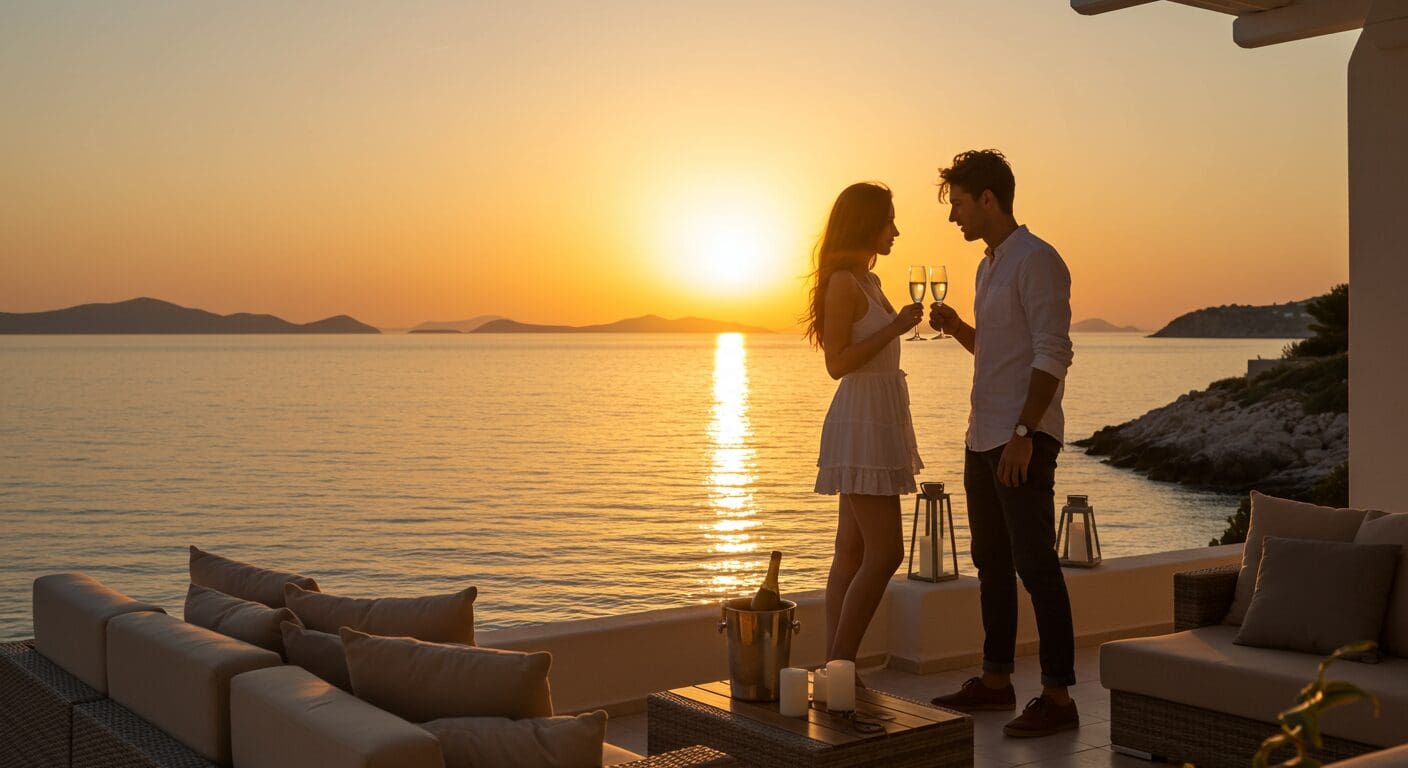
The sun has been down for twenty minutes but the sky over the Atlantic is still doing something unreasonable – a bruised violet dissolving into copper, the silhouette of a volcanic peak perfectly still against it, and somewhere below, two people sharing a bottle of local wine on a terrace they have entirely to themselves. This is the Canary Islands at their most persuasive. Not the pool-and-sunbed version you may have been sold at some point in your life, but the other one – the archipelago of black sand beaches, ancient laurel forests, dramatic calderas and genuinely world-class restaurants that rewards those who look a little beyond the familiar. For couples, it rewards them considerably.
Seven islands, each with its own personality, climate and landscape. That alone makes the romantic Canary Islands: the ultimate couples and honeymoon guide harder to write than it sounds – because what works beautifully for a honeymooning pair in search of wild solitude on La Palma is quite different from what a couple celebrating a milestone anniversary might want from a clifftop suite in southern Tenerife. The good news is there is something here for all of them. The better news is we know which is which.
Before diving in, our broader Canary Islands Travel Guide covers the practical essentials – when to go, how to island-hop, what to expect from each island. Consider this its more candlelit companion.
Why the Canary Islands Are Exceptional for Couples
There is a particular kind of travel that suits couples better than it suits anyone else – the kind where the landscape is dramatic but not exhausting, where the food and wine are taken seriously, where you can be entirely alone if you want to be, and where the weather does not require constant negotiation with fate. The Canary Islands, positioned just off the northwest coast of Africa and bathed in reliable sunshine for the better part of the year, tick all of these boxes with something to spare.
The islands sit in a sweet spot climatically – warm enough in January to eat dinner outside, not so savage in August as to make a midday walk feel inadvisable. The landscape is extraordinarily varied: Fuerteventura offers pale dune beaches that genuinely rival the Caribbean; Lanzarote has a volcanic otherworldliness that makes even a morning drive feel like an event; Gran Canaria shifts from resort coast to misty highland forest in under an hour; and Tenerife has Mount Teide, which is not just the highest peak in Spain but one of the more theatrical backdrops on which to propose. The pace is gentle, the light is extraordinary, and the locals have a particular talent for making an excellent meal feel unhurried.
Crucially for those considering a villa holiday, the islands offer genuine privacy. No packed hotel lobbies, no buffet queues, no sense of being processed. Just your own pool, your own kitchen for lazy breakfasts, your own terrace for those Atlantic sunsets. Couples who have tried both rarely go back.
The Most Romantic Settings Across the Islands
Tenerife tends to get the headlines, and the south of the island – around Costa Adeje and Los Gigantes – earns them. The cliffs at Los Gigantes rise some 800 metres from the water and watching them at golden hour from a boat is the kind of experience that renders conversation temporarily unnecessary. The north of the island offers an entirely different register: lush, green, colonial towns like La Orotava with cobbled streets and grand Canarian architecture, cooler temperatures and the sense that you’ve somehow arrived somewhere that tourists haven’t entirely found yet. (They have, of course. But it still feels that way.)
Lanzarote is the island for couples who respond to austere beauty – black lava fields, whitewashed villages with brilliant green doors and shutters, and the extraordinary work of César Manrique woven into the landscape like something between art and architecture. The Jameos del Agua, a natural lava tunnel converted by Manrique into an auditorium and garden, is the sort of place you visit once and describe for years.
La Gomera and La Palma are for the couples who have decided, sensibly, that the world is too crowded. Small, volcanic, densely forested and largely left alone, they offer a quality of silence that feels like a luxury in itself. The laurel forests of La Gomera’s Garajonay National Park – UNESCO-listed, ancient, enveloped in cloud – are genuinely unlike anywhere else in the world.
Romantic Restaurants and Dining Experiences
The Canaries have a food scene that frequently surprises people who weren’t expecting to be surprised. This is partly because the islands have produced ingredients – wrinkled papas arrugadas with mojo, local cheeses, fresh Atlantic fish, Lanzarote wines grown in volcanic ash – that any serious kitchen would be grateful for, and partly because a new generation of chefs has arrived with serious intentions.
Tenerife is home to a concentration of Michelin-starred restaurants that would not look out of place in the restaurant sections of any major European capital. Dining at this level on the island tends to combine technical precision with local produce in ways that feel considered rather than performative – tasting menus that tell the story of the islands course by course, with wine pairings that introduce you to the remarkable viticulture happening in the shadow of Teide.
For something less formal but no less memorable, seek out restaurants on clifftops or harbours where the setting does at least as much work as the kitchen – a fresh grilled fish at a small port restaurant at sunset is its own kind of perfection. Gran Canaria’s capital Las Palmas has a genuinely cosmopolitan dining scene; Lanzarote’s wine-producing region around La Geria combines landscape and gastronomy in ways that make a lunch there feel like a full afternoon well spent. Book ahead, always. The locals eat late and they eat well.
Couples Activities: From Sailing to Spa
The Atlantic surrounding the Canary Islands is not merely a backdrop – it is an activity in itself. Private sailing charters are among the most romantic things you can do here: leaving the coast in the early afternoon, finding a quiet cove, swimming off the boat, watching the sun drop while the skipper opens something cold. Many operators run sunset cruises as well, which are more structured but equally effective. Whale and dolphin watching is particularly good in the strait between Tenerife and La Gomera, where several species are resident year-round rather than seasonal visitors.
On land, the spa culture is strong – particularly in Tenerife, where several resort spas have built serious reputations for treatments that incorporate local volcanic elements: warm volcanic stone massages, thermal circuits, thalassotherapy using Atlantic seawater. Booking a morning treatment and spending the afternoon entirely horizontal by a private pool is, it turns out, an excellent way to spend a day.
Wine tasting on Lanzarote is a couples activity that rewards unhurried attention. The island’s viticulture is unique: vines planted in individual volcanic craters called hoyos, each dug by hand to reach the fertile soil beneath the ash, each surrounded by a low crescent wall to protect against the wind. Walking through La Geria’s vineyards and tasting the island’s distinctive malvasía at the source is the sort of thing that makes you briefly philosophical about human ingenuity.
Cooking classes across the islands offer a more active engagement with local cuisine – learning to make mojo rojo from scratch, understanding the particular preparation of local fish dishes, leaving with recipes you will attempt at home and find only partially transferable. Stargazing is another pursuit worth taking seriously: La Palma has some of the least light-polluted skies in the world, and the Roque de los Muchachos observatory sits above the clouds at 2,400 metres. A guided night under those skies with a good bottle of wine is quietly unforgettable.
The Most Romantic Accommodation Areas
Where you base yourself shapes everything. In Tenerife, the southwest coast – particularly around Costa Adeje – offers the highest concentration of luxury infrastructure: well-designed villas with private pools, easy access to restaurants and boat trips, consistent sunshine. The Orotava Valley in the north is a more characterful base if you’re less interested in beach proximity and more drawn to colonial atmosphere and cooler air.
On Lanzarote, the area around Yaiza and Playa Blanca in the south is consistently regarded as the most serene part of the island – away from the busier resort areas, with views towards Fuerteventura across the water and immediate access to the Timanfaya volcanic park. Gran Canaria’s southwest, particularly around Maspalomas and Meloneras, has developed a notably upmarket character; the dunes and the lighthouse at sunset are worth the trip alone.
For maximum privacy and the most dramatic setting, a villa in the elevated areas above the coast – with panoramic Atlantic views and true separation from neighbours – tends to be what couples who have been before request. The combination of indoor-outdoor living, a private pool, and that light at the end of the day is not something that gets old quickly.
Proposal-Worthy Spots
If you are going to ask an important question, it seems reasonable to do it somewhere that removes any ambiguity about the answer. The Canary Islands have several such places.
The summit caldera of Mount Teide, reached by cable car and a short walk, puts you above the clouds at over 3,700 metres with Spain and the Atlantic spread below in all directions. It is theatrical, cold enough to feel significant, and almost certainly better than an airport. The cliffs of Los Gigantes at golden hour, seen from the water on a private charter, are another strong candidate. The crater lakes at Caldera de Taburiente on La Palma, accessible on foot through pine forest, have a quality of remoteness and natural drama that tends to produce strong emotional responses. The mirador – the viewpoint – above the village of Masca in Tenerife’s Teno mountains looks out across a landscape so unlikely that context does most of the work for you.
A private villa terrace at sunset, glass in hand, away from everything, is the understated option. It works rather well.
Anniversary Ideas and Honeymoon Considerations
For anniversaries, the islands reward those who design the day around a single exceptional experience rather than trying to pack everything in. A private boat charter with a packed lunch and a swimming stop, followed by dinner at a serious restaurant with a tasting menu booked in advance, is a genuinely memorable way to mark a significant date. Hiring a private guide for a day in the mountains – whether walking the forests of La Gomera or exploring the volcanic landscapes of Lanzarote with someone who actually knows what they’re looking at – adds a layer of depth to the landscape that independent exploration doesn’t always provide.
For honeymooners, the key consideration is which island suits your particular version of romance. If yours involves beach, pool, excellent food and the option of a boat trip but not necessarily great physical exertion, Tenerife’s southwest or Lanzarote’s south will serve you well. If it involves dramatic landscapes, genuine solitude and the sense of discovery, La Palma or La Gomera are worth the slightly more complex logistics. Either way, a private villa rather than a hotel is, for most honeymooners, worth the small additional planning it requires. The difference between starting your first morning as a married couple in a room with a corridor outside it and starting it on a private terrace with coffee and a view of the Atlantic is not a small one.
Island-hopping is worth considering for longer honeymoons – Tenerife and La Gomera are connected by a ferry of under an hour, and combining the two gives you both cosmopolitan access and proper wilderness without much logistical complication. Pack light, book the restaurants in advance, and resist the urge to plan every hour.
Your Romantic Base: Luxury Villas in the Canary Islands
Everything described in this guide – the sunsets, the private dinners, the slow mornings, the stargazing – is made considerably better by having the right base. A luxury private villa in Canary Islands provides the kind of space, privacy and flexibility that no hotel, however well-appointed, can quite replicate. Your own pool. Your own kitchen for the breakfasts worth lingering over. Your own terrace for the evenings when the best thing to do is stay exactly where you are and watch the light change over the Atlantic until it’s gone. For couples, it is not simply an accommodation choice – it is the setting in which the whole trip takes place. Choose it accordingly.
When is the best time of year for a romantic trip to the Canary Islands?
The Canary Islands have a genuinely mild climate year-round, which makes them unusual among European destinations. For couples, the sweet spot tends to be late autumn through early spring – October to April – when temperatures are warm rather than hot, the islands are slightly quieter than peak summer, and the quality of light is particularly good. That said, summer works well if you’re primarily based around a private villa and pool, and the higher elevations of Tenerife and La Palma offer a natural escape from coastal heat.
Which Canary Island is best for a honeymoon?
It depends entirely on what kind of honeymoon you want. Tenerife offers the broadest range of luxury experiences – Michelin-starred dining, excellent spa options, sailing, and dramatic landscapes. Lanzarote suits couples drawn to volcanic scenery, distinctive architecture and superb local wine. La Palma and La Gomera are the choices for genuine remoteness and extraordinary natural landscapes. Many couples combine two islands for a longer honeymoon, with Tenerife and La Gomera being an easy pairing given the short ferry crossing between them.
Is it worth hiring a private villa over a hotel for a couples trip to the Canary Islands?
For most couples – and almost all honeymooners – yes, significantly so. A private villa gives you your own pool, outdoor living space and kitchen, which translates to genuine flexibility: late breakfasts on your own terrace, private evening swims, the option to cook a local market haul one night and go out the next. In a destination where so much of the pleasure comes from slow, unhurried time in beautiful surroundings, having a space that is entirely your own rather than shared with a hotel full of other guests makes a considerable difference to the overall experience.

