Apulia Travel Guide: Where to Stay, Eat & Explore in Luxury
At around six in the morning, before the heat has made its opinions known, the air in Apulia smells of wild fennel, warm stone and something faintly almond-sweet that you will spend your entire holiday trying to identify and never quite manage. The light is already golden – not the performative gold of sunset, but a quiet, matter-of-fact gold, as if the sun simply got up early and got on with it. Somewhere nearby, a pair of old men are having an argument about nothing in particular with the passionate conviction of people who have been friends for sixty years. A three-wheeled Ape van clatters past carrying crates of tomatoes the colour of arterial red. You have arrived in the heel of Italy’s boot, and it is, rather immediately, everything.
Apulia – or Puglia, to use its Italian name, though the anglicised version has a certain distinguished ring to it – is one of Europe‘s most quietly spectacular regions, and it has been hiding in plain sight for decades while its northern Italian cousins hogged the postcards. That is changing, and the travellers now discovering it are a revealing cross-section of people who know what they want. Couples marking a significant anniversary – a fortieth birthday, a twenty-fifth wedding anniversary, the end of a particularly brutal work year – find here the kind of slow, deeply pleasurable holiday that actually does what it says on the label. Families seeking real privacy, with young children who need a garden and a pool and the freedom to make noise without apologising for it, find in Apulia’s grand masserias and countryside villas exactly the kind of space that hotels, however lovely, simply cannot provide. Groups of friends in their thirties, forties, fifties – the kind of groups who want great wine and great food and great conversation but have earned the right to have it somewhere genuinely beautiful – come here and immediately start planning the next trip before the first one has finished. Increasingly, too, the remote workers arrive: laptop-toting professionals who have realised that a two-week stay in a luxury villa with reliable connectivity is not a holiday with some work in it, but a fundamentally different and better way of living, at least for a fortnight. And the wellness contingent – those who come for the slow food, the long swims, the morning yoga on a terrace above an olive grove – find in Apulia a region that is essentially wellness without the branding.
Getting Here Is Easier Than It Has Any Right to Be
The good news about getting to Apulia is that it is considerably less of an expedition than it once was, and the bad news is that this is no longer the secret it was. Direct flights from London to Bari and Brindisi operate throughout the summer season, with Ryanair, British Airways and easyJet among the carriers. Bari Karol Wojtyla Airport – named, with considerable ambition, after Pope John Paul II – is the region’s main hub and handles the bulk of international traffic. It sits about 8km from the city centre and roughly an hour from the Valle d’Itria, which is where a large proportion of luxury villa holidaymakers are headed. Brindisi Airport is more useful if you are based in the southern part of the region, around Lecce or the Salento peninsula, and is a good 90-minute drive from Bari. Both airports have car hire desks from all the major operators.
A car is not optional in Apulia. It is essential. The region is large – roughly 350km from top to toe – and spread in a way that makes public transport a charming but ultimately insufficient means of exploration. The roads are good, the signage occasionally philosophical in its ambiguity, and the driving culture is one that rewards a certain philosophical acceptance of your fellow road user’s personal interpretation of lane discipline. Hire something comfortable. The distances between a morning trulli visit, a lunchtime restaurant and an afternoon beach are not vast, but you will want to take the scenic route, and you will want to stop repeatedly for no reason other than that the view has just changed into something extraordinary.
The Table Is the Whole Point: Eating and Drinking in Apulia
Fine Dining
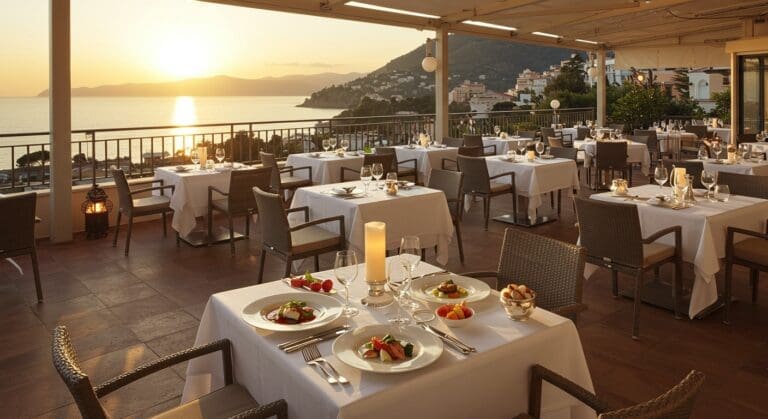
Apulia earned ten Michelin stars in the 2025 guide, which is the region announcing itself as a serious gastronomic destination rather than merely a pretty place with good tomatoes. The standard-bearer, by most measures, is Due Camini at Borgo Egnazia in Savelletri di Fasano – a restaurant that has the considerable advantage of being inside one of the most celebrated resort properties in Italy, but succeeds entirely on its own terms. Chef Domingo Schingaro’s cooking is rooted in Apulian tradition with a precision and modernity that makes each dish feel like both a discovery and a homecoming. Much of the produce comes from the estate’s own garden, which means the supply chain is, roughly speaking, the walk from the kitchen door to the herb beds.
Inland, in the historic town of Putignano, Angelo Sabatelli Ristorante represents the kind of place you tell people about in the slightly proprietary way of someone who found it themselves, even if you didn’t. Sabatelli’s cooking has a bold intelligence to it – red prawn with burrata and seaweed, rabbit with liquorice and black truffle – dishes that surprise without showing off. Down in Manduria’s Primitivo wine country, Casamatta at Masseria Li Reni is the rare restaurant that has earned both a Michelin star and a Green Star for sustainability, with chef Pietro Penna working almost exclusively with produce from the estate and the surrounding land. The pairing of food with the estate’s own Primitivo wines, made by the legendary Gianfranco Fino, is one of the more quietly perfect experiences a luxury holiday in Apulia has to offer.
In Conversano, Pashà Ristorante occupies a 15th-century palazzo with vaulted stone ceilings and an atmosphere that makes dressing for dinner feel like the obvious and correct thing to do. And in Carovigno, Già Sotto l’Arco – a family restaurant founded in 1982 by Teresa Galeone and Teodosio Buongiorno – delivers what the Michelin inspectors have recognised as cuisine that is ethical, rigorously seasonal and possessed of a genuine intelligence. Chef Teresa Galeone has been cooking here for over four decades. She is not, to put it gently, taking a gap year.
Where the Locals Eat
The Apulian relationship with food is not complicated – it is just very, very serious. In the hill towns of the Valle d’Itria, every small bar serves a version of the focaccia barese that will make you reconsider your relationship with bread. The local markets – Bari’s Mercato del Pesce on the waterfront, the morning markets in Locorotondo and Cisternino – are the best possible argument for renting a villa with a kitchen, because the produce is so good that the act of cooking it yourself feels like a privilege rather than a chore. The masseria restaurants, often attached to working farms, serve slow-cooked lamb, orecchiette with cime di rapa, burrata so fresh it barely holds its shape, and local Primitivo and Negroamaro wines poured with the generosity of people who know they have something worth sharing.
Hidden Gems Worth Seeking Out
The hidden gems of Apulia are, increasingly, not hidden – but they retain the character of places that haven’t tried to become anything other than what they are. A small osteria in the backstreets of Lecce’s old town where the handwritten menu changes daily and the owner will explain each dish with the focus of a man who considers this the most important conversation of your day. A trabucco – one of the ancient wooden fishing platforms that hang over the Adriatic on the Gargano coast – that has been converted into a restaurant where the catch comes up on a rope from the sea below and arrives on your plate approximately twenty minutes later. These are not places you will find with a Google search. They are places you will find by asking your villa concierge, who will make a call, and who will know someone.
The Shape of the Region: Where to Go and What You Will Find
Apulia is long and varied in a way that rewards those who resist the urge to see it all at once. The north – the Gargano promontory and the Foggia plain – is the wilder, less-visited part: dramatic limestone cliffs, the Foresta Umbra (one of Italy’s oldest forests), and a coastline of extraordinary clarity. Most luxury villa holidaymakers gravitate further south, and with good reason.
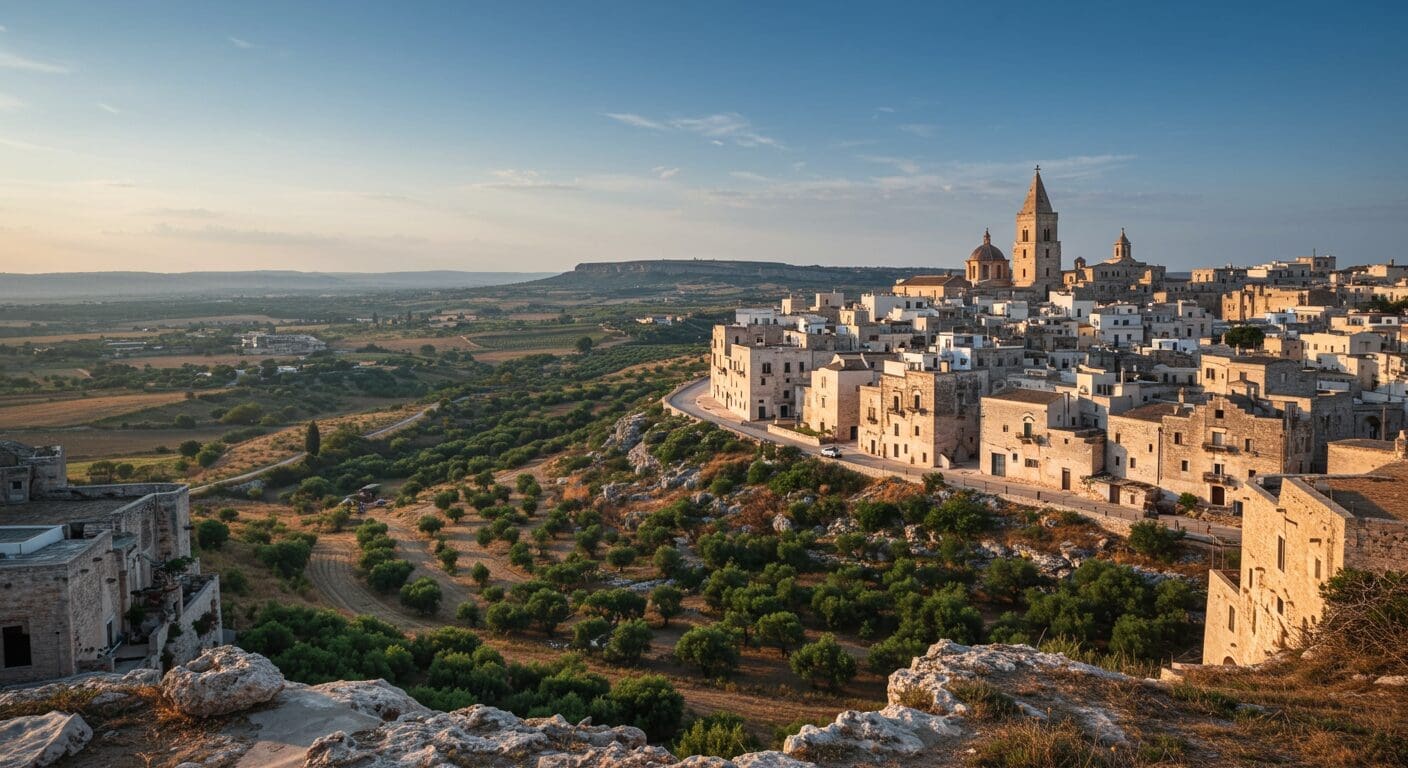
The Valle d’Itria, the rolling valley of trulli between Alberobello, Locorotondo, Cisternino and Martina Franca, is the region’s visual heart. The trulli – those conical-roofed stone buildings that look as if a medieval architect had a fever dream about ice cream cones – are genuinely extraordinary in person, and Alberobello, the most famous concentration of them, is a UNESCO World Heritage Site. It is also extremely popular in August. Go in May or September and you can almost hear yourself think.
Bari, the regional capital, is a city that has spent years being overlooked and has responded by becoming quietly excellent. The old town – Bari Vecchia – is a labyrinth of narrow streets where elderly women sit outside their front doors making orecchiette by hand, apparently entirely unconcerned by the tourists photographing them. It is one of those scenes that could easily tip into performance but somehow remains entirely genuine. South of Bari, the Itria valley gives way to the Salento – the furthest tip of the heel, anchored by Lecce, which is so relentlessly beautiful in its Baroque architecture that it requires a conscious effort not to walk into lamp posts. The beaches of the Salento, both Adriatic and Ionian, are among the finest in Italy – wide, clear, and backed by red rock and macchia scrubland.
Things to Do That Actually Merit the Description
The most transformative thing you can do in Apulia – and “transformative” is a word normally reserved for retreats that cost three times as much – is take a traditional cooking class with a local cook. Not a chef. A cook. A woman in her sixties who learned to make orecchiette from her mother and has been doing it the same way ever since, and who will regard your first attempt with the diplomatic silence of someone who has seen worse, but not much. These classes are available across the region, often run from private homes or masseria kitchens, and the combination of learning something genuinely useful, eating extremely well and spending two hours in someone’s actual kitchen is, without question, one of the best possible uses of a morning in Apulia. A luxury holiday should stretch you a little, and this does.
Beyond the kitchen, Apulia rewards the curious. The Castellana Grotte – an extraordinary cave system near Alberobello with chambers up to 60 metres high – is one of the most impressive underground landscapes in Italy and takes about two hours to explore properly. The trulli of Alberobello are, as noted, unmissable, but the less-visited trullo settlements around Locorotondo and Cisternino reward a slower wander. The baroque cities of Lecce, Otranto, Ostuni and Gallipoli each merit a full day, and the temptation to visit all four in a single frantic sweep should be firmly resisted. Otranto’s cathedral contains one of the most astonishing floor mosaics in Italy – a 12th-century representation of the tree of life and the history of the world that somehow fits on the floor of a church and somehow works.
Wine tourism is increasingly sophisticated here. The Primitivo di Manduria DOC zone offers cellar visits and tastings at estates that range from the internationally acclaimed to the appealingly modest. An afternoon driving the wine roads of the Salento, stopping at family-run cantinas, is the sort of thing that feels louche in the planning and entirely sensible in the execution.
Into the Water and Onto the Trails: Adventure in Apulia
Apulia has two coastlines – the Adriatic to the east, the Ionian to the west – and they are different in character in ways that matter to anyone who takes the sea seriously. The Adriatic coast around Monopoli, Polignano a Mare and the Torre Canne marine reserve has some of the clearest water in Italy, and diving here reveals posidonia meadows, cave systems and an abundance of marine life that makes it well worth obtaining a local dive guide. Polignano a Mare, built on limestone cliffs directly above the sea, is also home to one of the world’s more dramatic cliff diving venues – the Red Bull Cliff Diving competition has used it – though participation is entirely optional and spectating is considerably less alarming.
The Ionian coast around Porto Cesareo and the Salento is shallower, warmer and particularly well-suited to snorkelling and sea kayaking – the rock formations along the shoreline around Santa Maria di Leuca and Castro are extraordinary from the water. Kitesurfing is increasingly popular along the Otranto coast, where the conditions are reliable and the schools are well-established. Sailing the Apulian coast from a charter base in Brindisi or Otranto is an entirely different way to see the region, and one that rewards anyone willing to get slightly salty for a week.
On land, the Via Francigena del Sud passes through Apulia on its way to Santa Maria di Leuca, and sections of it make for exceptional hiking – particularly the stretch through the Valle d’Itria and the Murgia plateau, where the landscape of dry stone walls, olive groves and ancient farmhouses has a kind of biblical simplicity that proves unexpectedly moving. Cycling is well-suited to the Valle d’Itria, which is hilly enough to be interesting without being savage, and guided cycle tours between the white towns are now properly organised and easy to book.
Why Families Choose Apulia and Don’t Regret It
Apulia is, for families, about the kind of holiday that everyone actually remembers. Not the rushed museum visit with a child who is now philosophically opposed to Byzantine art. Not the hotel pool that seats forty people at maximum capacity with no shade. A private villa with a pool in the Apulian countryside gives a family something that is genuinely hard to replicate elsewhere: space, calm, privacy, and the ability to have lunch when you want it rather than when the restaurant decides.
The beaches of the Salento are ideal for younger children – the shallow, protected bays around Porto Cesareo and Torre San Giovanni offer warm, calm, clear water that requires very little in the way of parental anxiety. The trulli of Alberobello are, to a child of a certain age, inexplicably thrilling – they look, one six-year-old was overheard explaining to her mother, “like the houses from a game.” The Castellana Grotte is suitably dramatic. The food is enthusiastically child-friendly in the way that Italian food reliably is: pasta, pizza, gelato, more pasta. Nobody goes hungry. Nobody needs to negotiate.
For multi-generational families – the grandparents, the parents, the children, the family dog – the large masseria villas of the Valle d’Itria are ideal. They are built for extended households. They have been, in many cases, housing extended Apulian families for centuries. The logic is baked into the architecture. A villa with six bedrooms, a private pool, a terrace large enough for a dinner that seats twenty and a kitchen stocked by someone who knows what they are doing is not a luxury. It is, in the context of a family holiday, simply the sensible choice.
History Laid into Every Stone: Culture and Architecture in Apulia
Apulia has been invaded, occupied, contested and ruled by, among others, the Greeks, the Romans, the Byzantines, the Normans, the Swabians, the Aragonese, the Spanish and the French, and it has absorbed all of them and retained a culture that is distinctively, irreducibly its own. The archaeological museum in Taranto – the MArTA – is one of the finest collections of Magna Graecia artefacts in the world, and it is not remotely as famous as it deserves to be. The Castel del Monte, built by the Holy Roman Emperor Frederick II in the 13th century on a hill above the Murgia plateau, is one of the strangest and most beautiful buildings in Italy: an octagonal tower surrounded by eight octagonal towers, with no moat, no drawbridge, and no obvious practical military function. Frederick, by most accounts, was an unusual man.
Lecce’s Baroque architecture – the so-called Florence of the South, a comparison Lecce tolerates with diplomatic modesty – is executed in a local golden sandstone so soft that it could be carved with extraordinary intricacy, and so it was. Every church facade, every palazzo doorway, every balcony column is more elaborate than the last. It should be too much. It is, somehow, exactly right. The Easter celebrations in Taranto and across the region – the Settimana Santa processions, the hooded penitents, the slow drumbeats in the pre-dawn streets – are among the most extraordinary cultural events in southern Italy and worth building a spring itinerary around.
What to Bring Home: Shopping in Apulia
Apulia rewards those who shop with a little patience and a clear idea of what they are looking for. The obvious answer is food: bottles of Frantoio Muraglia olive oil in their distinctive ceramic bottles, Primitivo and Negroamaro from any number of the region’s serious wine producers, taralli (the small savoury crackers that are Apulia’s answer to the crisp and considerably better), and jars of sun-dried tomatoes or artichoke hearts in oil that will make a January pasta feel faintly miraculous.
Beyond food, Apulia has a genuine craft tradition in ceramics – the workshops of Grottaglie, a small town near Taranto that has been making ceramics since the Middle Ages, produce everything from rustic tableware to serious artistic pieces. The cartapesta tradition of Lecce – intricate papier-mâché figures and decorative objects – produces things of real beauty that survive the journey home with careful packing. The linen and embroidered textiles of the Salento, sold in small shops in Gallipoli and Otranto, are the kind of things you buy at the end of a holiday telling yourself you’ll use them every day and then save for best, which is probably the right decision.
The markets of Bari – and the Sunday morning antiques market in particular – are good for the kind of unhurried rummage that produces the occasional genuinely interesting find and more often produces the pleasant feeling of having looked. Which is its own reward.
The Practical Stuff, Delivered Without Unnecessary Drama
Italy uses the euro, tipping is appreciated but not mandatory in the way it is in, say, the United States, and a few coins left on the table or rounding up the bill is entirely appropriate. In smarter restaurants, a service charge is increasingly included. The language is Italian, with a strong Apulian dialect that is distinct enough to occasionally confuse native Italian speakers, let alone anyone arriving from the United Kingdom. In tourist areas and restaurants, English is widely spoken. In the inland villages, somewhat less so. A willingness to try and fail cheerfully in Italian is universally well-received.
The best time to visit Apulia for a luxury holiday is May, June, September and early October. The weather is warm, the light is extraordinary, the beaches are accessible without the August crowds, and the prices – for flights, for villas, for everything – are meaningfully lower than peak summer. July and August are glorious but busy, particularly along the Salento coast, which in the third week of August contains roughly half of Milan. This is not a criticism. It is just information. The shoulder seasons offer a version of Apulia that moves at a pace you can actually inhabit.
Apulia is, by the standards of southern Italy, a very safe destination. The usual common sense applies: don’t leave things visible in hire cars, particularly in the cities, and be aware of your surroundings in crowded areas. Healthcare is available through the standard European health insurance card for EU and, currently, for British visitors carrying a UK Global Health Insurance Card. The sun from June through August is not to be underestimated. It is a serious sun.
A note on dress: Apulia is a conservative region in the way that most of southern Italy is, and entering churches in shorts and bare shoulders will get you turned away at the door. This is not an unreasonable position for a 12th-century cathedral to take.
Why a Private Villa Is Not the Luxury Option – It Is the Right Option
There is a version of an Apulia trip that involves a hotel in Lecce or Ostuni – a very nice hotel, perhaps one of the converted palazzo hotels that the region does rather well. And that version has its merits. But there is another version, and it is the one that the people who come back to Apulia always describe: the one where you wake up in a centuries-old masseria surrounded by olive trees, walk out to your own private pool before anyone else is awake, and have a coffee in a silence broken only by crickets and a distant tractor. That is the version that lives in the memory long after the hotel restaurant has blurred into a general impression of white tablecloths.
The luxury villas of Apulia – the masserias, the converted farmhouses, the estates in the Valle d’Itria and the Salento – offer something that the best hotel cannot: space that is entirely yours. For families, that means children can run, make noise and exist without the low-level performance anxiety of shared spaces. For groups of friends, it means a long dinner on a terrace that goes on until midnight without anyone feeling they should be elsewhere. For couples, it means an intimacy and privacy that simply cannot be engineered in a hotel, however thoughtfully designed.
The villa category in Apulia now covers an extraordinary range: compact two-bedroom trulli conversions ideal for couples, mid-range properties sleeping six to eight with private pools and outdoor kitchens, and grand masserias sleeping sixteen or twenty with staff, chefs, concierge services and the kind of amenities – home cinemas, wine cellars, treatment rooms, tennis courts – that make the word “villa” feel faintly inadequate. Many of the best properties now offer reliable high-speed internet as standard, and increasingly Starlink connectivity, which has quietly transformed the calculus for anyone who works remotely and has been wondering whether two weeks in Apulia might be compatible with professional obligations. (It is. Entirely.)
The wellness dimension is built in. A private pool in the Apulian countryside, morning walks through olive groves, long dinners made from produce sourced that morning, afternoons of absolute quiet: this is wellness in the original sense of the word, before it acquired a product range. Several villa properties offer in-villa massage and treatment services, private yoga sessions and access to serious spa facilities nearby. The pace of Apulian life – unhurried, present, fundamentally suspicious of rushing – does the rest.
Excellence Luxury Villas offers an extensive collection of hand-selected properties across the region, from intimate couples’ retreats to grand estate villas for multi-generational gatherings. Browse our full range of luxury villas in Apulia with private pool and find the property that fits your version of the perfect Apulian holiday.
More Apulia Travel Guides
- Best Restaurants in Apulia: Fine Dining, Local Gems & Where to Eat
- Apulia Food & Wine Guide: Local Cuisine, Markets & Wine Estates
- Apulia with Kids: The Ultimate Family Holiday Guide
- Best Time to Visit Apulia: Month by Month Weather, Crowds & Tips
- Apulia Luxury Itinerary: The Perfect 7-Day Guide
- Romantic Apulia: The Ultimate Couples & Honeymoon Guide
What is the best time to visit Apulia?
May, June, September and early October are the optimal months for a luxury holiday in Apulia. The temperatures are comfortably warm rather than aggressively hot, the beaches are swimmable and uncrowded, and the landscape – with its almond blossoms in spring and harvest colours in autumn – is at its most varied and beautiful. July and August are hot, busy and expensive, particularly along the Salento coast. If you must travel in August, book your villa well in advance and accept that the coastal roads will test your patience on weekend evenings. Winter visits to Lecce and the inland towns are genuinely rewarding – quiet, atmospheric and considerably cheaper – though the sea will be cold and some restaurants and beach clubs will be closed.
How do I get to Apulia?
The two main airports are Bari Karol Wojtyla Airport and Brindisi Airport. Bari is the larger of the two, with direct flights from London Gatwick, Stansted and Heathrow, as well as connections from most major European hubs. Brindisi is more convenient for the Salento area and Lecce. Direct flights from the UK take approximately 2.5 to 3 hours. From Bari airport, the Valle d’Itria is roughly a 50-60 minute drive; Lecce is approximately 90 minutes from Brindisi. Car hire is strongly recommended – Apulia is best explored independently, and public transport between the rural areas is limited. An international driving licence is not required for EU or UK licence holders.
Is Apulia good for families?
Genuinely excellent. The beaches of the Salento – particularly around Porto Cesareo and the protected marine areas of the Ionian coast – offer shallow, clear, calm water that is ideal for young children. Italian culture is instinctively welcoming to children in a way that feels natural rather than curated, and family-friendly restaurants are the norm rather than the exception. For families specifically, a private villa with a pool is significantly better than any hotel: children have space to run, families can eat on their own schedule, and nobody is whispering apologies in a hotel corridor at 9pm. Multi-generational families in particular find the large masseria properties of the Valle d’Itria perfectly suited to their needs.
Why rent a luxury villa in Apulia?
Because the private villa format fits Apulia better than almost anywhere in Italy. The region’s great historic properties – the masserias, the converted trulli complexes, the grand estate houses – were built as self-contained worlds, and they remain so. A luxury villa gives you space that is entirely your own, a private pool, the ability to eat when and how you want, and a level of privacy that no hotel can genuinely match. At the upper end of the market, villa staff and concierge services mean that the experience is not self-catering in any conventional sense – it is private service at a ratio that a hotel simply cannot replicate. For groups, families and anyone who wants to truly inhabit a destination rather than just visit it, the villa is the obvious choice.
Are there private villas in Apulia suitable for large groups or multi-generational families?
Apulia is particularly well-suited to large group villa holidays. The masseria tradition – working farm estates with multiple buildings arranged around a central courtyard – means that many properties offer separate wings or outbuildings that give different family generations or friend groups a degree of independence within a shared space. Villas sleeping twelve, sixteen or twenty guests are available, typically with multiple private pools, large outdoor dining terraces, professional-grade kitchens and optional in-villa chef and housekeeping staff. For multi-generational trips – where grandparents need quiet and children need space to exist at full volume – the configuration of a large Apulian masseria is close to ideal.
Can I find a luxury villa in Apulia with good internet for remote working?
Yes, and increasingly so. The rapid improvement in rural Italian broadband infrastructure, combined with the growing availability of Starlink satellite connectivity, means that many luxury villas in Apulia now offer genuinely reliable high-speed internet suitable for video calls, large file transfers and sustained remote working. When booking, it is worth specifying your connectivity requirements clearly – our team can confirm speeds and infrastructure at individual properties. Many guests choose to combine two weeks in an Apulian villa with a regular working schedule, finding that the quality of their surroundings has a measurable effect on the quality of their work. This is not a coincidence.
What makes Apulia a good destination for a wellness retreat?
Apulia offers wellness in its most unmarketed and therefore most effective form: clean air, extraordinary produce, physical landscape that invites walking and swimming, and a culture that treats the long, unhurried meal as a form of meditation. At the villa level, private pools, in-villa massage services, access to yoga instructors and proximity to serious spa facilities – including the world-class Vair Spa at Borgo Egnazia – provide the structured wellness dimension for those who want it. The Apulian diet, based around olive oil, legumes, vegetables, fresh fish and moderate quantities of excellent local wine, is broadly what nutritionists spend their careers recommending. The pace of life in the inland towns and countryside does the rest. You will leave, without quite knowing how it happened, considerably less stressed than when you arrived.