Barbados Travel Guide: Where to Stay, Eat & Explore in Luxury
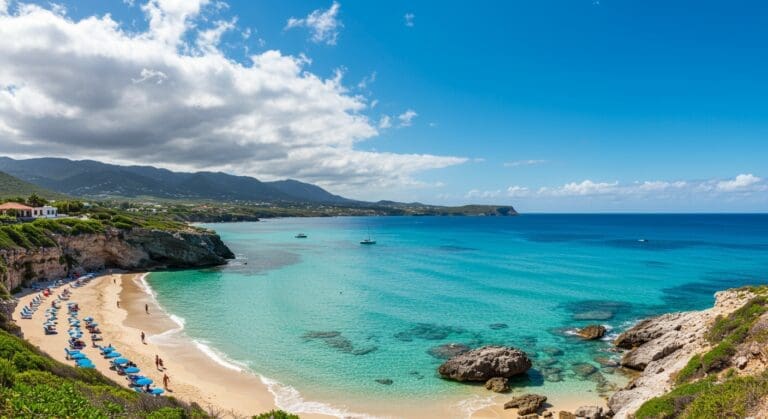
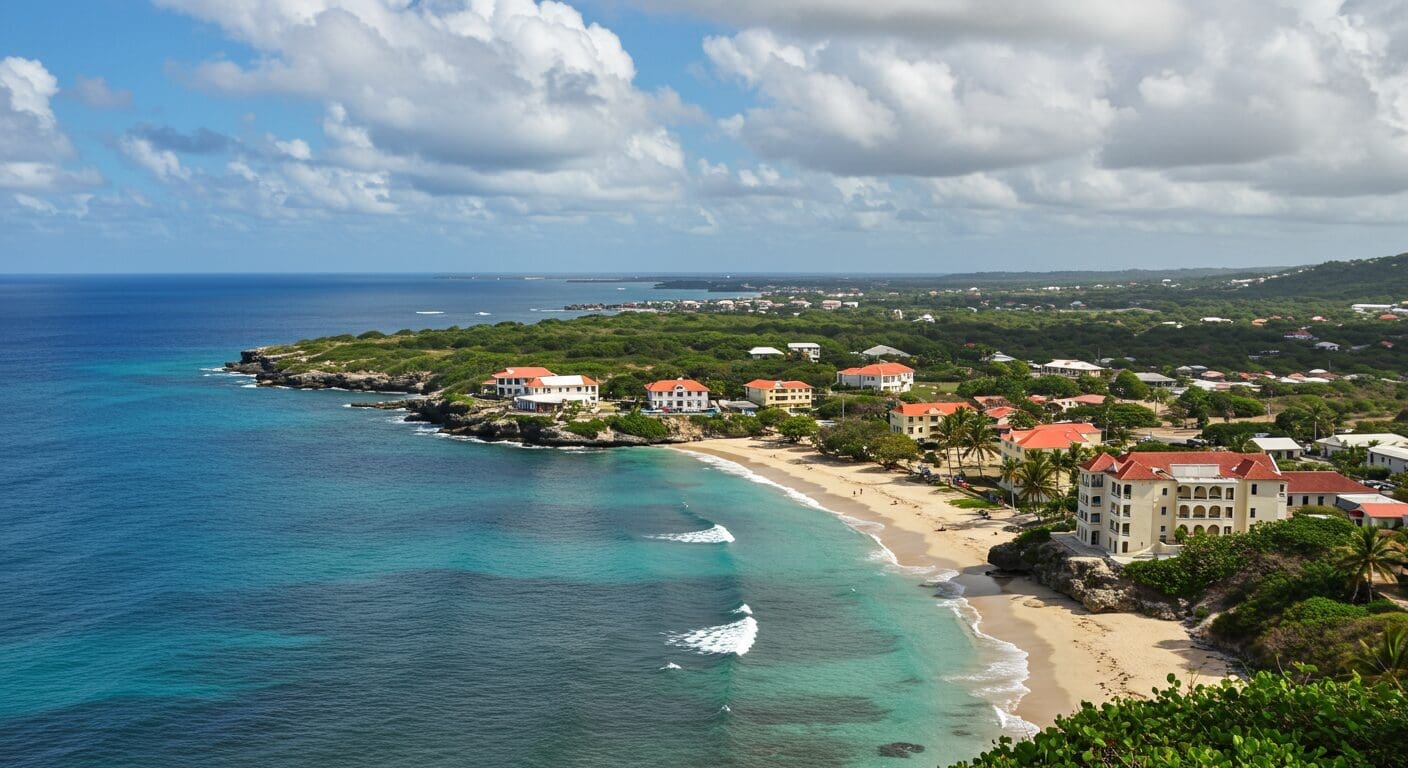
January in Barbados feels like the universe correcting an injustice. Somewhere back home – whether that’s a grey Tuesday in England, a polar vortex in the United States, or a damp February weekend that feels like it will never end – people are hunched into coats and checking weather apps with the hollow optimism of the truly desperate. And here, on this coral island twenty-one miles long and fourteen miles wide, the trade winds are doing their quiet, magnificent work. The temperature sits at around 27 degrees Celsius. The sea is the kind of blue that makes you question every holiday you’ve ever taken before this one. Barbados in its dry season, roughly December through April, is not just pleasant. It is persuasive. It makes you wonder, quite seriously, whether you’ve been living your life correctly.
The island rewards a broad range of travellers, and it’s worth being honest about that from the start. Families seeking genuine privacy – the kind that no hotel corridor or shared pool can ever quite provide – find their answer here in the extraordinary range of private villas, many staffed and several so secluded that you could go an entire week without encountering another tourist unless you chose to. Couples celebrating milestone anniversaries or honeymoons come for the romance of the west coast at sunset, the serious restaurant scene, and the particular pleasure of having nowhere in particular to be. Groups of friends, often gathered for a landmark birthday or a reunion that’s been talked about for two years and nearly cancelled twice, discover that Barbados works brilliantly at scale – the villa culture here is built for exactly this kind of gathering. Wellness-focused guests arrive looking slightly frayed and leave looking suspiciously well. And the remote workers – a newer but rapidly growing constituency – have found that Barbados offers something rare: genuinely reliable connectivity in genuinely beautiful surroundings, with a 12-Month Barbados Welcome Stamp visa making it all surprisingly straightforward. The island, in short, is rather good at making everyone feel the holiday was designed specifically for them.
Getting to Barbados – and Getting the Arrival Right
Grantley Adams International Airport, located on the south-eastern tip of the island near Bridgetown, is Barbados’s sole international gateway – and it handles the task with more grace than many Caribbean airports manage. Direct flights operate from London Gatwick and Heathrow (around eight to nine hours, which is long enough to watch two films and feel virtuous about skipping the third), as well as from several major United States and Canadian cities including Miami, New York, and Toronto. British Airways, Virgin Atlantic, and TUI all serve the route from the United Kingdom, with American Airlines, JetBlue, and others covering North American departures.
The moment you clear arrivals, the pace shifts. This is not your imagination – it genuinely slows, and the correct response is to let it. Pre-arrange your transfer if you’re heading to a villa; your property’s concierge or our team can organise a private driver, which costs a modest amount and spares you the taxi negotiation theatre that greets the unprepared. The drive from the airport to the Platinum Coast (the west coast, where many of the finest villas are concentrated) takes around 40 minutes in reasonable traffic, which gives you just enough time to feel the trade winds through the window and accept that you’ve arrived somewhere genuinely special.
Getting around the island once you’re here is simple enough. The ZR minibuses are a cultural experience in themselves – fast, music-filled, and extremely local. Renting a car gives you independence; just remember that Barbados drives on the left, the roads in the interior can be enthusiastically narrow, and GPS sometimes gets philosophical about which route it prefers. A local driver hired by the day is often the most civilised option, particularly if you plan to combine beach-hopping with sundowners.
Where to Eat in Barbados – from Chandelier Moments to Rum Shack Revelations
Fine Dining
The Cliff, perched above the Caribbean Sea on the west coast, is one of those restaurants that has earned its reputation so thoroughly that describing it feels almost redundant – and yet it continues to surprise. The setting alone is theatrical: torchlit terraces carved into the coral cliff face, the sea crashing softly below, the kind of atmosphere that makes even the most un-romantic travel companion briefly reconsider their position. The menu matches the drama. Seared scallops with a precision that suggests the kitchen takes its responsibilities seriously. Grilled mahi-mahi that reminds you why Caribbean fish cookery deserves more attention than it typically receives. Tender lamb prepared with a confidence that would be at home in any great European restaurant. Book well in advance – this is not the place to turn up and hope.
The Tides, one of three acclaimed sister restaurants alongside The Cliff and QP Bistro on Barbados’s west coast, occupies a charming coral stone building right at the water’s edge in Holetown. The emphasis here is on locally sourced ingredients treated with intelligence rather than fuss. The lobster bisque has something of a cult following among regulars, and the pan-seared barracuda is the kind of dish that arrives looking deceptively simple and tastes like a revelation. It’s a beautiful setting for a special occasion – intimate without being hushed, sophisticated without the slight stiffness that occasionally afflicts fine dining at altitude.
Where the Locals Eat
Champers, on the south coast overlooking Rockley Beach, operates in that pleasing middle territory where genuinely good food meets a genuinely lively atmosphere and the prices don’t require a moment of silent calculation before ordering. It’s a wine bar and restaurant combined, popular with Barbadians and regular visitors who’ve graduated from the tourist-trail circuit. The location right on the water’s edge is exceptional – the kind of view that restaurants in other countries would build entire marketing campaigns around. Here it’s almost taken for granted, which is part of the charm. The food consistently surpasses expectations, the service is warm and unrushed, and the wine list has been chosen by someone who clearly knows what they’re doing.
For a more casual but equally rewarding experience, the island’s fish markets and rum shacks offer a completely different register of pleasure. Oistins Fish Fry on Friday nights is something of a Barbadian institution – dozens of stalls selling freshly grilled fish, macaroni pie, and cou-cou to a backdrop of soca music and the general festivity of an island that knows how to finish a working week properly.
Hidden Gems Worth Seeking Out
The Fish Pot, set within the walls of a small historic fort at Little Good Harbour on the north-west coast, rewards the effort of getting there. This is not a restaurant that advertises itself aggressively – it doesn’t need to. Grilled lobster, catch-of-the-day specials dictated by what came in that morning, fish stews with depth and warmth: the cooking is straightforward and excellent. Tables by the water, candles reflected on the surface of a calm sea, the occasional clinking of glasses from people who’ve found something they weren’t looking for. It’s exactly that kind of place.
Nishi Restaurant in Holetown operates at a different frequency entirely. Chef Paul Edwards has built something genuinely distinctive: an Asian-Caribbean fusion that sounds like a concept and tastes like a conviction. The dining room moves into a lively courtyard as the evening progresses, and the bar is properly good. TripAdvisor rates it among the top ten restaurants in the entire Caribbean – a statistic that would feel like a press release if the food didn’t back it up entirely.
Barbados Parish by Parish – an Island That Rewrites the Rule About Small Meaning Simple
Barbados divides itself into eleven parishes, each with a distinct character that a week’s visit will only begin to reveal. St James, on the west coast, contains what’s known locally as the Platinum Coast – a stretch of calm, clear sea and fine-sand beaches that has attracted serious money since the 1960s and shows no signs of stopping. Speightstown in the north of St James retains the bones of a proper working town, with a historical character that the more manicured stretches of coast have largely traded away. It’s worth an afternoon.
St Peter, further north, gives way to wilder landscape and emptier beaches. The Atlantic coast – the east side of the island, facing away from the sheltered Caribbean – is an entirely different emotional experience. At Bathsheba, the natural rock formations known as the Soup Bowl rise from surging water in formations that make the west coast’s turquoise calm seem almost artificial by comparison. This is where serious surfers come, and where serious walkers come, and where serious thinkers come when they want to be reminded that the sea is not always decorative.
The interior parishes – St Joseph, St Andrew, St Thomas – are green and hilly and largely overlooked by visitors who never venture beyond the coastal roads. This is a mistake. Scotland District in the northeast is an anomaly in the best possible sense: rolling hills, eroded gullies, mahogany forests, and a landscape that looks less like a Caribbean island and more like a particularly dramatic corner of the British Isles. The irony is not entirely lost on anyone paying attention to Barbados’s history.
Bridgetown, the capital, operates at a brisk urban pace that contrasts pleasingly with the villa-and-beach rhythm most visitors settle into. The historic Garrison area and the Parliament Buildings are UNESCO World Heritage Sites, and the old Careenage harbour at the city’s heart – once the landing point for centuries of trade – is now lined with restaurants and bars that fill cheerfully each evening.
The Best Things to Do in Barbados – Beyond the Beach Chair
The beach chair is fine. We are not dismissing the beach chair. But Barbados offers considerably more than the horizontal pleasures that fill most holiday photography, and the activities on offer range from the genuinely exhilarating to the quietly memorable.
A catamaran cruise ranks near the top of the list not because it appears on every activity menu on the island, but because it genuinely delivers. Sailing out from the west coast to snorkel with hawksbill sea turtles – wild ones, going about their ancient business in the warm water – is the kind of experience that bypasses cynicism entirely. Carlisle Bay, a protected natural harbour near Bridgetown, adds another dimension: six shipwrecks lie on its sandy floor, colonised now by tropical fish, stingrays, and the occasional turtle that has decided real estate on a sunken vessel is preferable to open water. Snorkelling and scuba diving here requires no particular experience level to be rewarding.
Harrison’s Cave in the central parish of St Thomas is an eco-adventure park built around a series of spectacular underground limestone caverns – stalactites and stalagmites formed over millennia, underground streams, and the kind of geological drama that makes you feel briefly and pleasantly small. Electric trams carry visitors through the main cavern system; more adventurous options involve rappelling and guided caving for those who prefer their natural wonders with a side of mild adrenaline.
The island’s rum heritage deserves its own afternoon, or possibly two. The Mount Gay Rum Distillery in Bridgetown claims to be the world’s oldest surviving rum producer – a claim backed by a deed of sale dated 1703 – and its tours manage to be genuinely interesting rather than merely commercially functional. The Banks Brewery, the Foursquare Rum Distillery, and the Malibu Visitor Centre offer further education for those who feel that rum tourism is an underserved category.
On the Water and Under It – Barbados for the Adventure-Inclined
The east coast’s Atlantic-facing waters produce some of the finest surfing in the Caribbean, with Bathsheba’s Soup Bowl offering a reef break that has been part of the Barbados Surf Pro circuit and attracts skilled surfers from around the world. Beginners are better served by the calmer south coast breaks around Freights Bay, where several surf schools operate with patience and good humour.
Kitesurfing has found a natural home at Silver Sands on the southern tip of the island, where the trade winds maintain a reliability that kitesurfers treat with something close to religious reverence. The conditions there are considered among the best in the Atlantic region, and the stretch of beach on a good wind day has the organised chaos of an extreme sports festival. Watching from the shore is free. Attempting it yourself requires a lesson, a harness, and a reasonable tolerance for being briefly horizontal in the water.
Scuba diving beyond the wrecks of Carlisle Bay takes in reef systems teeming with parrotfish, spotted eagle rays, moray eels, and nurse sharks. The Stavronikita, a Greek freighter deliberately sunk in 1978 as an artificial reef, now sits at around 42 metres and has been thoroughly colonised by marine life in the four decades since – a reminder that the ocean is very good at making something beautiful out of what humans have discarded.
Cycling through the interior parishes has become increasingly well-organised, with guided tours navigating the Scotland District’s hills and the quieter roads of St John. It is, admittedly, warmer than road cycling in Europe. Considerably warmer. Factor accordingly.
Barbados for Families – What the Brochures Get Right and the One Thing They Miss
Barbados has a longstanding reputation as an excellent family destination, and unlike many such reputations it holds up to scrutiny. The west coast beaches are genuinely calm and safe for young children – the Caribbean Sea along the Platinum Coast has the quality of a very large, very warm swimming pool, with none of the unpredictable swells that make Atlantic beaches nerve-wracking for parents of small people. Lifeguards staff many of the main beaches. The water visibility is such that you can watch your child swimming from considerable distance, which is either reassuring or slightly unnecessary depending on the age of the child in question.
Harrison’s Cave is excellent for children from about six upwards – the combination of genuine geological spectacle and the novelty of going underground in a tram reliably produces the kind of enthusiasm that is otherwise difficult to generate in pre-teenagers. The Barbados Wildlife Reserve at Farley Hill in St Peter allows close encounters with green monkeys, red-footed tortoises, maras, and various bird species in a mahogany forest setting. The monkeys are not behind glass. They are simply there, going about their business, occasionally taking a more active interest in visitors than visitors initially anticipated.
The snorkelling and catamaran cruise combination works beautifully for families with children old enough to swim confidently – the sea turtle encounters produce a level of genuine, undiluted wonder that is becoming harder to engineer in an age of screens. And the private villa model – which we’ll come to properly in a moment – is arguably best appreciated by families, for whom the combination of a private pool, outdoor space, kitchen facilities, and the absence of other people’s children is not a luxury so much as a sanity-preserving necessity.
History, Culture, and the Barbados That Exists Beyond the Waterfront
Barbados was a British colony for 366 years – longer than virtually any other Caribbean territory – before achieving independence in 1966 and becoming a republic in 2021. This history is present everywhere on the island if you know how to look: in the plantation great houses scattered through the interior, in the Georgian architecture of Bridgetown, in the parish church systems, in the fact that Bajans drive on the left and play cricket with a seriousness that should not be underestimated.
The Garrison historic area in Bridgetown, a UNESCO World Heritage Site alongside the historic Bridgetown itself, contains the oldest surviving horse racing track in the western hemisphere, British military buildings dating from the 17th and 18th centuries, and a cannon collection that belongs to a different era of territorial ambition entirely. The Barbados Museum, housed in the old military prison at the Garrison, provides the historical context that the beach doesn’t quite offer but that genuinely enriches the experience of being here.
Villa Good Hope and Sunbury Plantation House offer windows into the plantation era that are presented with enough historical honesty to be useful rather than merely decorative. Sugar cane production shaped this island and its people profoundly and painfully – the story is complicated and important, and Barbados is increasingly telling it with the nuance it deserves.
The Crop Over Festival, running from June through early August, is the island’s major cultural celebration – originating in the 18th-century tradition of marking the end of the sugar harvest and now evolved into an extraordinary carnival of calypso competitions, costumed processions, and the Grand Kadooment parade that closes the season. If your travel dates have any flexibility, aligning a visit with Crop Over is rewarding in ways that ordinary tourist activity simply cannot replicate.
Shopping in Barbados – What’s Worth Bringing Home
Barbados shopping divides naturally into two categories: the things you genuinely want to bring home, and the things you will purchase in a moment of holiday enthusiasm and regard with mild perplexity in six months’ time. We are here to help you navigate the distinction.
In the first category: Barbadian rum, which ranges from the excellent Mount Gay XO and the remarkable Foursquare expressions to small-batch productions that make thoughtful gifts for people who understand the difference between rum as a concept and rum as a serious spirit. Local hot sauces – particularly those featuring the Scotch bonnet pepper that features prominently in Bajan cooking – are lightweight, genuinely useful, and considerably more personal than the average airport purchase.
Holetown, on the west coast, contains the island’s most polished concentration of boutiques, jewellers, and lifestyle stores. Limegrove Lifestyle Centre is essentially a very well-edited open-air shopping centre where the brands skew international luxury but the atmosphere remains Caribbean rather than clinical. Chattel Village in Holetown offers more locally made crafts, artwork, and clothing in a setting of traditional painted chattel houses that has the advantage of being photogenic without trying particularly hard.
Bridgetown’s duty-free shopping – concentrated around Broad Street – covers the expected territory of watches, jewellery, and spirits at prices that reward a brief comparison before departure. The Pelican Village craft market near the Bridgetown harbour is the better option for those looking for handmade pottery, batik fabrics, and the kind of wall art that occasionally survives the return home with its dignity intact.
Practical Barbados – the Information That Sounds Dull and Occasionally Isn’t
The currency is the Barbadian dollar, fixed at 2 BBD to 1 USD – a rate that has remained stable for decades and makes mental arithmetic pleasantly straightforward for American visitors. US dollars are widely accepted; pounds and euros less so, though they’ll generally be taken at hotels and larger establishments. Credit cards work at most restaurants and shops; smaller rum shacks and market stalls may prefer cash.
The official language is English, which Bajans speak with an accent of considerable musicality that occasionally moves faster than new arrivals anticipate. The Bajan dialect – Bajan creole – operates in parallel and adds considerable colour to the island’s conversational register. You will not be expected to speak it, but a genuine attempt to engage with its rhythms is universally appreciated.
Barbados is consistently rated as one of the safer destinations in the Caribbean, with a crime rate that is low by regional standards. The usual sensible precautions apply – don’t leave valuables unattended on beaches, be aware of your surroundings in Bridgetown at night – but this is not an island that demands constant vigilance, and the general warmth and directness of the local population makes visitors feel genuinely welcome rather than merely economically necessary.
Tipping is standard at around 10-15% in restaurants; many will add a service charge automatically, in which case a further tip is at your discretion rather than obligation. The best time to visit for weather is December through April – the dry season – though the shoulder months of May and November offer better value and the green season’s occasional afternoon shower is usually brief and dramatically warm. The Crop Over season in July and August brings energy and cultural richness that some travellers find worth the slightly higher humidity.
Why a Private Villa in Barbados Changes the Entire Character of the Trip
There’s a version of a Barbados holiday that involves a very nice hotel, a pool shared with strangers who have arrived from a different flight and are determined to arrive at breakfast before you, and a dinner reservation that requires you to be somewhere at 8pm regardless of how your afternoon went. This is fine. Many people enjoy it enormously. We are not here to be dismissive about hotel life.
There is, however, another version. A private villa – and Barbados has an exceptional stock of them, ranging from four-bedroom retreats with direct beach access on the Platinum Coast to expansive eight-bedroom estate properties with full staff, private pools, home cinemas, and a concierge whose principal job is to make your week feel effortless – operates on a fundamentally different set of principles. Your pool is yours. Your schedule is yours. Breakfast happens when you want it. The group of friends who’ve flown from three different cities can occupy the same space without the hotel mathematics of who has which room view and why one room is marginally better than another.
For families, the calculus is obvious: space, safety, a private pool that doesn’t require sunbed reservation politics, and the ability to put children to bed and remain in the same property rather than navigating corridors. For couples on milestone trips, many of Barbados’s finest villas come with concierge services that can arrange private dinners on the terrace, spa treatments in-villa, and the kind of personalised logistics that make a significant occasion feel genuinely considered. For remote workers, high-speed internet – increasingly Starlink-backed at premium properties – and dedicated workspace means a working week in Barbados is not merely theoretical. The productivity of working with a view of the Caribbean Sea versus a view of a car park is, remarkably, comparable.
Wellness-focused guests find that the villa model supports the kind of recovery and restoration that hotels rarely manage: the ability to move at your own pace, access a private pool or gym at 6am without encountering anyone, arrange an in-villa massage or yoga session, and eat according to your preferences rather than the restaurant’s hours. The pace of Barbadian life – genuinely unhurried, warm rather than transactional – does the rest.
With over 27,000 properties worldwide, Excellence Luxury Villas has a carefully curated portfolio of luxury holiday villas in Barbados to suit every travel style, group size, and occasion. The right villa, in the right location, on this particular island, is not an upgrade. It’s the whole point.
More Barbados Travel Guides
- Best Restaurants in Barbados: Fine Dining, Local Gems & Where to Eat
- Barbados Food & Wine Guide: Local Cuisine, Markets & Wine Estates
- Barbados with Kids: The Ultimate Family Holiday Guide
- Best Time to Visit Barbados: Month by Month Weather, Crowds & Tips
- Barbados Luxury Itinerary: The Perfect 7-Day Guide
- Romantic Barbados: The Ultimate Couples & Honeymoon Guide
What is the best time to visit Barbados?
The dry season, running from December through April, offers the most reliably settled weather – warm, sunny, and cooled by the trade winds with very little rainfall. This is peak season, and prices and demand reflect it accordingly. The shoulder months of May and November give excellent value with broadly good conditions. June through November is the Atlantic hurricane season, though Barbados sits at the southern edge of the hurricane belt and is hit less frequently than many other Caribbean islands. July and August bring the Crop Over Festival, which makes the heat and humidity very much worth the trade-off for visitors interested in authentic cultural immersion.
How do I get to Barbados?
All international flights arrive at Grantley Adams International Airport on the south-eastern coast of the island. Direct flights operate from London Gatwick and Heathrow (approximately 8-9 hours) with British Airways, Virgin Atlantic, and TUI. From North America, American Airlines, JetBlue, and others serve routes from Miami, New York, Boston, and Toronto, with flight times ranging from 4 to 5.5 hours depending on departure city. From the airport, a pre-arranged private transfer to the west coast takes around 40 minutes and is the most comfortable arrival option for villa guests with luggage.
Is Barbados good for families?
Genuinely, yes. The west coast beaches are calm, warm, and safe for young children. The Barbados Wildlife Reserve, Harrison’s Cave, and catamaran snorkelling with sea turtles are among the best family activity options in the Caribbean. The private villa model is particularly well-suited to family travel – a private pool removes the shared-pool logistics, a kitchen gives you control over meals and timing, and the space means that adults and children can exist in the same property without anyone being unreasonable about it. Barbados also has a low crime rate and a welcoming local culture that makes travelling with children feel genuinely relaxed.
Why rent a luxury villa in Barbados?
A private villa in Barbados gives you something a hotel cannot: genuine privacy, your own pool, your own schedule, and a staff-to-guest ratio that is rarely matched in even the finest hotels. For groups and families, the space alone justifies the choice – multiple bedrooms, living areas, outdoor terraces, and a pool that belongs exclusively to your party. Many villas come with a private chef, housekeeper, and concierge who can arrange everything from beach equipment to in-villa spa treatments and restaurant reservations. It is, in the truest sense, a home in one of the most beautiful places on earth – with all the inconvenient parts removed.
Are there private villas in Barbados suitable for large groups or multi-generational families?
Barbados has an excellent supply of larger villa properties designed with exactly this kind of travel in mind. Estate properties with six, eight, or more bedrooms are available on the island, often with separate wings or guest cottages that give different generations or sub-groups within a party their own private space while sharing common areas. Many of these larger villas come with full staff including a villa manager, chef, housekeeping team, and sometimes a dedicated concierge – which makes running a large group gathering feel considerably less like project management than it otherwise might.
Can I find a luxury villa in Barbados with good internet for remote working?
Increasingly, yes – and the quality of connectivity at premium Barbados villas has improved significantly in recent years. Many properties now offer high-speed fibre or Starlink satellite internet, which provides reliable speeds suitable for video calls, large file transfers, and the general demands of a working day conducted somewhere considerably more pleasant than an office. The Barbados Welcome Stamp visa, introduced in 2020 and subsequently updated, allows remote workers to live and work on the island for up to twelve months – making Barbados one of the most forward-thinking Caribbean destinations for the location-independent professional.
What makes Barbados a good destination for a wellness retreat?
Several things converge here to make wellness travel particularly effective. The trade winds keep the heat manageable and the air genuinely clean. The pace of Bajan life is unhurried in a way that isn’t performative – it simply operates at a different frequency, and most visitors find that it recalibrates their own within a day or two. Private villas with pools, yoga decks, gyms, and space for in-villa massage and treatment services provide the infrastructure. The island’s fresh seafood and local produce support healthy eating without effort. And the combination of ocean swimming, outdoor activities, and the kind of sleep that comes from genuinely switching off produces results that most wellness programmes spend considerable money trying to replicate.