Barcelona Food & Wine Guide: Local Cuisine, Markets & Wine Estates
Here is a mild confession: Barcelona is not, strictly speaking, the spiritual home of Catalan cuisine. The villages of the Empordà, the fishing ports of the Costa Brava, the farmhouses of the Penedès – these are where the soul of the cooking actually lives. Barcelona is where it comes to be celebrated, refined, occasionally deconstructed by a man with a syringe, and charged accordingly. That is not a criticism. The city has absorbed the best of its surrounding land and sea with remarkable appetite, and what you find here – across its markets, its neighbourhood restaurants, its wine bars with no sign above the door – is a food culture of genuine, layered brilliance. You just need to know where to look, and perhaps when to ignore the places that have fairy lights strung along the terrace and a laminated menu in six languages.
This Barcelona food & wine guide: local cuisine, markets & wine estates is written for travellers who eat seriously – who consider what to have for dinner a decision worth forty-five minutes of genuine deliberation, and who would rather spend a morning at a cava estate than on a hop-on hop-off bus. If that sounds like you, read on.
Understanding Catalan Cuisine: The Foundation
Catalan cooking is older and more particular than most visitors expect. It has its own grammar. The foundational technique is the sofregit – a long, slow reduction of onion and tomato cooked down until it is almost a paste, sweet and deeply savoury, the base note beneath fish stews, meat braises and rice dishes. Then there is the picada, a paste of toasted nuts, garlic, fried bread and sometimes chocolate or saffron, stirred into sauces at the last moment to thicken and intensify them. These are not things you can rush. They suggest a cuisine built on patience, on the understanding that good things take time and moderate heat.
The signature flavour combination is mar i muntanya – sea and mountain – which appears everywhere, from rabbit with prawns to chicken with cuttlefish. It sounds eccentric until you eat it, at which point it seems entirely obvious. The coastline and the interior are never far apart in Catalonia, and the cooking reflects that geographical intimacy. Bread rubbed with tomato and olive oil – pa amb tomàquet – arrives at almost every table, and is one of those dishes so simple it borders on a philosophical statement. Somewhere between a condiment and a course. Never skip it.
Signature Dishes Worth Ordering Twice
Fideuà is the dish that often surprises visitors expecting paella. Made with short, thin noodles rather than rice, cooked in a rich fish or seafood broth until the noodles at the edges crisp slightly, it is served traditionally with alioli – a fierce, garlic-forward emulsion quite unlike the diluted versions that appear in tourist-facing establishments. Order it at a restaurant where the kitchen is visible and the waiter does not speak to you in English before you have said a word.
Esqueixada is another essential – a salad of shredded salt cod, tomato, olives, onion and olive oil. It requires good salt cod, properly desalinated over two days, and excellent oil. When both conditions are met, it is one of the finest things you can eat on a warm afternoon. Calcots – long, sweet spring onions grilled over fire and served with romesco sauce – appear from January through March, traditionally eaten at outdoor gatherings called calcotades, where quantities of wine are consumed and nobody worries particularly about their sleeves. It is, in the best possible way, not a refined experience.
For meat, look for botifarra – the Catalan fresh pork sausage, eaten grilled with white beans – and fricandó, a slow-braised veal dish with wild mushrooms. The mushrooms in Catalonia are worth a mention of their own. The region is serious about its bolets – seasonal wild fungi including rovellons (saffron milk caps), moixernons and, in the right season, truffles.
The Boqueria and Barcelona’s Best Food Markets
La Boqueria is, of course, the famous one. It is also, if you arrive mid-morning in summer, a remarkable study in how a genuine food market can be slowly colonised by tourism without quite losing its soul. Go early – before nine – and you will find the stalls selling to restaurant chefs and neighbourhood cooks, and the atmosphere is entirely different. The fish section alone is worth the visit: sea urchins, razor clams, whole monkfish heads, piles of small clams of three or four varieties. It is an education arranged on ice.
For a less theatrical but arguably more authentic experience, the Mercat de Santa Caterina in El Born – designed by Enric Miralles with a wildly tiled roof that looks like something a confident child might have created with a geometry set – serves its local neighbourhood daily and rewards unhurried exploration. The Mercat de l’Abaceria in Gràcia and the Mercat de Galvany in the Eixample left are both excellent choices for travellers staying in those districts who want to shop the way residents do, which is the only way worth doing it.
Barcelona’s Wine Culture and the Penedès Region
The vineyards are less than an hour from the city, which is either very convenient or a test of one’s resolve at Sunday breakfast. The Penedès is the dominant wine region, best known internationally for cava – Catalonia’s traditional-method sparkling wine, made primarily from xarel·lo, macabeo and parellada grapes. Cava has suffered something of an image problem in recent decades, unfairly associated with budget celebrations, but the serious producers are making wines of genuine complexity and age-worthiness that deserve a second look and a better glass.
Torres is the region’s most internationally recognised name – a family operation of considerable scale and ambition whose wines span everything from approachable everyday bottles to serious single-vineyard expressions. A visit to their estate near Vilafranca del Penedès is well organised and informative without being condescending, which is not always a given on winery tours. Gramona, producing some of the finest long-aged cavas in the region, and Recaredo, a biodynamic estate whose Terrers wines command serious attention from serious wine drinkers, are both worth seeking out. Pérez Pando and Can Ràfols dels Caus represent the more experimental, terroir-focused end of the Penedès spectrum.
The Priorat, two hours southwest, is the region’s other great wine story – a landscape of dramatically steep slate and quartz soils (llicorella) producing Garnacha and Cariñena-based reds of extraordinary concentration and mineral depth. Álvaro Palacios, whose L’Ermita became one of Spain’s most sought-after wines, is the name that opened the world’s eyes to what was possible here. A day trip to Priorat – through the ancient village of Gratallops, along roads that qualify as optimistic even by Spanish standards – is one of the more memorable wine excursions in all of Spain.
Wine Estates to Visit from Barcelona
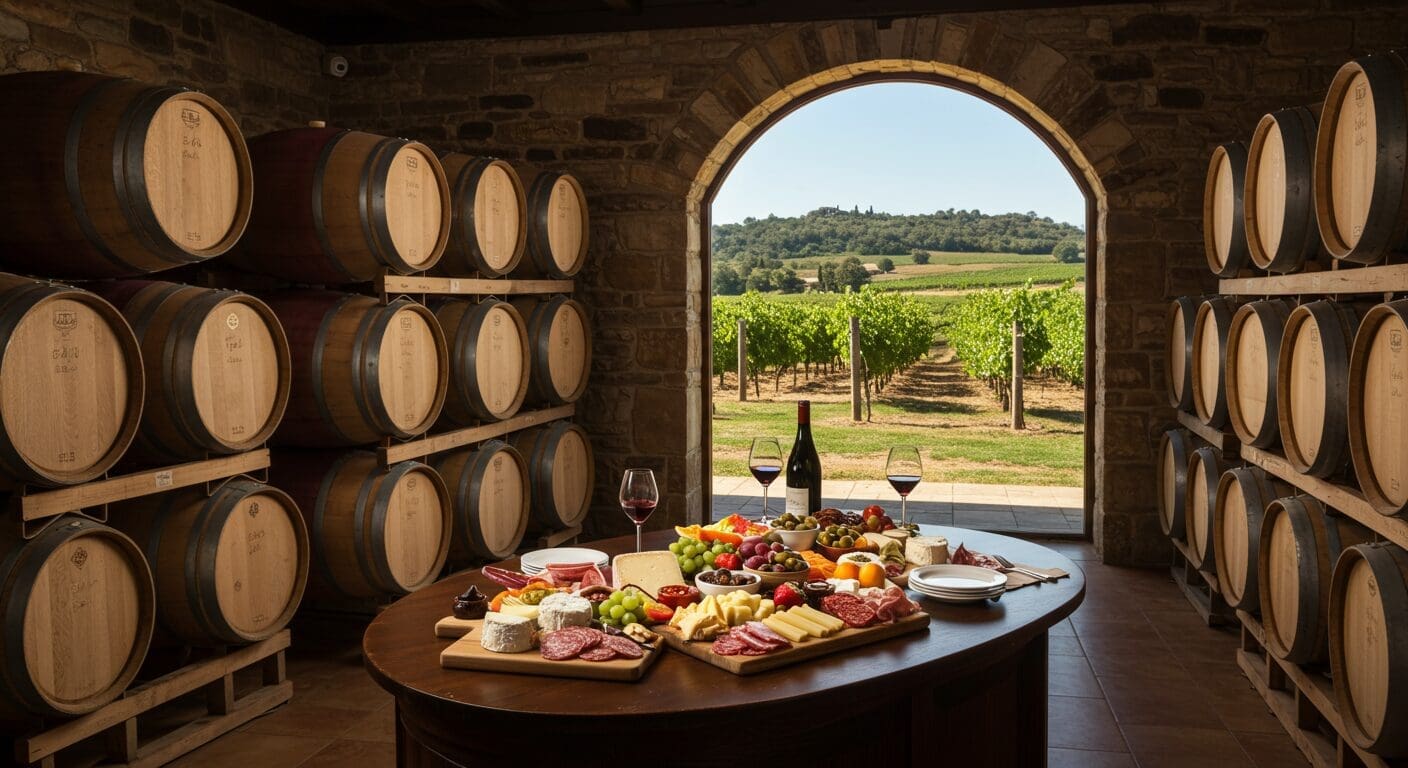
For luxury travellers with a private driver at their disposal (which, staying in a villa, you likely have access to arranging), the wine estates around Barcelona make for exceptional full-day or half-day excursions. In the Penedès, Codorníu – operating from a Modernista winery complex that is an architectural landmark in its own right – offers guided visits through cathedral-like underground cellars of considerable drama. Freixenet, the other great cava house, is nearby and equally visitor-ready.
For something more intimate, smaller estates such as Mas Comtal in Avinyonet del Penedès or Celler Cecilio in Priorat offer visits by appointment that feel like private encounters with people who genuinely love what they make, rather than a managed brand experience. These are the visits you remember. Book ahead, arrive curious and do not feel obliged to spit.
The Alella appellation, almost on Barcelona’s doorstep to the north of the city, is an underrated discovery – a small DO producing white wines from the local Pansa Blanca grape (a local name for xarel·lo) that are fresh, mineral and pair beautifully with the seafood available twenty minutes away on the coast.
Olive Oil, Truffles and the Produce Worth Knowing
Catalonia produces some of Spain’s finest olive oils, particularly from the Siurana and Les Garrigues designations in the south of the region. The oil from Siurana, made primarily from Arbequina olives, is characteristically gentle and fruity – the kind of oil that makes pa amb tomàquet taste like an entirely reasonable meal. Look for cold-pressed oils from small producers; the difference between these and commercial supermarket olive oil is similar to the difference between a fine Burgundy and something in a cardboard box.
Truffles are a more seasonal pleasure. The black truffle (Tuber melanosporum) is hunted in the winter months in the forests of Osona and the pre-Pyrenean foothills, and several operators now offer truffle hunting experiences with trained dogs – a combination of agricultural education and slapstick that tends to end with you holding a small, extraordinarily expensive lump of earth and feeling disproportionately proud. In summer, the Catalan kitchen turns to rovellons and other wild mushrooms with similar reverence. Mushroom foraging trips in the autumn, offered by a number of local guides, are a genuinely lovely way to spend a morning in the hills above the city.
Cooking Classes and Food Experiences
Barcelona has a well-developed ecosystem of cooking experiences for visitors, ranging from the perfunctory (make paella, drink sangria, take a photograph) to the genuinely instructive. For the serious end of the spectrum, seek out classes run by professional chefs or food educators who focus specifically on Catalan technique – sofregit, picada, the proper construction of a suquet (a Catalan fish and potato stew) – rather than generic Spanish cooking. Market tours followed by cooking classes, where you shop with a chef in the Boqueria or Santa Caterina before cooking what you have chosen, are the format that tends to work best: it connects the ingredients to the result in a way that a sterile kitchen demonstration rarely does.
For those whose interest runs more toward eating than cooking, private dining experiences with access to chefs operating outside formal restaurant contexts have become increasingly available. A private lunch prepared by a retired Michelin-starred cook in a farmhouse in the Maresme, served with wines from a producer you visited that morning, is the kind of afternoon that does not feature in any guidebook and tends to be what people mention first when asked about their trip, years later.
The Best Food Experiences Money Can Buy in Barcelona
The city’s fine dining scene is deep and serious. Disfrutar – run by three alumni of the legendary elBulli – has held two Michelin stars and consistently appears among the world’s top restaurants. The cooking is technically extraordinary, playfully theatrical and rooted in a genuine love of Catalan ingredients beneath all the innovation. Booking requires planning measured in months rather than weeks. Consider this fair warning.
Tickets, the more accessible Adrià brothers project, offers a festive, tapas-format experience with the same technical pedigree applied to smaller bites – percebes (barnacles), spherified olives, creative takes on classic Catalan combinations. Also worth mentioning: Bodega Sepúlveda, Quimet & Quimet in the Poble Sec – standing room only, tins opened to order, vermouth poured generously, montaditos assembled with real skill – is as authentically Barcelona as anything with a dress code. Sometimes the best food experience is the one that costs twelve euros and happens on a Tuesday afternoon.
For the truly aspirational, a private tour of the Penedès with a master of wine, arranged through a specialist concierge, followed by a private dinner at a Michelin-starred restaurant with a tasting menu paired to wines you selected earlier in the day, is the kind of experience that represents both excellent value for what it delivers and entirely unjustifiable excess, simultaneously. We recommend it unreservedly.
Making the Most of Your Time: Practical Notes
Eating hours in Barcelona are not negotiable on the city’s terms. Lunch is the main meal, served from around two until four. Dinner rarely begins before nine, and ten is unremarkable. Restaurants that open at seven-thirty for dinner are, with very few exceptions, opening for tourists. The best thing you can do is reset your internal clock within the first twenty-four hours and commit to the rhythm entirely. The reward is eating with a room full of Barcelonans rather than a room full of people from your own country who also could not wait until nine.
The aperitivo hour – from around seven to nine – is when vermut (vermouth, served on ice with an olive and a slice of orange) is consumed at outdoor tables across the city’s older neighbourhoods. Gràcia, El Born and Poble Sec are the best districts for this ritual. It is not a substitute for dinner. It is the reason dinner feels so well-earned.
For the full picture on what to do, where to stay and how to approach the city, see our comprehensive Barcelona Travel Guide.
Stay Well, Eat Well: Barcelona Villas
The best food trips need the right base – somewhere with a kitchen worth using for the ingredients you bring back from the market, a terrace suited to a long lunch that begins at two and quietly becomes dinner, and enough space to invite the friends you have made at the winery. Our collection of luxury villas in Barcelona offers exactly that: private, beautifully appointed properties across the city and its surrounding region, where the cooking, the drinking and the unhurried pleasure of it all can happen entirely on your own terms. Which is, when you think about it, the only sensible way to eat in Catalonia.