Calpe Food & Wine Guide: Local Cuisine, Markets & Wine Estates
Here is the mild confession: Calpe is not, strictly speaking, where most people go to eat well. They go for the Peñón – that vast, improbable rock rising from the sea like a geological dare – and for the beaches, and for the kind of long unhurried days that make you forget what day of the week it is. Food tends to be an afterthought. Which is precisely why those who do pay attention to what’s on the plate here end up so pleasantly surprised. Because Calpe, sitting quietly on the Costa Blanca between Dénia and Altea, turns out to be one of the better-kept culinary secrets on the Spanish Mediterranean coast. The sea is generous, the hinterland grows things of serious quality, and the local wine culture is older and more interesting than the holiday crowds would ever suggest.
The Regional Cuisine: What Calpe Actually Tastes Like
Calpe sits within the Valencian Community, which means its culinary DNA is shaped by rice, seafood, citrus, and a fierce local pride that makes any debate about paella origins genuinely dangerous at the dinner table. The cuisine here is coastal Valencian in character – lighter and more seafood-driven than the interior, but with enough earthy depth to remind you that the mountains are not far away.
Rice is the non-negotiable foundation. Not just paella – though paella done properly in this region is a different creature entirely from the tourist-facing imitation served in foil trays further up the coast – but arroz a banda, which translates roughly as “rice on the side” and describes a dish in which fish is cooked in a rich, concentrated stock, the rice then cooked separately in the same liquid until it absorbs every atom of flavour from the sea. It arrives golden, slightly socarrat-crisped at the bottom, and is eaten with alioli. It is one of the great rice dishes in a region that takes rice very seriously indeed.
Fideuà is another essential – essentially paella made with short noodles instead of rice, finished in the oven and served with the same charred-bottom ambition. Its origins are disputed between nearby Gandia and various coastal towns, but Calpe cooks it well and that is what matters. Then there is espencat – a simple, beautiful salad of roasted red peppers, aubergine, and salt cod, dressed in olive oil – which speaks the language of every Valencian grandmother who ever existed and is quietly one of the most satisfying things you can eat on a warm evening.
The fishing tradition here is not decorative. Calpe still has an active fishing fleet, and the daily catch – red mullet, sea bass, monkfish, cuttlefish, prawns of frankly offensive quality – goes directly from boat to kitchen with the kind of supply chain that more fashionable food cities spend millions trying to manufacture. Local restaurants source locally not because it is on trend, but because it always has been.
Calpe’s Food Markets: Where the Serious Shopping Happens
Calpe’s covered market – the Mercado Municipal – is the kind of place that rewards arriving early and leaving slowly. It operates on weekday mornings and offers the full spectrum of local produce: fish and shellfish still glistening from the boats, seasonal vegetables from the huerta gardens inland, local cheeses, cured meats, olives prepared in a dozen different ways, and that particular Mediterranean abundance of citrus that makes the whole building smell faintly like a very good cocktail.
The Saturday street market is a different, livelier affair – more eclectic, more browsable, better for picking up things you didn’t know you needed. For the genuinely food-obsessed visitor, this is where you will find local honey producers, small-batch olive oils, and the kind of obscure preserved goods that don’t survive the journey home nearly as intact as you hope they will.
If you are staying in one of the luxury villas in Calpe with a proper kitchen – and many of the finest ones are exceptionally well-equipped – then provisioning from the market is one of the great pleasures of being here. There is something deeply satisfying about buying prawns from the person who knows the person who caught them.
For a broader market experience, the town of Altea just down the coast holds an excellent Thursday market with a strong artisan food presence, and Dénia to the north – a town with its own Michelin-starred gravity – hosts markets with produce that reflects that town’s more gastronomically elevated reputation. Both are within comfortable driving distance for a morning excursion.
Local Wines and the Alicante Wine Region
Calpe falls within the Denominación de Origen Alicante – a wine region that has spent the last two decades doing the quiet, unglamorous work of actually improving, rather than simply claiming to. The results are now genuinely impressive, particularly for visitors whose mental map of Spanish wine tends to stop at Rioja and Ribera del Duero.
The star grape here is Monastrell – known in France as Mourvèdre – which thrives in the intense Mediterranean heat and produces wines of extraordinary depth and concentration. Well-made Monastrell from this region can be inky and brooding in youth, but with the kind of structural generosity that makes it extraordinary with food. It carries notes of dark fruit, tobacco, dried herbs, and a mineral quality that reflects the limestone-rich soils. This is not a grape for the faint-hearted, which is, of course, exactly why it is worth seeking out.
The Fondillón is worth special attention – a unique Alicante wine style made from overripe Monastrell grapes, aged oxidatively for a minimum of ten years, producing something between a dry oloroso sherry and a great Madeira. It was apparently a favourite of Louis XIV, which is the kind of historical endorsement that ought to appear more prominently on the label. It pairs magnificently with aged cheeses, foie gras, and the kind of contemplative late-evening conversation that good wine tends to produce.
White wines from the region – made primarily from Merseguera, Macabeo, and increasingly from Verdejo – are clean, citrus-driven, and extremely good with the local seafood. They are the wines that make arroz a banda taste even better than it already does, which is a considerable achievement.
Wine Estates and Bodegas Worth Visiting
The wine estates of the Alicante DO are spread across the region – some close to the coast, others in the elevated inland zones around Villena and Jumilla where the altitude moderates the heat and adds complexity to the wines. For visitors based in Calpe, several are reachable in under an hour, making for an excellent half-day or full-day excursion that combines scenery, wine education, and the kind of cellar visits that actually teach you something rather than simply moving you from tasting station to tasting station.
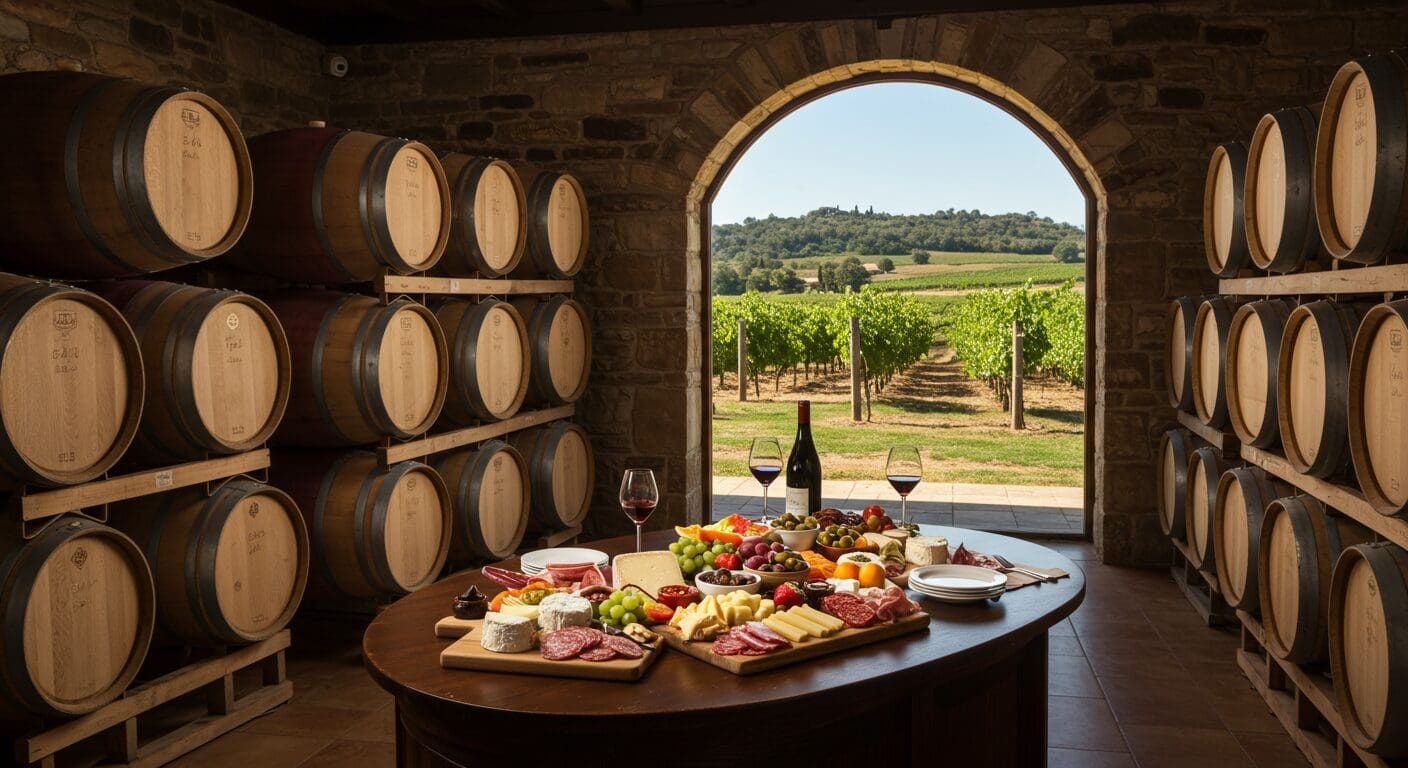
The Marina Alta sub-zone – which covers the coastal strip around Calpe and Dénia – is producing increasingly interesting wines from indigenous varieties, with smaller boutique producers leading the way. These estates typically offer guided visits by appointment, with tastings structured around both their wine portfolio and a broader conversation about the terroir and grape varieties of the region. Some include lunch overlooking the vineyards, which is as good a way to spend a Thursday afternoon as any.
For the most immersive experience, engage a private guide who can arrange exclusive access to estates not routinely open to the public, including barrel tastings, meetings with winemakers, and bespoke food-and-wine pairing experiences. This is the kind of access that transforms a pleasant outing into something genuinely memorable – and is entirely feasible to arrange through a quality villa concierge service.
Olive Oil: The Liquid Gold of the Hinterland
The olive groves that cover the hillsides inland from Calpe are not decorative. The Costa Blanca’s interior produces olive oil of considerable quality – predominantly from the Blanqueta and Farga varieties, which are indigenous to Valencia and produce oils of distinctive character: grassy, slightly peppery, with an aromatic freshness that distinguishes them from the more widely exported Picual or Arbequina styles.
Several small producers in the region offer visits to their mills and groves, particularly in the period around the November-January harvest when the oil is at its most vibrantly fresh. Pressing day oil – turbid, intensely flavoured, almost luminous green – is one of those things that is nearly impossible to describe to someone who hasn’t tasted it, and tastes absolutely nothing like the olive oil in the supermarket at home. (The polite version of that sentence would have stopped earlier.)
Many of these producers sell directly from the estate, and buying a case of properly made local olive oil to bring home is among the most reliable food souvenirs available in this part of Spain. It also travels considerably better than the preserved goods you will be tempted by at the market, which is useful information for anyone who has ever optimistically packed a jar of anchovies in their hand luggage.
Cooking Classes and Culinary Experiences
The appetite for hands-on culinary experiences in the Calpe region has produced a small but well-regarded ecosystem of cooking classes, market tours, and private chef experiences that cater specifically to discerning visitors who want to do more than simply eat well – they want to understand why.
Paella and rice dish masterclasses are the most popular entry point, and the best ones combine a morning market visit to select ingredients with an afternoon cooking session and a long, self-congratulatory lunch at the end. They tend to be led by local cooks – not necessarily chefs in the professional sense, but people who have been making these dishes correctly their entire lives, which is a rather more reliable qualification. Learning the correct technique for socarrat – that essential caramelised crust at the bottom of the pan – is a genuine skill that requires instruction, patience, and a willingness to be corrected.
For villa guests, private chef experiences are the most seamlessly luxurious option: a chef arrives at the villa with market-sourced ingredients and cooks a multi-course dinner around your table, while explaining the dishes, their origins, and the wine pairings as they go. It is dinner and education simultaneously, which is the ideal ratio. Several excellent private chefs operate in the Calpe area, and a reputable villa management service will have established relationships with the best of them.
Wine-focused experiences – private tastings, vineyard walks, winemaker dinners – can be arranged through specialist operators who work with the estates of the Alicante DO and neighbouring regions. These are best booked well in advance, particularly for the more exclusive estate access.
The Best Food Experiences Money Can Buy in Calpe
For a thorough grounding in what this corner of Spain eats, start with arroz a banda at a proper local restaurant – not the seafront places aimed at passing trade, but the ones a street or two back that don’t have menus translated into seven languages. Order the Fondillón with whatever comes after the rice. Walk to the port in the evening when the fishing boats are returning and the light on the Peñón is doing its most theatrical work. This costs almost nothing and is among the finest free entertainments in Spain.
For the high-end experience, Dénia’s Michelin-starred reputation makes it worth the thirty-minute drive north. The town’s most celebrated restaurant – Quique Dacosta’s eponymous three-Michelin-starred destination – is one of the most serious fine dining experiences in Spain, and for visitors in the area with the appetite and the budget, it represents a rare opportunity to eat at the highest level while staying somewhere distinctly un-metropolitan. Booking is essential and must be made well in advance. It is the kind of dinner that recalibrates your understanding of what food can do, which sounds dramatic until you’ve actually been.
Closer to Calpe itself, the local dining scene rewards exploration: look for family-run restaurants serving traditional Valencian cooking, fish restaurants sourcing directly from the local fleet, and increasingly, younger chefs who are applying serious technique to the same exceptional local ingredients. The scene is quieter than Dénia’s, but that is not the same as being lesser.
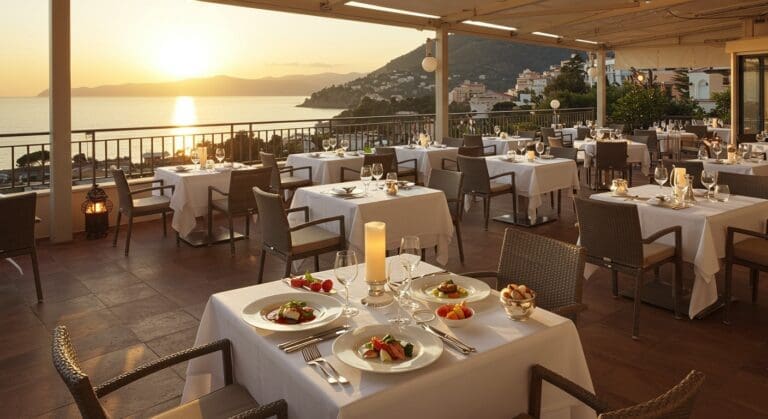
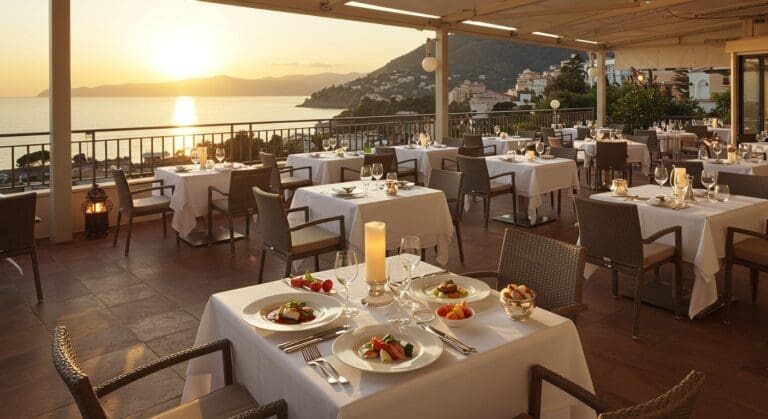
A private catered villa dinner – market-sourced, chef-led, served around a table above the sea with the Peñón lit up at dusk – is, frankly, hard to beat as a food experience. It is the particular gift of staying in a villa rather than a hotel: the setting is yours, the timing is yours, and nobody is waiting to turn the table.
For a fuller picture of what to do, see, and explore while you’re here, our Calpe Travel Guide covers the destination in satisfying depth.
Plan Your Calpe Food & Wine Experience
The best way to explore Calpe’s food and wine culture is to have a base that makes everything feel easy rather than effortful. A private villa with a proper kitchen for market mornings, a terrace for evening dining, and enough space to return to after a long day among the vineyards is not an indulgence – it is, arguably, a practical necessity. Browse our collection of luxury villas in Calpe and find the kind of base that makes this corner of the Costa Blanca feel exactly as it should: unhurried, beautifully fed, and entirely your own.