Best Time to Visit Campania: Month by Month Weather, Crowds & Tips
Campania is the rare destination that doesn’t ask you to choose between history and beauty, between food and landscape, between the dramatic and the deeply human. Nowhere else on earth can you eat the world’s greatest pizza in the shadow of a volcano that once buried an entire civilisation, then drive twenty minutes to a coastline so extravagantly lovely it makes grown adults stop mid-sentence. This is southern Italy at its most unapologetic – layered, loud in the best sense, and entirely on its own terms. The question is not whether to come. The question is when.
Understanding Campania’s Climate and Crowd Cycle
Campania operates on a rhythm that rewards the curious and quietly punishes the blindly optimistic. The region runs roughly 300 days of sunshine a year, a fact the locals mention with the casual pride of someone who has simply always lived this way. Summers are hot and dry along the coast, winters are mild by any northern European standard, and the shoulder months – April, May, September, October – deliver the kind of weather that makes you feel the universe has arranged things specifically for your benefit.
Crowds follow a predictable arc: thin in winter, building through spring, reaching a crescendo of jostling humanity in July and August before thinning again through autumn into something altogether more civilised. Prices move in lockstep with the crowds. Understanding this cycle – and knowing when to lean into it or step deliberately around it – is the difference between a trip that transforms you and one that merely exhausts you.
January and February: The Quiet Campania Few People See
January and February in Campania belong to a different Italy entirely. Pompeii without the tour groups. The Amalfi Coast road without the coaches. Naples in the rain, which sounds like a warning but is actually rather beautiful – the light low and grey over the bay, the streets slick and empty enough that you can finally see the architecture rather than the backs of other people’s heads.
Temperatures hover between 8°C and 14°C, which is perfectly walkable with a decent coat. Some smaller coastal hotels and restaurants close for January or February, particularly along the Amalfi Coast and on Capri and Ischia, so planning matters. But the major museums – the National Archaeological Museum in Naples, the Royal Palace at Caserta – are fully open and, in January, almost eerily quiet.
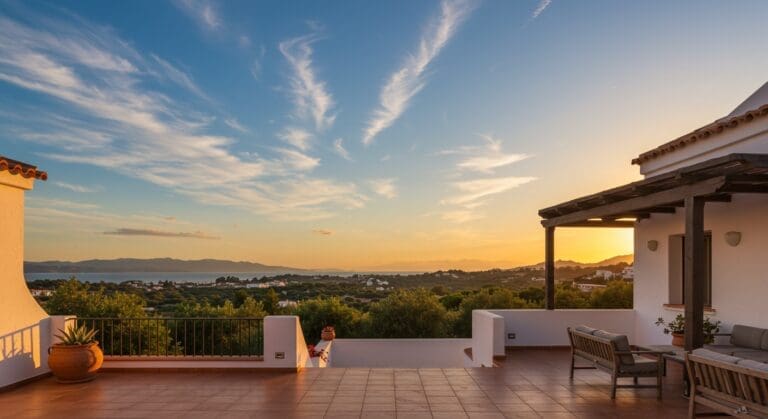
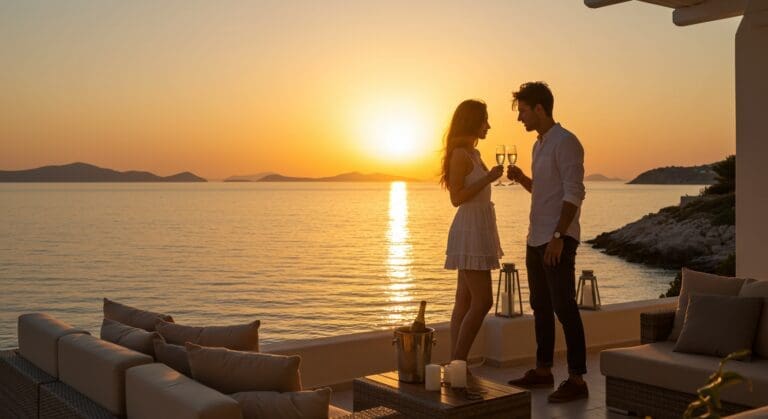
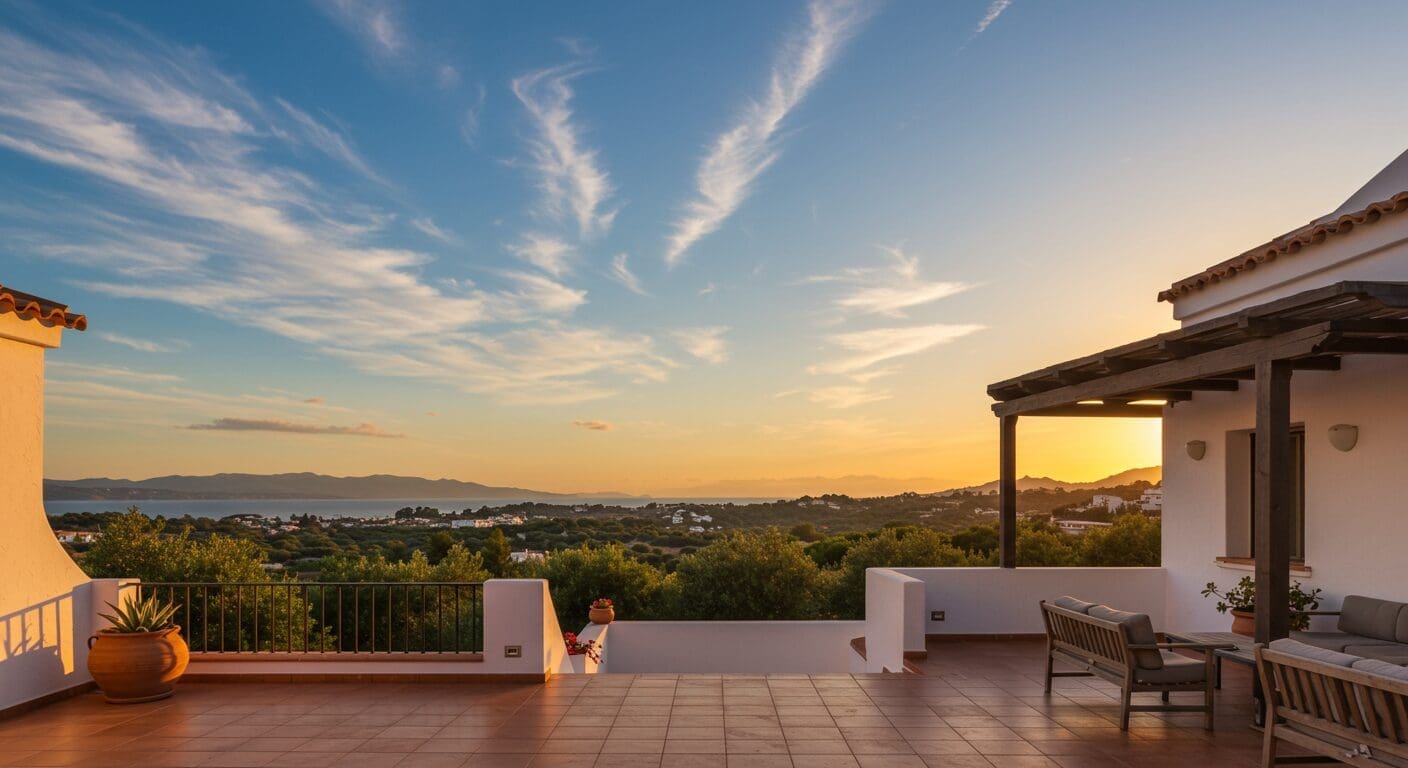
This is a season for couples who like their own company, for serious travellers who want Campania without the performance of it. Hotel rates drop significantly – sometimes by 40 to 60 percent on summer peaks. If your idea of luxury includes having a villa terrace entirely to yourself with an uninterrupted view of the Tyrrhenian Sea, January will deliver it without argument.
March and April: The Region Wakes Up
Something shifts in March. The almond trees flower on the hillsides above Positano. The lemon groves on the Sorrentine Peninsula flush a deep, almost implausible green. Temperatures climb into the high teens, occasionally touching 20°C by April, and the light takes on that specific golden clarity that makes every photograph look like you’ve applied a filter when you haven’t.
Easter is worth planning around carefully – it draws large domestic crowds, particularly to Naples and the coastal towns, and accommodation books up faster than you’d expect. The Settimana Santa processions in Naples are genuinely moving if you’re there for them, and genuinely inconvenient if you’re simply trying to get somewhere by car. Plan accordingly.
April is arguably the finest month in Campania for the independent traveller. Flowers everywhere – including the famous Infiorata festivals in various hilltop towns – but the summer hordes have not yet materialised. Hiking trails on the Lattari Mountains above the Amalfi Coast are green and cool. The sea is still too cold for most people to swim in, which means the beaches are left to those who simply want to look at the sea rather than be in it. This suits some of us perfectly well.
May: The Sweet Spot
If Campania had a favourite month, it would be May – though it would be too well-mannered to say so directly. Temperatures reach 22°C to 25°C along the coast. The sea begins to warm. The tourist infrastructure is fully operational without being overwhelmed. Gardens are at peak bloom, including the extraordinary terraced gardens of the historic villas along the Amalfi Coast.
This is also prime season for outdoor dining – long lunches under pergolas, the kind that start at 1pm and are still going at 4pm because nobody can think of a good reason to stop. Families with school-age children can’t usually make May work, which keeps the crowds at a manageable level and the atmosphere notably more relaxed than high summer.
Villa rentals in May represent exceptional value relative to what you’re getting. Full facilities, ideal weather, lower nightly rates than June through August. It is, in short, the month for people who do their research.
June: Summer Begins in Earnest
June brings the first serious heat – temperatures regularly hitting 28°C to 30°C by mid-month – and the first serious crowds. The school holiday exodus from northern Europe and the UK begins in the second half of the month, and you’ll notice it. Positano starts to feel like a very attractive traffic jam. Capri becomes the kind of place where you queue for the funicular as a matter of routine.
That said, early June retains some of May’s grace before the full summer machinery kicks in. The sea is warm enough for swimming – ideal for families with young children. Events pick up: the Napoli Pizza Village typically takes place in June, which is precisely as good as it sounds and an excellent use of an evening. The Ravello Festival, which runs through the summer on the terraces above the Amalfi Coast, begins its programme.
Rates climb steeply through June. Book villas and hotels as far in advance as possible – the best properties go months ahead.
July and August: High Season – Eyes Open
Here is the honest account of high summer in Campania: it is magnificent and it is absolutely relentless. July and August temperatures inland can reach 35°C or above, though the coast is moderated by sea breezes to something closer to 30°C. The Amalfi Coast road becomes a test of character – beautiful, yes, but shared with an almost philosophical quantity of other vehicles.
August 15th – Ferragosto – is the zenith of domestic Italian holidaying. The beaches are packed, restaurants require advance booking as a matter of survival, and certain hilltop villages appear to have simply given up trying to manage the footfall. This is not the moment for those who prefer to feel like a traveller rather than a tourist.
And yet: the sea is brilliant, the water warm and clear, the evenings perfect. Festivals animate every town. The Ravello Festival reaches its peak with open-air concerts on the Villa Rufolo terrace, with the sea as the backdrop. For families, for groups, for anyone who wants Campania at full operatic volume, summer delivers everything it promises. Go in knowing what you’re signing up for, and it’s deeply satisfying. Go in expecting tranquility, and you’ll be disappointed.
September: The Intelligent Choice
September is when Campania quietly becomes extraordinary for discerning travellers. The heat softens – 26°C to 28°C is typical, occasionally warm enough to feel like high summer but without the physical aggression of August. The sea retains its summer warmth well into the month, often beyond. And the crowds – the vast majority of European families back in school, the package holiday wave receded – thin to something altogether more human.
This is the month that locals will recommend if you ask them honestly. Restaurants are still at full stretch but tables are easier to come by. The coast roads clear by mid-month. Villa prices begin to ease downward from their August peaks while conditions remain close to their summer best. The grape harvest begins in the volcanic soils around Vesuvius and in the Cilento – there is something deeply satisfying about watching the landscape do something purposeful.
September suits almost everyone: couples, groups, families with flexible school arrangements. If the question is which single month represents the best time to visit Campania, September makes a compelling argument that is difficult to dismiss.
October: Autumn Arrives and Brings Its Own Rewards
By October, Campania wears a different kind of beauty. The light changes – lower, warmer in quality, painting the coastline in tones that wouldn’t look out of place in a Caravaggio. Temperatures settle around 20°C to 23°C, ideal for walking, exploring archaeological sites, and spending extended time in the hill towns of the interior – Ravello, Sant’Agata sui Due Golfi, the villages of the Cilento – that high summer makes logistically stressful.
Some smaller hotels and restaurants begin to close mid to late October, particularly on Capri and the smaller islands. But the mainland coast and Naples remain fully operational. Prices drop noticeably from September, and availability opens up. Hikers and walkers will find October conditions on the Sentiero degli Dei – the Path of the Gods above Positano – close to ideal: cool air, low humidity, the summer crowds gone.
October suits couples and independent travellers particularly well. It is a month for lingering – over lunch, over a view, over a glass of Greco di Tufo on a terrace that you have, for the first time in months, almost entirely to yourself.
November and December: The Case for Winter
November brings rain and the departure of the coastal crowds. It also brings a Campania that operates entirely for its own residents’ benefit, which is a Campania worth seeing. Naples in November is gloriously, defiantly itself – the markets at full tilt, the street life unperformed, the food as extraordinary as ever and the queues at its great pizzerias considerably shorter. Temperatures dip to 12°C to 16°C, which is perfectly manageable.
December in Naples is something of a revelation if you can time it right. The Presepe – the nativity scene tradition – is taken seriously here in a way that borders on the magnificent. The craftsmen’s quarter of San Gregorio Armeno, which makes handmade figures for nativity scenes year-round, reaches peak atmosphere in December, the streets busy but with a purpose and warmth that feels entirely different from August’s blunt commercial pressure.
Christmas markets operate across the region. New Year is celebrated with the kind of enthusiasm that makes you glad you’re not trying to drive anywhere. Villa rates in November and early December are at their annual low. For those whose priority is cultural depth over beach time, these months reward the open-minded traveller considerably more than their reputation suggests.
A Note on Shoulder Season Villa Rentals
There is a particular pleasure in arriving at a luxury villa in Campania in, say, late September or early May, when the property was designed for summer but the world hasn’t quite caught up to that fact yet. The staff attentive because there are fewer guests to attend to. The local restaurants eager for business. The roads clear enough that you remember why people photograph this coastline in the first place.
Shoulder season villa rental in Campania is, simply, the best value proposition in Italian luxury travel. You access the same extraordinary properties – the cliff-top terraces, the private pools with their bay views, the interiors that make you reassess your own home with some sadness – at rates that reflect genuinely different market conditions. The experience is categorically not worse than August. In many respects, it is better.
For our full regional picture – archaeological sites, coastal drives, where to eat, what to see and in what order – visit our Campania Travel Guide, which covers the region in the depth it deserves.
Find Your Villa in Campania
Whatever month you choose – and we trust by now you have strong feelings about this – Campania demands the right base. A villa here is not merely accommodation. It is the difference between visiting the region and inhabiting it, however briefly. A private terrace from which to watch the light change over the bay. A kitchen in which to do something useful with the lemons you’ve been picking up all week. Space to decompress after the inevitable afternoon you spent lost on a coast road that was, objectively, worth it.
Browse our curated collection of luxury villas in Campania and find the property that suits your season, your party, and your particular idea of what southern Italy should feel like from the inside.