Catalonia Travel Guide: Where to Stay, Eat & Explore in Luxury
What if the perfect holiday didn’t require you to choose between culture and coastline, mountains and Michelin stars, ancient history and some of the most forward-thinking cuisine on the planet? Most destinations force a compromise. Catalonia, refreshingly, refuses to. This is a region that has spent centuries being underestimated – first as merely the gateway to Spain, then as simply the place where Barcelona happens to be – and has responded by quietly becoming one of the most complete travel destinations in Europe. The coast alone could justify the trip. The food scene would justify it twice over. And then there are the Pyrenees, the medieval villages, the cork forests, the wine valleys, and enough Gaudí to keep an architecture enthusiast occupied for a week without once feeling they’d had enough.
The question, really, is who Catalonia is for. The answer is almost embarrassingly broad – which is precisely what makes it so compelling. It works beautifully for families seeking space, privacy and a private pool that actually gets used rather than just photographed. It rewards couples on milestone trips who want a mix of genuine romance and serious gastronomy without having to pick one. Groups of friends who want long lunches that turn into dinners will be well served here, as will remote workers who’ve finally admitted that “working from home” was always a transitional phase on the way to “working from a hilltop villa with a view of the Mediterranean.” Wellness-focused guests find the combination of clean mountain air, exceptional local produce and the particular slowness of rural Catalan life genuinely restorative. The region doesn’t curate itself for any single type of traveller. It simply gets on with being extraordinary and lets visitors catch up.
Getting Here is the Easy Part – It’s Leaving That Gets Complicated
Barcelona El Prat Airport is the obvious entry point, and it functions remarkably well for a city of this scale – direct flights connect from most major European hubs and, increasingly, from long-haul origins including New York, Toronto and several Gulf cities. From the airport, the journey into central Barcelona takes around 35 minutes by the Aerobus, or a very reasonable taxi fare if you’re arriving with the kind of luggage that suggests you’re staying somewhere with a proper wardrobe. For those heading directly to the Costa Brava or the Girona countryside, Girona-Costa Brava Airport is the smarter choice – a small, unfussy airport that handles Ryanair’s volume of traffic with more grace than you might expect. It sits around 90 kilometres north of Barcelona and puts you considerably closer to some of the region’s most coveted corners.
Reus Airport, south of Barcelona, serves the Costa Daurada and Tarragona area – useful if your villa sits in that direction. For those arriving from elsewhere in Spain, the high-speed AVE train from Madrid to Barcelona takes around two and a half hours and manages to make flying feel faintly absurd by comparison. Once in Catalonia, the practical reality is this: Barcelona is best navigated by metro and taxi. Everything else requires a car. This is not a hardship. Driving through the Alt Empordà on a clear morning, with the Pyrenees on the horizon and the smell of thyme coming through an open window, is one of those experiences that travel writers reach for and routinely undersell. Hire the car. Take the scenic route. The motorway will still be there if you change your mind.
Catalonia Has 77 Michelin Stars. No, That’s Not a Typo.
Fine Dining
Catalonia was named the World Gastronomy Region for 2025. That designation sounds like the kind of thing tourism boards commission and nobody takes seriously – except that in this case, the evidence is simply overwhelming. The region’s 54 Michelin-starred restaurants hold a combined 77 stars between them, a concentration of culinary excellence that would be remarkable in any country and is frankly astonishing in a single region.
El Celler de Can Roca in Girona is where you start any serious conversation about Catalan fine dining. Founded by the three Roca brothers in 1986 – Joan in the kitchen, Josep overseeing wine, Jordi handling pastry – it has held three Michelin stars for years and was ranked the best restaurant in the world by Restaurant magazine in both 2013 and 2015. The cooking is rooted in traditional Catalan flavour but arrives at the table in forms that occasionally make you question your understanding of what food can be. Booking is competitive, to put it politely. Plan well ahead.
Barcelona alone contains four three-Michelin-star restaurants, which gives the city a density of culinary ambition that even Paris might eye with a degree of professional respect. Disfrutar – whose name translates simply as “enjoy,” a piece of understatement worthy of the British – holds three stars and consistently appears at the very top of the World’s 50 Best Restaurants rankings. Its playful, technically extraordinary tasting menus are built around Mediterranean flavours and seafood, but presented in ways that challenge what a tasting menu is permitted to be. Lasarte, Martín Berasategui’s restaurant at the Condes de Barcelona hotel, was the first restaurant in the city to receive three stars and maintains that standard with elegant, urban haute cuisine – the kind of cooking that is confident enough not to need to shout about itself. Cocina Hermanos Torres offers a dramatic open-kitchen experience where the theatre is part of the meal without ever tipping into self-indulgence. And ABaC, which retained its “worth a special journey” distinction in the 2025 Michelin Guide, rounds out Barcelona’s remarkable fine dining landscape with long, carefully choreographed tasting menus built around seasonal produce and luxurious ingredients.
Where the Locals Eat
The best thing you can do in any Catalan market town on a Saturday morning is nothing more complicated than finding the local mercat and following your instincts. La Boqueria in Barcelona is famous, yes, and also genuinely worth visiting before 9am when it still resembles a market rather than a theme park. But the real pleasure is in the smaller markets – Vic’s Saturday market, the market at Olot, the fish market at Palamós where the catch comes in early and moves fast. Catalan locals tend to eat in establishments that don’t feel the need to describe themselves on Instagram, serve pa amb tomàquet (bread rubbed with tomato and olive oil, deceptively simple, genuinely addictive) as a matter of course, and regard a three-course lunch as a reasonable minimum. The menú del día tradition – a fixed-price lunch of multiple courses with wine included – is alive and well across the region and represents one of the finest value propositions in all of European dining.
In Barcelona, the Eixample neighbourhood and the Gràcia barrio both reward wandering with an appetite. Beach clubs along the Costa Brava tend to combine good simple cooking – grilled fish, local anchovies, cold rosé – with the particular pleasure of eating ten metres from the sea. Vermouth culture is serious here. Catalan wine bars in particular take their cava and their Penedès whites with considerable regional pride, and rightly so.
Hidden Gems Worth Seeking Out
If you find yourself in the Alt Empordà region – and you should – the area around Cadaqués and the Cap de Creus peninsula rewards those willing to look beyond the well-trodden paths. Small family restaurants in inland villages often serve the kind of honest, ingredient-led cooking that the fine dining world spends enormous amounts of money and technique trying to approximate. The anchovies of L’Escala are a genuine local treasure – cured in salt, rich and complex in a way that bears no resemblance to the wan things served on supermarket pizzas. Seek out a proper colmado (deli) and buy a jar to take home. You will not regret it, and customs permitting, your kitchen will thank you.
A Region That Refuses to Be Summarised – Exploring Catalonia’s Landscapes
The first thing to understand about Catalonia’s geography is that it contains more variation than many countries three times its size. The coastline alone runs for over 700 kilometres, ranging from the rocky coves and transparent water of the Costa Brava in the north – where Salvador Dalí chose to live, which tells you something about its particular quality of light – to the broad sandy beaches and warmer, calmer waters of the Costa Daurada further south. These are not interchangeable. The Costa Brava is dramatic and intimate, its coves accessible mainly by boat or on foot, the villages white-walled and genuinely old. The Costa Daurada is more generous with space and gentler on families with small children who require sand in significant quantities.
Inland, the landscape changes with an almost theatrical abruptness. The Pyrenees form the northern border with France, and they are serious mountains – not the friendly, rolling kind but proper peaks with serious hiking, medieval monasteries perched on improbable ledges, and a silence that urban life has made increasingly rare. The volcanic landscape of La Garrotxa, around Olot, is something else entirely: a UNESCO Biosphere Reserve of extraordinary geological strangeness, with ancient craters colonised by beech forests and small, perfectly preserved medieval towns sitting in the valleys between them. The Priorat wine region, with its terraced vineyards and ochre soil, looks like a painting of the idea of wine country. The Delta de l’Ebre, where the Ebro river meets the sea, is one of the most important wetland habitats in southern Europe and has a spare, flat beauty that takes a moment to understand and then stays with you.
Barcelona sits at the centre of all this – a city that functions, architecturally and culturally, as the region’s confident declaration of intent. To treat it merely as a gateway is to misunderstand both the city and the journey.
From Salvador Dalí to Sea Kayaking – Things to Do in Catalonia
The range of activities available across Catalonia is broad enough to make any itinerary feel slightly inadequate. In Barcelona, the obvious starting point is the Sagrada Família – not because it needs defending as a tourist attraction, but because it genuinely rewards time that many visitors don’t give it. Gaudí’s unfinished basilica is still under construction (it has been for 140 years; there is a completion date, though the city has learned to treat such estimates with equanimity) and the interior, with its forest of branching stone columns and coloured light, is more extraordinary than any photograph prepares you for.
Beyond Barcelona, the Dalí Triangle – three sites connected to the surrealist painter who called this region home – is among the most distinctive cultural circuits in Europe. The Dalí Theatre-Museum in Figueres is where he is buried, having designed the building himself with the kind of self-mythologising that makes you simultaneously exasperated and completely charmed. The castle at Púbol and his house at Portlligat, on the edge of Cadaqués, complete a portrait of an artist who was inseparable from his landscape in the most literal possible way.
The medieval monasteries of Montserrat and Poblet are worth a morning each – Montserrat for its extraordinary mountain setting and the sense of theatre with which the monks arranged their architecture, Poblet for the austere, complete quality of a working Cistercian monastery that has been here since the twelfth century. The Roman remains at Tarragona – a UNESCO World Heritage Site – are among the most impressive in the Iberian Peninsula, and the city wears its ancient history with a refreshing lack of fuss.
On the coast, boat trips along the Costa Brava from towns like Begur, Lloret de Mar or Palamós access coves that are simply unreachable by road. This is the best way to understand why the Costa Brava coastline has the reputation it does. The water is the colour it is in travel posters – which is always slightly alarming when you encounter it in reality, as though the world has momentarily loaded in higher resolution than usual.
The Pyrenees Are Not Just Scenery – Adventure Across Catalonia
Catalonia’s only national park – Parc Nacional d’Aigüestortes i Estany de Sant Maurici – sits in the high Pyrenees and deserves a category of its own. With over 200 mountain lakes, well-marked trails ranging from gentle lakeside walks to serious multi-day routes, and a network of mountain refugis (huts) that make extended hiking genuinely accessible, this is one of the great wilderness experiences of southern Europe. The park is off-limits to private vehicles, which creates the particular pleasure of walking through a landscape that most people only see in photographs. The mountains are reflected in the lakes with a clarity that feels almost unreasonable. Even hikers who would usually describe themselves as moderate can find routes that feel significant without being punishing.
Skiing in the Catalan Pyrenees is a serious proposition. The resorts at Baqueira-Beret, La Molina and Grandvalira (just across the border in Andorra, easily reached from Catalan territory) serve everyone from beginners to experienced off-piste skiers with properly challenging terrain. Baqueira-Beret in particular has a reputation that extends well beyond Spain – it is the resort of choice for the Spanish royal family, which has done its profile no harm at all.
Along the coast, the Costa Brava is one of the best diving destinations in the Mediterranean. The protected marine reserves at Cap de Creus and the Illes Medes – an archipelago of seven small islands and surrounding reefs – shelter exceptional underwater biodiversity, with visibility that can exceed twenty metres on a good day. Sea kayaking along the coastal paths between coves is an increasingly popular way to access areas that boat trips only partially reveal. Cycling is well established throughout Catalonia, with marked routes covering everything from gentle coastal paths to genuinely demanding Pyrenean climbs. The region is also one of the better kitesurfing locations in the Mediterranean, particularly around the Delta de l’Ebre where the Tramontana wind creates reliable conditions.
Why Families Come Back to Catalonia – and Keep Coming Back
Catalonia works for families with a thoroughness that suggests the region has given the matter genuine thought. The practical advantages are considerable: beaches that offer both drama and safety, a climate that is genuinely reliable from May through September, food that is fresh and direct enough to satisfy even the most determined child-level palate (Spanish children eat anchovies; this is both impressive and instructive), and a culture that regards the presence of children at restaurants and in public spaces as entirely normal rather than something requiring management.
For families, the luxury villa proposition is where things move from convenient to transformative. A private villa with a pool removes the morning negotiation about sunlounger reservation that turns otherwise reasonable adults into territorial creatures. Children have space to move freely; parents have space to breathe. Larger properties accommodate multiple generations without the compression of hotel corridor life – grandparents get their own wing, teenagers get the level of privacy their dignity requires, and everyone converges at mealtimes without having previously spent the day on top of each other. The addition of a villa concierge means that restaurant bookings, boat hire, day trips and grocery deliveries can be arranged without the cognitive load falling on whichever parent has quietly been doing all the organisation. Family holidays in luxury villas in Catalonia tend to produce the kind of memories that people describe years later with unusual precision. There is a reason the same families return.
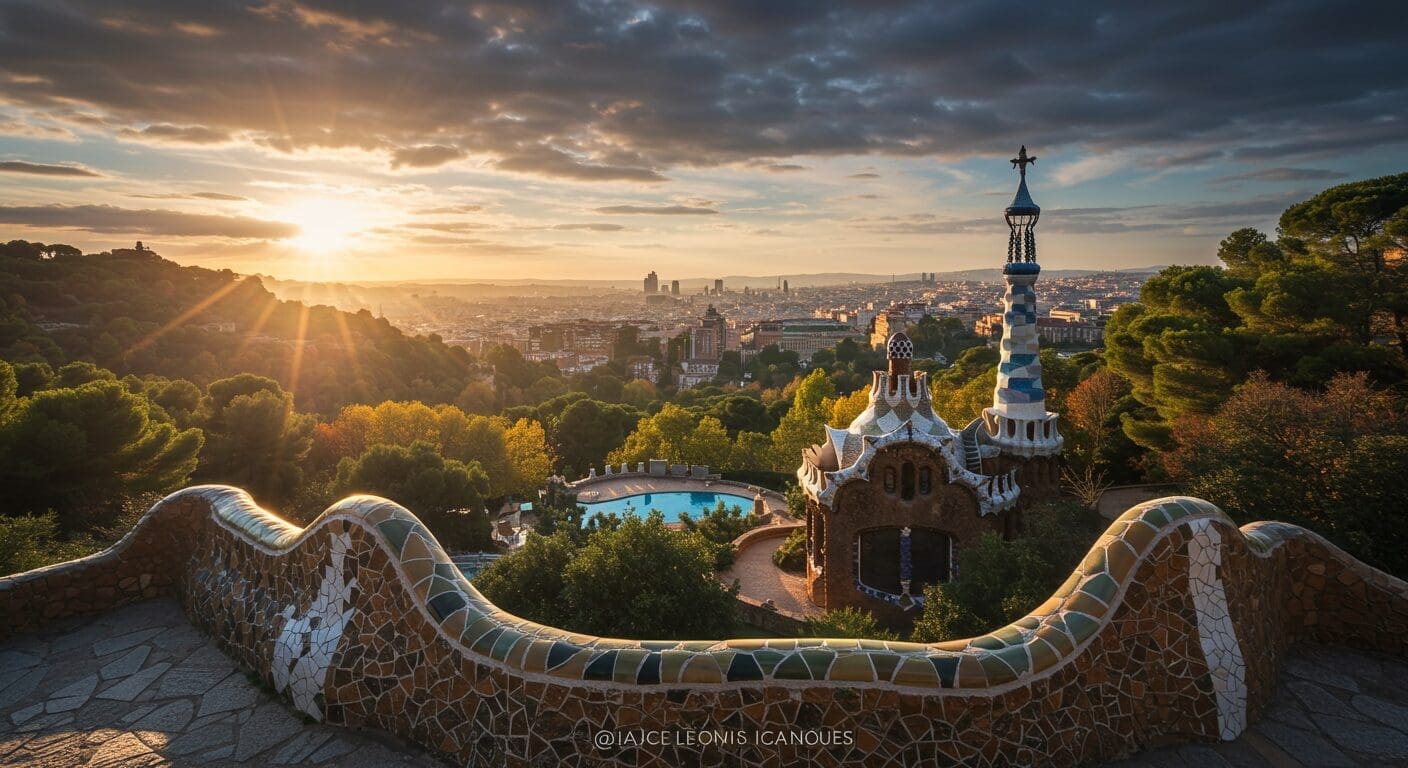
Specific child-friendly highlights include the Aquarium Barcelona, the interactive CosmoCaixa science museum, and the extraordinary fantasy landscape of Parc Güell – which manages to be genuinely magical while also being completely explained by the fact that Gaudí designed it. Theme park visitors are well served by PortAventura World near Salou, one of the best in southern Europe by any reasonable measure.
Catalonia Has Been Making Culture Since Before Most Countries Existed
To understand Catalonia is to understand, at least partially, that this is not simply a region of Spain – it is, in the minds of many of its inhabitants, a nation that happens to share a political structure with the rest of the Iberian Peninsula. The Catalan language predates the modern Spanish state and is spoken, read and defended here with a conviction that visitors should treat with respect rather than puzzlement. Signage is in Catalan first; conversations begin in Catalan and shift to Spanish (or English) as circumstances require. This is not provincialism – it is cultural confidence, which is a rather different thing.
The artistic legacy of Catalonia is extraordinary in proportion to its geography. Antoni Gaudí and his contemporaries in the Modernisme movement produced an architectural revolution in the late nineteenth and early twentieth centuries whose effects on Barcelona are still being processed – the Sagrada Família, the Casa Batlló, the Casa Milà (La Pedrera) and the Palau de la Música Catalana are individually remarkable and collectively unlike anything else in the world. Joan Miró and Salvador Dalí both claimed Catalonia as the essential context for their work. Pablo Picasso, though born in Málaga, spent his formative artistic years in Barcelona, and the Museu Picasso in the city’s El Born quarter is one of the finest single-artist collections anywhere.
The calendar of Catalan festivals is its own form of cultural education. The Castellers – human tower builders who compete in extraordinary formations that reach ten or more storeys high – perform at major festivals throughout the year and represent something genuinely specific to Catalan culture. La Diada de Sant Jordi on 23rd April, when Catalans exchange books and roses with a romantic pragmatism that other cultures might learn from, is one of the most charming public celebrations in Europe. The Festes de la Mercè in September fills Barcelona’s streets with fire-runners, concerts and a particular kind of collective joy that the city deploys better than almost anywhere.
Shopping in Catalonia – Beyond the Souvenir
The most rewarding shopping in Catalonia is also the most straightforward: local produce, local craft, things that cannot be found anywhere else. The aforementioned anchovies from L’Escala deserve repeat mention – they are a serious food product, beautifully packaged and genuinely exceptional. Catalan olive oils from the Siurana and Les Garrigues denominations are among the best in Spain. Wine from the Priorat, Montsant and Penedès regions travels well and represents significant value at the quality level available.
Barcelona’s Eixample district is the address for serious fashion – both international brands along Passeig de Gràcia and increasingly impressive Spanish and Catalan designers in the surrounding streets. The El Born neighbourhood has evolved into one of the best concentrations of independent boutiques, design shops and concept stores in any European city, with a particular strength in ceramics, textiles and contemporary jewellery. The Mercat de Santa Caterina – the El Born alternative to La Boqueria, with its extraordinary mosaic roof and considerably fewer selfie sticks – is both a functioning market and an architectural experience. For antiques, the Mercat Gòtic de Barcelona on Thursdays and Saturdays in front of the cathedral draws serious collectors and curious browsers in roughly equal numbers.
Handmade espardenyes (espadrilles), traditional Catalan pottery from La Bisbal d’Empordà, and cava from the Penedès cellars all make gifts that feel specific rather than generic – which is, really, the only kind worth bringing home.
What You Actually Need to Know Before You Go
The currency in Catalonia is the euro. Credit cards are accepted almost everywhere in cities and tourist areas; smaller villages and rural markets occasionally prefer cash, so carrying some is not the act of retro nostalgia it might seem. The official languages are Catalan and Spanish; English is widely spoken in Barcelona and in most tourist-facing contexts across the region, though a few words of Spanish will always be appreciated and a few words of Catalan will be received with something approaching delight.
Tipping culture is more relaxed than in the United States or even the United Kingdom. At restaurants, rounding up or leaving five to ten percent is appreciated but not expected in the way it is elsewhere. Service staff are professionals, not people working for tips because their wages don’t cover the basic cost of living – which changes the atmosphere of the transaction in ways that are hard to define precisely but easy to feel.
The best time to visit depends on what you’re seeking. May, June and September offer the most favourable combination: reliable warmth, long days, calmer seas and the particular pleasure of being somewhere slightly before or after the peak crowd. July and August are excellent if you want heat and a beach and don’t mind the company – Catalonia is a popular destination among Spaniards themselves, which tends to mean that the crowds are at least lively rather than merely numerous. The Pyrenees are best visited in July and August for hiking, December through March for skiing. Barcelona is a year-round destination with no genuinely bad season, though February can be quiet and a little grey – which, depending on your disposition, might be exactly what you need.
Safety is not a significant concern, though Barcelona specifically requires the usual urban awareness around pickpockets in crowded tourist areas – Las Ramblas being the most obvious example. The sun is more powerful than visitors from northern Europe typically expect. Factor thirty is not excessive in July. Pharmacy staff are excellent and will deal with sunburn diplomatically.
Why a Luxury Villa in Catalonia Simply Makes More Sense
Hotels have their place. That place, in Catalonia, is probably best occupied by a luxury villa. The case is not difficult to make. Consider the private pool – not a shared pool where the arrangement of sunloungers requires the kind of strategic thinking usually reserved for board meetings, but one that belongs entirely to your party for the duration of your stay. Consider the kitchen, stocked with local produce from the market you visited that morning, where breakfast happens at whatever time makes sense rather than whatever time the restaurant closes. Consider the space: a five-bedroom villa gives a family or a group of friends room to be together and apart in the proportions they actually want, rather than the proportions a hotel corridor imposes.
Luxury villas in Catalonia range from restored masías (traditional farmhouses) in the countryside around Girona – stone-walled, cool in summer, with views across cork forests and vineyards – to contemporary architectural statements on the Costa Brava cliff tops, where floor-to-ceiling glass and infinity pools meet the Mediterranean in ways that make the Instagram photograph somewhat redundant because you’re already living inside it. Many properties come with staff: chefs who shop at local markets and cook the kind of dinner that could hold its own at a good restaurant, housekeepers who manage the domestic infrastructure invisibly, concierges who have the number of the right person at El Celler de Can Roca or can arrange a private boat for the day with the kind of ease that makes it seem less like a miracle than it actually is.
For remote workers – the category of traveller who has understood that “location independence” need not mean a co-working space in Lisbon when it could mean a hilltop villa above the Alt Empordà – connectivity has improved dramatically across the region. Many premium properties now offer high-speed fibre or satellite connections sufficient for video calls, cloud work and the general maintenance of a professional life that doesn’t require presence in a specific office. The question “can I work from here?” is increasingly answered in the affirmative. The more interesting question is whether you’ll want to, once you’ve seen what’s outside the window.
For wellness-focused stays, the combination of villa amenities – private pools, outdoor spaces for yoga, gyms in larger properties – with Catalonia’s landscape and food culture creates conditions for genuine restoration rather than performative relaxation. The pace of rural Catalan life, the quality of the produce, the mountain air, the long unhurried lunches: these things work cumulatively in ways that no spa treatment quite manages on its own.
Excellence Luxury Villas offers an exceptional range of private villa rentals in Catalonia – from intimate retreats for couples to grand multi-generational estates with staff, pools and the full private luxury experience. Whichever corner of this remarkable region calls to you, there is a villa waiting that will make it significantly better than you imagined.
More Catalonia Travel Guides
- Best Restaurants in Catalonia: Fine Dining, Local Gems & Where to Eat
- Catalonia Food & Wine Guide: Local Cuisine, Markets & Wine Estates
- Catalonia with Kids: The Ultimate Family Holiday Guide
- Best Time to Visit Catalonia: Month by Month Weather, Crowds & Tips
- Catalonia Luxury Itinerary: The Perfect 7-Day Guide
- Romantic Catalonia: The Ultimate Couples & Honeymoon Guide
What is the best time to visit Catalonia?
May, June and September are the sweet spot – warm enough for swimming, calm enough for comfort, and free from the peak-season crowds that July and August bring. If you’re heading to the Pyrenees for hiking, July and August offer the most reliable mountain weather. Skiers should plan for December through March. Barcelona is genuinely enjoyable year-round, though the quieter winter months suit those who prefer the city at a more human pace.
How do I get to Catalonia?
Barcelona El Prat Airport is the main international gateway, with direct connections from most major cities across Europe and direct long-haul routes from North America and the Gulf. Girona-Costa Brava Airport serves the northern Costa Brava region and handles significant budget airline traffic. Reus Airport near Tarragona is the most convenient entry point for the Costa Daurada. If you’re travelling from within Spain, the high-speed AVE train from Madrid to Barcelona takes approximately two and a half hours and is genuinely competitive with flying once airport time is factored in. A hire car is strongly recommended for exploring beyond Barcelona.
Is Catalonia good for families?
Exceptionally so. The combination of reliable summer weather, varied beaches (rocky coves on the Costa Brava, broad sandy stretches on the Costa Daurada), family-friendly cultural attractions and a dining culture that genuinely welcomes children makes Catalonia one of the better family destinations in southern Europe. Private villa rental is particularly well suited to families – the private pool, the additional space and the flexibility around mealtimes all significantly improve the experience compared to hotel-based stays. PortAventura World near Salou is among the best theme parks in Spain for older children.
Why rent a luxury villa in Catalonia?
Privacy, space and a staff-to-guest ratio that hotels cannot match. A luxury villa gives your group exclusive use of the property – pool, gardens, indoor and outdoor living spaces – without the logistics of shared hotel facilities. Many premium villas include chef services, housekeeping and concierge support, which shifts the experience from self-catering to something considerably closer to a fully serviced private retreat. For families and groups in particular, the freedom that comes with having your own space is transformative. The best luxury villas in Catalonia also place you directly in the landscape – coastal cliff tops, rural countryside, medieval villages – in a way that even the finest hotel cannot replicate.
Are there private villas in Catalonia suitable for large groups or multi-generational families?
Yes, in considerable number. The Catalan villa market includes properties sleeping anywhere from four guests in an intimate coastal retreat to twenty or more in grand rural masías with multiple wings, several bathrooms per bedroom, private pools and extensive outdoor entertaining space. Multi-generational properties are increasingly designed to provide separation as well as togetherness – separate apartments or guest houses within the same estate, for instance – which makes the extended family holiday considerably more harmonious for everyone involved. Staff options including private chefs, childcare and housekeeping are available at the premium end of the market.
Can I find a luxury villa in Catalonia with good internet for remote working?
Increasingly, yes. Connectivity across Catalonia has improved significantly in recent years, and many premium villa properties now specify high-speed fibre broadband as a standard amenity. In more rural or elevated locations where fixed-line infrastructure is limited, Starlink satellite internet has become a practical and increasingly common solution, offering speeds sufficient for video conferencing, cloud-based work and reliable connectivity throughout the day. When booking, it is worth confirming the specific connection type and speeds with the property management team, particularly if reliable high-bandwidth connectivity is a firm requirement rather than a preference.
What makes Catalonia a good destination for a wellness retreat?
Several things converge here in useful ways. The landscape – mountains, coastline, forests, clean air – provides the backdrop for outdoor activity that genuinely supports wellbeing rather than simply providing content. The food culture, built around fresh local produce, olive oil, vegetables and seafood, is aligned with most serious approaches to healthy eating. The pace of life in rural Catalonia is genuinely slower than most of northern Europe, and that slowness turns out to be more restorative than most formal wellness programmes. Private villas with pools, outdoor yoga spaces, gyms and proximity to hiking or cycling routes offer the infrastructure for a serious wellness stay. Day spa facilities are available in several towns across the region, and the Pyrenean hot spring traditions add a specifically local dimension to the wellness offering.