Colorado Food & Wine Guide: Local Cuisine, Markets & Wine Estates
What does it taste like, exactly, to be a mile above sea level? If you arrived expecting beef, beer and not much else, Colorado is about to make you feel pleasantly foolish. This is a state with genuine culinary ambition – one that has quietly assembled a food and wine identity serious enough to make coastal food writers fidget in their seats. Rocky Mountain elk on the menu. Award-winning Rieslings produced in a high desert nobody outside Colorado had heard of until recently. Farmers’ markets that would embarrass half of California. The altitude does something peculiar to flavour here – it concentrates things, tightens them, lifts them. Whether that is the wine, the bison broth or simply your appetite after a morning at elevation, Colorado rewards the curious eater in ways that very few American states can claim.
This Colorado food & wine guide covers everything worth knowing: the regional cuisine, the producers doing remarkable things with challenging terroir, the markets worth getting up early for, and the food experiences that justify an entire trip on their own. Consider it your definitive companion to eating and drinking well here. For everything else – where to stay, what to do, how to move around – our full Colorado Travel Guide has you covered.
The Character of Colorado Cuisine
Colorado’s food culture sits at an interesting crossroads – literally and figuratively. It draws on the ranching traditions of the Great Plains to the east, the Pueblo and Navajo culinary heritage of the Southwest to the south, and the mountain foraging culture that has always been part of life at altitude. The result is a regional cuisine that is neither Texan nor Californian nor strictly Mexican, but something genuinely its own. Hearty without being heavy. Grounded in the landscape without being nostalgic about it.
Bison is the foundational protein, and rightly so. Colorado ranchers have been raising the animal responsibly for decades, and the flavour – leaner and more complex than beef, with a faint sweetness that registers somewhere behind the palate – is exceptional. You will find it as steak, in green chile stew, as tartare in the better restaurants, and occasionally as a burger served with the kind of apologetic sophistication that tells you the chef is slightly embarrassed by how good it is.
Green chile deserves its own paragraph. The Hatch and Pueblo varieties grown in Colorado and neighbouring New Mexico are roasted fresh each autumn, and what follows – a thick, slow-cooked green chile sauce ladled over everything from scrambled eggs to enchiladas to smothered burritos – is one of the great regional food experiences in the American West. Ordering “Christmas” gets you both green and red. Nobody will judge you. In fact, they will respect you.
Rocky Mountain trout, wild game including elk and venison, Olathe sweet corn from the Western Slope, Palisade peaches that are spoken of with a reverence usually reserved for Burgundy vintages – Colorado’s larder is exceptional. The state’s chefs, particularly in Denver, Aspen and Telluride, have learned to use it with considerable sophistication.
The Wine Country You Didn’t Know Existed: Grand Valley and Beyond
Colorado wine surprises people. That is part of its charm. The Grand Valley AVA – centred around the town of Palisade in Mesa County on the Western Slope – produces wine at around 4,700 feet of elevation, making it one of the highest wine-producing regions in North America. The climate is high desert: hot days, cold nights, and very little rainfall. The diurnal temperature swing does for Colorado grapes what it does for Burgundy in a good year – it preserves acidity while allowing full ripeness. The wines have a brightness, a cut, that you do not always find in warmer American appellations.
Merlot, Cabernet Franc, Syrah and Riesling perform particularly well here. The Rieslings are worth seeking out specifically – they carry a mineral quality that reflects the clay and sandy loam soils, and they age more gracefully than most people expect from a relatively young wine region. There is also the Two Rivers Winery area, and a growing cluster of producers around Colorado Springs and the Canon City area to the east, working with both Bordeaux and Rhône varieties.
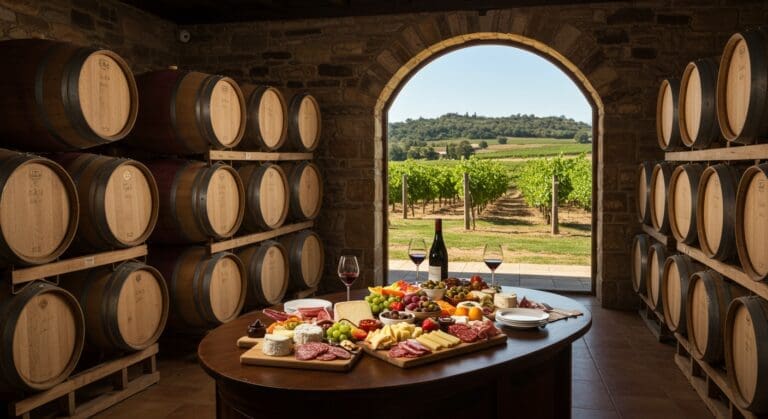
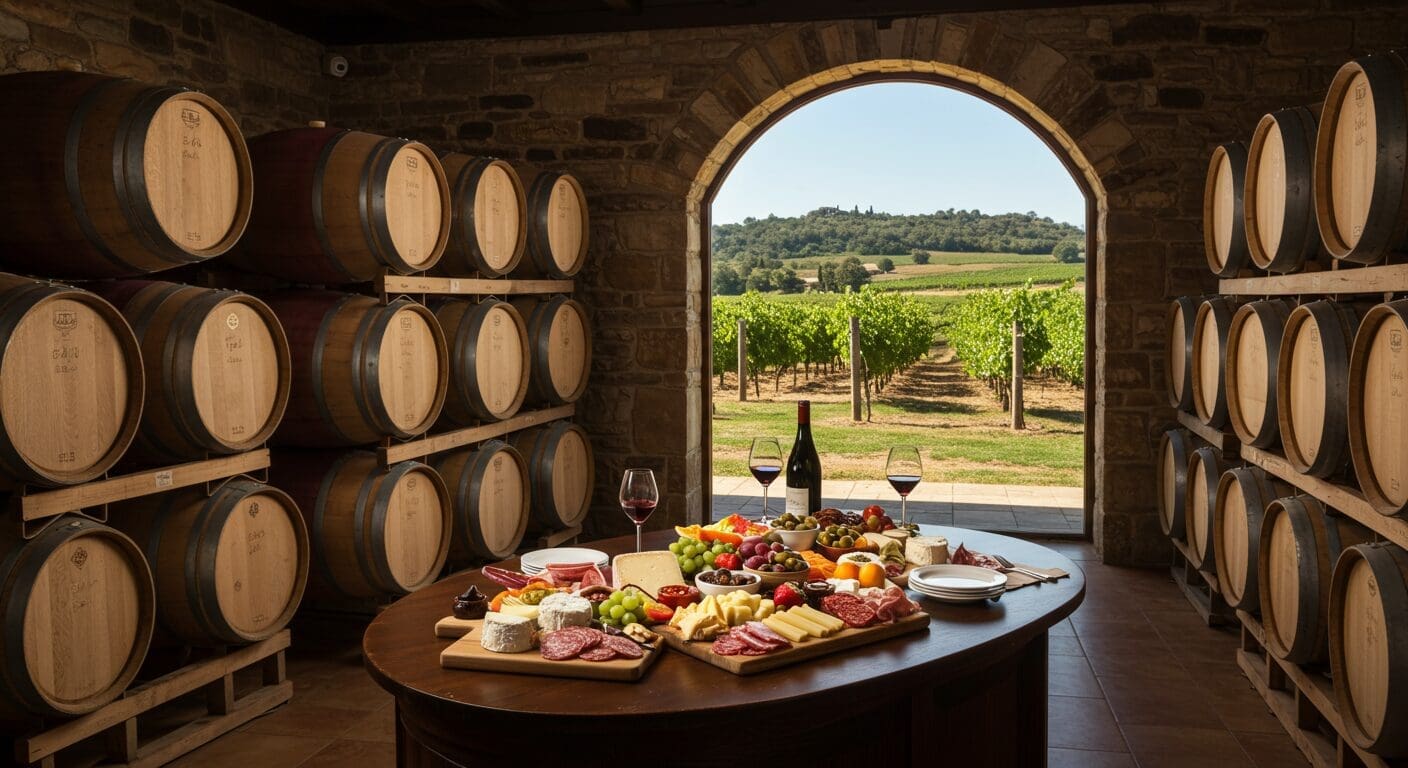
Visiting the Grand Valley wine estates is genuinely pleasurable. The tasting rooms tend to be smaller and more personal than their Napa equivalents, and the winemakers are often pouring their own wine, which changes the conversation entirely. You can spend a morning driving between producers along the Palisade wine trail, stopping for a tasting at one estate, a conversation about soil composition at another, and an unexpectedly good cheese plate at a third. It is a very civilised way to spend a Tuesday. The Colorado Wine Board provides a current map of licensed producers and tasting rooms, and given how quickly the region is evolving, it is worth consulting before you go.
The North Fork Valley around Paonia is a smaller, cooler sub-region producing impressive results – particularly with Gewürztraminer and Pinot Noir. This is Colorado wine country for people who think they don’t like Colorado wine. It tends to change minds.
Denver’s Food Scene: Where the Serious Eating Happens
Denver has transformed itself into one of the more genuinely exciting food cities in the United States over the past fifteen years – a fact that continues to catch visitors off guard. This is not a scene built on trend-following. Denver’s best restaurants reflect an honest engagement with local ingredients, regional traditions, and a kitchen culture that values skill over spectacle.
The River North Arts District (RiNo) is the current epicentre of culinary ambition. The neighbourhood’s converted warehouses and industrial spaces house some of the city’s best restaurants – from focused tasting menu operations to outstanding ramen, wood-fired cooking, and serious cocktail bars that take their fermentation as seriously as any kitchen. It is the kind of neighbourhood where you go for one drink and dinner and emerge four hours later having eaten and drunk considerably more than planned. Which is the correct outcome.
Larimer Square, the city’s oldest block, remains reliably excellent for upscale dining, with restaurants that have earned their reputations over years rather than months. The Highlands neighbourhood offers a slightly more residential dining scene – the sort of places that locals actually eat rather than the places locals send visitors. Worth the distinction.
For the luxury traveller, the standout experiences are the city’s high-end chef-driven restaurants. Look for operations built around dry-aged Colorado beef, hyper-seasonal tasting menus that change with the mountain growing season, and wine programmes that take the Grand Valley seriously alongside their French and Italian selections. Denver’s sommelier community is quietly formidable.
Aspen and Mountain Town Dining: Altitude with Attitude
Aspen’s restaurant scene punches well above its population’s weight, which is partly a function of the clientele and partly a function of chefs who genuinely want to be there. The combination of serious money, extraordinary natural surroundings and a food culture that attracts talent from across the country produces dining that holds its own against any American city. The Aspen Food & Wine Classic, held each June, has been drawing the world’s best chefs and winemakers to the mountains since 1983, and its influence on the local food culture is significant.
What sets mountain town dining apart is not merely the quality of the ingredients – though the proximity to ranches, farms and foraged mountain produce matters – but the context. Eating a plate of elk medallions with a glass of Colorado Syrah after a day in the Rockies is an experience with a specificity that fine dining in a city simply cannot replicate. The altitude, the appetite, the particular slant of light at 7,000 feet – these things are not incidental. They are the meal.
Telluride and Steamboat Springs have both developed food scenes worth making a detour for. Telluride in particular has attracted chefs producing thoughtful, ingredient-driven cooking in a town that takes its pleasures seriously across every category.
Markets Worth the Early Alarm Call
Colorado’s farmers’ markets are the kind that restore your faith in seasonal eating. The Denver Farmers Market, running from May through November at various locations across the city, draws producers from the Western Slope and the Eastern Plains – you will find the legendary Palisade peaches (in season from mid-July), Olathe sweet corn, fresh-roasted green chiles, local honey, artisan cheeses, and an impressive selection of small-batch preserves and ferments. It is also, it should be noted, one of the more photogenic markets in the country. People know this and behave accordingly. Arrive early, before the tripods appear.
Boulder’s Pearl Street and Saturday Farmers Market is arguably the state’s finest. Boulder has long attracted the kind of food producers who care rather intensely about what they are doing – organic, biodynamic, pasture-raised, wildly earnest about soil health – and the market reflects this. It is also very beautiful, set against the backdrop of the Flatirons. Even if you have no intention of cooking anything, walking through it is a form of food education in itself.
In Grand Junction, the farmers’ market serves as an unofficial tasting room for the Grand Valley wine and produce region. Pick up peaches, local lavender, and a bottle of something from a nearby estate. This is what a Saturday morning should feel like.
Cooking Classes, Food Experiences and Learning to Eat Well Here
For luxury travellers who want to engage with Colorado’s food culture beyond the restaurant table, there is a growing infrastructure of hands-on experiences worth knowing about. Cooking classes focused on green chile preparation, game cookery and high-altitude baking (altitude genuinely changes baking chemistry, which is one of those facts that sounds made up until your first collapsed cake at 9,000 feet) are available across Denver, Boulder and the mountain towns.
Private chef experiences – where a local chef comes to your villa or rental property, sources ingredients from local producers and markets, and produces a multi-course dinner with wine pairings – are increasingly popular and entirely justified. They allow you to experience the regional cuisine at its most personal. Several operators based in Denver and Aspen offer this specifically for private villa guests, and the quality is consistently high.
Farm-to-table dining experiences on working Colorado ranches are worth investigating. These are not staged tourist affairs – they are occasions to eat grilled bison beside the people who raised it, with Colorado wine and the kind of silence that only open country provides. They range from the informal to the genuinely luxurious.
Truffle hunting is not a traditional Colorado activity, but there are culinary foraging experiences in the mountain forests – focused on wild mushrooms, including porcini and chanterelle varieties – that provide a similar pleasure. Guided half-day foraging walks are available in season, and the results often end up on the dinner table the same evening. There is something deeply satisfying about that.
Colorado Beer, Spirits and the Broader Drinks Culture
It would be an omission not to mention Colorado’s craft brewing culture, which predates the national craft beer movement and remains one of the country’s most serious. The state has more craft breweries per capita than almost anywhere in the United States, and the quality across styles – from lager to imperial stout to sour ales that rival Belgian originals – is uniformly high. Denver’s Great American Beer Festival is the national benchmark event for the industry.
Colorado’s spirits scene has followed the craft trajectory with enthusiasm. Several distilleries produce whiskey, bourbon and gin using local grains and Rocky Mountain water, and the results have begun attracting serious attention from beyond the state. Tasting rooms in Denver and Boulder offer guided flights with the kind of conversation about process and provenance that wine tastings take for granted but spirits culture is still catching up to. A distillery visit makes for an excellent afternoon, particularly if you have a driver arranged.
The Best Food Experiences Money Can Buy in Colorado
For the traveller whose budget is not the primary consideration, Colorado offers some food experiences that sit in a category of their own. A private dinner at elevation – in a mountain hut, on a rented terrace overlooking the Rockies, or in the private dining room of one of Denver’s or Aspen’s finest restaurants – is the kind of occasion that becomes the story you tell for years. Private wine tours through the Grand Valley with a dedicated guide and transport, stopping at the most interesting small producers with pre-arranged tastings and a private lunch, cost less than you might expect and deliver significantly more than most formal wine country tours.
Helicopter access to remote backcountry lodges for private chef dinners exists in Colorado and is exactly as extraordinary as it sounds. The combination of inaccessibility, landscape and exceptional food creates an experience so particular to this place that it is difficult to replicate anywhere else. A reservation, careful logistics and a willingness to spend appropriately are the only requirements.
For those who want the full picture of the state’s food culture in concentrated form, a multi-day culinary itinerary – moving from Denver’s restaurant scene to the Grand Valley wine country to a mountain town market and back – can be arranged through specialist operators who understand both the food landscape and the logistics. It is not spontaneous. It is better than spontaneous.
Plan Your Stay
Colorado’s food and wine culture is best experienced slowly and with the right base. A private villa gives you the kitchen to bring the market home, the space to host a private chef dinner, and the freedom to move at your own pace between the wine estates, the mountain towns and the city restaurants. It is the difference between passing through a food culture and actually inhabiting it, if only for a week.
Explore our collection of luxury villas in Colorado and find the base that suits your particular version of eating and drinking well at altitude.
When is the best time to visit Colorado for food and wine experiences?
Late summer and early autumn – roughly August through October – is the prime season for Colorado food and wine tourism. Palisade peaches and Olathe sweet corn are at their peak, the green chile harvest and roasting season is in full swing, and the Grand Valley wine estates are busy with harvest. Farmers’ markets are at their most abundant. The Aspen Food & Wine Classic in June is worth planning around if fine dining and wine seminars are your focus. Winter in the mountain towns brings a different kind of culinary pleasure – hearty game dishes, serious wine lists and après-ski dining culture at its best.
What are the must-try foods when visiting Colorado?
Bison in any form – steak, burger or slow-cooked stew – is the essential Colorado protein. Green chile, particularly Pueblo-style, is a regional staple that appears at every level of dining from diners to fine restaurants. Palisade peaches, available in mid-summer, are genuinely exceptional and worth seeking out fresh at a farmers’ market. Rocky Mountain trout, elk medallions and locally foraged mushrooms round out a list of ingredients that reflect the landscape honestly. For drinks, explore both the Grand Valley wines – particularly Riesling and Cabernet Franc – and the state’s serious craft brewing tradition.
Is Colorado wine worth seeking out, or is it better to stick to established wine regions?
Colorado wine is worth seeking out, particularly if you have any interest in high-altitude viticulture and wines with genuine regional character. The Grand Valley AVA produces wines – especially Riesling, Merlot and Syrah – that stand comfortably alongside comparable bottles from better-known American appellations. The tasting room experience is more personal and accessible than Napa or Sonoma, and the prices reflect a region that hasn’t yet fully priced in its own reputation. The North Fork Valley around Paonia is worth a specific detour for cooler-climate varieties. Think of Colorado wine the way early adopters thought of Argentina or New Zealand – interesting, undervalued, and moving fast.