Romantic Costa Brava: The Ultimate Couples & Honeymoon Guide
Romantic Costa Brava: The Ultimate Couples & Honeymoon Guide
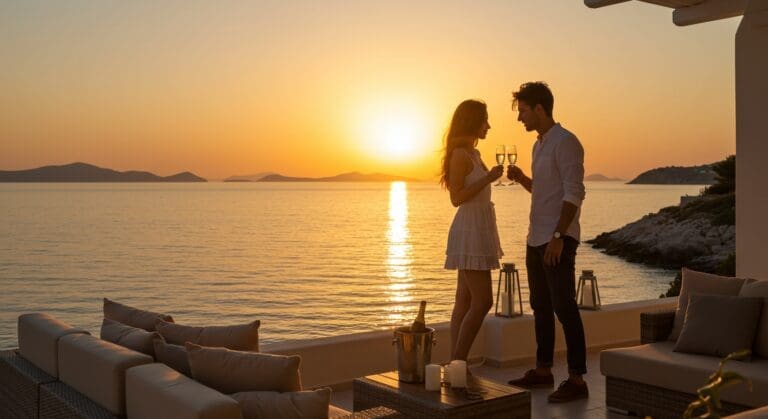
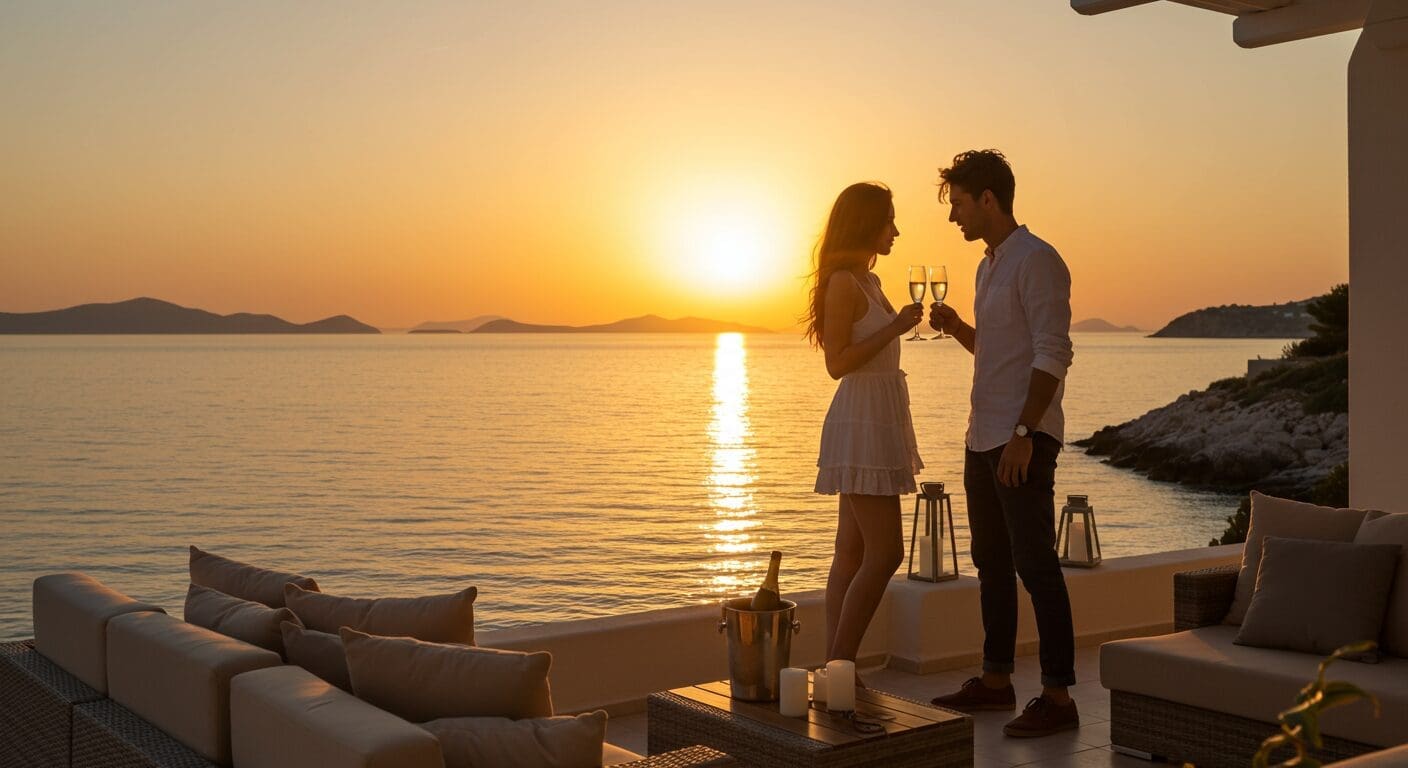
It is late afternoon, somewhere between Calella de Palafrugell and Llafranc, and two people are sitting on a terrace above the Mediterranean with a bottle of Empordà white between them. The light is doing that thing it only does here – turning the water into hammered bronze, making the white-washed walls look like they are generating their own heat. There is nowhere particular to be. The pine-scented air drifts up from the coast path below. Nobody is talking. This is, it turns out, exactly what they came for. The Costa Brava does not seduce you with fanfare. It simply presents itself, in all its raw, unmanicured beauty, and waits for you to catch up.
Why the Costa Brava is Exceptional for Couples
There is a particular type of place that is romantic not because anyone decided to make it so, but because the geography, the culture, and the pace of life conspired – quite without permission – to create something that consistently undoes people. The Costa Brava is that kind of place. It runs for roughly 200 kilometres along the northeastern edge of Spain, from Blanes in the south up to the French border, and it does not behave like a single destination. It behaves like a collection of them: dramatic clifftop paths, secret coves accessible only by boat, medieval villages perched above the sea as if daring it to blink first, whitewashed fishing ports that have somehow remained exactly themselves despite decades of visitors.
What makes it genuinely exceptional for couples – as opposed to merely popular – is the quality of intimacy it offers. There are no vast resort strips here, no relentless animation entertainment, no queue for the sun lounger. Instead: a cala (cove) that fits twenty people if they squeeze, a restaurant with twelve tables where the owner has been cooking the same arroz caldoso for thirty years, a coastal path at dusk where you will pass almost no one. The Catalan culture adds its own layer – proud, quietly sophisticated, with a table culture that treats dinner as an event and a glass of wine as an argument worth having.
For context on the broader destination, the Costa Brava Travel Guide covers everything from practical travel tips to where to base yourself across the region.
The Most Romantic Settings and Experiences
The coastal path known as the Camí de Ronda is possibly the most romantic walk in Spain that nobody outside Catalonia talks about loudly enough. Threading along the cliff edges between fishing villages, it reveals the coast as it genuinely is: wild, geological, ancient. Walk the stretch between Tamariu and Llafranc in the early evening and the light will do the rest. The sea below shifts through every register of blue and green. You will want to photograph it constantly and later realise none of the photographs work. Some things only work in person.
Cap de Creus, the most easterly point of the Iberian peninsula, is something else entirely – a surrealist landscape of tortured rock formations that Salvador Dalí loved obsessively and which justifies that obsession completely. The lighthouse at the tip is the kind of place where the wind is always just slightly too strong and that feels, somehow, correct. It is dramatic and elemental and utterly unlike anywhere else. Couples who go there tend to return to the car without saying very much. This is a good sign.
The medieval village of Peratallada, inland among the Empordà plains, has a quality of stillness that is almost architectural. Walls of golden stone, candlelit restaurant terraces, no cars within the walls. An evening here – dinner, a glass of local wine, a slow walk back through lanes lit by a single bulb – belongs to a different century. One you did not know you wanted to visit.
The Best Restaurants for a Special Dinner
The Costa Brava has – and this is not nothing – more Michelin stars per kilometre of coastline than almost anywhere in Europe. El Celler de Can Roca in Girona, run by the three Roca brothers, has held three Michelin stars for years and has twice been named the world’s best restaurant. Booking requires planning that resembles logistics rather than spontaneity, but the experience – intricate, playful, deeply Catalan – is precisely the kind of meal that marks an occasion permanently. For a honeymoon or significant anniversary, it is worth the effort.
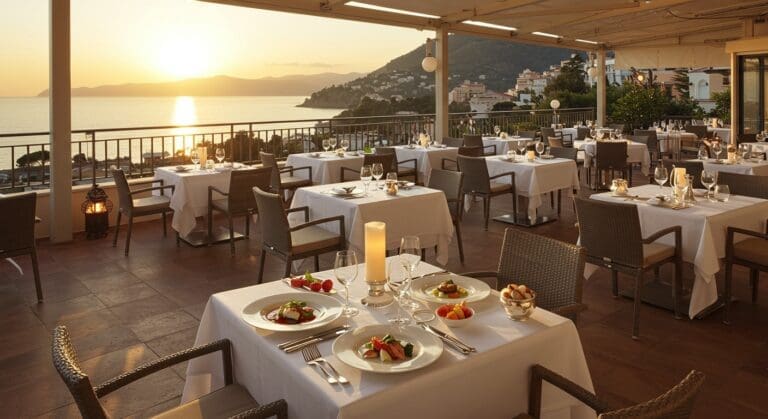
Beyond the stratosphere of three-star dining, the coast is lined with restaurants that understand the Mediterranean instinctively. Look for places in the fishing villages of the Baix Empordà – Palafrugell, Begur, Calella – where the day’s catch arrives and disappears before the menus have a chance to be corrected. A good rule: if the terrace overlooks the water and the menu includes suquet de peix (Catalan fish stew), you are probably in the right place. Pair it with a bottle from the Empordà DO – the local wines, made with Garnatxa and Cariñena grapes under a sky that has earned the credit – and dinner becomes the kind of memory that gets mentioned years later at dinner parties, slightly embellished each time.
Couples Activities: Sailing, Spa, Wine and More
Sailing along this coastline is not a cliché. It is, in fact, the correct way to understand what makes it remarkable. Seen from land, the Costa Brava is beautiful. Seen from a boat – anchored in a cala that has no road access, the pines dropping down to clear green water, the world reduced to this – it becomes something more personal. Private sailing charters are available from ports including Roses, Palamós, and L’Estartit, ranging from half-day excursions to multi-day liveaboard journeys up the coast. Some operators offer sunset sailing with a cooler of local wine and cured meats. There is a word for this. It is “yes”.
Wine tasting in the Empordà is underrated in the way that genuinely good things often are – not yet overrun, not yet turned into an experience with a gift shop and a tasting mat. Boutique wineries in the region offer visits and tastings in settings of considerable understated charm: old stone cellars, vine-covered terraces, wines that genuinely taste of this specific landscape. Combine it with a stop at a local market for charcuterie and cheese and you have constructed, without really trying, a perfect afternoon.
Cooking classes anchored in Catalan cuisine – working with ingredients from the market that morning, learning the principles of sofregit and picada, understanding why this food tastes the way it does – give couples something they take home beyond photographs. An activity you can recreate on a Tuesday in February has a long life. Spa facilities in the better rural hotels and villa complexes around Begur and Cadaqués tend toward treatments using local olive oil and sea minerals, quiet and small-scale, which is exactly how spa experiences should feel. The Costa Brava has yet to discover the concept of the “wellness resort” in the corporate sense. Long may that continue.
The Most Romantic Areas to Stay
Begur sits on a hill above a cluster of some of the best calas on the coast and behaves as if it knows this very well. It is quiet without being dull, sophisticated without being glossy, and the views from the castle ruins at sunset are the kind that make people reconsider their life choices (usually favourably). The surrounding coves – Sa Riera, Aiguablava, Sa Tuna – are each different in character and each extraordinary on their terms. It is the finest base on the coast for couples who want beauty without performance.
Cadaqués, clinging to its bay in the far north near Cap de Creus, is wilder and more remote – the road in is genuinely memorable, and not always in a relaxing way – but that difficulty is part of what has preserved it. White-washed lanes, a Dalí museum that should not be missed, restaurants where the fish arrived this morning, a particular quality of light that artists have been chasing for a century. It is not the most convenient place on the Costa Brava. Convenience is not really what you are here for.
Tamariu and Llafranc, smaller and quieter than their better-known neighbours, offer a level of intimacy that the more popular resorts cannot. Rental villas set in pine forests above the sea, small harbours where fishing boats and pleasure craft share the water in apparent mutual indifference, restaurants where reservations require some persistence. These are villages for couples who prefer the discovery of a place to the validation of it.
Proposal-Worthy Spots on the Costa Brava
The lighthouse at Cap de Creus has been discussed. It is a strong candidate – elemental, end-of-the-world, dramatic in all the right ways – though the wind will require a certain commitment to the moment. The viewpoint above Begur castle at dusk is calmer and arguably more composed: the entire coastline spread south below, the sea the colour of old copper, the light doing something that no photographer has successfully explained. There is a reason people keep trying.
Peratallada’s medieval courtyard at night, lit by lanterns and largely empty after the day visitors have gone, has a quality of theatrical stillness that tends to make things feel significant. For those who prefer water: propose by the sea at Sa Tuna or Aiguablava in the early morning, before anyone else arrives, when the cove is glassy and silent and the world is briefly very small. The Costa Brava rewards people who get there first.
Anniversary Ideas and Special Occasions
A cooking class followed by a private dinner using what you made, eaten on a terrace with a view: this is not a complicated formula but it works reliably and completely. Combine it with a night in a rural boutique hotel in the Empordà hinterland – stone floors, white linen, someone else’s ancient wisteria climbing the courtyard wall – and you have constructed an anniversary that requires very little improvement.
For significant milestones, a private sailing charter along the coast with a stop at a secluded cala for swimming and a lunch of local food prepared onboard covers all the required bases: beauty, privacy, pleasure, a story worth telling. The itinerary between Palamós and Cadaqués, taking two or three days if you can spare them, passes some of the least-spoiled stretches of the Mediterranean coast. It is, in the best possible way, a lot to take in.
A private Empordà wine tour visiting two or three small producers, ending with dinner in Girona – a medieval city of considerable beauty that most Costa Brava visitors fail to give adequate time – makes for an anniversary day with layers: countryside, culture, table, conversation. Girona’s old town, with its coloured houses above the Onyar river and its Jewish quarter intact, is the kind of place that functions as a reminder that Spain was always more complicated and more interesting than the brochures suggested.
Honeymoon Considerations for the Costa Brava
Honeymooners have specific requirements that the Costa Brava handles with more elegance than many better-marketed destinations. Privacy comes naturally here – in a private villa with its own pool above the sea, in a cala accessed by a fifteen-minute coastal walk, in a restaurant that seats twenty and does not rush. The pace of life is Mediterranean in the truest sense: unhurried, sensory, oriented toward pleasure without apology.
The best time to honeymoon is May, June, or September – warm enough, quieter than the core summer weeks, the light superb in all directions. July and August bring higher temperatures and more visitors, particularly to the more accessible villages; perfectly manageable in a private villa but worth knowing before you book. The shoulder months reward couples who want the coast largely to themselves.
Travel from within Europe is straightforward – Girona and Barcelona airports are both served by major carriers, and driving the coast is itself a pleasure, the road periodically revealing views that demand an immediate stop. Build in time for Girona, for the Dalí triangle (Figueres, Portlligat, Púbol), and for at least two or three days where the plan is simply the coast path, a cove, and lunch. Honeymoons do not need a schedule. They need a base from which to not follow one.
Your Romantic Base: A Private Villa on the Costa Brava
There is a particular quality to arriving at a private villa on the Costa Brava – the gate, the garden, the pool in the evening light, the view that belongs, for this week, entirely to the two of you – that no hotel, however excellent, quite replicates. A villa means breakfast when you want it, swimming when you want it, dinner served on a private terrace as the sun drops behind the pines. It means the rhythm of the days is set by you, which is, ultimately, what a romantic holiday is for.
Whether you want a clifftop villa above the calas of Begur, a restored stone farmhouse among the Empordà vineyards, or a whitewashed property with direct sea access near Cadaqués, a luxury private villa in Costa Brava is the ultimate romantic base – and the starting point from which everything described in this guide becomes not just possible but easy.
When is the best time of year to visit the Costa Brava as a couple?
May, June, and September offer the best combination of warm weather, clear seas, and relative quiet. The coast is at its most beautiful before the peak summer crowds arrive and after they leave. Temperatures in May and June are ideal for coastal walking and sailing, while September adds the warmth of a full summer season to a noticeably calmer atmosphere. July and August are perfectly enjoyable – especially from a private villa – but involve more company along the coastal paths and in restaurants.
Which area of the Costa Brava is most romantic for a honeymoon?
Begur is widely regarded as the most romantic base on the coast – its hilltop position, proximity to several of the finest calas, and unhurried village character make it ideal for couples. Cadaqués offers something wilder and more remote, with an artistic heritage and a quality of light that has attracted painters and writers for decades. For inland romance, the Baix Empordà villages – particularly Peratallada and Pals – offer medieval architecture, excellent restaurants, and a stillness that is rare on any European coastline.
Do I need to book restaurants well in advance on the Costa Brava?
For the finest restaurants – including El Celler de Can Roca in Girona – advance booking of several months is essential, and for special occasions this planning is more than worth the effort. For excellent village restaurants along the coast, booking two to five days ahead during high season is generally sufficient and advisable. In shoulder season, you will often find tables with less notice, though the better-known spots still fill quickly on weekends. The restaurants worth waiting for are, without exception, worth waiting for.