Famagusta Food & Wine Guide: Local Cuisine, Markets & Wine Estates
At around half past six in the evening, when the worst of the heat has lifted and the light turns that particular shade of amber that photographers spend their whole careers chasing, something shifts in Famagusta. The smell of charcoal smoke drifts over the old city walls. Somewhere nearby, someone is pressing garlic into halloumi, and a pan of loukoumades is about to hit hot oil. The ancient stones that have watched over this city since the Lusignan dynasty are still doing their thing, impassive and extraordinary, while below them the real business of the day – the business of eating – is only just beginning. This is a city where the table is not merely a place to refuel. It is where the whole layered, complicated, occasionally bewildering history of Cyprus makes the most sense.
Welcome to the Famagusta food and wine guide: local cuisine, markets and wine estates – the definitive companion for travellers who take their fork as seriously as their itinerary. For further context on the destination itself, our Famagusta Travel Guide covers everything from history to logistics.
The Culinary Identity of Famagusta
Famagusta is not a city that does culinary half-measures. Positioned on the eastern coast of Cyprus, it has spent centuries absorbing influences – Byzantine, Venetian, Ottoman, British – and rather than letting them cancel each other out, the local cuisine has done something more interesting. It has layered them. The result is a table that feels both unmistakably Cypriot and quietly cosmopolitan, a place where olive oil from ancient groves meets spice routes that passed through here long before anyone thought to build an airport.
The cooking is fundamentally honest. It begins with quality ingredients – the vegetables grown in the Mesaoria plain, the seafood pulled from the eastern Mediterranean, the sheep and goats that have been grazing these landscapes for millennia – and does relatively little to obscure them. There is a confidence to Cypriot cooking that some visitors mistake for simplicity. It is not simplicity. It is precision. Knowing when to stop is one of the hardest skills in any kitchen, and it is one that Famagusta cooks have generally mastered.
The cuisine here also reflects the particular character of North Cyprus – the region in which Famagusta sits. There is a distinctly Turkish Cypriot thread running through many dishes, which means you will find influences not just from the broader Levant but from Anatolia too. It produces a fascinating culinary tension, warm and generous in equal measure.
Signature Dishes You Need to Know
Let’s begin where all serious eating begins: with the meze. Not the pale imitation served at indifferent restaurants in European cities, but the genuine article – a procession of small dishes that arrives in waves, continues well after you thought it had finished, and leaves you in the particular state of satisfied helplessness that only a properly executed Cypriot meze can produce. Expect halloumi grilled until it has the faintest char at the edges, olives marinated in coriander seed and lemon, taramosalata with actual flavour, hummus that bears no resemblance to anything that ever came in a plastic supermarket tub, and small dishes of trahanas – a fermented wheat and yoghurt porridge that sounds alarming and tastes wonderful.
Kleftiko is the dish most people come for and rightfully so. Slow-cooked lamb, sealed in a clay oven for hours until it falls apart at the slightest suggestion of a fork, fragrant with garlic and bay, is one of those things that makes you reconsider your opinions about simplicity. It takes all day to make. It takes considerably less time to eat.
Stifado – a rich, sweet-and-savoury braised meat stew made with shallots, red wine and warm spice – appears on menus here with a depth that comes from generations of quiet refinement. Along the waterfront, fresh seafood holds its own: grilled sea bass, octopus dried in the sun then charcoal-softened, small fried whitebait eaten whole with a squeeze of lemon and absolutely no ceremony whatsoever.
And then there is halloumi, which deserves its own paragraph simply because the version you eat here is not the version you have been eating everywhere else. Made locally, often from a blend of sheep’s and goat’s milk, it has a freshness and saltiness in balance that commercially produced halloumi rarely achieves. Eat it warm. Eat it immediately. That is essentially the only rule.
Local Wines and Wine Estates
Cyprus has one of the oldest wine traditions in the world – a fact the island mentions at every available opportunity, though in this case the bragging rights are entirely earned. Wine has been produced here for at least four thousand years, which puts most New World wine regions in rather awkward historical company. The eastern part of the island, while not itself the primary wine-growing region (that distinction belongs to the Troodos foothills in the south), benefits fully from Cyprus’s viticultural culture and is well supplied by producers from across the island.
The grape variety to know is Maratheftiko, a red that produces wines of real structure and character – dark fruit, earthy depth, a distinctive tannic grip that rewards food. It is indigenous to Cyprus and therefore not something you will find growing particularly successfully anywhere else. This is one of the quiet pleasures of drinking wine in Cyprus: you will encounter varieties that exist almost nowhere else on earth. Xynisteri, the principal white grape, makes wines of considerable freshness and aromatic delicacy – ideal with the kind of grilled seafood that Famagusta’s coastline produces so effortlessly.
For wine estates worth the journey, the most rewarding experiences tend to involve driving west and south into the wine villages of the Troodos region – Omodos, Kilani, Kyperounta – where small family producers receive visitors with a combination of genuine pride and the kind of hospitality that involves sitting down and not leaving for quite some time. Look for producers working with organic and biodynamic approaches, as there is a growing movement among younger Cypriot winemakers to work with their extraordinary terroir rather than simply impose international styles on it.
Commandaria, Cyprus’s ancient dessert wine, is worth seeking out in its most authentic forms. Made from sun-dried Xynisteri and Mavro grapes in the villages around Limassol, it is one of the world’s oldest named wines and has a complexity – dark dried fruit, caramel, a faint oxidative edge – that rewards slow contemplation with good company. It pairs extraordinarily well with the local desserts, which brings us neatly to where we need to go next.
Food Markets and Where to Shop Like a Local
The markets of Famagusta are not heritage tourist attractions dressed up for Instagram. They are working markets where actual people buy actual food, which is precisely what makes them worth your time. The old town market area, located within or close to the medieval walls, offers a sensory encounter that no curated food hall experience can replicate: stalls piled with local produce, vendors who have opinions about their olives and are not shy about sharing them, and the particular chaos of a Mediterranean market in full morning swing.
Come early. The best produce goes first, and the light is better, and you will have the additional satisfaction of being the person who got up at seven while everyone else is still on their villa terrace waiting for coffee. The olives here deserve particular attention – Cypriot olives are cured in a variety of ways, some in brine, some cracked and dressed with coriander and citrus, and the differences between them are worth investigating seriously. Pick up dried herbs too: local thyme, oregano and sage are of a quality that will make your home cooking briefly seem more interesting than it actually is.
Honey vendors are another reason to linger. Cyprus produces exceptional thyme honey with a depth and fragrance that commercial honey cannot touch. It is the kind of thing you buy meaning to take home as a gift and then quietly decide to keep for yourself. Nobody needs to know.
Cooking Classes and Culinary Experiences
For travellers who want to understand Cypriot food rather than simply consume it – and there is a meaningful difference – cooking classes offer the most direct route. The best experiences in this region tend to be informal, home-based affairs run by local cooks who have been making these dishes their entire lives and regard teaching them as both a pleasure and a mild opportunity to set the record straight about certain techniques. You will learn to make halloumi from scratch, work with fresh herbs, understand the logic of a meze, and probably drink more wine than you intended while doing so.
Look for experiences that take you to a local home kitchen rather than a commercial cooking school setting. The conversations that happen around a domestic stove – about family, about food, about Cyprus – are frequently as valuable as anything you learn to cook. This is the kind of thing that does not appear in your final bill but ends up being what you remember.
Some operators offer market-to-table experiences that begin at the morning market, involve some pointed commentary on how to select produce, and end at a table somewhere with a glass of local wine and the dishes you have helped prepare. It is one of the better half-days available to you in this part of Cyprus, and we say that having considered the competition seriously.
Olive Oil, Carobs and the Produce of the Land
Cyprus has been producing olive oil since antiquity, and the eastern part of the island maintains this tradition with quiet conviction. The olive groves around the Famagusta region include ancient trees of extraordinary age – gnarled, silver-leafed and apparently immortal – that produce oil with a character quite different from the smooth, mild products that dominate supermarket shelves. Cypriot extra virgin olive oil tends toward the robust: grassy, peppery, with a finish that lets you know it means business.
Visiting an olive oil producer during the harvest season – roughly October to December – is one of the more rewarding agricultural experiences available on the island. The cold-pressing process has changed relatively little over centuries, and watching it happen while sampling oil so fresh it still has a slightly cloudy appearance is the kind of thing that ruins supermarket olive oil for you permanently. This is presented as a warning rather than an endorsement.
Less well known internationally but equally important to Cypriot culinary identity is the carob. The eastern Mesaoria plain has long been carob country, and the tree – dark, drought-resistant, quietly magnificent – produces pods used to make carob syrup, carob flour and a product called pasteli, a sesame and carob brittle that is one of those things you will eat casually and then suddenly realise you have eaten an entire bag of. Carob syrup poured over thick strained yoghurt and walnuts is a Cypriot breakfast that requires no further improvement.
The Best Food Experiences Money Can Buy in Famagusta
For those travelling with a serious food budget and equally serious intentions, Famagusta and its surrounds offer a handful of experiences that sit at the upper end of what the region makes possible. Private meze dinners arranged through villa concierge services can bring local chefs to your table for evenings that are entirely tailored – specific dishes, specific wines, specific dietary requirements all addressed with the kind of attention that a good restaurant cannot always guarantee when it is also serving forty other tables.
Coastal dining experiences – whether at a proper fish taverna on the waterfront or a private arrangement at a beach location – are elevated significantly when the fish has come directly from local day boats rather than a distribution network. This is worth asking about specifically. The difference between fish eaten on the day it was caught and fish that has spent two days on ice is not subtle.
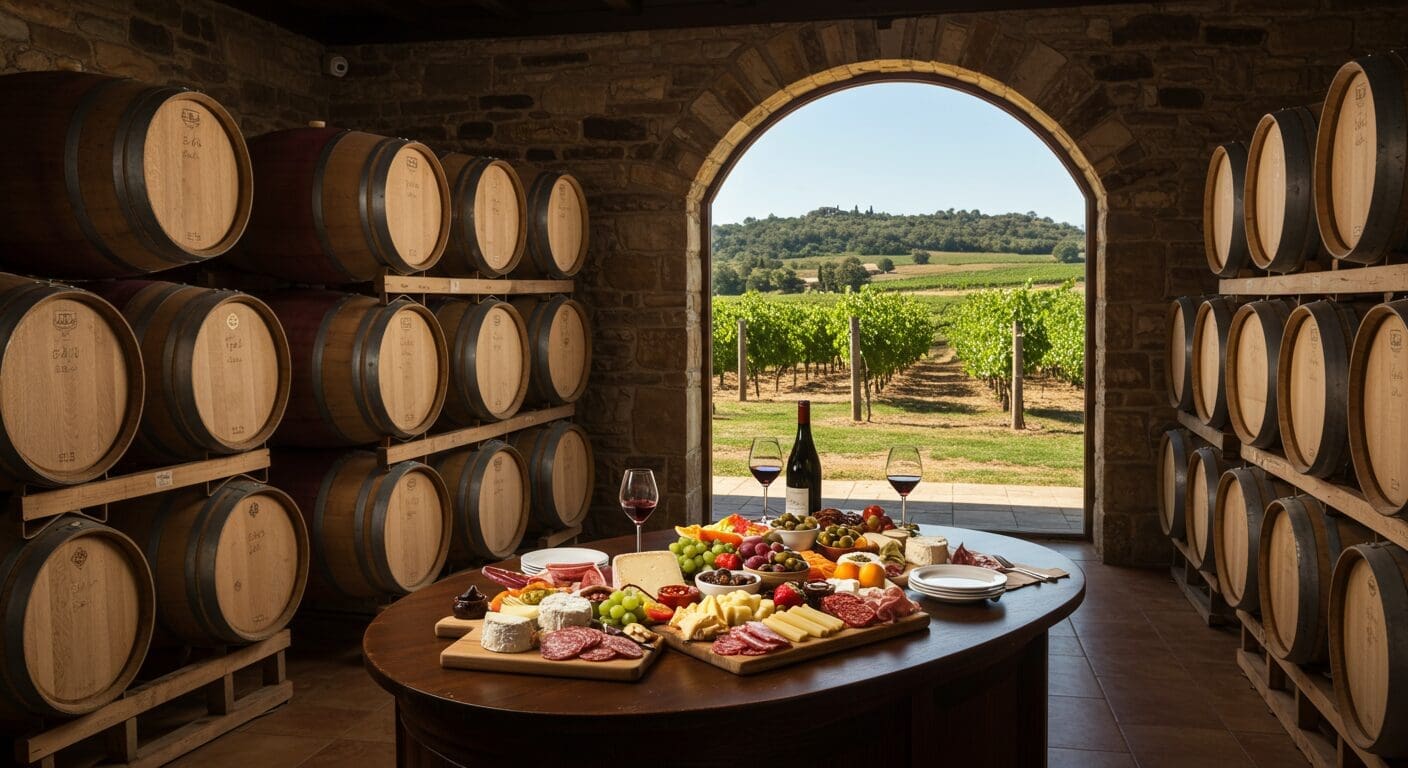
For wine enthusiasts, a private tour of two or three small producers in the Troodos wine villages, arranged with a knowledgeable local guide who can handle introductions and translation, turns a pleasant afternoon into something considerably more meaningful. Tasting through the indigenous varieties – Maratheftiko, Xynisteri, Promara – with the people who grew the grapes is an education in Cypriot character as much as in Cypriot wine. The producers generally prefer you to buy something at the end. This is reasonable.
Finally: food photography has become its own industry, and Famagusta’s combination of ancient architecture, morning market light and visually compelling cuisine makes it genuinely one of the better Mediterranean destinations for it. Guided food photography experiences – half-day sessions with a local photographer who also knows where to eat – are available and satisfying for a specific type of traveller. You know who you are.
Plan Your Table Around Your Villa
The food and wine life of Famagusta is at its best when you have the space to engage with it properly – a private kitchen for the produce you bring back from the market, a terrace for the evening meze, a pool for the interval between the cheese course and the dessert wine. For travellers who want to eat and drink through eastern Cyprus with genuine freedom, staying in a private villa changes the entire logic of the holiday.
Explore our collection of luxury villas in Famagusta – properties with the kitchen facilities, outdoor dining spaces and location to make the very most of everything this remarkable culinary destination has to offer.
What are the must-try dishes in Famagusta?
Famagusta’s most essential dishes include the full Cypriot meze – a multi-course spread of dips, grilled halloumi, marinated olives, and small plates – alongside kleftiko (slow-cooked lamb sealed in a clay oven), stifado (braised meat stew with shallots and warm spice), and fresh grilled seafood from the eastern Mediterranean coast. Locally made halloumi, eaten warm from the grill, is a different product entirely from its exported counterpart and should be treated as a priority. Finish with loukoumades (honey-soaked doughnuts) or yoghurt with carob syrup and walnuts for a genuinely Cypriot conclusion to any meal.
What wines should I look for in Cyprus and Famagusta?
The indigenous varieties are the ones worth seeking out. Maratheftiko is the most characterful red – structured, earthy, with dark fruit and real depth. Xynisteri is the primary white grape, producing fresh, aromatic wines that pair beautifully with local seafood. Commandaria, the ancient Cypriot dessert wine made from sun-dried grapes, is one of the world’s oldest named wines and a genuinely extraordinary product when sourced from traditional producers. The main wine-growing areas are in the Troodos foothills to the west, and a day trip to visit small family estates there is one of the most rewarding food and wine experiences available to visitors in this part of Cyprus.
Are there cooking classes or market tours available in Famagusta?
Yes – and the most rewarding tend to be the more intimate, home-based experiences rather than formal cooking schools. Look for classes that teach the fundamentals of Cypriot cuisine – halloumi making, meze preparation, working with local herbs – in a domestic kitchen setting. Market-to-table experiences that begin at the morning market and end at a meal prepared from what you have bought are particularly well suited to the Famagusta area. Private villa concierge services can often arrange bespoke culinary experiences, including private chef dinners featuring local dishes and wines, which are among the best food experiences available in the region.