Istria County Food & Wine Guide: Local Cuisine, Markets & Wine Estates
Istria County Food & Wine Guide: Local Cuisine, Markets & Wine Estates
The ritual happens every autumn, in the hill towns of the Istrian interior, and it goes like this: a truffle hunter – usually a man of few words and considerable suspicion – sets out before dawn with a dog that has been trained to do the one thing no amount of money can adequately replicate. The dog finds the truffle. The man digs it out. It is weighed, sniffed, occasionally argued over, and eventually sold for a sum that would make your eyes water. By evening, that same truffle – white, pungent, roughly the size of a small fist – will have been shaved over fresh pasta in a farmhouse kitchen somewhere near Motovun, eaten by people who will remember the meal for years. This is Istria. It does not announce itself. It simply delivers.
Istria County is, without much contest, one of Europe’s finest food and wine destinations – and one of its most underestimated. Wedged between Italy, Slovenia and the Adriatic, it has absorbed centuries of Venetian, Habsburg and Slavic influence and distilled them into something entirely its own: a cuisine that is simultaneously rustic and refined, grounded in landscape, season and a quiet, unhurried confidence in the quality of local ingredients. For the luxury traveller with a serious interest in eating and drinking well, few places on the continent offer a more rewarding itinerary.
This guide covers everything worth knowing: what to eat, where to drink, which wine estates deserve a morning of your time, where the markets are, and why the olive oil here deserves more reverence than it typically receives from first-time visitors.
The Essence of Istrian Cuisine
Istrian cooking is what happens when the Italian instinct for simplicity meets a Central European tolerance for richness, all filtered through a landscape of limestone hills, coastal fishing villages and dense oak forests. The result is food that is deeply satisfying without being ostentatious – which, depending on your perspective, is either the highest compliment you can pay a regional cuisine or a neat summary of why Istria still flies under the radar while Tuscany strains under the weight of its own reputation.
The foundational ingredient, the one that appears with almost devotional frequency, is the truffle. Both white and black truffles are found here, but it is the white truffle – tartuf in the local dialect – that commands genuine awe. Shaved raw over hand-rolled pasta, stirred into scrambled eggs, or simply served alongside a glass of Malvazija, it is allowed to be what it is without interference. The best Istrian kitchens understand that truffle cookery is mostly about restraint.
Beyond truffles, the cuisine pivots on seasonal vegetables, locally caught fish and seafood, aged sheep’s and goat’s cheeses, cured meats – particularly the prosciutto of Drniš and the air-dried Istrian pršut, which is leaner and more savoury than its Italian cousin – and an array of wild herbs that grow along the karst. Fuži, the hand-rolled pasta tubes, are practically a regional symbol. Maneštra, a thick vegetable and bean stew, is the kind of dish that reminds you winter was once genuinely difficult. Roasted lamb and peka – meat or seafood slow-cooked under a cast iron bell buried in embers – appear at nearly every serious local table and warrant every bit of their reputation.
Truffles: The Experience Beyond the Menu
If you eat truffles in a restaurant and think that is the complete experience, you are missing the point. The real encounter happens in the forests around Motovun, Buzet and Grožnjan, where truffle hunters offer guided expeditions that take you from the fog-covered oak woodland at dawn to a farmhouse table by mid-morning. You will watch the dog work – methodically, purposefully, with a quiet focus that puts most humans to shame – and you will come away understanding why Istrian truffles have their own food fair, their own mythology and, in some years, their own headlines.
The Motovun truffle season runs from September through January for white truffles, with the October-November window considered peak. Black truffles are found year-round. Organised hunts are easily arranged through local estates and luxury concierge services, and the best experiences conclude with a truffle-focused tasting lunch prepared from the morning’s finds. It is, as food experiences go, genuinely one of the most memorable you will have anywhere in Europe – and not merely because you paid for it.
Istrian Wine: The Producers and the Grapes Worth Knowing
Istrian wine has been improving at a pace that has quietly alarmed a number of Italian wine critics, which is either a delicious irony or simply evidence of what good terroir and serious winemaking ambition can produce when nobody is looking. The peninsula’s red soil – terra rossa – and white limestone contribute to wines of considerable character, and the region’s winemakers have, over the past two decades, invested heavily in both quality and identity.
The grape you must understand first is Malvazija Istarska – Istrian Malvasia – a white variety that produces wines ranging from light and citrus-driven to rich, skin-contact expressions that have made Istria a reference point in the natural and orange wine world. At its best, Malvazija has a dry, almost saline quality with notes of almonds, dried herbs and stone fruit. It is the perfect companion to fish, seafood and the lighter truffle dishes, and it is entirely its own thing – comparisons to Italian Malvasia are largely unhelpful.
The red variety to seek out is Teran, a deep, tannic, high-acid wine made from the Refošk grape on the region’s distinctive red soils. It can be challenging in less careful hands, but in the right vintage and from the right producer it is a wine of genuine power and originality – the kind that makes you sit back and reassess your assumptions about Croatian wine entirely. Alongside these two flag-bearers, Muškat Momjanski, a local sweet Muscat, merits attention as one of the more charming aperitif wines on the Adriatic.
As for producers: the Istrian wine scene features both established estates that have been building reputations since the 1990s and a newer generation of small-scale growers committed to low-intervention winemaking. Visiting estates directly – through arranged tours and tastings – is far more rewarding than working your way through a wine list, and most serious estates in the Poreč, Pula, Buzet and Buje areas welcome visitors by appointment. Look for producers working with native varieties and older vine material, where the wines carry the most distinctive expression of the Istrian terroir.
Wine Estates and Tasting Visits
Visiting a wine estate in Istria is a different experience from the standard tasting-room circuit familiar from Bordeaux or Napa. The scale is human. The winemaker is often also the person who picks the grapes, drives the tractor, and pours your glass. There is a directness to these encounters – a lack of performance – that serious wine travellers tend to find enormously refreshing after years of being ushered through immaculate hospitality spaces by brand ambassadors.
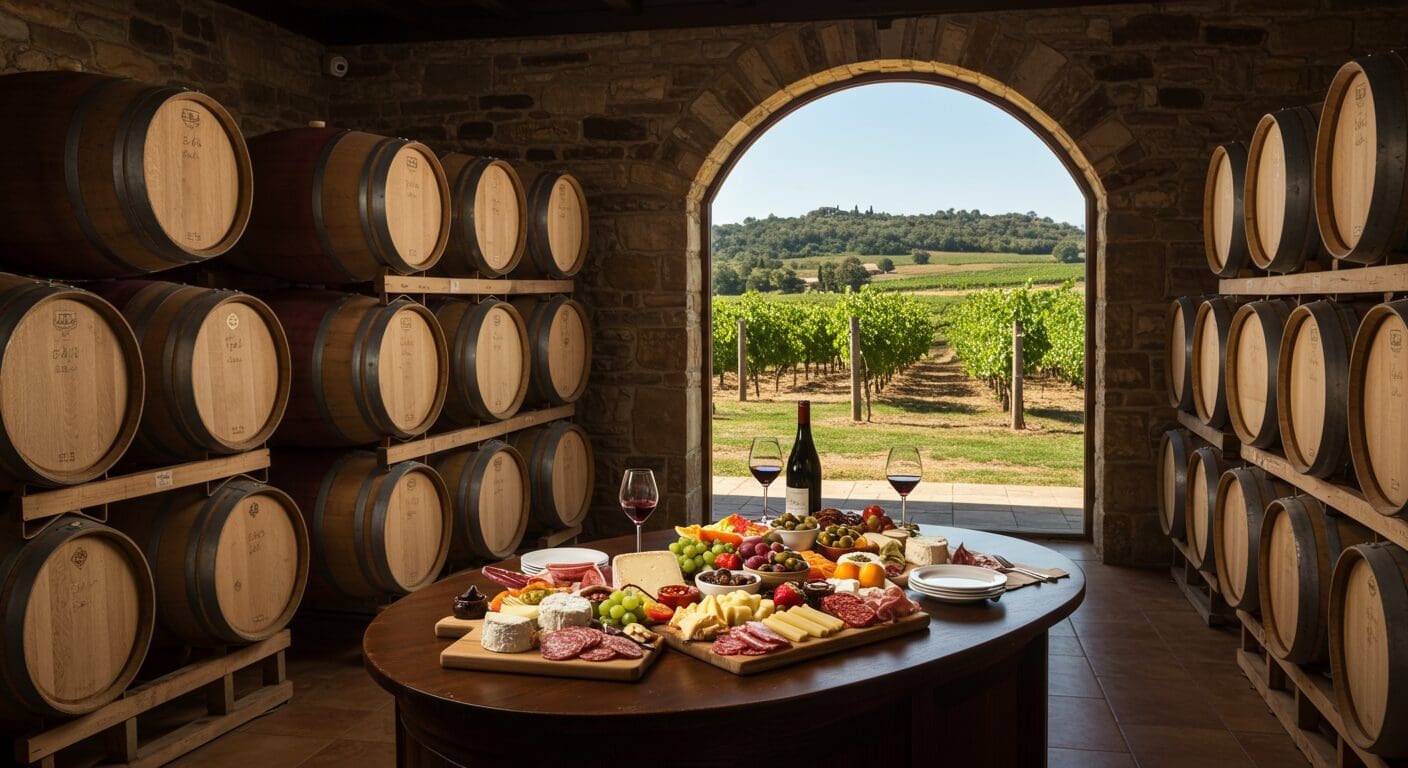
The areas around Buje in the northwest, sometimes called the Tuscany of Istria by people who have clearly spent more time in Buje than Tuscany, are particularly rich in small estates working with Malvazija and Teran. The Mirna River valley, near Motovun, combines wine production with olive groves and truffle territory, making it possible to structure an entire day’s itinerary around a single valley. Estate visits in this region typically include cellars and vineyards, seated tastings with local charcuterie and cheese, and often a meal if arranged in advance. The hospitality is genuine rather than choreographed, which makes all the difference.
For guests staying in luxury villas across Istria County, private wine tours – organised through villa management or specialist local operators – offer access to producers who do not advertise and cellars that do not appear in guidebooks. This is where the real wine education happens.
Olive Oil: The Other Liquid Gold
Istrian olive oil has won enough international awards to fill a respectable trophy cabinet, and it remains one of the region’s most underappreciated exports largely because the quantities produced are small, the producers are not interested in mass distribution, and the best bottles rarely leave the peninsula. For the visitor, this is excellent news.
The dominant variety is Buža, a local cultivar that produces oils with a distinctive green, grassy intensity and a pronounced peppery finish – sometimes almost aggressive in its youth, then mellowing into something complex and deeply aromatic over time. Alongside Buža, you will encounter Rosulja and Črnica, both producing softer, fruitier profiles. Many estate oils are blends, carefully composed to balance intensity with elegance.
The olive harvest runs from October to December, and the best mills offer pressing days open to visitors – these are worth building an itinerary around if your visit coincides. The smell of freshly pressed olive oil in a working mill is one of those sensory experiences that sounds unremarkable in writing and is, in practice, extraordinary. Producers in the Vodnjan area, south of Pula, and around Buzet and Motovun are particularly well regarded. Buy generously, declare it honestly at customs, and use it within twelve months of pressing.
Food Markets and Local Producers
The morning market is still a functioning institution in Istrian towns, which is either a sign of a healthy food culture or simply evidence that locals have not yet been persuaded that supermarkets are adequate substitutes. Either way, the traveller benefits.
In Pula, the covered market in the heart of the old city is one of the most atmospheric in the region – a 19th-century iron-and-stone structure that operates daily and spills out into the surrounding streets on busier mornings. Here you will find seasonal vegetables from local smallholders, fresh fish brought in from the overnight boats, local honeys, dried herbs, hand-pressed olive oils in repurposed bottles with handwritten labels, and the occasional elderly woman selling things from her garden that exist outside any formal commercial category. It is the kind of market that reminds you what markets are actually for.
Rovinj’s market, smaller and more tourist-adjacent, is still worth an early morning visit before the cruise passengers arrive. Buzet, the so-called City of Truffles, hosts a truffle fair each September that draws visitors from across Europe and which manages, remarkably, to remain genuinely local in character. The Grožnjan area is worth visiting for its artisanal producers and the particular combination of medieval village atmosphere and high-quality local food shopping that the town handles with considerable grace.
Cooking Classes and Culinary Experiences
Learning to make fuži by hand, in a farmhouse kitchen, with a woman who has been doing it since before you were born and has absolutely no patience for incompetence – this is the kind of cooking class that stays with you. Istria has a number of serious culinary experiences on offer, from structured half-day pasta and truffle workshops to multi-day immersive programmes that move between kitchen, market, vineyard and mill.
The most rewarding experiences tend to be intimate – small groups, private arrangements, a strong sense of personal instruction rather than group tourism. Villa concierges across Istria County can typically arrange private cooking sessions with local chefs or home cooks, either at the villa itself or at a local farmhouse. The latter is preferable, if only because cooking in someone else’s kitchen – surrounded by their dried herbs, their particular arrangement of copper pots, their dog sleeping in the corner – produces a completely different quality of engagement than a demonstration kitchen built for the purpose.
For guests interested in a more structured culinary education, several agritourism estates in the central Istrian hills offer full-day programmes combining foraging, cooking and eating. These are best booked directly through the estates or via a specialist local operator who can personalise the experience to dietary requirements and interest level.
The Best Food Experiences Money Can Buy in Istria
Let us be direct. If you are travelling to Istria County with a serious appetite and a considered budget, there is a hierarchy of experiences worth prioritising, and it is not quite the same hierarchy that appears in most travel articles.
The private truffle hunt followed by a farmhouse truffle lunch is, by most accounts, the single most memorable food experience the peninsula offers. Not because truffles are automatically impressive – they are not, in the wrong context – but because the combination of landscape, ritual, produce and table creates something genuinely irreducible. Book it before anything else.
A private wine tour through the Buje or Motovun areas, arranged for a small group with access to producers not on the public circuit, comes a close second. The conversations you have in a cellar with a winemaker who pours you their library wines and explains, with forensic enthusiasm, the difference between their 2018 and 2019 Malvazija – this is the kind of thing that recalibrates your understanding of a region entirely.
A meal at one of Istria’s serious destination restaurants – the kind that have attracted international attention without becoming international in character – should anchor at least one evening. The food here draws on all of the above: truffles, Teran reductions, Adriatic fish, house-pressed olive oil, local cheese boards of genuine complexity. Book well in advance. Arrive hungry. Leave slowly.
And finally: the simple pleasure of buying good ingredients at a morning market and cooking them in your villa kitchen. Istrian produce is exceptional enough that the cook barely needs to intervene. A bottle of local Malvazija, chilled. A piece of grilled fish. Oil you bought directly from the producer two days ago. This, too, is a luxury food experience. It simply requires no reservation.
For more on planning your time across the peninsula, including where to stay, what to see and how to move between the coast and the interior, visit our Istria County Travel Guide.
If you are ready to base your food and wine itinerary in a property that matches the quality of what surrounds it, explore our collection of luxury villas in Istria County – from hilltop estates in the truffle country of the interior to coastal retreats within reach of the morning markets and Adriatic fish boats. The peninsula rewards those who stay long enough to understand it. We suggest you give yourself the time.
When is the best time to visit Istria County for food and wine experiences?
The autumn months – September through November – are the most rewarding for serious food and wine travellers. The white truffle season is at its peak from October onwards, the grape harvest takes place in September and early October, and the olive pressing begins in late October. Markets are full of seasonal produce and the weather remains warm enough to sit outside comfortably. Spring is also excellent for those interested in foraging, wild asparagus and the lighter expressions of Istrian cuisine, with fewer visitors and lower villa rates than the peak summer period.
What are the must-try dishes in Istrian cuisine?
Start with fuži – hand-rolled pasta tubes typically served with truffle shavings or a slow-cooked meat ragù. Maneštra, the thick bean and vegetable stew, is a benchmark dish for understanding the region’s peasant cooking roots. Peka – meat or seafood cooked under a heavy iron bell covered in embers – is essential, as is pršut, the local air-dried cured ham, served simply with local sheep’s cheese and olive oil. In coastal areas, grilled or salt-baked Adriatic fish is the obvious priority: the simplicity is the point. And wherever you are, a dish involving fresh local truffles during the season will tell you more about Istrian cuisine than any amount of background reading.
Which Istrian wines should I look for, and how are they best paired with local food?
Malvazija Istarska is the white wine to prioritise – it is the most expressive and distinctive of the local varieties, ranging from crisp and citrus-driven to richer, amber-coloured skin-contact versions. It pairs beautifully with seafood, light truffle preparations and local charcuterie. Teran, the signature red, is a deep, tannic, high-acid wine made from the Refošk grape on Istria’s red soils – pair it with lamb, peka dishes, aged cheeses and the richer truffle pastas. Muškat Momjanski, a delicate sweet Muscat from the village of Momjan, works well as an aperitif or alongside lighter desserts. All three are best discovered by visiting producers directly, where context and conversation add considerably to the experience.