Ko Samui District Travel Guide: Best Restaurants, Culture & Luxury Villas
There are islands that promise paradise and deliver a car park with cocktails. Ko Samui is not one of them. What it manages, with a degree of quiet confidence that other tropical destinations spend decades trying to fake, is the rare combination of genuine natural beauty and genuine infrastructure – the kind of place where you can have a Michelin-recognised dinner one evening, a dawn muay thai session the next morning, and spend the afternoon in a private infinity pool watching thunderheads build over the Gulf of Thailand. Bali has the mysticism. Phuket has the scale. The Maldives has the isolation. Ko Samui has all of the above, at human scale, with better food than any of them, and a personality that rewards those who take the time to look past the beach clubs.
That personality makes it, somewhat unusually for a tropical island, a genuinely versatile destination. Couples marking a significant anniversary or honeymoon find exactly the kind of romance that doesn’t require performance – private villas, candlelit tables over the ocean, nothing to do but exist. Families who want space, privacy and a pool their children will actually use without sharing it with forty strangers are extraordinarily well catered for here. Groups of friends in their thirties and forties who have graduated from hostels and now want a villa with a chef and a sound system but also, if possible, some extraordinary snorkelling – welcome. Remote workers seeking reliable connectivity and a view that makes their colleagues look slightly envious on video calls will find both. And wellness-focused travellers chasing something more than a hot stone massage will discover that Ko Samui has built an entire ecosystem of serious wellbeing around them, from Ayurvedic programmes to sunrise yoga on private beaches to menus designed around healing rather than just eating nicely.
Getting to Ko Samui: Easier Than You’d Expect, Better Than You Deserve
Ko Samui International Airport is one of those places that immediately signals you’ve made a good decision. It’s an open-air airport with thatched roofs and tropical planting, and arriving there from a grey northern winter feels faintly theatrical – the island seems to understand the value of a good entrance. Bangkok Airways operates the hub here, running frequent daily flights from Bangkok’s Suvarnabhumi Airport (roughly an hour) and Chiang Mai. International travellers typically connect through Bangkok, though there are also direct or one-stop connections from Singapore, Kuala Lumpur and Hong Kong for those coming from within the region.
The alternative arrival is by ferry from Surat Thani on the mainland – a longer but rather beautiful approach that rewards the patient traveller, particularly at golden hour when the limestone karsts and fishing boats arrange themselves into something approaching a postcard. Most luxury villa guests, however, opt for a private airport transfer, which is both sensible and significantly more comfortable than it sounds: a chilled towel, an air-conditioned vehicle, and twenty minutes later you’re through the gates of your villa.
Getting around the island itself is best done by hiring a car or scooter (the roads are manageable, if spirited), booking a private driver through your villa concierge – genuinely the most relaxed option for those who’d rather not navigate Ring Road at dusk – or using songthaews, the shared red pickup trucks that serve as Ko Samui’s informal bus network and are as efficient as they are endearingly unpredictable. Grab, the Southeast Asian ride-hailing app, works reliably here and is the obvious choice for solo outings.
Where to Eat: From Treetop Dining to the Catch of the Day
Fine Dining
Ko Samui’s fine dining scene has moved well beyond the tropical resort formula of “nice setting, average food.” What exists here now is genuinely exciting – ambitious, ingredient-led cooking that happens to take place with extraordinary views.
Tree Tops Signature Dining at the Anantara Lawana Resort in Chaweng is the kind of place that sounds gimmicky until you arrive and realise it is, in fact, spectacular. Eight private salas are built into the canopy of a 120-year-old tree – preserved, not butchered, during the restaurant’s construction, which tells you something about the operation’s values – with views over the Gulf of Thailand. The menu runs to eight courses; options like “Embers of Earth & Ocean” or the healing vegetarian menu “Roots of Earth & Bloom” represent the kind of European-Asian cooking that uses locally sourced ingredients with proper seriousness. TripAdvisor’s Best of the Best and Thailand Tatler’s Best Restaurants lists both agree this is worth the booking. They are correct.
Dining on the Rocks at Six Senses Samui in Bophut takes a different approach to spectacular: terraced decks over the Gulf, 270-degree views across the water to neighbouring islands, and the kind of cooking that the Six Senses brand has built its global reputation on. Whether you’re seated in the open air or in the covered neighbourhoods (their word, and it works), the experience of watching the sun dissolve into the Gulf while dinner arrives in careful courses is not something you’ll quickly forget.
Where the Locals Eat
Kapi Sator in Chaweng holds a Michelin Bib Gourmand distinction in the 2025 MICHELIN Guide Thailand, which is the award that means the food is exceptional and the price won’t require a conversation with your bank manager. This is the place to understand Southern Thai cuisine properly – not the adapted, slightly timid version served to tourists, but the real thing. Squid in sweet coconut milk with lemongrass. A daily fish menu that changes according to what came off the boats that morning. Deep-fried whole pomfret under a fierce Southern Thai curry. Surat Thani oysters, Tapi River prawns, day-boat scallops. Everything local, everything sustainably sourced. This is what Southern Thai food actually tastes like. Remarkable.
Fisherman’s Village in Bophut operates every Friday night as a walking street market – stalls, street food, local vendors, the kind of organised chaos that’s actually quite organised – and is the best single introduction to the island’s casual food culture. The smells alone are worth the trip.
Hidden Gems Worth Seeking Out
Chez François in Fisherman’s Village, Bophut, operates on terms that would be eccentric anywhere else and feel somehow perfect here. There is one option: a four-course meal designed that evening by Chef François Porté-Garcia, a Frenchman who appears to have followed his instincts somewhere significantly warmer and more delicious than France. Guests who prefer to know what they’re ordering before they arrive might find the format initially alarming. Those guests are invariably won over.
2 Fishes, also in the Bophut area, is the kind of place that takes a moment to understand. Italian cuisine, beachfront setting, five minutes from Fisherman’s Village – on paper it sounds like an accident. In practice, Chef Leandro has built something that locals return to with the loyalty usually reserved for family restaurants: handmade pasta, local seafood, imported ingredients used with discrimination rather than ostentation. It is, as the regulars will tell you unprompted, one of the best things on the island.
The Island’s Neighbourhoods: Where to Base Yourself and Why It Matters
Ko Samui is not a small island – it’s roughly 25 kilometres across at its widest point – and its different areas have distinct characters that make choosing your base worth some thought rather than just picking the name you recognise.
Chaweng is the island’s main hub: longest beach, most restaurants, liveliest nightlife, highest density of everything. For those who want to be at the centre of things and don’t mind some noise after dark, it delivers. The beach itself is genuinely impressive – a long sweep of white sand that, at the northern and southern ends, maintains something approaching serenity.
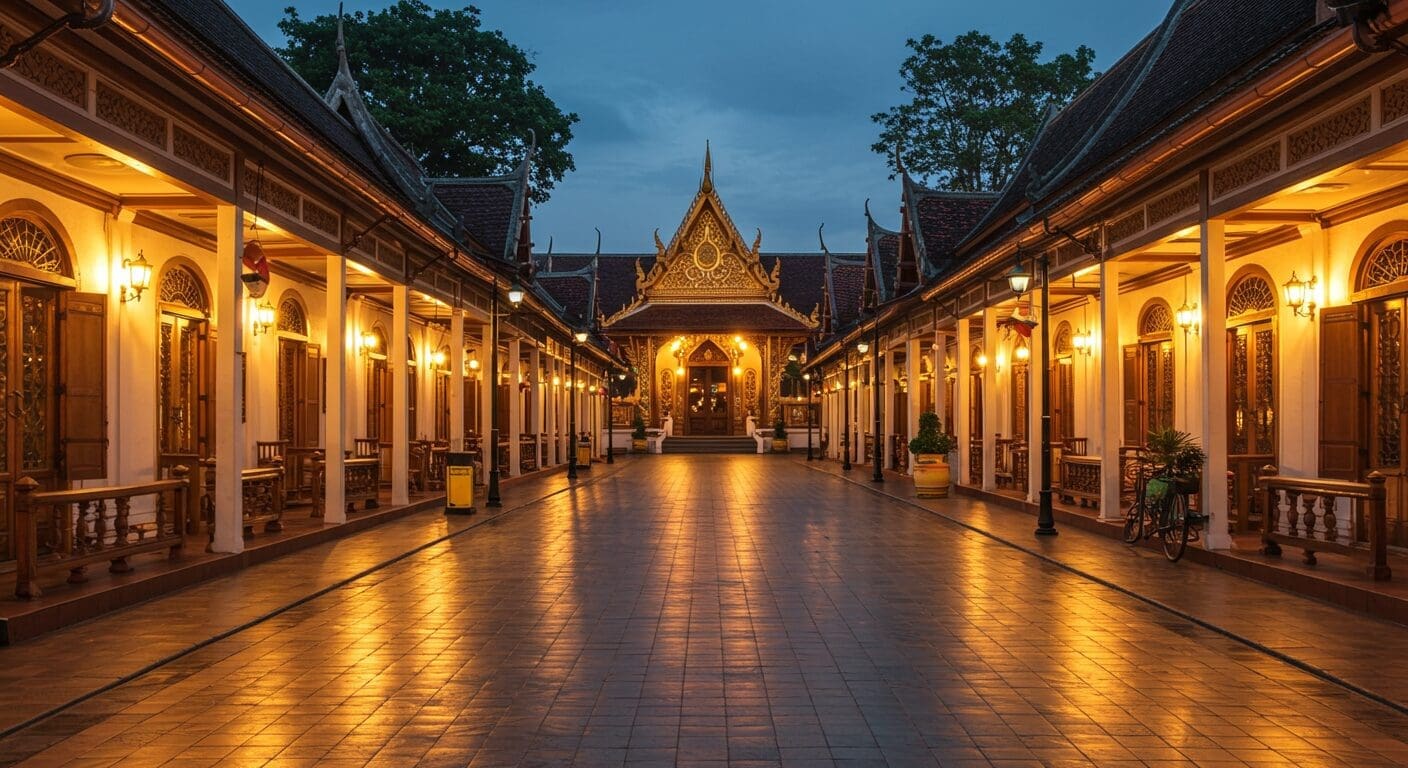
Bophut and Fisherman’s Village, on the north coast, represent a quieter, more characterful Ko Samui. The village retains its wooden Chinese shophouses and a pace of life that feels closer to the island’s actual history. This is where expats who have been here long enough to know better tend to eat, and the dining options – 2 Fishes, Chez François, the weekly walking market – reflect the neighbourhood’s confidence.
Maenam, further west along the north coast, is the choice for those who actively don’t want to be found. Long beach, minimal development, excellent snorkelling. Families and couples who came to Ko Samui to experience Ko Samui rather than a resort version of it tend to gravitate here.
The south and southwest – Taling Ngam, Na Muang – reward the curious with views across to Ko Phangan and Ko Tao, some of the island’s most interesting temples, and a version of the island that the majority of visitors never see. The interior is largely undeveloped forest punctuated by waterfalls – Na Muang Falls being the most accessible and rewarding – and the drive through the central highlands between coasts is worth doing for the views alone.
Big Buddha Beach (Bang Rak) sits on the northeast and is named after the landmark it contains – a 12-metre golden seated Buddha on a small island connected to the mainland by a causeway – which draws everyone at least once. It’s one of those things that photographs poorly relative to the actual experience.
Things to Do in Ko Samui: The Full Range
There is an entire category of Ko Samui holiday that involves doing almost nothing, and this guide wishes to affirm that this is entirely valid and frankly underrated. However, for those who require activity alongside their luxury, the island provides.
The Ang Thong National Marine Park – an archipelago of 42 islands about an hour by speedboat from the north coast – is one of those places that makes the effort immediately worthwhile. Kayaking through emerald lagoons, hiking to viewpoints over the Gulf, snorkelling waters that haven’t been loved to death by overtourism: it is extraordinary. Full-day trips leave regularly; private charters, arranged through any villa concierge worth their position, are significantly more enjoyable.
Muay thai is available everywhere and ranges from tourist-facing kickboxing classes with a diploma at the end to serious training camps where the coaches are former champions and the sessions are genuinely demanding. Those who arrive thinking it’s a gentle morning activity are quickly corrected.
Temple-hopping requires a full day and a driver. Wat Plai Laem, with its enormous multi-armed Guanyin statue and resident catfish, is the most immediately spectacular. Wat Khunaram contains the mummified monk Luang Pho Daeng, displayed in a glass case in a manner that manages to be both sobering and oddly moving. Respect the dress code at all of them – shoulders and knees covered – not because anyone will turn you away, but because it’s the courteous thing to do.
Cooking classes, elephant sanctuaries (the ethical ones, of which there are several – please verify before booking), paddleboard yoga, Thai massage training, island-hopping to Ko Tao and Ko Phangan by private speedboat: the menu of options is substantial and continues to grow as the island’s tourism infrastructure matures.
In and Under the Water: Ko Samui’s Adventure Life
The Gulf of Thailand has a slightly different character from the Andaman Sea on Thailand’s western coast – warmer, calmer for much of the year, with visibility that rewards divers who make the small effort to get out to the better sites. Ko Samui itself is not the diving epicentre – that distinction belongs to Ko Tao, about 45 minutes north by speedboat – but the proximity makes it entirely practical to make the crossing for a day or more of serious diving.
Ko Tao’s dive sites include Chumphon Pinnacle, Sail Rock (shared with Ko Phangan and home to whale sharks on a good day), and the Japanese Gardens, which are among the most reliably beautiful shallow dives in Southeast Asia. PADI courses at all levels are available and widely respected. The island’s dive schools have been operating for decades and know these waters with the kind of intimacy that only comes from a great deal of time underwater.
Back on Ko Samui itself, snorkelling off the northern and southern headlands rewards the early riser – before the boats start and the visibility holds. Kayaking along the coastline, particularly around the quieter western and southern shores, reveals the island at its most unmediated.
Kitesurfing conditions vary by season – the northeast monsoon between November and February generates wind on the northern coast that kitesurfers treat as a gift, while the calmer months suit paddleboarding and sailing. Several operators on the north coast run sailing day trips around the island and out to the marine park, which are among the better ways to understand Ko Samui’s geography and general magnificence.
Road cycling and mountain biking have grown significantly as organized activities – the interior trails are properly technical in places, and the views from the ridge routes over both coastlines simultaneously justify the effort. For those who prefer the scenic without the suffering, a car or driver achieves much the same result.
Ko Samui with Children: Space, Privacy and Pools That Actually Deliver
Ko Samui is exceptionally good for families, and the private villa model is a significant part of why. The hotel version of a beach holiday with children is, however luxurious the property, ultimately a public experience – other people’s children in your pool, mealtimes governed by restaurant hours, the constant low-level management of shared space. A villa removes all of this.
Private pools here are genuinely private: children can spend the entire day between pool and beach without parental vigilance about strangers, which is both safer and significantly more relaxing for everyone involved. Villa kitchens and in-house chefs mean that the 6pm hunger emergency – known to every parent who has ever tried to time a restaurant booking around a tired five-year-old – simply ceases to exist. Villa staff ratios, which typically far exceed anything a hotel provides, mean that the logistics of a family holiday become almost invisible.
The island itself delivers for families beyond the pool. The Samui Aquarium and Tiger Zoo, the elephant sanctuaries (again, ethical ones, vetted carefully), water parks, kayaking on calm bays, snorkelling in shallow, warm, clear water: children who need activity are well served. The beach at Chaweng Lake area, and the generally calm waters of the north coast at Maenam and Bophut, are suitable for younger swimmers. Jellyfish are occasionally present during seasonal changes – ask locally about current conditions, which any villa concierge will know.
The practicalities of travelling to Ko Samui with children are also less daunting than some long-haul destinations. The flight time from most European hubs to Bangkok, connecting to Ko Samui, is long but manageable; the island has excellent medical facilities by Southeast Asian standards; and the general attitude of Thai culture towards children – warmly accommodating rather than merely tolerant – makes the on-the-ground experience considerably easier than it might be elsewhere.
History, Culture and the Ko Samui That Predates the Beach Clubs
Ko Samui was a coconut farming island for most of its recorded history. This sounds prosaic until you understand that the coconut industry sustained entire generations here and still exports something in the region of two million coconuts a month. The island’s interior retains traces of this agricultural past in its plantations and small farms; the coconut monkey shows (trained monkeys harvesting coconuts for tourist observation) are a cultural artifact of contested ethics that the more thoughtful visitor will probably skip.
The island’s Chinese heritage, particularly evident in Bophut’s Fisherman’s Village and the older communities of Nathon on the west coast, reflects centuries of trade and settlement from southern China. The wooden shophouses, the festivals, the particular character of the older neighbourhoods – these are not manufactured heritage but the genuine article.
Theravada Buddhism shapes daily life in ways that are easy to miss if you’re not paying attention: the morning alms-giving, the spirit houses outside every business and home (small shrines that predate Buddhism here and reflect older animist traditions), the temple festivals that run through the calendar year. Makha Bucha, Visakha Bucha and the annual Samui Festival in October are the most significant cultural moments in the calendar – the latter involving temple fairs, traditional performances and a degree of organized chaos that is genuinely joyful.
The full moon parties on neighbouring Ko Phangan have become so famous they’ve generated their own ecosystem of half moon parties, black moon parties and sunrise parties, all within easy reach by speedboat. These are, to deploy some diplomatic language, perhaps not for everyone. The cultural experience of watching twenty thousand people from different countries dance on a beach is, however, authentically Ko Samui in the sense that it couldn’t happen anywhere else.
Shopping on Ko Samui: Where to Spend and What to Bring Home
Ko Samui is not a shopping destination in the way that Bangkok – three hours away by air and a genuinely different proposition – is a shopping destination. What it offers instead is more selective and often more interesting.
The Nathon market on the west coast is the island’s working market: fresh produce, local goods, none of the theatrical tourist-friendliness of the Friday night walking market in Bophut. Both are worth visiting for different reasons. The CENTRAL Festival shopping mall in Chaweng provides the full spectrum of international brands alongside Thai chains, which is useful for practical purchases and not particularly interesting otherwise.
For quality souvenirs and design, the boutiques scattered through Fisherman’s Village and along Chaweng’s side streets reward exploration: handcrafted textiles, locally produced coconut products (the oil, the sugar, the beautifully packaged soaps), silverwork, ceramics, and the kind of beach-appropriate clothing that is both beautiful and appropriate for the climate. Thai silk from the mainland is also available through several quality vendors and is a perennial worthwhile acquisition.
The Samui weekend market (held on Saturdays in Nathon) draws local traders with produce, street food and handicrafts in a format that feels less curated than the Friday walking street but more alive for it. Bargaining is expected at market stalls and not expected at shops with price tags. The distinction is worth understanding before you offend someone by accident.
Practical Matters: The Useful Information That Doesn’t Have to Be Boring
The currency is the Thai Baht. ATMs are widely available; many restaurants and shops in tourist areas accept credit cards, though a small surcharge is common. Cash remains useful for markets, street food and smaller local businesses, where card readers are the exception rather than the rule.
The language is Thai, though English is spoken widely enough in tourist areas that the linguistically uninventive traveller will not struggle significantly. Making the effort with basic Thai pleasantries – sawadee krap or ka for hello, khob khun for thank you – is rewarded with a warmth that goes beyond politeness. Thai people notice the effort even when the pronunciation is unfortunate.
Tipping is not mandatory but is genuinely appreciated: 20-50 baht for small services, 10% at restaurants where service charge is not included (check the bill), and a discretionary amount for villa staff at the end of a stay, typically distributed by the villa manager if you provide a lump sum.
The best time to visit Ko Samui depends on which coast you’re staying on and which month you’re willing to tolerate risk. The dry season on the west and north coasts runs roughly from December to August, with February through May offering the most reliably clear conditions. November and December see the northeast monsoon, which brings significant rain and choppy seas to the east coast in particular. The island stays warm year-round – temperature is rarely a concern – but monsoon rain is serious when it arrives, not the photogenic light drizzle of European summers.
Safety: Ko Samui is generally very safe by any measure. The standard precautions apply – secure your valuables, use a helmet on a scooter (non-negotiable: the roads are faster than they look), respect the sea conditions indicated by beach flags, and apply sunscreen with more discipline than you think is necessary. The sun here does not share Europe’s diffident relationship with melanin.
Dress code at temples is shoulders and knees covered; modest dress more generally is appreciated away from beach areas. The Thai cultural concept of ‘face’ – the importance of dignity, composure and not creating scenes – means that losing your temper or being loudly demanding in public will achieve the opposite of the intended result. Calmness is effective. Calmness is also, in a place this beautiful, relatively easy to maintain.
Why a Private Villa Is the Only Way to Do This Properly
Ko Samui has excellent hotels – the Six Senses, the Four Seasons on the south coast, the Anantara properties – and anyone who tells you otherwise is being contrarian for the sport of it. But the private villa experience here offers something that even the best hotel cannot replicate, and it goes beyond the obvious.
Privacy, first. The ability to step from your bedroom into a private pool at seven in the morning without encountering another soul, to have breakfast served at exactly the time you want it, to make as much or as little noise as the evening requires – these are not trivial luxuries. They are what make a holiday feel like your holiday rather than a managed experience at a resort.
Space is the second consideration. Ko Samui’s villa market has matured to the point where multi-bedroom properties with serious design credentials – infinity pools that appear to pour into the Gulf of Thailand, outdoor living spaces the size of most hotel lobbies, bedrooms with the kind of sea views that would normally cost significantly more to access – are genuinely available to independent travellers. For families, the space means that children and adults inhabit different parts of the same property with everyone happier for it. For groups of friends, it means communal meals and private retreats are possible simultaneously.
Many of the island’s best villas come with in-villa chefs who will source ingredients from local markets – those Surat Thani oysters, that day-boat fish – and cook to your specific brief. Villa managers and concierge teams, available through Excellence Luxury Villas and its local network, handle everything from restaurant reservations at Tree Tops to private speedboat charters to the Ang Thong Marine Park. The operational overhead of a holiday simply disappears.
For remote workers, Ko Samui has developed the infrastructure to match its appeal: high-speed internet is standard in quality villas, Starlink connections are increasingly available in more remote properties, and a workspace with a Gulf of Thailand view is, empirically, more motivating than a corporate hot desk. For wellness-focused guests, private pools, outdoor yoga platforms, villa gym equipment and direct access to the island’s network of spa practitioners and wellness instructors make the villa the treatment centre.
Ko Samui rewards the traveller who arrives with good instincts and no rigid agenda. The island has been hosting visitors long enough to know what they want before they do. A private villa, staffed and designed to match the quality of the landscape, is simply the most coherent way to inhabit it. Explore luxury villa holidays in Ko Samui District and find the property that makes the Gulf of Thailand yours for a week or two.
More Ko Samui District Travel Guides
- Best Restaurants in Ko Samui District: Fine Dining, Local Gems & Where to Eat
- Ko Samui District Food & Wine Guide: Local Cuisine, Markets & Wine Estates
- Ko Samui District with Kids: The Ultimate Family Holiday Guide
- Best Time to Visit Ko Samui District: Month by Month Weather, Crowds & Tips
- Ko Samui District Luxury Itinerary: The Perfect 7-Day Guide
- Romantic Ko Samui District: The Ultimate Couples & Honeymoon Guide
What is the best time to visit Ko Samui District?
The most reliable window for Ko Samui is February through August, when the west and north coasts enjoy dry, clear conditions and the Gulf is calm enough for snorkelling, sailing and island-hopping. December and January are popular despite the tail end of the northeast monsoon – the weather is often fine, but occasional rain and rougher seas on the east coast are possible. October and November see the heaviest rainfall, particularly on the east side of the island; travellers visiting then should base themselves on the west or north coast and accept that some days will involve reading on the terrace. Which, at a Ko Samui villa, is not entirely a hardship.
How do I get to Ko Samui District?
Ko Samui has its own international airport – Ko Samui International (USM) – with frequent connections to Bangkok’s Suvarnabhumi Airport via Bangkok Airways (approximately one hour), and regional connections from Singapore, Kuala Lumpur, Hong Kong and Chiang Mai. Most travellers from Europe, North America and Australia connect through Bangkok, making the journey a two-flight itinerary. Alternatively, the ferry from Surat Thani on the mainland is a slower but scenic approach. Private airport transfers to your villa are available and strongly recommended over public transport for those arriving with luggage or after a long-haul flight.
Is Ko Samui District good for families?
Genuinely excellent. The combination of calm warm waters (particularly on the north coast), child-friendly activities – snorkelling, kayaking, elephant sanctuaries, cooking classes, water parks – and the private villa model makes Ko Samui one of the more practically comfortable long-haul family destinations available. A private villa with its own pool removes the shared-space friction of resort hotels entirely; in-villa chefs handle the timing logistics of feeding children; and villa staff ratios mean that families are supported rather than managed. Thai culture is warmly accommodating towards children, which makes the day-to-day experience noticeably easier than in some European destinations.
Why rent a luxury villa in Ko Samui District?
The private villa provides what no hotel can: genuine privacy, space that scales to your group, a pool that belongs entirely to you, and staff ratios that make the operational side of a holiday invisible. In Ko Samui specifically, the villa market offers properties with design credentials and views – infinity pools above the Gulf of Thailand, outdoor living spaces facing open water, bedrooms where the sea is the first thing you see in the morning – that hotels in the same price bracket cannot replicate. Add an in-villa chef sourcing ingredients from local markets, a concierge handling restaurant bookings and speedboat charters, and the result is a version of Ko Samui that is both more personal and more comfortable than any resort alternative.
Are there private villas in Ko Samui District suitable for large groups or multi-generational families?
Yes, and the range is substantial. Ko Samui’s villa market includes properties sleeping four up to twenty or more guests, with configurations designed for multi-generational use: separate bedroom wings, children’s rooms adjacent to parent suites, multiple living areas so different generations can coexist without negotiation, and private pools large enough to accommodate a crowd. Many larger villas include dedicated staff quarters, multiple kitchen and dining configurations, and entertainment spaces – home cinemas, games rooms, outdoor dining pavilions – that make them function as self-contained retreats. Concierge services available through Excellence Luxury Villas can manage the full logistics of a large-group stay.
Can I find a luxury villa in Ko Samui District with good internet for remote working?
High-speed fibre internet is standard in the island’s quality villa properties, and Starlink connections are increasingly available in more remote or elevated locations where standard infrastructure is less reliable. Ko Samui is well-developed enough that connectivity is not the gamble it might be on more isolated island destinations. Most luxury villas either have a dedicated workspace or can configure one; the combination of reliable connectivity and the kind of outlook that makes four hours of focused work feel entirely manageable is one of the island’s less-advertised advantages for the growing number of location-independent professionals who have worked out that paradise and productivity are not mutually exclusive.
What makes Ko Samui District a good destination for a wellness retreat?
Ko Samui has developed one of the most complete wellness ecosystems in Southeast Asia, anchored by properties like Six Senses Samui – which runs serious Ayurvedic and detox programmes alongside its spa – and supplemented by an island-wide network of yoga studios, meditation centres, Traditional Thai massage practitioners of genuine skill, and nutritionally focused restaurants. The climate makes outdoor movement possible year-round: sunrise yoga on a private beach, open-water swimming, cycling through the interior, muay thai training. Private villas add the infrastructure layer: pools for hydrotherapy and early-morning swims, outdoor spaces for yoga and meditation, and in-villa chefs who will cook to a wellness brief with locally sourced, seasonal ingredients. The pace of Ko Samui – unhurried in the way that warm tropical islands tend to enforce – does the rest.