Best Restaurants in Koh Samui: Fine Dining, Local Gems & Where to Eat
Here is something the guidebooks consistently overlook: some of the most extraordinary meals in Koh Samui happen not at the famous beach clubs or the resort restaurants with the architectural drama, but in small, unmarked buildings in Bophut where the chef is also the person taking your reservation, cooking your food, and occasionally joining you for a glass of wine at the end of the evening. Koh Samui has quietly – and without much fuss – developed one of the most interesting dining scenes in Southeast Asia. It still has the coconut shakes and the pad thai on plastic chairs. It also has Michelin recognition, eight-course tasting menus suspended in a forest canopy, and an Italian chef with three decades of London and Sydney behind him making handmade pasta in a village on the north coast. The range, frankly, is extraordinary. Where you eat here says a great deal about how well you’ve done your research.
The Fine Dining Scene: Where Koh Samui Gets Serious
Luxury travellers arriving in Koh Samui expecting the fine dining scene to be a thin consolation prize compared to Bangkok will want to revise that assumption fairly quickly. The island has developed a genuine upper tier of restaurants – intimate, considered, and in some cases architecturally breathtaking – that would hold their own in any major city.
The most theatrical of them all is Tree Tops Sky Dining & Bar at Anantara Lawana Resort in Chaweng. Recognised by TripAdvisor’s Best of the Best and Thailand Tatler’s Best Restaurants, this is one of those places that sounds like a gimmick until you actually arrive. Eight private salas sit within a treetop canopy, connected by wooden walkways roped off above the garden below. The effect is part treehouse, part private club, entirely romantic. Each table is its own world – no sense of other diners, no ambient restaurant noise, just the canopy above and an eight-course menu delivered to your elevated eyrie. Highlights include scallops smoked over charcoal with kaffir lime (the smoke and citrus together doing something quite clever), and braised chicken breast with pistachio crumble and honey-roasted beets. This is the kind of dinner you plan a trip around. Book well in advance. Seriously.
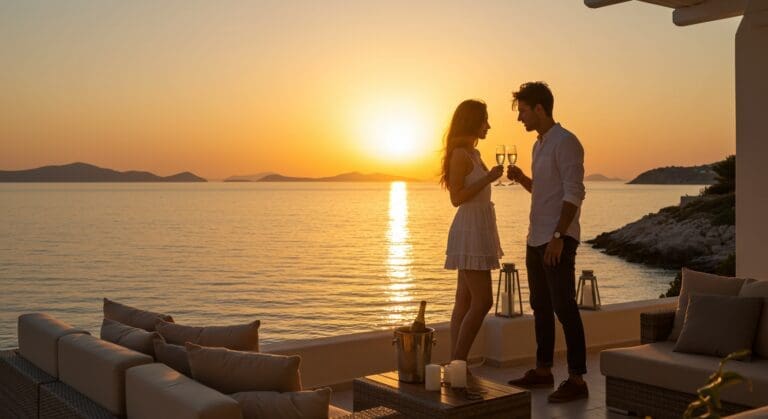
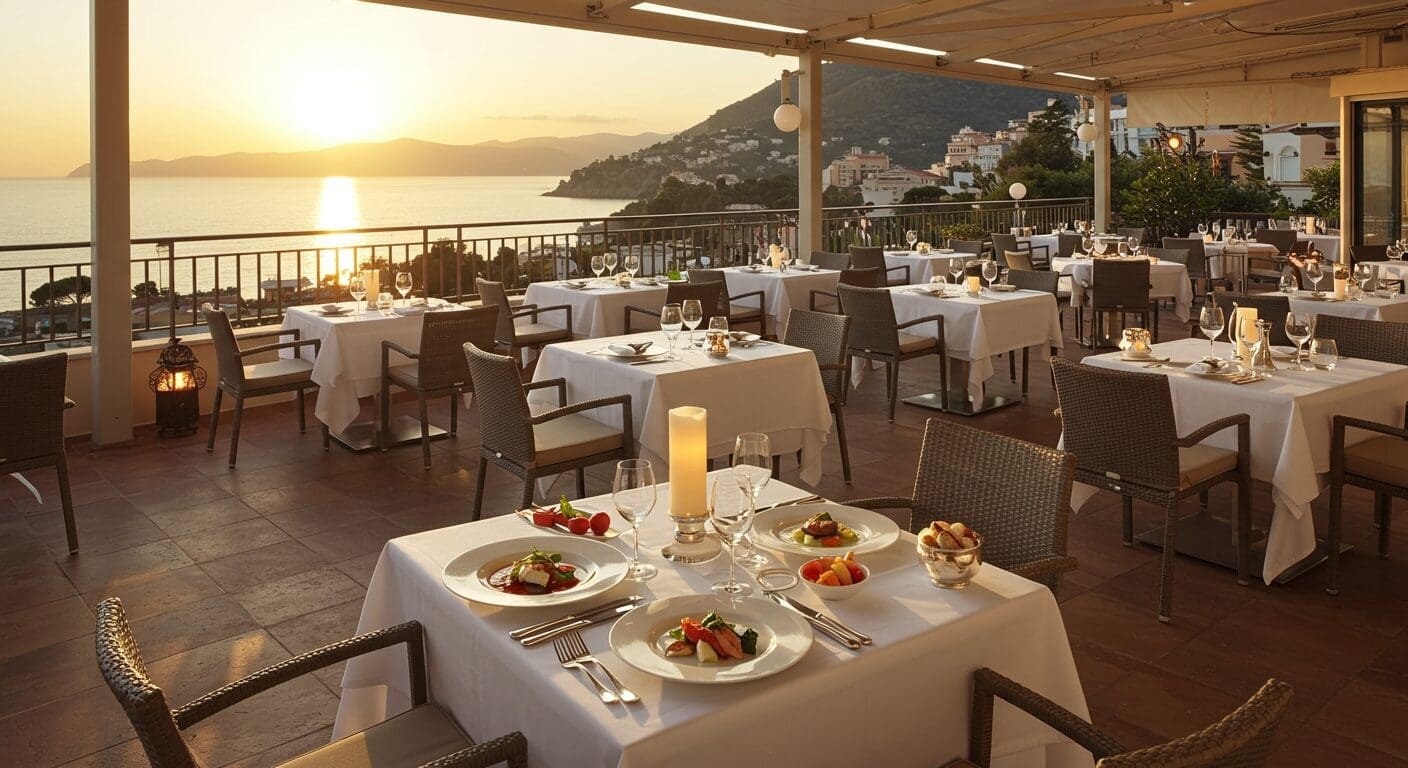
At the north tip of the island, Dining on the Rocks at Six Senses Samui occupies a series of terraced decks – both open-air and covered – that face 270 degrees of ocean and surrounding island silhouettes. The name is literal: the restaurant sits on an outcrop of rock above the Gulf of Thailand. The menu here is sophisticated and seasonal, and the kitchen takes its sourcing seriously, which fits neatly with Six Senses’ broader philosophy. But even if you arrived and ate nothing, the view at dusk – the light going gold, the islands going dark – would be worth the journey. Order the seafood. Watch the horizon. You have nowhere to be.
Kapi Sator: The Michelin Recognition That Changed the Conversation
If Tree Tops is the most theatrical dining experience on the island, Kapi Sator is arguably the most important. This Bophut restaurant holds a Michelin Bib Gourmand distinction – a recognition that signals exceptional cooking at accessible prices, and in Koh Samui’s context, represents the island’s most significant culinary credential. The focus is southern Thai cuisine, which is a different beast entirely from the central Thai cooking most visitors know from home.
Southern Thai food is fiercer, more sour, more aggressively spiced. It uses kapi – fermented shrimp paste – as a foundation flavour that underpins dishes with real depth and funk. Sator beans, the namesake of the restaurant, appear throughout: those flat, slightly bitter legumes that southerners are devoted to and that nobody else has quite figured out yet. The curries here are darker and more complex than their northern counterparts. The seafood is bought locally. The cooking is technically accomplished but culturally grounded – which is a harder thing to pull off than it sounds. If you eat at one restaurant in Koh Samui that expands your understanding of Thai cuisine beyond what you thought you knew, this is the one.
Chez François and 2 Fishes: The Hidden Gems of Bophut
Bophut’s Fisherman’s Village – all narrow lanes and wooden shophouses along the waterfront – punches well above its weight in dining terms. Two restaurants in particular represent exactly the kind of discovery that luxury travellers with genuinely good taste tend to remember long after the resort breakfasts have blurred together.
Chez François, on the edge of the village, looks from the outside like someone’s house. That is because it essentially is someone’s house – chef-owner François Porté-Garcia has turned his home into what many consider the finest restaurant in Bophut and one of the best on the island. There is no menu to browse. There is no list of choices to debate. There is one thing: a four-course meal, prepared by François, different each time, built around what is good and what he feels like cooking. It is an act of considerable confidence and, it turns out, considerable skill. The experience is more like being invited to dinner by someone who is very good at this than visiting a restaurant in the conventional sense. Reservations are essential and should be made as early as possible.
A short walk away, 2 Fishes is a different proposition – an Italian restaurant led by Chef Leandro Panza, a man with over 25 years of experience across respected Italian restaurants in London, Sydney, Melbourne, and Singapore. This is not fusion, not Italian-Thai, not a compromise. It is accomplished Italian cooking executed with the confidence of someone who has spent three decades doing exactly this. The handmade pasta is the starting point – precise, properly textured, made fresh. The menu builds around local seafood and premium imported ingredients, and the result is the kind of Italian food that makes you wonder why more of it doesn’t exist in this part of the world. The answer, presumably, is that there aren’t enough Leandros to go around.
Beach Clubs and Casual Dining: When You Want Your Feet in the Sand
Not every meal in Koh Samui should require a reservation made three weeks in advance and an outfit with a collar. The island’s beach club scene has matured considerably, and several venues now manage to do something genuinely difficult: serve food that is actually worth eating in a setting that is actually worth sitting in. The two things do not always coincide.
Chaweng Beach’s strip of beach clubs ranges from forgettable to occasionally good. The better approach is to follow the principle of finding somewhere quieter – Lipa Noi on the west coast, or the northern stretches near Bophut – where the sunbeds are less densely packed and the kitchen isn’t cooking for a crowd of five hundred. Look for beach restaurants with fresh seafood boards rather than laminated menus with photographs. If the menu has photographs, adjust your expectations accordingly.
For something more casual with genuine Thai flavour, the coconut-heavy southern curries served in small restaurants along the Mae Nam coast are some of the most satisfying lunches on the island. Order the massaman – here it tends to be richer and more aromatic than anywhere else – and eat it at a plastic table with a view of the water. Nobody is watching. This is allowed.
Food Markets: Where the Island Really Eats
The Fisherman’s Village Walking Street in Bophut operates on Friday evenings and remains one of the island’s most atmospheric food experiences. Stalls line the waterfront selling grilled seafood, Thai sweets, fresh spring rolls, and an assortment of things that are harder to identify but worth trying anyway. The crowd is a genuine mix of locals, expats, and travellers who have done their research, which gives the whole thing an energy that more curated food experiences struggle to replicate.
For something more local and less tourist-adjacent, the morning markets scattered around the island’s interior – particularly around Nathon, the working capital that most visitors drive through without stopping – offer the best opportunity to see what Koh Samui’s residents actually eat. The answer involves a great deal of grilled pork on skewers, rice congee eaten at six in the morning, and small parcels of sticky rice wrapped in banana leaf that cost almost nothing and taste like someone’s grandmother made them. She probably did.
The night market near Chaweng has its regulars and its highlights – look for the stall selling pad kra pao (stir-fried basil with meat and a fried egg) – but it has also become aware of its own popularity in the way that changes a market’s character. Go early, eat quickly, and then go somewhere better for dessert.
What to Order: Dishes Worth Seeking Out
Southern Thai cuisine, being the dominant culinary tradition of Koh Samui, offers several dishes that visitors from elsewhere in Thailand won’t recognise from the tourist menus they’ve previously encountered. Gaeng tai pla – a fermented fish curry that is pungent and deeply savoury – is not for the faint-hearted but is one of the most characterful things you can eat on the island. Khao yam, a rice salad eaten at breakfast, is lighter and more aromatic, built around toasted coconut, dried shrimp, and a sweet-sour dressing. It is more complex than it looks and better than it sounds.
Seafood is, predictably, excellent. The grilled whole fish – sea bass, barramundi, red snapper – served with a sharp, herb-heavy dipping sauce is a reliable choice almost everywhere that has a grill. Crab in yellow curry is worth ordering when you see it. So is tiger prawn tom yum made with fresh galangal and kaffir lime leaves rather than the paste that shortcuts the process. You will be able to tell the difference.
For dessert, the mango and sticky rice season peaks between April and June. Outside of that window, look for thub thim krob – water chestnuts in jasmine-scented coconut milk with shaved ice – which is cooling, delicate, and one of the things about Thai cuisine that remains genuinely underrated in the West.
Wine, Cocktails and Local Drinks
Thailand’s relationship with wine is improving, though import duties ensure that a decent bottle remains a more significant financial commitment than it would be at home. The better resort restaurants – Six Senses, Anantara Lawana, and the more serious independent establishments – maintain wine lists with genuine thought behind them, and the sommelier-led selections at places like Dining on the Rocks are worth engaging with rather than defaulting to house pours.
For those who would rather embrace the local, Singha and Chang remain the default beers and remain perfectly suited to the climate. Leo is slightly lighter and perhaps underappreciated. Local rum-based cocktails, particularly those built around Mekhong whisky mixed with fresh lime and soda, are honest, inexpensive, and appropriate to the setting in a way that a gin and tonic rarely quite is.
Coconut water, drunk straight from the coconut with a straw on any beach, costs very little and is the single most refreshing thing available in 35-degree heat. This is not a bold claim. It is simply a fact.
Reservation Tips and Practical Notes
The better restaurants in Koh Samui fill up quickly during high season, which runs roughly from December through March. Tree Tops Sky Dining at Anantara Lawana operates only eight tables – which means that if you want to eat there on a Saturday in January, you will need to have planned for this significantly in advance. Chez François is similarly limited by its nature as a private dining experience, and Chef François’s four-course meals sell out. Do not arrive hoping that availability has somehow sorted itself out. It has not.
Kapi Sator and 2 Fishes both reward early booking during peak season, though they are more forgiving than the ultra-intimate venues. WhatsApp is widely used for reservations across Koh Samui’s independent restaurant scene – more reliably than email in many cases. If you are staying in a villa or resort with a concierge, put them to work.
Dress codes at fine dining restaurants are smart casual at minimum. This does not mean arriving in flip-flops and hoping for the best. The island is relaxed; the better restaurants are not casual. There is a distinction worth observing.
The Villa Option: Bringing the Restaurant to You
For those who find that the best meal of a trip is sometimes the one that requires no reservation, no transport, and no shoes at all, many luxury villas in Koh Samui come with private chef options that deserve serious consideration. A talented local chef shopping at the morning market and cooking a southern Thai menu around your villa’s pool is, in the right circumstances, as good as anything a restaurant can offer – and considerably more relaxed. It also solves the problem of the return journey after the wine list at Dining on the Rocks has been properly explored.
For a deeper understanding of everything the island offers – beaches, temples, activities, and the full picture beyond where to eat – the Koh Samui Travel Guide covers the island in the detail it deserves.