Koh Samui Food & Wine Guide: Local Cuisine, Markets & Wine Estates
There is a moment, usually around the third day on Koh Samui, when you stop thinking about the food and start thinking about the food. Not in a nervous, is-this-safe way – in the way that proper travellers think about it, with a kind of reverential obsession. The island sits in the Gulf of Thailand with a cuisine that has absorbed centuries of Chinese, Indian, Malay and southern Thai influence, producing something that is simultaneously more complex and more immediate than anything you will find on a restaurant menu back home. The coconut groves are not decorative. The lemongrass is not a garnish. And if you eat your way through this island properly – through its markets, its cooking schools, its private beach dinners, its quietly exceptional wine scene – you will leave knowing something true about a place rather than merely having visited it.
The Character of Southern Thai Cuisine
Koh Samui sits in the south of Thailand, which matters enormously at the table. Southern Thai cuisine is a different beast from the food most people associate with the country – less sweet, considerably more fierce, and shot through with the kind of heat that arrives late and stays long. The coconut palm defines the landscape and the cooking in equal measure. Coconut milk softens and enriches curries that would otherwise be almost confrontationally spiced. Coconut cream thickens sauces. Fresh coconut flesh appears in desserts, salads and snacks with the casual abundance of an island that produces it in extraordinary quantities.
The food here is also shaped by the sea. Koh Samui is surrounded by waters that yield crab, squid, prawns, sea bass, red snapper and shellfish with a freshness that renders the question of whether to order fish entirely redundant. You are on an island. The answer is yes. The other defining influence is the Muslim community in the south of Thailand, whose culinary traditions have drifted northward and shaped the way spice blends are built – heavier on turmeric, coriander and cumin than the central plains, with a richness that speaks of trade routes and centuries of cross-cultural exchange.
Signature Dishes Worth Seeking Out
Any honest Koh Samui food and wine guide must begin with Gaeng Tai Pla – a southern Thai fish kidney curry of such uncompromising intensity that it tends to divide opinion cleanly in two. It is funky, deeply saline, brick-red with dried chillies and entirely unlike anything labelled “Thai curry” in the West. Order it once. Form your own view. You will not forget it either way.
Massaman curry arrives here with more authority than elsewhere – slower-cooked, richer, fragrant with star anise and tamarind in a way that reveals its Persian-influenced origins more clearly. Alongside it, Khao Yam deserves attention: a southern Thai rice salad scattered with toasted coconut, dried shrimp, lemongrass and sour fruits, dressed with a fermented fish sauce that is more interesting than it sounds and considerably better than you expect. Hoi Malaeng Poo – mussels cooked with lemongrass and Thai basil – is the kind of dish that disappears from the plate before you have consciously decided to eat it. And for breakfast, or frankly any time, Khao Tom, a gentle rice porridge cooked with ginger and scattered with crispy garlic, is the island’s quiet masterpiece.
Do not leave without eating fresh crab. Stir-fried with yellow curry paste and egg, it is one of those combinations that seems too simple to be remarkable until it absolutely is.
Koh Samui’s Wine Scene – and Why Thailand Has One
Thailand is not the first country that comes to mind when someone mentions wine. This is understandable and also increasingly a shame. The country sits between the 15th and 20th parallels of latitude – outside the traditional wine-growing belt – but producers in the so-called “New Latitude” wine movement have demonstrated over the past two decades that tropical viticulture is not merely possible but genuinely interesting. Thailand’s wines are different from European ones in ways that reward curiosity rather than comparison.
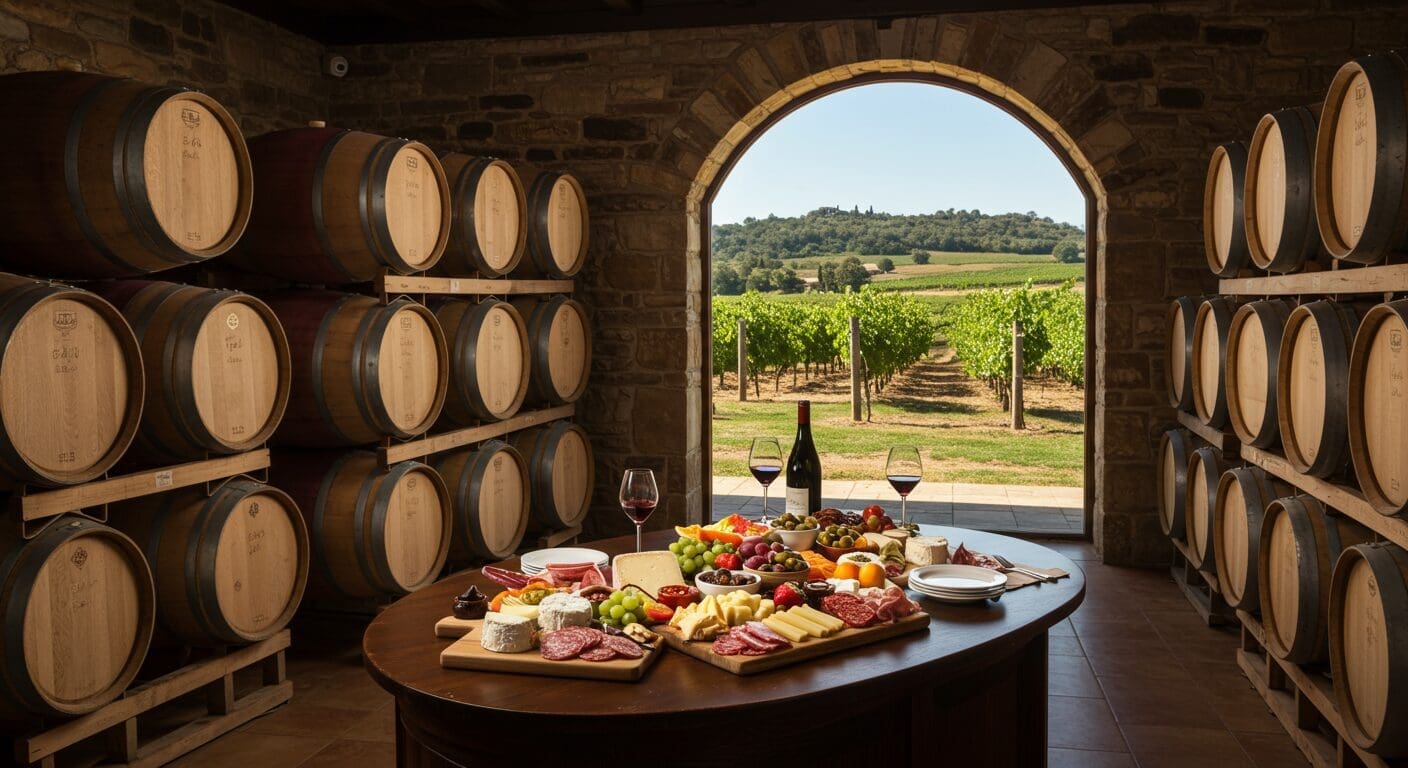
Koh Samui itself does not have vineyards – the island’s climate and terrain favour coconut and rubber over Cabernet – but it sits within reach of Thailand’s established wine regions, and the island’s best restaurants and luxury villas source from producers who have done serious work. GranMonte Estate in the Asoke Valley of Khao Yai is Thailand’s most internationally recognised producer, making Syrah, Viognier and Chenin Blanc that have attracted genuine critical attention. Monsoon Valley, whose vineyards stretch across Hua Hin and the hills of Khao Yai, produces accessible, well-made wines and has done more than almost anyone to establish Thai wine as a category worth taking seriously. Their Colombard and their Muscat are particularly worth tracking down.
For the luxury traveller based in Koh Samui, the discovery is often made at the table rather than the vineyard – but the better hotels and private villa concierges can arrange curated wine dinners and tastings that match these Thai producers with the local cuisine in ways that are genuinely revelatory. Pairing a cold-fermented Chenin Blanc with Hoi Malaeng Poo is the kind of discovery that makes you feel smug at dinner parties for months afterward. (Which, let’s be honest, is part of the point.)
Markets: Where the Real Cooking Begins
The morning markets of Koh Samui are not a tourist attraction. They are a supply chain. And watching that supply chain operate – watching vendors arrive before dawn with baskets of holy basil, bundles of kaffir lime leaves, piles of galangal root and ice-packed fish straight from the night boats – is one of the more grounding experiences the island offers.
The Nathon Market on the west coast is the most authentically local of the main markets, favoured by residents rather than resort guests and proportionally less photogenic and more real. The Fisherman’s Village Walking Street in Bophut operates on Friday evenings and occupies a more comfortable position between experience and commerce – the colonial shophouses fill with street food vendors, and the food is genuinely good rather than merely atmospheric. Grilled satay, freshly made rotis with condensed milk, steamed dumplings, coconut pancakes cooked on ancient cast-iron moulds – the evening market rewards slow walking and a willingness to point at things you cannot identify.
The Lamai Walking Street on Saturday evenings covers similar ground with a slightly younger crowd and an excellent selection of som tam variations – the papaya salad adjusted southward with dried shrimp and fermented crab paste in quantities that remind you exactly where you are geographically.
Cooking Classes Worth Your Time
A good cooking class on Koh Samui begins at a market. Any class that begins in a kitchen has missed the most important lesson. The genuine understanding of Thai cooking – the instinct for balance between salt, sour, sweet and heat – starts with knowing what you are buying and why. Several operators on the island have understood this and built their programmes accordingly.
The best classes follow a market visit with hands-on instruction across four or five dishes, typically including a curry paste made from scratch (the mortar and pestle work is harder than it looks and more satisfying than it sounds), a soup, a stir-fry and a dessert. Small group sizes matter more than any other variable – cooking Thai food with twelve strangers in an industrial kitchen is a different and lesser experience than doing it with three or four people around a single wok station. Luxury villa concierges on Koh Samui can arrange private cooking experiences – sometimes delivered directly to your villa, with a chef who will teach you to make a Massaman curry in your own kitchen before disappearing quietly and leaving you to eat it on your terrace. This is, by some margin, the correct approach.
The Best Food Experiences Money Can Buy
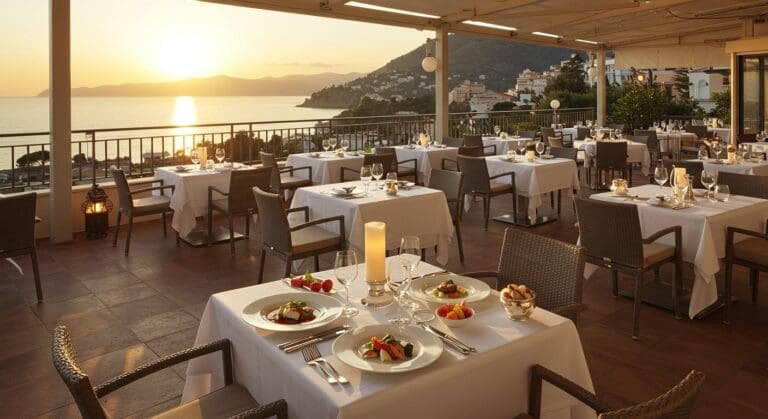
Koh Samui rewards investment at the table. A private beach dinner – arranged through your villa, with a personal chef, a long table on the sand and the Gulf of Thailand doing its best as backdrop – is the kind of experience that earns its cost in memory. The food, when done well, is a progression through the island’s flavours: a cold crab salad to start, Massaman lamb to follow, fresh mango and sticky rice to finish, and enough thoughtful wine selection to make the whole thing cohere.
Several of the island’s high-end restaurants deserve serious attention. The beachfront dining rooms of the major luxury properties often employ chefs who have trained in Bangkok’s best kitchens and returned to cook with ingredients they grew up with – a combination that produces food with both technical precision and genuine soul. Ask your villa concierge which chef has the most interesting current menu rather than which restaurant has the highest profile. The answer changes seasonally and is almost always more useful.
For the truly committed, a day trip to the mainland with a private guide focused exclusively on food – markets, lunch at a local restaurant in Surat Thani, a visit to a coconut sugar producer – offers a perspective on the region’s ingredients and cooking traditions that no island restaurant can fully replicate. It is the difference between reading about a place and briefly living inside it.
Truffle hunting and olive groves, you will not find here. What you will find instead is a toddy palm sugar farm if you seek one out, where the sap is collected before dawn and reduced over wood fires into a caramel-dark, complex sweetener that underpins half the island’s desserts. It is local, it is artisanal, and it does not require a Tuscan hillside to be worth your attention.
Eating Well at Your Villa
One of the genuine pleasures of staying in a private villa on Koh Samui – rather than a hotel, however excellent – is the ability to commission your meals rather than select them from a fixed menu. A villa chef with access to the morning market and a clear brief can produce something that a restaurant, with its overhead, its consistency requirements and its hundred covers a night, simply cannot. Breakfast becomes a ceremony. Lunch becomes an experiment. Dinner becomes the reason you are here.
The practical logistics are worth knowing: most high-quality luxury villas on Koh Samui can arrange daily market runs, private chef services and wine deliveries. Communicate your preferences early – dietary requirements, spice tolerance, favourite flavours – and the better concierge teams will translate these into a week of eating that feels personalised rather than catered. There is a meaningful difference, and it is largely a question of conversation and advance planning. Do both. It is, after all, food – it deserves the preparation.
For everything you need to plan your time on the island beyond the table, our Koh Samui Travel Guide covers the full picture – beaches, culture, logistics and the useful things nobody tells you until you arrive.
Plan Your Koh Samui Food Journey in Style
The food on Koh Samui is not a footnote to a beach holiday. It is, for those who approach it properly, the whole argument for being here. The markets run on a clock set to the fishing boats. The curries carry centuries of trade in every spice. The coconut groves outside your villa window are not scenery – they are the larder. And eating your way through an island from a private villa, at your own pace, with the right introductions and the right chef, is a form of travel that justifies the word properly.
Browse our collection of luxury villas in Koh Samui and find the right base for a food journey that goes considerably beyond the poolside menu.