Las Palmas Travel Guide: Where to Stay, Eat & Explore in Luxury
Most first-time visitors to Las Palmas de Gran Canaria make the same mistake: they treat it like a beach resort. They land, find their sunlounger on Las Canteras, and spend a week congratulating themselves on the weather – which is, admittedly, almost offensively good year-round – while an entire city of consequence hums with life just behind them. Las Palmas is a proper, breathing, complicated capital city of nearly 380,000 people. It has a UNESCO-listed old town, a Michelin-calibre restaurant scene, surf breaks that serious wave riders travel continents to reach, a history tangled up with Columbus and the Age of Exploration, and a cultural energy that owes as much to West Africa and Latin America as it does to mainland Spain. The beach is wonderful. It is also, genuinely, the least interesting thing here.
Which brings us to who actually thrives here. Las Palmas works beautifully for couples on milestone trips – anniversaries, significant birthdays, the kind of holiday that needs to deliver on multiple fronts simultaneously – because it offers fine dining and cultural weight alongside the reliable Atlantic sun. Families seeking privacy, particularly those staying in a private villa rather than a hotel corridor, find that the city’s beaches are safe, calm and genuinely child-friendly without being infantilised. Groups of friends who want more than pool time will find a city that rewards exploration. Remote workers have long understood something the rest of the world is slowly catching up to: Las Palmas has some of the best connectivity in Europe, a digital nomad infrastructure that has been quietly developing for years, and the kind of light that makes a laptop screen almost worth looking at. And wellness-focused guests – those who measure a holiday in sleep quality, morning swims and the ratio of vegetables to alcohol consumed – will find the city’s pace, its open Atlantic air and its outdoor culture quietly recalibrate everything. The luxury holiday Las Palmas offers is, in short, a more layered proposition than most people realise until they’re already on the plane home, making notes for next time.
Getting Here Is Easier Than You Deserve for a Place This Good
Gran Canaria Airport – officially Aeropuerto de Gran Canaria, locally known as Gando – sits about 25 kilometres south of the city centre, which translates to roughly 25 to 35 minutes by taxi or private transfer depending on traffic. It receives direct flights from across Europe year-round, including London, Manchester, Amsterdam, Frankfurt, Paris and most Scandinavian capitals. From the United Kingdom, you’re looking at roughly four hours in the air – long enough to finish a book, short enough not to dread it. Flights are frequent and, by European standards, often surprisingly reasonable even in high season.
For those staying in a luxury villa, pre-arranged private transfers are the obvious choice – your villa concierge can arrange this, and it’s worth doing, because arriving somewhere new in an air-conditioned car with someone who knows where they’re going is a small pleasure that costs relatively little and sets the right tone immediately. Alternatively, taxis from the official rank outside arrivals are metered, reliable and honest. Car hire is available at the airport and genuinely useful if you plan to explore the island’s interior – the roads into the volcanic heartland are excellent and the landscape extraordinary, though the city itself is navigable without one.
Within Las Palmas, the Guagua bus network is good and locals use it unselfconsciously. Taxis are plentiful and inexpensive by northern European standards. If you’re staying in the northern Vegueta and Triana districts, much of what you’ll want to do is walkable. The waterfront promenade along Las Canteras, meanwhile, is one of those rare urban seafronts that genuinely rewards going slowly on foot.
Where to Eat in Las Palmas: From Michelin Ambition to Breakfast by the Sea
Fine Dining
The fine dining conversation in Las Palmas begins, invariably, with Restaurant Bevir. Chef José Luis Espino has built something genuinely unusual here – a contemporary tasting menu experience inspired by the 19th-century Spanish realist writer Benito Pérez Galdós, who was born in Las Palmas and whose literary legacy gives the city a quiet cultural gravitas it wears without making a fuss. Espino’s food is organised with the same attention to detail and refinement as a good novel: every course is a discovery, the ingredients are first-rate, the textures thoughtfully considered. It is the kind of meal you reconstruct over dinner the following night, trying to explain to someone else why it worked. Book well ahead.
Restaurant Tabaiba, helmed by chef Abraham Ortega, operates in a different register but with equal ambition. Ortega describes his approach as “evolving Canary Island cuisine” – not reinventing traditional dishes for the sake of it, but taking exceptional local produce and lifting it to a genuinely gastronomic level. The result is food that feels rooted and surprising at the same time, which is harder to achieve than it sounds and rarer than menus claiming to do it would suggest.
Where the Locals Eat
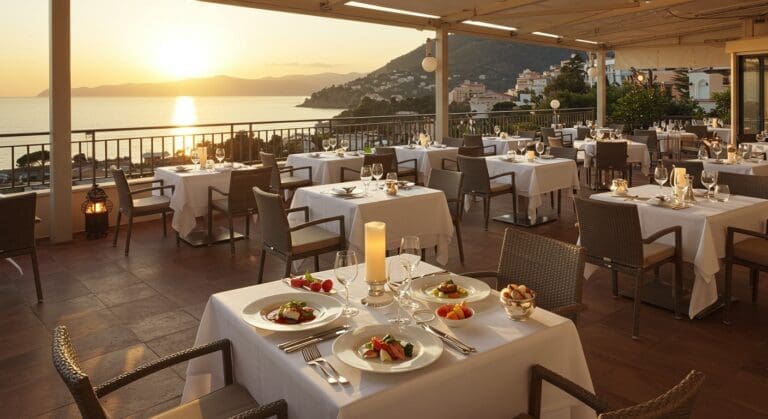
Restaurante La Marinera is the kind of place that appears in no algorithm and requires no justification. It sits on a rocky outcrop with views across the Atlantic that are frankly distracting during the day and quietly beautiful as the evening light drops. The dining room is, by its own admission, slightly dated – but the seafood is fresh, the grilled fish is handled with confidence, and the seafood paella has the kind of authority that only comes from decades of making it the same way for people who would notice if anything changed. Locals eat here. That is recommendation enough.
For something more energetic and less dependent on tides and fishing boats, the Triana and Vegueta neighbourhoods offer a dense concentration of neighbourhood restaurants, wine bars and tapas spots that fill up with exactly the demographic you want to be eating among – people who live here and care about their lunch. The Mercado de Vegueta is the place to start any serious engagement with local produce: stalls selling papas arrugadas, mojo rojo, fresh tuna, local cheeses and the kind of bread that makes you reconsider your entire relationship with carbohydrates.
Hidden Gems Worth Seeking Out
Restaurant Llévame al Huerto is worth singling out for travellers who arrive with wellness intentions but also want their food to be genuinely interesting. Venezuelan chef Jennise Ferrari has been cooking in Las Palmas long enough to understand what the island produces and how to honour it, while bringing South American and Asian influences to the table with a light touch rather than a heavy hand. The menu is short – which is always a good sign – and the atmosphere is friendly without being performative about it.
Restaurant El Santo, tucked into a pedestrian street in the Triana district and occupying the first floor of a traditional old-town house, manages the useful trick of feeling simultaneously historic and contemporary. The green-toned decor mixes exposed stone with plant-patterned wallpaper in a way that shouldn’t work but does. The food leans into local Canarian flavours with Mexican inflections, and dishes arrive unhurried – an approach to pacing that is more radical than it appears in a world where restaurants increasingly treat service as a conveyor belt.
The Landscape Beyond the City: Gran Canaria in Full
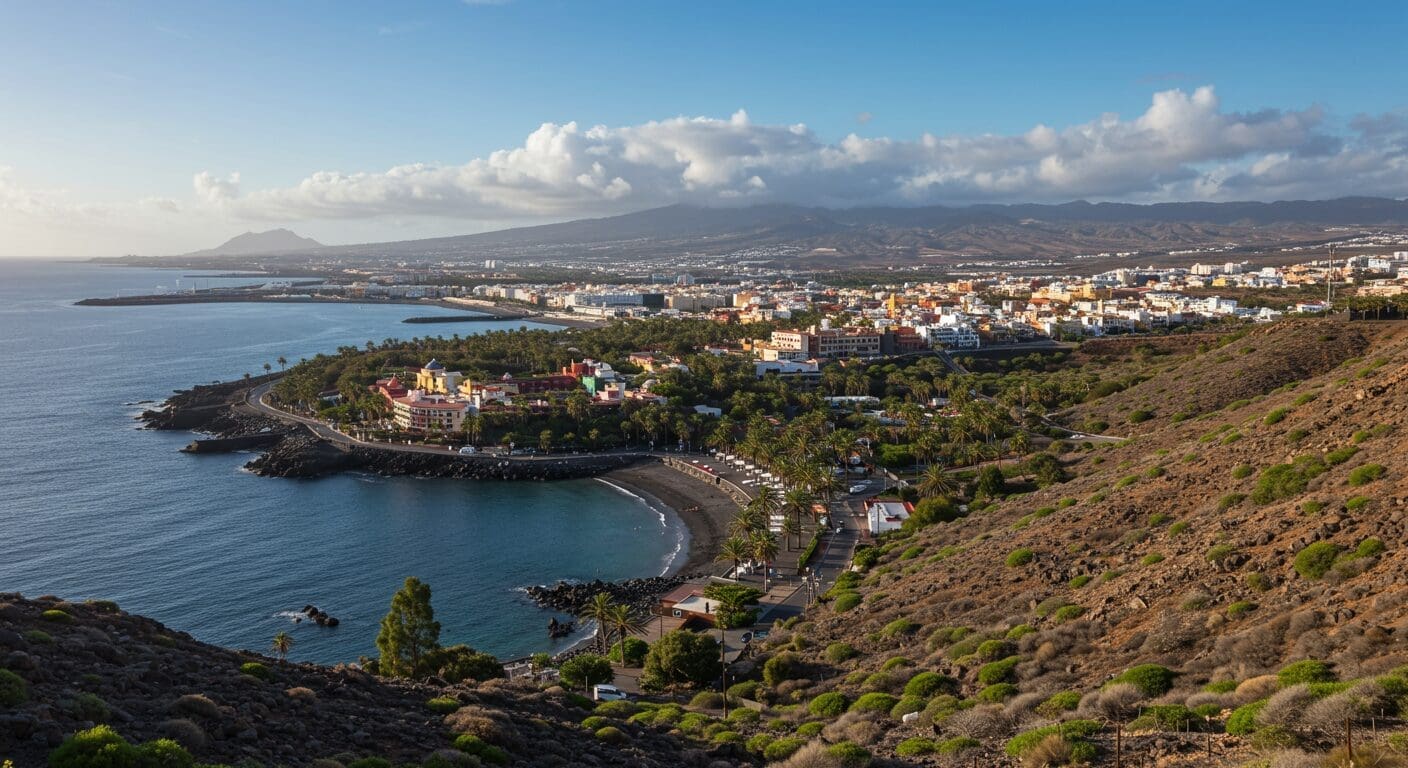
Gran Canaria is frequently, and slightly lazily, described as a “continent in miniature.” It is a cliché that happens to be accurate. The island covers just under 1,600 square kilometres, but within that compact space it contains a coastline of golden Atlantic dunes, a mountainous volcanic interior that rises to over 1,900 metres, ancient pine forests, subtropical ravines called barrancos, and a southern coast that looks entirely different from the northern one. Las Palmas sits at the northern tip, and the contrast between the city and the wild interior twenty minutes inland is the kind of thing that stops you mid-sentence.
The Roque Nublo – a volcanic rock monolith standing 80 metres tall in the central highlands – is the island’s most recognisable landmark and one of the more quietly arresting things you can stand next to in this part of the world. The drive up through the villages of Tejeda and Artenara takes you through a landscape that feels ancient and almost theatrical, particularly in the afternoon light when the cloud shadows move across the barranco walls. The towns themselves are worth stopping in: small, stone-built, producing honey and almonds and a local marzipan called mazapán de Tejeda that you will buy too much of and not regret.
The south of the island – Maspalomas, the dunes, the resort coast – is a different beast entirely and largely exists for a different type of visitor. It’s not without its pleasures, but it operates on a scale and at a volume that makes Las Palmas feel, by comparison, like a city that has retained its self-respect. Day-tripping south is worthwhile; spending your entire holiday there when you could be in Las Palmas is a choice we’ll leave uncommented upon.
Things to Do in Las Palmas: The Long List That Somehow Keeps Growing
The best things to do in Las Palmas tend to reveal themselves gradually, which is part of the city’s particular appeal. Start with Playa de Las Canteras, which stretches for over three kilometres along the city’s western edge. It is genuinely one of the finest urban beaches in Europe – not in a “nice considering it’s in a city” way, but in an objectively good beach way. The natural volcanic reef known as La Barra protects the inner waters, creating conditions that are calm enough for children and confident swimmers while maintaining enough life below the surface for snorkelling to be rewarding. The promenade that runs its length is the city’s living room: families, joggers, elderly men playing chess, surf schools, juice bars, the whole civic theatre of a city that lives outdoors by default.
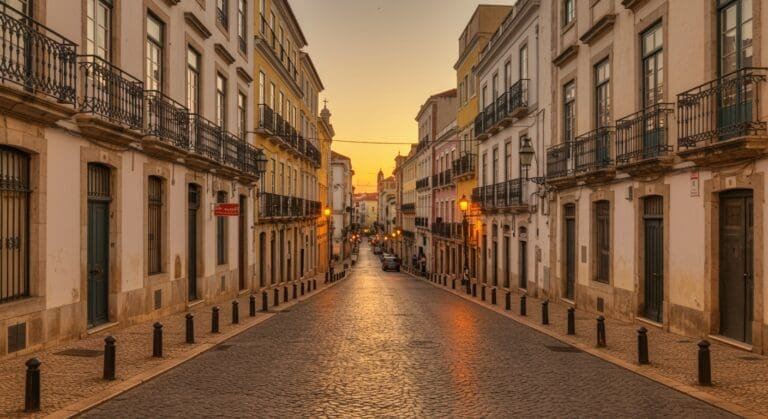
Vegueta, the oldest district of Las Palmas, was declared a UNESCO World Heritage site and earns it without trying too hard. The colonial architecture – built during the period when Las Palmas was a critical stop on the Spanish route to the Americas – is beautifully preserved. The Cathedral of Santa Ana took four centuries to complete, which gives it a certain plurality of architectural styles. The Casa de Colón, where Christopher Columbus reportedly stayed during his first voyage to the Americas in 1492, now functions as a museum with a thoughtful collection relating to the Age of Exploration. Walking through Vegueta on a weekday morning, when the tour groups have yet to materialise, is one of those simple pleasures that costs nothing and leaves a disproportionate impression.
The Auditorio Alfredo Kraus – a striking piece of modernist architecture built into the dunes at the southern end of Las Canteras – is worth seeing both from the outside and, if timing allows, from within during a concert. Named after the Canarian tenor who remains something of a local deity, it hosts classical concerts and cultural events throughout the year. The building itself, with its glass facade looking directly out to sea, has the rare quality of architecture that improves on acquaintance.
In the Water and on the Peaks: Adventure Across the Island
Las Canteras hosts what is regularly cited as the best right-hand surf break in Europe, and the surf culture around it is serious without being unwelcoming. Several well-established surf schools operate along the promenade and cater to complete beginners through to intermediate surfers looking to improve in reliable Atlantic swell. For experienced surfers, the outer reef produces waves that attract international competition. The water is warm by northern European standards – rarely below 19°C even in January – which removes one of surfing’s more persistent obstacles.
Diving and snorkelling around La Barra reef produce encounters with rays, moray eels, sea turtles and an abundance of smaller reef life. The visibility is generally excellent, and several dive operators based near Las Canteras run certified courses and guided dives for all levels. If you prefer to remain on the surface, kayaking and stand-up paddleboarding are both easily arranged along the beach.
The island’s interior offers serious hiking territory. The trails around Roque Nublo and the Caldera de Tejeda are well-marked and reward both casual walkers and those who prefer their leisure activities to involve genuine elevation gain. The GR-131 traverses the island north to south and provides a multi-day route for serious hikers who want to understand the landscape at a pace that allows understanding. Mountain biking has also grown considerably as a pursuit on Gran Canaria, with terrain that ranges from technical to punishing – depending on your relationship with vertical metres.
For those drawn to the wind, the southern coast around Pozo Izquierdo is one of the world’s premier kitesurfing destinations, hosting the PWA World Kiteboarding Championship most years. It is worth a day trip from Las Palmas simply to watch people do something you would never attempt, performed at a level that makes it look effortless.
Las Palmas with Children: Better Than Anyone Told You
Las Palmas has a quietly excellent case to make as a family destination, which it rarely makes loudly enough. The beach at Las Canteras is the starting point: the protected reef creates calm, shallow inner waters that are as safe for young children as any beach in Europe, with lifeguards on duty throughout the main season. The promenade is wide, flat and tolerant of buggies, bikes and the particular chaos that families travelling with small children generate involuntarily.
The city itself is more child-friendly than its size might suggest. The Casa de Colón offers interactive exhibitions that make history accessible without condescending to either children or their accompanying adults. The Parque Doramas, with its mature trees and open space, serves as a useful pressure valve for anyone whose children have reached the theoretical limit of cultural absorption for one afternoon. The Palmitos Park, a botanical and bird park in the south of the island, is a reliable half-day excursion for families with younger children.
The specific advantage of choosing a luxury villa over a hotel for family travel is hard to overstate. Private pool access means children can swim on a schedule that suits the family rather than hotel opening hours. Separate bedrooms mean everyone – parents included, and this matters – actually sleeps. Space for nap times, early dinners, a kitchen for the inevitable fussy eater, outdoor terraces for evening meals after the children are down: these are not marginal improvements to a family holiday, they are fundamental ones. A family staying in a properly equipped luxury villa in Las Palmas is having a qualitatively different experience from the same family in adjacent hotel rooms. Different in ways that compound daily.
Galdós, Columbus and the Weight of History: Culture in Las Palmas
Las Palmas has been consequential for longer than most European cities care to admit. Founded in 1478 by the Spanish Crown as a base for the conquest of the Canary Islands, it rapidly became one of the most strategically important ports in the Atlantic world – a refuelling and provisioning stop for ships heading to the Americas, West Africa and beyond. Columbus stopped here in 1492 on his way to the New World. Charles Darwin stopped here in 1832 on his way to the Galapagos. The city has, historically, been on the way to somewhere important for several centuries running.
This history is worn, on the whole, with more ease than self-congratulation. The Vegueta district is the physical record of the colonial era: the cathedral, the bishop’s palace, the arcaded mansions with their internal courtyards – all built to the scale of civic confidence. The Museum of Las Palmas (Museo Elder de la Ciencia y la Tecnología) provides a different kind of cultural experience, with interactive science and technology exhibitions that draw local families and genuinely hold attention across age groups.
Benito Pérez Galdós – whose literary reputation within Spain is roughly equivalent to Dickens in England – was born in Las Palmas in 1843, and the city takes genuine pride in the connection. His birthplace, now the Casa-Museo Pérez Galdós, is a beautifully preserved colonial house that functions as both biographical archive and cultural centre. The fact that one of the city’s best restaurants has built its entire creative identity around his work tells you something about the depth of that civic pride.
The city’s cultural calendar includes Las Palmas Carnival – one of the largest carnivals in the world and frequently compared in scale to Rio de Janeiro – which runs in February and transforms the city into something that requires seeing to be properly described. If you are planning a holiday during this period, book accommodation significantly in advance and abandon any expectations of early nights.
Shopping in Las Palmas: From Market Stalls to Independent Boutiques
The Triana district is Las Palmas’s traditional shopping neighbourhood – a pedestrianised grid of streets lined with a mix of international brands, local independents, jewellers, bookshops and the kind of shoe shops that suggest a population taking footwear seriously. The architecture here is particularly fine, with modernist facades from the early 20th century and the occasional art deco flourish that rewards looking up from shop windows.
The Mercado de Vegueta remains the best single destination for anyone interested in what the island actually produces. Local cheeses – particularly the smoked and cured varieties from the central highlands – are worth bringing home in quantity. The same applies to mojo rojo and mojo verde, the island’s characteristic sauces, which exist in jarred forms perfectly designed for suitcase travel. Local honey, particularly from the Tejeda valley, is exceptional. The mazapán de Tejeda, mentioned earlier, does not survive the return journey in the quantities initially purchased.
For contemporary design and locally produced crafts, the Centro de Arte La Regenta – housed in a converted 19th-century tobacco factory – hosts rotating exhibitions and a small shop offering work by local artists and designers. The Calle Mayor de Triana and its surrounding streets contain a number of independent boutiques worth an afternoon’s reconnaissance, particularly for those in search of something that cannot be ordered online from home. Several shops specialise in traditional Canarian embroidery and lacework, which is produced in the island’s inland villages and represents a craft tradition of genuine antiquity.
The Practical Business of Being Here: What You Actually Need to Know
The currency is the euro. The language is Spanish, with the Canarian accent – softer, with some distinct vocabulary borrowings from Latin America – that occasionally surprises visitors who learned Castilian Spanish elsewhere. English is widely spoken in the tourist-facing economy, less so in neighbourhood restaurants and markets, where a few words of Spanish are rewarded with immediate warmth. The island sits in the Atlantic time zone (GMT-1), one hour behind mainland Spain, which is either a useful productivity buffer or a persistent mild confusion depending on your relationship with time zones.
The best time to visit Las Palmas is, with only slight exaggeration, any time. The climate is genuinely one of the city’s defining characteristics: temperatures hover between 18°C and 27°C year-round, with the summer months bringing more heat and the winter months occasionally producing a northerly wind called the harmattan that carries Saharan dust and temporarily reduces visibility. The city is busiest – and most expensive – between December and February, when northern Europeans arrive in significant numbers seeking the light that their own latitudes have temporarily suspended. Spring and autumn offer excellent conditions with fewer people. August is warm and busy with Spanish domestic tourism.
Tipping is appreciated but not mandatory in the way it functions in the United States. Rounding up the bill or leaving five to ten percent at restaurants is standard practice. Safety in Las Palmas is broadly comparable to any mid-sized European city: sensible urban awareness applies, particularly around the port area at night, but the city does not present unusual risks for visitors. The tap water is technically drinkable but heavily chlorinated – bottled water is inexpensive and universally available. Public pharmacies (identified by a green cross) are numerous and well-stocked.
A hire car is useful but not essential for guests staying in the city. For island exploration beyond the capital, having wheels opens up the interior considerably – and the road to Roque Nublo, in particular, is the kind of drive that justifies the rental cost on its own terms.
Why a Private Villa Changes Everything About a Luxury Holiday in Las Palmas
There is a particular kind of morning that is only available to villa guests. You wake when you choose. You make coffee in your own kitchen – or someone makes it for you, if you’ve arranged staffed accommodation. You walk out onto a private terrace or pool deck with a view that belongs, for this week at least, entirely to you. No dining room opening times. No sunlounger reservations. No corridor. The arithmetic of luxury villa travel is straightforward: the space, the privacy and the flexibility it provides are simply not available at any price in a hotel.
For those searching for luxury villas in Las Palmas, the options range from architect-designed city properties with rooftop pools in the historic quarter to larger island villas set into the northern hillsides with sweeping Atlantic views, full concierge service and the kind of outdoor living spaces that make the distinction between inside and outside pleasantly theoretical. Families benefit enormously from the ratio of space to people – multiple bedrooms, separate sleeping zones for children, private pools that don’t require timed sessions. Groups of friends find that the communal spaces of a well-designed villa create the kind of easy, self-directed holiday rhythm that hotel lobbies categorically do not.
For remote workers – and Las Palmas has more of them per capita than almost anywhere in Europe – the combination of fibre-optic connectivity (increasingly supplemented by Starlink in premium properties) and a dedicated workspace within a private villa is genuinely transformative. The city’s co-working infrastructure is among the best-developed of any European destination, but working from a villa terrace with Atlantic light and a private pool available for the lunch break is an arrangement that makes the concept of “the office” feel somewhat theoretical.
Wellness-focused guests will find that a villa with a private pool, outdoor yoga space and proximity to Las Canteras for morning swims creates an environment that hotels – however well-equipped their spa facilities – struggle to replicate. The pace of recovery is simply different when you control the environment. No one is doing a conference call in the adjacent sunlounger. No one is playing hotel-lobby jazz at the volume deemed appropriate by the front desk.
Excellence Luxury Villas offers a curated portfolio of private villa rentals in Las Palmas across the full spectrum of property types, sizes and specifications – from intimate couples’ retreats to substantial multi-generational estates with dedicated staff. Each property is individually selected and personally verified, which in practice means the photographs reflect reality and the WiFi is what it claims to be. Both are rarer qualities than they should be.
More Las Palmas Travel Guides
- Best Restaurants in Las Palmas: Fine Dining, Local Gems & Where to Eat
- Las Palmas Food & Wine Guide: Local Cuisine, Markets & Wine Estates
- Las Palmas with Kids: The Ultimate Family Holiday Guide
- Best Time to Visit Las Palmas: Month by Month Weather, Crowds & Tips
- Las Palmas Luxury Itinerary: The Perfect 7-Day Guide
- Romantic Las Palmas: The Ultimate Couples & Honeymoon Guide
What is the best time to visit Las Palmas?
Las Palmas enjoys a remarkably stable climate year-round, with temperatures rarely dropping below 18°C or exceeding 28°C. That said, the city is busiest and most expensive between December and February, when northern Europeans arrive in search of winter sun. For a balance of good weather, manageable crowds and better villa availability, spring (March to May) and autumn (October to November) are the sweet spots. If you want to experience Las Palmas Carnival – one of the largest in the world – plan around February, and book accommodation well in advance.
How do I get to Las Palmas?
Gran Canaria Airport (Aeropuerto de Gran Canaria, code LPA) is located approximately 25 kilometres south of Las Palmas city centre, around 25 to 35 minutes by taxi or private transfer. Direct flights operate year-round from across Europe, including London, Manchester, Amsterdam, Frankfurt, Paris and most Scandinavian capitals. From the UK, flight time is approximately four hours. Private transfers can be pre-arranged through your villa concierge and are the most seamless option for villa guests arriving with luggage and children.
Is Las Palmas good for families?
Genuinely, yes – though not in the manufactured resort way that some family destinations operate. The beach at Las Canteras is one of the safest urban beaches in Europe, with calm protected waters created by the natural volcanic reef and lifeguards on duty throughout the main season. The city has good museums with interactive content for children, accessible cultural attractions in Vegueta, and easy island day trips to attractions like Palmitos Park. Families staying in a private villa with a pool have a significant advantage over hotel accommodation: private pool access, flexible mealtimes, separate sleeping spaces and genuine space for everyone to decompress independently.
Why rent a luxury villa in Las Palmas?
The honest answer is space, privacy and flexibility – in that order. A private villa gives you a pool that belongs to your group alone, a kitchen for when you don’t want to go out, outdoor living spaces that make the most of the climate, and the absence of hotel infrastructure (check-in queues, dining room hours, adjacent strangers) that quietly shapes the texture of a hotel stay in ways you only notice in contrast. For families, groups of friends, and couples who value having a home rather than a room, the villa model simply delivers a different quality of holiday. Staffed villas with concierge service extend this further – providing local expertise, in-villa catering and logistics support without sacrificing privacy.
Are there private villas in Las Palmas suitable for large groups or multi-generational families?
Yes, and the range is substantial. Excellence Luxury Villas offers properties in and around Las Palmas that range from intimate two-bedroom retreats to large multi-bedroom estates with separate wings, multiple living areas, private pools and full staff including housekeeping, concierge and in-villa chef options. For multi-generational families – grandparents, parents and children travelling together – a villa with distinct bedroom clusters and multiple living spaces is transformatively more comfortable than any hotel configuration. Individual parties retain autonomy while sharing communal spaces on their own terms.
Can I find a luxury villa in Las Palmas with good internet for remote working?
Las Palmas has one of the most developed digital nomad infrastructures in Europe, and premium villas in the area increasingly reflect this. Many properties in the Excellence Luxury Villas portfolio offer high-speed fibre-optic broadband, with a growing number of premium properties providing Starlink connectivity for reliably fast speeds regardless of location. If you require specific connectivity specifications – upload speeds, dedicated workspace, multiple devices – these requirements can be flagged at the enquiry stage and matched to appropriate properties. The city’s general connectivity is excellent, with numerous co-working spaces available if you need a change of scene from your villa desk.
What makes Las Palmas a good destination for a wellness retreat?
Several things converge. The climate is consistent enough to guarantee outdoor activity year-round – morning swims at Las Canteras, hiking in the volcanic interior, cycling coastal routes – without the weather becoming an obstacle or a variable. The Atlantic air and the city’s outdoor culture create an environment that resets the nervous system fairly efficiently. At the villa level, private pools, outdoor yoga terraces, access to in-villa personal trainers and chefs providing nutritional menus are all available through Excellence Luxury Villas’ concierge service. The pace of Las Palmas itself – unhurried, sociable, oriented around long lunches and evening walks – does a certain amount of the wellness work without any formal programme being required.