
Best Time to Visit Lisbon Coast: Month by Month Weather, Crowds & Tips
Best Time to Visit Lisbon Coast: Month by Month Weather, Crowds & Tips
There are places in Europe that do sunshine, and places that do culture, and places that do excellent seafood eaten at wobbly tables near water. The Lisbon Coast manages all three simultaneously, and then adds something that almost nowhere else on the continent can quite replicate: the Atlantic in its full, unmediated glory. Not the tame, Mediterranean version – the real thing, rolling in from thousands of miles of open ocean, keeping the air clean and the light extraordinary and the waves, frankly, a little alarming if you weren’t expecting them. Pair that with one of Western Europe’s sunniest climates, a coastline that swings between dramatic cliff-backed beaches and aristocratic resort towns, and a villa rental market that rewards those who plan ahead, and you start to understand why the question of when to come matters rather more than it does in some destinations. The short answer is: almost any month works. The longer answer is below.
The Lisbon Coast in Spring: March, April and May
Spring on the Lisbon Coast is the kind of weather that makes you feel mildly superior to everyone still wearing coats in northern Europe. Temperatures climb steadily through March, April and May – from around 16°C in March to a very comfortable 22°C by the end of May – and the light has that particular quality, sharp and golden, that photographers and painters have been chasing here for centuries. The Atlantic is still cool for swimming, hovering around 16-17°C, but nobody serious about surfing considers that a problem.
Crowds are manageable and prices are noticeably lower than the summer peak. The beaches at Cascais and Guincho have space on them. You can book a restaurant in Sintra without planning it as a military operation. The famous gardens at Sintra’s palaces – Monserrate in particular – are spectacular in spring, with everything in bloom and the queues not yet at their summer worst. Easter brings some domestic visitors, and accommodation prices nudge up briefly around the long weekend, but this is a minor disruption rather than a transformation.
Spring suits couples and independent travellers particularly well – those who want the scenery and the food without the infrastructure of high summer. Families with young children who can travel outside school holidays will find this one of the best-value windows of the year. Villa rental rates at this time of year can be 30-40% lower than July and August, which, if you are staying somewhere with a pool and a view of the Atlantic, is not a trivial saving.
Summer: June, July and August
This is, by any reasonable metric, the Lisbon Coast at its most obvious. Temperatures sit between 26°C and 30°C through July and August, the sun is reliably present for nine to ten hours a day, the sea has warmed to a swimmable 20-21°C, and every beach between Estoril and Setubal has filled with people who have all, independently, had the same excellent idea. June is the sweet spot within summer – warm, bright, and not yet at the full capacity that July and August bring.
The Festas de Lisboa run through June, a month of popular festivals in the capital that spills into the wider region with music, sardines, and an atmosphere that is genuinely celebratory rather than manufactured for tourists. The villages along the coast come alive in a way they simply don’t in winter – beach bars open, boats are available for charter, surf schools fill up, and the outdoor restaurants on the seafront at Cascais operate at full, cheerful pitch.
The trade-off is crowds and cost. August in particular is peak domestic Portuguese holiday season as well as peak international, which means the roads from Lisbon to Cascais on Friday afternoons require a certain philosophical composure. Villa prices are at their highest, advance booking is essential – particularly for larger properties – and the more accessible beaches become genuinely busy by mid-morning. None of this makes summer a bad choice. It makes it a different choice, and one that suits families with school-age children, large groups, and those who want the full, animated version of the coast rather than the quieter one.
Autumn: September, October and November
September is, to those who know the Lisbon Coast well, the actual best month to visit. The summer crowds have thinned, the sea temperature is at its warmest of the entire year – around 21-22°C, residual heat from three months of summer – and the light has softened into something even more remarkable than the hard brightness of July. Temperatures through September hold comfortably above 24°C. It is, in other words, summer without the receipts.
October remains warm and largely dry – around 21°C and genuinely pleasant – before November introduces the first proper rains and a more wistful, Atlantic-facing mood. By late November the coast has largely returned to the Portuguese, and many seasonal beach businesses have closed. But the restaurants remain open, the villas remain available, and prices have dropped considerably. The surf, meanwhile, improves steadily through autumn as Atlantic swells build – the beaches around Guincho become less a place for families with windbreaks and more a place for people who know what they are doing on a board.
Autumn is a particularly good fit for couples, wine-focused travellers (the Setubal peninsula produces some excellent reds, and harvest season runs through September and October), and anyone who finds the social density of August slightly exhausting. The Lisbon Coast in autumn has a quality that is harder to photograph but easier to remember.
Winter: December, January and February
The Lisbon Coast in winter is not a secret, exactly, but it is underused – which amounts to the same thing. Temperatures rarely drop below 10°C even in January, and mild days of 14-16°C with clear skies are entirely common. The Atlantic is cold and not for casual swimming, but the coastline is extraordinarily atmospheric in winter light, and Sintra in particular takes on a different character entirely – the crowds have gone, the mist hangs around the peaks in a way that makes the palaces look genuinely otherworldly, and you can actually hear yourself think.
Christmas and New Year bring a brief spike in visitors and prices, but January and February are about as quiet as the region gets. Villa rental rates drop to their lowest point of the year. Restaurants that survive on year-round trade – and there are many, this is not a purely seasonal coast – are welcoming and unhurried. Golfers who follow the sun around Europe know the Estoril area well in winter; the courses are in good condition and available without the booking pressures of summer.
Winter suits those who travel for food, culture, and landscape rather than beach time – the sort of traveller who considers a long lunch with a view of the Atlantic on a bright January afternoon not a consolation prize but a specific, rather refined pleasure. It also suits remote workers taking advantage of Portugal’s favourable digital nomad infrastructure, for whom the question of beach weather is largely irrelevant. The shoulder between winter and spring – late February into early March – is particularly good value and frequently underestimated.
The Shoulder Seasons: Why March-May and September-October Are Worth Your Attention
The case for shoulder season on the Lisbon Coast rests on a simple, recurring truth: the things that make this stretch of coastline worth visiting – the Sintra palaces, the beaches at Cascais and Praia do Guincho, the seafood, the light, the distinctive combination of Atlantic drama and elegant resort atmosphere – are all present year-round. What the shoulder seasons remove is the element of competition for them.
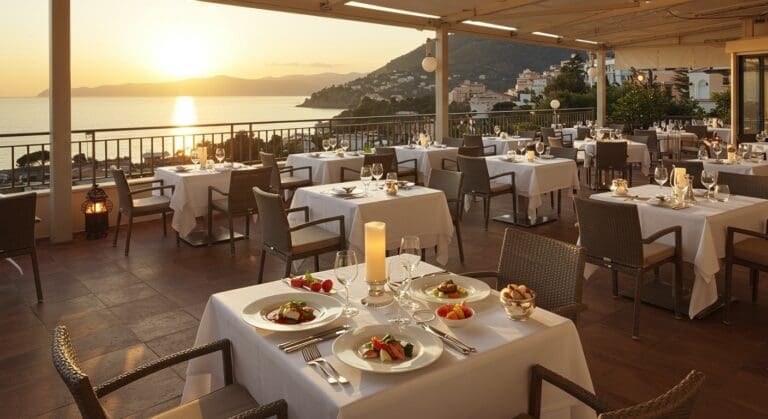
In May, you can drive the coast road from Cascais to Guincho with the windows down and find a parking space. In September, you can have a long, unhurried lunch on a seafront terrace and watch the Atlantic doing its thing without feeling you are participating in a spectator sport. Villa rental prices in May and September are meaningfully lower than August, the food is just as good, and the experience of actually being somewhere – rather than being one of many thousands of people simultaneously being somewhere – is qualitatively different.
For families, May half-term and early September offer a workable compromise between school schedules, tolerable prices, and weather that is reliably warm enough for beaches. For couples and small groups, the shoulder seasons are not a compromise at all. They are, most years, the obvious choice – if you can resist the gravitational pull of booking the weeks when everyone else is booking.
Quick Reference: Month by Month Summary
January: Cool, quiet, excellent value. Atmospheric rather than beachy. Golfers and culture-seekers thrive. Crowds: minimal. Prices: lowest of the year.
February: Similar to January, with early spring beginning to stir by month’s end. Good for those who want the coast largely to themselves.
March: Warming up noticeably. Gardens coming into flower around Sintra. Atlantic still cold. Prices remain low. A good month to visit if summer heat is not your primary goal.
April: Comfortably warm at 18-20°C. Easter brings a brief domestic crowd. Spring festivals in the wider region. Strong shoulder-season value.
May: One of the best months. Warm enough for beaches, prices pre-peak, Sintra at its most photogenic. Families with flexible school schedules take note.
June: Festas de Lisboa adds atmosphere. Warmth arrives properly. Beaches filling but not yet overwhelmed. A very good month – and better value than July or August.
July: Peak summer begins. Hot, bright, busy. Book well ahead for villas. The coast in full operation.
August: The height of everything – heat, crowds, prices, atmosphere. Excellent for families and groups. Less excellent for spontaneous decisions.
September: Arguably the finest month. Warm sea, thinning crowds, cooler evenings, harvest season nearby. Highly recommended.
October: Still warm, quieter, beautiful light. Some seasonal businesses closing mid-month. Good walking and cycling conditions along the coast paths.
November: Rain arrives in earnest. The coast becomes local again. Prices low, atmosphere contemplative. Not for everyone – very much for some.
December: Mild by European standards. Christmas atmosphere in Cascais and Sintra. Brief price spike around the holidays, then quiet again.
Plan Your Lisbon Coast Villa Stay
Whether you are arriving in the soft warmth of a May morning or settling in for a week of September sunsets with the Atlantic doing its theatrical best, the right villa makes the difference between a holiday and a genuinely memorable stretch of time. Our full Lisbon Coast Travel Guide covers where to stay, what to do, and how to approach this particular stretch of Portuguese coastline with the knowledge it deserves.
When you are ready to choose where you are actually staying, browse our hand-selected collection of luxury villas in Lisbon Coast – properties chosen for their position, their quality, and the particular pleasure they offer at whatever time of year you choose to visit.
What is the best month to visit the Lisbon Coast to avoid crowds but still have good beach weather?
September is widely considered the ideal balance. The summer crowds have retreated, the sea temperature is at its annual peak at around 21-22°C, daytime temperatures stay above 24°C, and villa and accommodation prices have dropped from their August high. Early October is a close second for those with more flexibility, though some seasonal beach facilities begin to close mid-month.
Is the Lisbon Coast worth visiting in winter?
More than most people realise. Temperatures are mild by northern European standards – typically 13-16°C on a clear day – and the coastline, Sintra in particular, takes on a genuinely different and often more dramatic character in winter light. Prices are at their lowest, the best restaurants are available without reservation battles, and the Atlantic coast in winter has an atmosphere that is entirely its own. It is not a beach holiday, but for food, culture, walking, and golf, it is a quietly excellent choice.
When is the Lisbon Coast most expensive and how far ahead should I book a villa?
July and August are peak season and prices for quality villa rentals reflect this – expect rates 30-50% higher than spring or autumn equivalents. If you are travelling in July or August, booking three to six months in advance is strongly advisable for larger or better-positioned properties. For shoulder season travel in May, June, or September, two to three months ahead is generally sufficient, though the best villas fill earlier than you might expect. Winter availability is rarely a problem, though the Christmas and New Year period is an exception.