Best Restaurants in Menorca: Fine Dining, Local Gems & Where to Eat
Here is what every restaurant guide about Menorca gets wrong: they send you to the beach clubs and the harbourside terraces, which are lovely, while quietly overlooking the fact that the best meal you will eat on this island may well happen in a converted shoe factory in Ciutadella or on a vine-shaded terrace at a working winery where the grapes are still slightly sticky from the harvest. Menorca has spent years watching its flashier sister islands collect all the headlines. It has used the time wisely. The food scene here is not trying to be Ibiza. It is not trying to be anywhere. It has simply got on with the business of being quietly, confidently excellent – and the locals would really rather you didn’t tell too many people about it.
For the luxury traveller who eats well at home and expects to eat better on holiday, Menorca delivers something increasingly rare: restaurants with genuine personality, ingredients of serious provenance, and cooking that reflects a place rather than performing it. Whether you are after a long, unhurried lunch at a hilltop winery, lobster pulled from the bay that morning, or a tasting menu in a space that would look at home in a Copenhagen design magazine, this island has the table for you. Pull up a chair.
The Fine Dining Scene: Where Menorca Gets Serious
Menorca does not yet carry a cluster of Michelin stars in the way that Barcelona or San Sebastián might, but to conclude from this that the island lacks serious culinary ambition would be a mistake of some magnitude. What you find instead is a generation of chefs – many of them, pointedly, Menorcans who trained elsewhere and chose to come home – cooking with real intelligence and restraint. The influence of Catalonia and the Balearic food tradition is present, but it is worn lightly.
At the top of most discerning visitors’ lists sits Mon Restaurant in Ciutadella – and rightly so. Chef Felip Llufriu spent years in Barcelona’s higher-end kitchens before returning to Menorca, and the combination shows in every dish: there is technical fluency here, but also a rootedness, a sense that this food could only come from this island. The setting helps considerably. The restaurant occupies a meticulously restored 1935 Art Deco building that also functions as a boutique hotel, and the dining room carries that particular quality of spaces that have been put together by people who actually care about such things. The menu blends traditional Menorcan flavours with modern technique – familiar enough to be comforting, original enough to be interesting. Book ahead. The room is not large, and word has travelled.
Then there is Smoix, also in Ciutadella, which takes an entirely different approach and is no less impressive for it. The building was once a shoe factory, and the industrial bones have been kept: exposed ductwork, timber rafters, a whitewashed interior courtyard that somehow manages to feel both raw and refined. The menu is short – genuinely short, in the way that signals confidence rather than laziness – and changes with the seasons. What tends to remain, because the kitchen would likely face a minor insurrection if they removed them, are the crawfish ravioli and the beluga lentils with king-prawn tempura: dishes that sound simple when described and taste like considerably more when eaten. If there is one restaurant on the island that most clearly signals how seriously Menorca is beginning to take itself, it is this one.
Seafood Icons: The Dishes Worth Travelling For
Any honest conversation about eating in Menorca has to begin, sooner or later, with caldereta de langosta. This lobster stew – rich, aromatic, built on a base of tomato, onion, garlic and the kind of patience that home cooks rarely have on a Tuesday – is the island’s signature dish, and it is one of those rare things that actually lives up to the reputation. The lobster comes from Menorca’s own waters, which are cleaner and colder than you might expect for the Mediterranean, and the difference is perceptible on the plate.
For the definitive version, most people who know the island will point you in the same direction: Es Cranc in Fornells. Fornells is a small fishing village on the northern coast – whitewashed, calm, the kind of place where the boats are still actually used rather than purely decorative – and Es Cranc is its culinary anchor. This is a family-run restaurant with decades of practice behind it and a direct relationship with the fishermen who supply it. The lobsters come from Fornells Bay itself. The caldereta is prepared with what can only be described as focused simplicity: no excess, no theatre, just exceptional ingredients treated with the respect they deserve. It is, by several accounts and considerable personal experience, one of the best things you can eat in the Balearics. King Juan Carlos I has been a regular visitor to Fornells specifically for this dish, which either tells you something about the caldereta or about the efficiency of the royal security detail. Probably both.
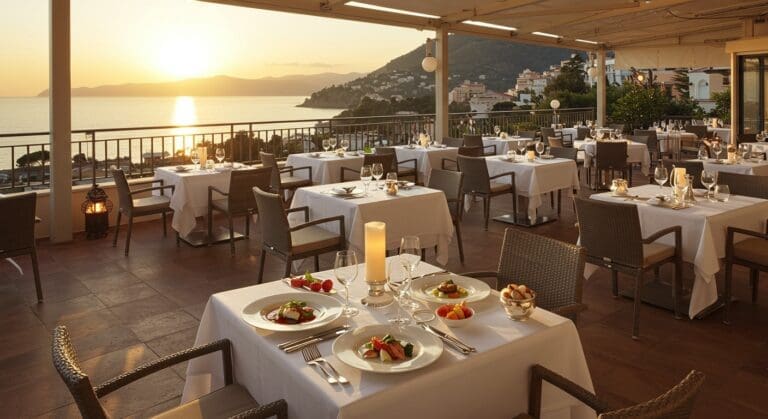
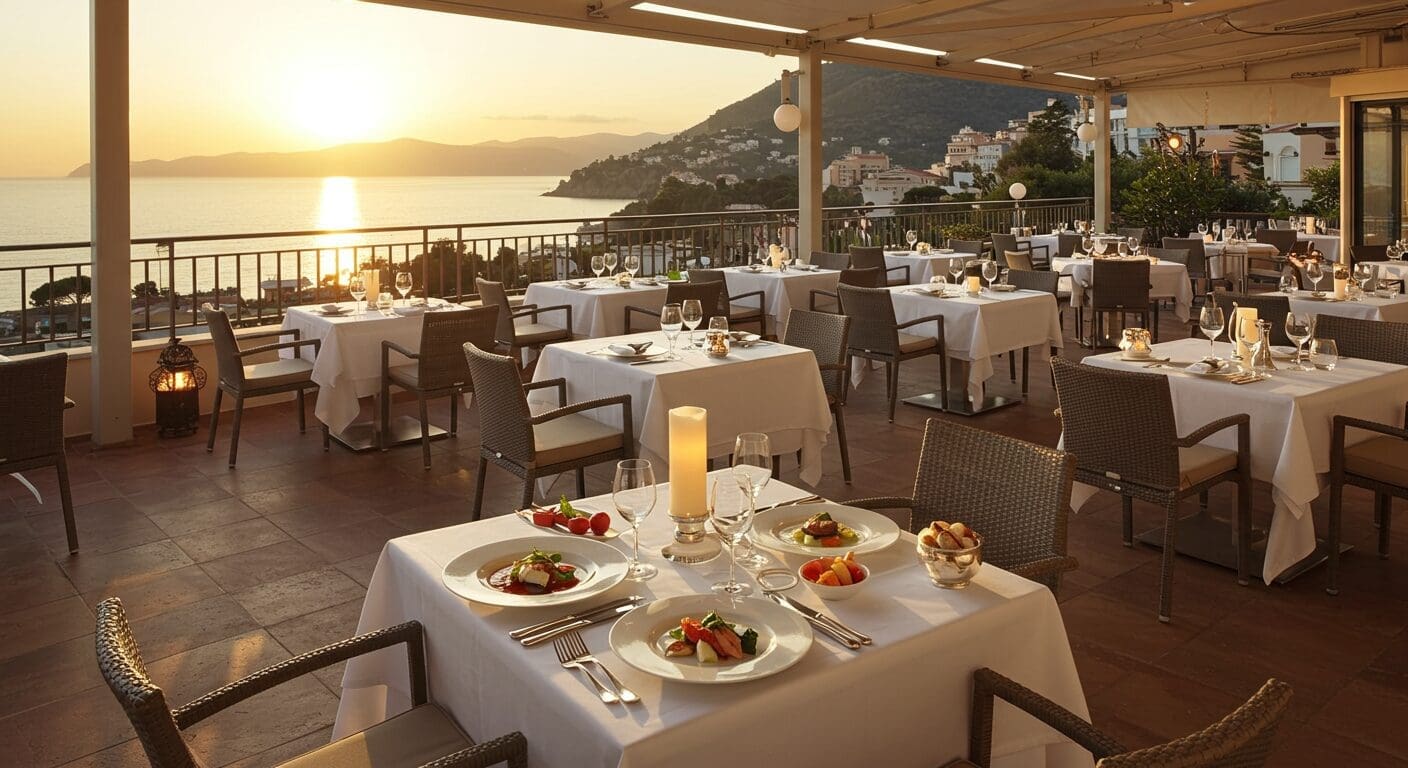
Down in Ciutadella’s harbour, Café Balear has been doing things properly since 1970 and has the loyal clientele to prove it. Sitting by the port, watching the light change on the water while working through a bowl of lobster stew and a glass of something cold and white, is one of those holiday experiences that sounds unremarkable in the telling and is quietly unforgettable in the having. They source fresh catches daily from local fishermen, the seafood selection is broad and reliably excellent, and the ambiance – warm, unpretentious, genuinely welcoming – is exactly what a harbour restaurant should be.
Binifadet: When the Wine is the Destination and the Food Matches It
Menorcan wine has a story worth knowing. For much of the twentieth century, the island’s winemaking tradition essentially went to sleep – the climate was considered marginal, the local grapes unfashionable, the market uninterested. Then a handful of producers decided this was nonsense and got to work. The results have been, to put it mildly, vindicating.
Binifadet, near Sant Lluís in the island’s south, is the winery most responsible for changing the conversation. It has revived ancient, rare grape varieties, brought serious winemaking technique to bear on them, and in doing so put Menorca on the radar of people who care about interesting wine. The estate itself is worth visiting for the landscape alone – rolling vines, warm stone, the specific quality of light that the southern end of the island has in the afternoon.
But the restaurant is the reason most people come back. Tables are set throughout the winery itself, on the terrace and out among the vines, and the overall effect is so naturally atmospheric that it feels slightly unfair to restaurants that have had to actually try for this. The food is modern Menorcan – careful, seasonal, properly cooked – and the wine list is, for understandable reasons, exceptional. It is the kind of lunch that expands to fill several hours without anyone quite noticing, which is exactly as it should be. There is also a large wine shop and the option to tour the vineyard. Go on a clear day. Take your time. You will not regret either decision.
Beach Clubs, Casual Dining & Eating by the Water
Not every meal on a Menorca holiday needs to be an occasion, and the island understands this. The coastline is peppered with beach bars and chiringuitos – some deeply casual, some rather less so – where the formula of fresh fish, cold beer and salt air does its reliable, unapologetic work.
The key distinction for the discerning visitor is knowing which beach restaurants have genuine kitchens behind them and which are largely sustained by the view. Menorca’s southern coast, with its series of sheltered calas, tends to offer the better options: smaller operations, often family-run, where the grilled fish genuinely was swimming this morning and the pa amb oli – the Balearic staple of bread rubbed with tomato and doused in local olive oil – is made with ingredients that would embarrass a lesser establishment.
For longer, more leisurely beach lunches at the luxury end, look for restaurants attached to the island’s better hotels and villa estates along the south coast, where the cooking tends to be more ambitious and the wine list more considered. The informal rule of thumb: the further from the main tourist drag and the closer to the fishing boats, the better your chances of eating something genuinely memorable.
Food Markets & Local Provisions
Menorca’s markets reward the curious and repay the early riser. The Mercat des Peix in Maó – the covered fish market near the harbour – operates in the mornings and is as good an argument as any for waking up before the day has properly settled into itself. Local fishermen bring in their catches, vendors arrange them with the unselfconscious artistry that only comes from decades of practice, and the whole thing operates at a pace that feels deliberately at odds with the modern world. For villa guests with access to a kitchen, this is where you start.
The weekly markets in Ciutadella, Ferreries and other inland towns offer local cheeses – Menorca’s formatge is a DO-protected product and the real thing bears no resemblance to the supermarket approximation – along with local honey, ensaïmades, vegetables grown in the island’s fertile central plain, and the kind of preserved meats that make you briefly wish customs regulations were more flexible.
Menorca’s local spirit, gin – a genuine Menorcan tradition that predates the craft gin revival by about two centuries, owing to British occupation of the island in the eighteenth century – is worth seeking out in its local form. Gin amb llimona (gin with lemon) at a bar in Maó’s old town is not the most glamorous introduction to an island, but it is one of the more characterful ones.
What to Order: A Short, Opinionated Menu
Beyond the caldereta, the Menorcan table has plenty to say for itself. Sobrassada – the island’s soft, spiced cured sausage – appears across breakfast, lunch and dinner in various forms and is deeply good in all of them. Coca (a flatbread with various toppings), arròs de la terra (a local rice dish with inland ingredients), and any preparation of the island’s red prawns are worth ordering whenever they appear. For dessert, formatjades (small cheese or sweet pastries) are the local answer to the croissant and considerably more interesting.
On the wine side, Binifadet’s whites – made from Chardonnay and local varieties – handle the island’s seafood particularly well. For something more local still, ask for wine from the Vins de la Terra Illa de Menorca designation: small production, increasingly good, and the kind of thing that makes a wine list worth reading rather than just navigating.
Reservation Tips & Practical Notes
Menorca operates on a shorter, more concentrated tourist season than Ibiza or Mallorca, and the better restaurants fill up accordingly. For Mon Restaurant, Smoix, and Es Cranc in particular, reservations two to three weeks in advance are advisable in July and August. Binifadet, given the size of its dining room and the number of people who have been told it is unmissable (rightly), books up with similar speed.
Lunch, it is worth noting, is taken seriously here. The midday meal at a Menorcan restaurant is not a quick sandwich and a return to the pool – it is an event, often the main event of the day, and the kitchen is usually at its best for it. Dinner begins late by northern European standards: before 8.30pm, you will largely be eating alongside other non-Spanish visitors, which is fine but misses something. A table at 9pm or 9.30pm, with the evening air cooling and the meal stretching unhurriedly ahead, is the intended experience.
Many of the island’s best restaurants close for one or two days a week – typically Monday or Tuesday – so check before making the drive, particularly if you are staying at one of the more remote villas and the journey involves commitment.
The Luxury Villa Advantage: Eating In, Eating Well
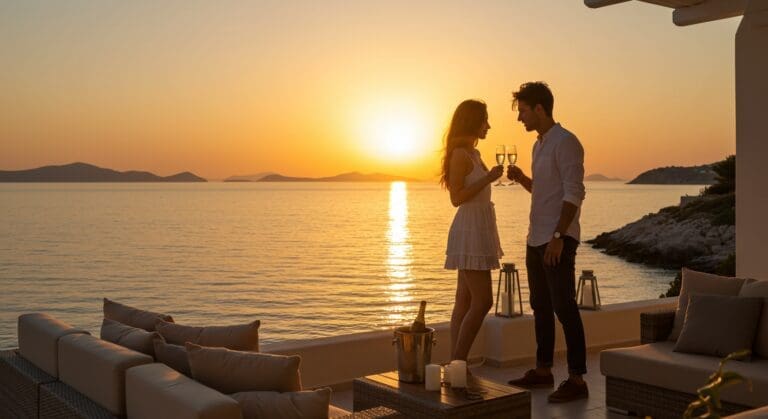
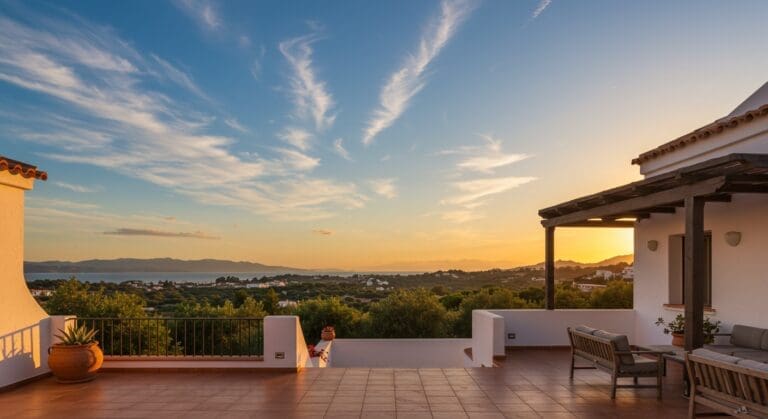
One of the less obvious pleasures of staying in a luxury villa in Menorca is the question of what to do with all of that space and that kitchen. For guests who would rather stay home some evenings – and after a long lunch at Binifadet, this will seem not just reasonable but essential – the option of a private chef brings the island’s food culture directly to you. A good private chef on Menorca will know where to source the morning’s fish, which local cheeses are ready, and how to prepare a caldereta that respects the tradition rather than merely gesturing at it. It is an entirely different way of engaging with a food culture, and for some evenings, the candlelit terrace of your own villa is simply the better table.
For more on planning your time on the island – from where to stay to what to do beyond the restaurant – see our full Menorca Travel Guide, which covers the island in the detail it deserves.