
Mexico Food & Wine Guide: Local Cuisine, Markets & Wine Estates
Here is what the guidebooks reliably miss: Mexican food is not a single cuisine. It is twenty-something distinct cuisines sharing a passport. The moment you arrive expecting tacos al pastor and leave having eaten nothing else, you have made the same mistake as the traveller who goes to France and eats baguettes for a fortnight, satisfied they’ve understood the place. Mexico is a country where mole takes three days to make and contains upwards of thirty ingredients, where Oaxacan cooks use dried grasshoppers with the same casual authority a French chef reaches for fleur de sel, and where a bowl of pozole in a Guadalajara market on a Sunday morning will rearrange your understanding of what soup can be. This is a mexico food & wine guide: local cuisine, markets & wine estates worthy of the country itself – which is to say, far more complex and rewarding than most people expect.
The Regional Picture: Why Mexico Has No Single Cuisine
Understanding Mexican food begins with geography. The country stretches from the arid northern borderlands down through the central highlands, into the tropical coasts of Veracruz and Yucatán, and out to the Pacific shores of Oaxaca. Each region has its own agricultural identity, its own indigenous traditions, its own pantry.
In the north – think Sonora, Chihuahua, Nuevo León – the cooking is hearty and meat-focused. Sonoran beef is among the best in the country, raised on open ranchland and grilled over mesquite with minimal ceremony. This is where the flour tortilla reigns supreme, thick and handmade, far removed from the mass-produced versions the world has come to accept as the real thing.
Move south and everything changes. Oaxaca is often cited as the culinary heart of Mexico, and for good reason: it is home to seven distinct varieties of mole, to tlayudas (large toasted tortillas loaded with beans, cheese, and meat), to mezcal producers working with agave plants older than most European vineyards, and to a cheese-making tradition that produces the extraordinary quesillo – the string cheese pulled fresh and wound into tight balls at market stalls each morning.
Yucatán operates in its own culinary universe. The Mayan influence here is unmistakable. Cochinita pibil – slow-roasted pork marinated in bitter orange juice and achiote, cooked underground in banana leaves – is the dish that defines the peninsula. The flavour is deep, slightly earthy, faintly citric, and deeply unlike anything from the rest of the country. Lime, habanero, and recados (Yucatecan spice pastes) appear in dishes you would not find anywhere else in Mexico. The food here rewards curiosity.
Veracruz, on the Gulf Coast, shows its Spanish and Afro-Caribbean heritage through a cuisine rich in seafood, olives, capers, tomatoes, and herbs. The classic Veracruz-style red snapper – cooked with olives, capers, and tomatoes in a manner that feels Mediterranean and utterly Mexican simultaneously – is one of those dishes that makes you reconsider national borders altogether.
Signature Dishes Worth Travelling For
Some dishes transcend their origins and become arguments for getting on a plane. Mole negro from Oaxaca is one of them – a sauce of extraordinary depth, built from charred chillies, chocolate, spices, tomatoes, and often the charred tortilla itself. It is served over turkey or chicken, and it tastes like something that took three days to make, because it did.
Chiles en nogada from Puebla is arguably Mexico’s most theatrical dish: green poblano chillies stuffed with a mixture of meat, dried fruits, and spices, covered in a white walnut cream sauce, and garnished with pomegranate seeds and fresh parsley. Green, white, and red – the colours of the Mexican flag, which the Pueblans will point out to you with justified pride. It is seasonal, available only in late summer and early autumn when pomegranates are ripe, which gives it an additional quality that menus rarely can: scarcity.
Birria, originally from Jalisco, has become the subject of considerable international attention in recent years – some of it deserved, some of it the predictable Instagram-driven simplification of something genuinely complex. The real version is a slow-cooked goat or beef stew with dried chillies and spices, served with a consommé for dipping. It is deeply satisfying and does not require a social media strategy to appreciate.
Tamales, huitlacoche (corn fungus, used like truffle), squash blossom quesadillas, aguachile from Sinaloa, and tlayudas round out a list that could go on considerably longer. Mexico is not short of signature dishes. It is short of travellers willing to look past the obvious ones.
Mexican Wine: Baja California and Beyond
Mexico has been producing wine since the sixteenth century, which makes it one of the oldest wine-producing countries in the Americas. You would not immediately know this from the wine lists of most restaurants outside the country. That is their loss.
The Valle de Guadalupe in Baja California is the beating heart of Mexican wine production – a semi-arid valley about an hour from Ensenada and two hours from San Diego – and it has undergone a quiet transformation over the past two decades. What was once a region of modest table wines is now producing bottles that attract serious international attention. The climate here is Mediterranean in character: warm days, cool nights, maritime influence from the Pacific. It suits Tempranillo, Nebbiolo, Grenache, and Cabernet Sauvignon particularly well. There are also interesting expressions in Chardonnay and Sauvignon Blanc for those who arrive with white wine loyalties.
The valley has around 150 wineries at present count, ranging from boutique family operations to larger estates with full restaurants, accommodation, and tasting experiences. The social scene in Valle de Guadalupe has developed considerably – there are open-air restaurants here that feel like the best outdoor dining in the country, set against olive groves and vine rows with Pacific light doing its work on everything.
Beyond Baja, wine production has taken root in other regions. Querétaro, Coahuila, and Guanajuato are producing wines of growing quality, particularly at altitude where temperature variation supports more complex flavour development. These regions are less visited by wine travellers, which for the curious represents both an opportunity and a mild inconvenience in terms of available information. Querétaro in particular has attracted investment and winemaking talent, and its sparkling wines deserve more attention than they currently receive.
Wine Estates to Visit
The Valle de Guadalupe estate experience is unlike most wine regions in the world. There is a looseness to it – a taco stand next to a natural wine producer, a wood-fired restaurant operating in the vineyard, winemakers who will talk to you for an hour if you ask the right questions. It does not have the formal grandeur of Bordeaux or the choreographed precision of Napa. This is, depending on your temperament, either a feature or a problem. Most people who visit conclude it is a feature.
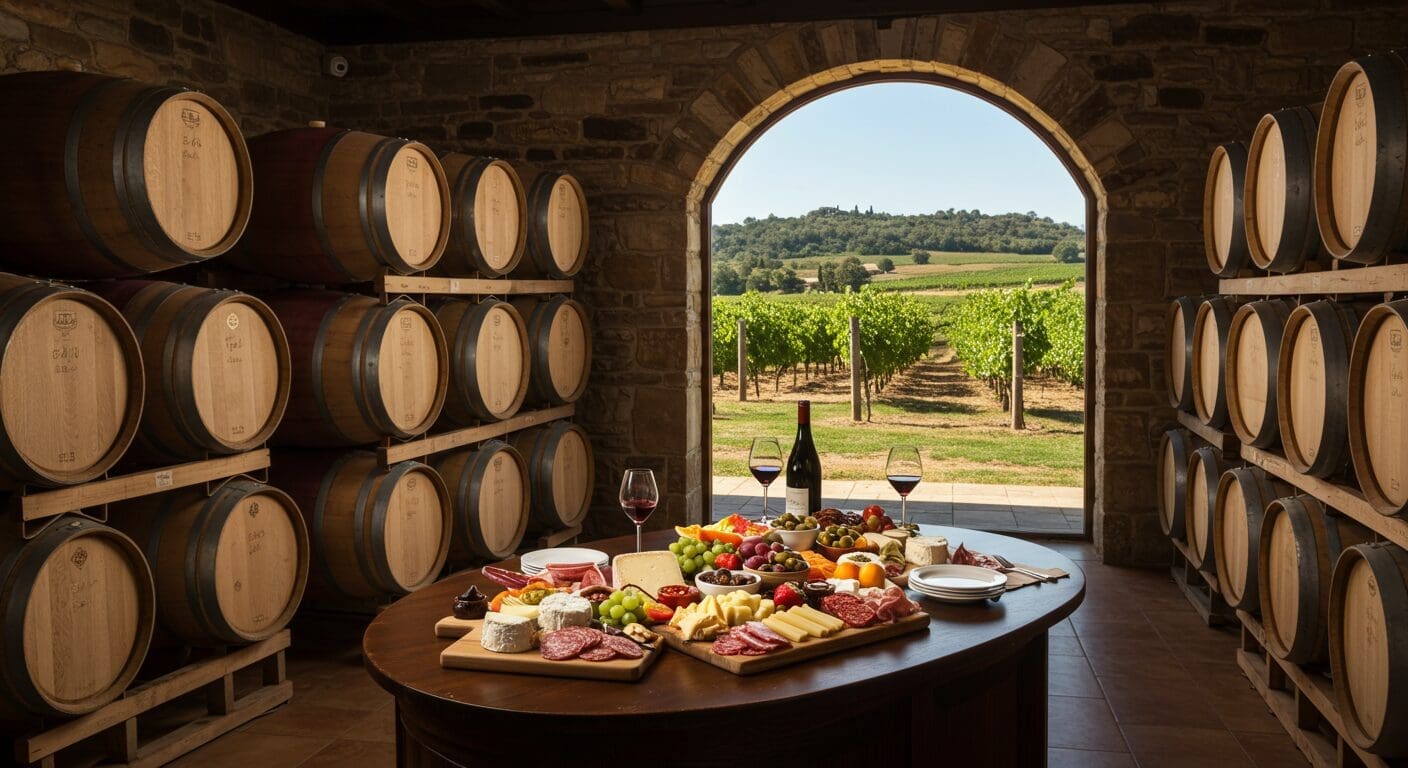
Estate visits in the valley typically include vineyard walks, cellar tours, and seated tastings paired with regional food. The best producers work with minimal intervention, focusing on terroir expression rather than heavy manipulation. The reds tend toward structure and earthiness; the whites are often aromatic and food-friendly rather than overtly fruity. Bring an appetite as well as a palate – the food and wine here are genuinely inseparable.
Further north, the Guadalupe Valley wine route is best done over two or three days rather than rushed in an afternoon. Those staying in the area will find the experience far more rewarding than a day trip from Ensenada. A number of estates offer private tours and tastings for guests staying in villa accommodation nearby, which is the civilised approach.
The Great Food Markets
Mexican markets are not tourist attractions with an unfortunate crush of locals getting in the way. They are functional, living institutions around which entire communities organise their weeks, and they happen to be among the most extraordinary food environments on the planet. The distinction matters because it changes how you approach them.
Oaxaca’s Mercado Benito Juárez and the adjacent Mercado 20 de Noviembre are the twin pillars of the city’s market culture. At 20 de Noviembre, you choose your cut of meat, hand it to a stall holder, and it is cooked on a charcoal grill in front of you while women move between tables selling freshly made tortillas from baskets on their heads. This is not a food hall concept dreamed up by a property developer. It has been operating in essentially this form for generations.
Mexico City’s Mercado de San Juan is the gourmet market – the one that chefs visit, where you will find imported cheeses alongside local truffles from the state of Veracruz and Chiapas, dried chillies in varieties you cannot name, fresh herbs, and exotic mushrooms. It is also the place to try exotic ingredients if you are feeling adventurous: grasshoppers, ant eggs (escamoles), and huitlacoche appear alongside more familiar produce without ceremony. The casual proximity of the extraordinary to the ordinary is one of the things that makes Mexican markets quietly exhilarating.
In Yucatán, the Lucas de Gálvez market in Mérida is the place to understand the region’s kitchen. The produce here – achiote paste, habaneros in shades from yellow to orange-red, fresh chaya leaves, regional cheeses – tells you everything about what Yucatecan cooks are working with and why the food tastes the way it does.
Truffles, Olive Oil, and the Luxury Larder
Mexico is not a country that announces its luxury larder loudly. But for those who look, it exists.
Mexican truffles – or what the country has long used as a functional equivalent – come in two forms. First, huitlacoche: the corn fungus known since Aztec times, treated with the same quiet reverence a French chef might apply to Périgord black truffle. It has an earthy, smoky complexity and is used in quesadillas, soups, and sauces. It is not truffle in the botanical sense, but it occupies a similar emotional register in Mexican cooking: something that elevates a dish through depth rather than quantity. Second, actual black truffles have been discovered growing in certain pine forests in the states of Oaxaca and Chiapas – a fact that has prompted quiet excitement in culinary circles and the occasional journalist stumbling into the forest looking terribly pleased with themselves.
Olive oil production in Mexico is less known but genuinely interesting. Baja California, specifically the Valle de Guadalupe and surrounding areas, produces olive oil alongside its wines – the Mediterranean climate that supports viticulture works equally well for olive cultivation. Some wine estates produce small-batch extra virgin olive oil that is worth bringing home, along with the bottles. A few producers offer olive oil tastings alongside wine flights, and the combination of the two, eaten with local bread and cheese, is one of those unplanned pleasures that travel occasionally provides.
Cooking Classes and Food Experiences Worth the Investment
The luxury food experience in Mexico operates at several levels. At the top of the pyramid are chef-led private classes in traditional kitchens – particularly in Oaxaca and Mexico City – where you learn to make mole from scratch, grind your own masa, and understand the logic of Mexican cooking from the ground up. These sessions run anywhere from three hours to a full day and are frequently led by cooks who have been doing this for decades. The best of them begin with a market visit to source ingredients, which doubles as an education in produce selection and an excuse to eat something at the market before you start cooking. Both are legitimate reasons.
In Mexico City, a number of leading chefs offer private dining experiences and kitchen tours for guests staying in the city. The capital has one of the most dynamic restaurant scenes in Latin America – a mixture of traditional cantinas, contemporary taco institutions, and fine dining restaurants that would hold their own in any major food city in the world. Private experiences here tend to be genuinely personalised rather than the formatted group tours that characterise the category in other destinations.
Mezcal and tequila tastings are, of course, the other pillar of the food and drink experience. In Oaxaca, visiting a palenque – a small artisanal mezcal distillery – and watching the production process while tasting spirits made from different agave varieties is an experience that makes most gin distillery tours look rather apologetic by comparison. The depth of knowledge among producers, and their willingness to share it, remains one of the most generous aspects of Mexican hospitality.
For those who want to go further, private food and wine itineraries can be built around the Valle de Guadalupe wine route, Oaxacan market culture, and Mexico City’s restaurant scene, combining them into a two-week journey that functions as a serious culinary education. It is, frankly, not the worst way to spend a fortnight.
Plan Your Stay: Luxury Villas and the Perfect Base
The food and wine of Mexico is best experienced slowly, from a base that allows you to move at your own pace rather than the schedule of a hotel. A private villa in Oaxaca puts you within reach of the markets, the mezcal producers, and the restaurants without the logistics of organised tours. In Baja California, villa accommodation in or near the Valle de Guadalupe means wine estates become a morning stroll rather than an afternoon expedition. In the Yucatán, the right property gives you access to the cuisine of Mérida and the coast simultaneously, with a kitchen to bring your market finds home to if the cooking instinct takes hold.
For the full picture on planning your visit – from the best time of year to travel to cultural context and logistics – our Mexico Travel Guide covers everything you need before you arrive.
Browse our collection of luxury villas in Mexico and find the right base for a culinary journey that will take considerably longer than one trip to fully explore. Most guests consider this a feature rather than a problem.