Moraira Food & Wine Guide: Local Cuisine, Markets & Wine Estates
Here is the mild confession: Moraira is not, strictly speaking, famous for its food. The Costa Blanca has spent decades being famous for sunshine, sailing, and a particular style of British holidaymaker who treats paella as a novelty. And yet, quietly, without making a fuss about it, this small stretch of the Valencian coast has assembled one of the most compelling eating and drinking landscapes on the Spanish Mediterranean. The produce is extraordinary. The wine estates are serious. The markets are genuinely good rather than performatively quaint. And if you know where to look – which, after reading this, you will – Moraira rewards the curious palate in ways that its low-key reputation entirely fails to suggest.
The Food Culture of the Marina Alta
Moraira sits within the comarca of the Marina Alta, a region of the Valencia province that has been growing things quietly and well for centuries. The soil here is varied and generous – citrus groves, almond trees, carob, fig and olive compete with the vines that have increasingly made the area worth the attention of serious wine writers. The sea is close enough to matter, but not so close that the cuisine becomes purely maritime. What you get instead is that particularly satisfying Mediterranean balance: fish when it is excellent, meat and game when the season demands it, and vegetables that taste like vegetables are supposed to.
Valencia is rice country – this is non-negotiable – and the Marina Alta takes that seriously. But the local cooking here has its own distinct character, one that leans into the Moorish legacy of the interior: spices used with subtlety, almonds folded into sauces, honey appearing where you might not expect it. There is a thread of old-fashioned thrift running through traditional Valencian cooking that produces dishes of remarkable depth from relatively simple ingredients. Nothing is wasted. Everything has a purpose. It is the opposite of the kind of cooking that requires a glossy kitchen and a lot of equipment.
What to Eat: Signature Dishes and Regional Specialities
Start, as you probably should start everything in Valencia, with rice. But not the paella you think you know. The paella of the Marina Alta countryside is made with chicken, rabbit, and flat green beans – no seafood, no chorizo, certainly no peas – cooked over wood fire in a wide, shallow pan until the bottom layer catches slightly and becomes the socarrat, the caramelised crust that separates a proper paella from an impersonation of one. Locals are evangelical about socarrat. Rightly so.
Arroz a banda is the other rice dish worth your time – originally a fisherman’s preparation in which fish and seafood are cooked in a rich broth, removed, and then used to cook the rice separately. The rice absorbs everything. It is served with alioli, the garlicky emulsion that appears across the Costa Blanca with the frequency and enthusiasm of a local politician at a ribbon-cutting. You will eat a great deal of alioli. This is not a problem.
Look out too for fideuà, the noodle-based cousin of paella that originated just up the coast in Gandia, and has been enthusiastically adopted here. Coca – a flatbread topped with anything from roasted vegetables to salt cod to sobrasada – serves as both snack and starter depending on the hour and your hunger. And then there are the salt-cured anchovies from the region, which bear absolutely no resemblance to the tinned variety and should be eaten with good bread and nothing else, as a form of meditation.
Wine in Moraira: The Marina Alta’s Quiet Revolution
The Denominación de Origen Marina Alta is not the most famous wine region in Spain. It is not trying to be. What it is doing, with increasing skill and confidence, is producing wines that are genuinely expressive of their place – the combination of altitude, Mediterranean climate, and limestone-rich soils that gives the wines a freshness and mineral quality that feels quite distinct from the broader Valencia DO wines to the south.
The indigenous Moscatel de Alejandría grape is the one to know here. In its traditional form it produces sweet, honey-scented wines – the kind that have been made in these hills since the Phoenicians were still around to appreciate them. But contemporary producers are doing something more interesting: vinifying it dry or semi-dry, with results that offer aromatic intensity without the weight of sweetness. They are wines that pair brilliantly with the local food and that reward the kind of attention most holiday drinking never gets.
Giró Ribot has a presence in the region, and the local cooperative traditions mean there are producers working at every scale from small family estates to larger operations supplying the better restaurants of the Marina Alta. White wines dominate, which makes sense given the climate, but there is interesting work being done with Monastrell and Garnacha for those who want something red with their evening grilled meat.
Wine Estates and Bodega Visits
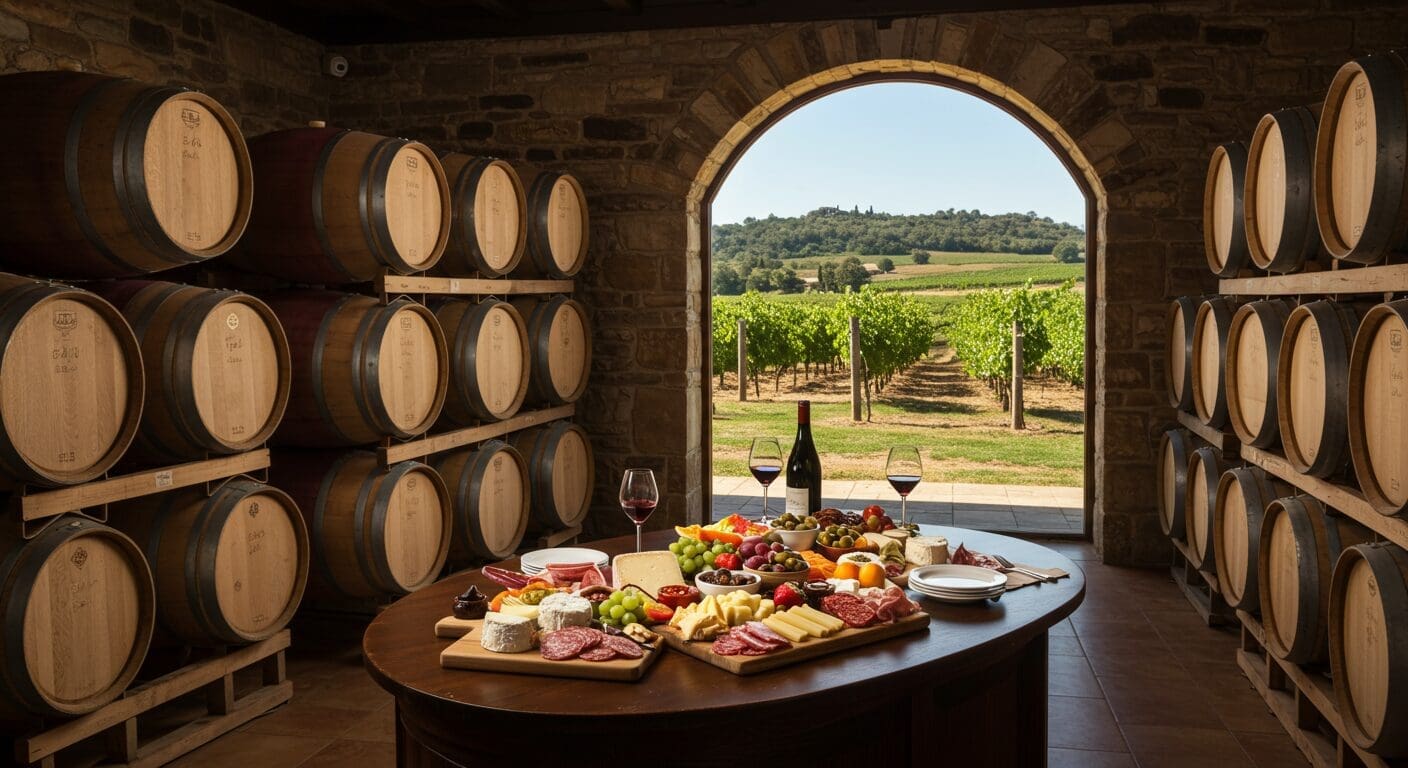
The hills behind Moraira and the surrounding villages of Teulada, Benissa and Jalón (the Jalón Valley in particular) are where the serious wine exploration begins. The Jalón Valley – a short drive inland through dramatically changing landscape – is home to a cluster of bodegas ranging from small artisan producers to estates set up specifically for visits, with tastings, tours and in some cases full lunch experiences that allow you to sit with a glass and watch the light move across the vines in a way that makes you feel, briefly, that you have solved something.
Estate visits in this region tend to be unpretentious and genuinely educational – a combination that is rarer than it should be. You will learn about the specific challenges of growing Moscatel in limestone soils. You will taste through several vintages. You will probably buy more than you intended to carry home. Most estates can arrange visits by appointment, and many are within comfortable driving distance of Moraira for a half-day excursion that pairs well with lunch in one of the valley villages.
For those staying in villas, the advantage of a private kitchen and cellar storage makes it entirely reasonable to treat a bodega visit as the beginning of an evening’s entertainment rather than a tick-box activity. Buy a case. Cook something good. Eat outside. This is, in essence, what Moraira is for.
Markets: Where the Locals Actually Shop
Moraira’s own weekly market runs on Fridays and is the kind of market that strikes the right balance between useful and atmospheric – there are enough locals buying vegetables and enough visitors browsing ceramics that it feels alive without feeling staged. The produce section is the reason to go early: tomatoes that smell like tomatoes should, local honey, fresh almonds in season, the region’s extraordinary citrus, and cheeses from the interior that rarely make it as far as a supermarket shelf.
The market in Teulada, a short drive away, is similarly worthwhile and arguably less visited by people in holiday clothes, which is its own kind of recommendation. Calpe has a larger market with a wider variety of produce and a good fish stall worth the detour. And the covered market in Dénia – Moraira’s more substantial neighbour to the north – is one of the best in the region, with a fish section supplied directly by the Dénia fishing fleet, which brings in the gambas rojas de Dénia that are, without exaggeration, among the finest prawns in the world. They are expensive. Order them anyway.
Cooking Classes and Hands-On Food Experiences
Learning to cook paella properly is one of those experiences that sounds like a tourist activity until you actually do it and realise you have been making rice in the wrong spirit for your entire adult life. Several operators in and around Moraira offer cooking classes that go well beyond the basics – covering coca breads, rice dishes, alioli from scratch, and the proper management of a paella pan over wood flame. Look for classes that use market shopping as the first stage, so the cooking begins with an understanding of where the ingredients come from rather than a pre-weighed kit.
Private cooking experiences can also be arranged for villa guests through concierge services, bringing a local chef directly to your kitchen for an afternoon session that doubles as a dinner preparation. This is, it turns out, a rather pleasant way to spend an afternoon in a well-equipped villa kitchen with a glass of local white wine open on the counter. The results are your own dinner, which you will eat with the particular satisfaction of having made it yourself – or at least watched it being made very nearby.
Wine and food pairing experiences are available through several of the local bodegas, and the best of these combine a cellar tour with a table set among the vines and a menu designed specifically around the estate’s wines. These are the kind of lunches that extend without apology into the mid-afternoon.
Olive Oil, Almonds and the Produce of the Hinterland
The olive groves of the Marina Alta produce oil of considerable quality, much of it consumed locally and never seeing the inside of a supermarket. The variety most commonly grown here is Blanqueta, a local cultivar that produces oil with a mild, slightly buttery character and a clean finish – it is excellent for dressing fish, for bread, for anything where you want flavour without aggression. Local mills often sell direct, and a visit to an almazara during the October-to-December pressing season is a genuinely interesting way to understand why good olive oil costs what it costs.
Almonds are equally important to the landscape and the economy of the inland areas. The Marina Alta’s almonds – harvested in late summer – are used in traditional sweets, in the almond-based horchata variations of the region, and in the turron that is made seriously and well in several villages. The Marcona variety, creamy and rich, is the one to seek out. Buy them raw from a market stall, or roasted with salt, and eat them with the local wine. Some things require no further elaboration.
The Best Food Experiences Money Can Buy in Moraira
If you are in Moraira on a budget, this section may not apply to you. But if you are staying in a luxury villa and looking for food experiences that match the standard of your surroundings, the region does not disappoint.
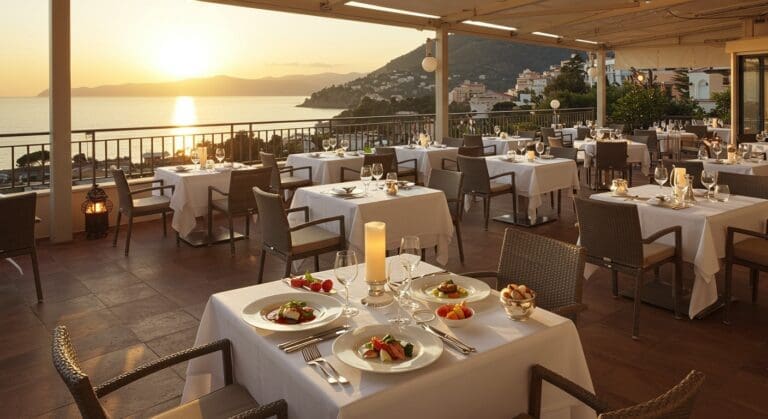
The gambas rojas de Dénia, mentioned above, are the starting point – ideally eaten at a restaurant in Dénia’s port with a cold glass of local white wine and a view of the fishing boats that caught them that morning. Dénia itself has become one of the more interesting food destinations on the Spanish coast, with a restaurant scene serious enough to have attracted international attention without losing its connection to the fishing village it actually is.
Private chef dinners in a villa setting are one of the most genuinely enjoyable ways to experience the local food culture – a chef who knows the region, who shops the markets, who can design a menu around the season and the size of your party. This is not just about convenience, though it is also about convenience. It is about eating food cooked specifically for you, in a setting you have chosen, with wine you have selected from a cellar visit you made two days before. This is what the luxury travel writers mean when they talk about the experience economy, and it turns out they are correct.
Truffle hunting is less of a Moraira speciality than it is in the interior provinces of Castellón and Teruel, but day trips to truffle country are not out of the question for the enthusiastic, and several operators can arrange guided hunts during the winter season with a meal built around the harvest at the end. It is a long day and somewhat muddy. The truffles are worth it.
Plan Your Moraira Food Adventure
The best food experiences in Moraira are rarely the loudest ones. They happen at a Friday market stall where the seller explains which tomatoes are best this week. They happen at a bodega table in the Jalón Valley with a glass of dry Moscatel and the afternoon entirely free. They happen in a villa kitchen at dusk, with a paella pan you learned to use properly and a fire that took longer to light than you expected. Moraira is a place that rewards patience and attention – two qualities that happen to be the most important ones a traveller can bring to a table. For a broader view of what this corner of the Costa Blanca has to offer, our Moraira Travel Guide covers the full picture.
If you are ready to make it your base, browse our collection of luxury villas in Moraira – properties chosen specifically for guests who want space, privacy, a proper kitchen, and a terrace from which to watch the sun set over a glass of something local. The food, as this guide should have made clear, will take care of itself.