Morocco Food & Wine Guide: Local Cuisine, Markets & Wine Estates
There is a moment, somewhere around the second hour of a Marrakech dinner, when time stops making sense. The candles have burned low. Someone has refilled your glass of Moroccan Syrah without asking. A clay pot arrives at the table trailing steam and saffron, and the conversation – which had been perfectly adequate until this point – simply dissolves. Nobody minds. That is the thing about eating well in Morocco: the food doesn’t compete with the experience. It is the experience. From the charcoal-scented lane food of a medina alley to a ten-course tasting menu in a restored riad, this country feeds you with an intent that borders on the ceremonial. This Morocco food and wine guide exists because you deserve to know exactly what you’re walking into – and exactly where to find the best of it.
The Foundations: Understanding Moroccan Cuisine
Moroccan cuisine is one of the great underrated food cultures of the world. Which is saying something, given that most people who’ve eaten a tagine in their lives have a reasonable sense of the territory. But the real thing – the slow-cooked, deeply spiced, architecturally complex real thing – operates on a different level entirely from its exported cousins.
The cuisine is built on layers. There is the Berber foundation: hearty, elemental, grain-based, rooted in the Atlas Mountains and the pastoral rhythms of rural life. On top of that sits the Arab influence brought by centuries of Andalusian exchange – the sweet-savoury interplay, the love of dried fruits and nuts in meat dishes, the baroque use of spice. Then comes the influence of the Jewish communities who shaped much of the country’s preserved food traditions, the Ottoman echoes in pastry and bread, and the French colonial layer that gave Morocco its wine culture and a certain attachment to good butter. The result is a cuisine that rewards attention.
The spice palate here is not about heat – a distinction worth making early. Moroccan food reaches for depth rather than fire. Ras el hanout – a blend that can contain anywhere from twelve to forty spices depending on who’s making it and how they’re feeling about you – is the defining flavour compound. Cumin, coriander, ginger, turmeric, cinnamon, preserved lemon: these are the recurring notes. Harissa brings the heat when heat is called for, but it arrives as an option, not an imposition.
Signature Dishes Worth Seeking Out
A tagine is the obvious starting point, but it is a category, not a dish. The lamb tagine with prunes and almonds from the Fes region is a different proposition entirely from a coastal fish tagine prepared in Essaouira with chermoula and preserved lemon. Both are technically tagines. They taste nothing alike. Context matters enormously here.
Bastilla – sometimes spelled b’stilla – is Morocco’s great showpiece dish. A flaky warqa pastry encasing pigeon (or increasingly chicken) with eggs, almonds, and a dusting of cinnamon and sugar, it manages to be simultaneously absurd and transcendent. The sweet-savoury-crispy-soft combination should not work. It works magnificently.
Mechoui is whole roasted lamb, cooked low and slow in an underground pit until the meat falls from the bone with the merest suggestion of a look. It is traditionally prepared for celebrations and large gatherings, which means getting the real version requires either knowing the right people or staying somewhere with a kitchen team who does. This is, incidentally, one of the more compelling arguments for renting a private villa with a private chef.
Harira is Morocco’s great everyday soup – a thick, nourishing broth of tomatoes, lentils, chickpeas, and lamb, fragrant with fresh herbs and finished with a squeeze of lemon. It is the dish that breaks the Ramadan fast each evening, and it is also the dish that will cure whatever ails you at one in the morning. Street food here includes msemen (flaky griddle bread with honey), makouda (fried potato cakes), and brochettes of spiced lamb or kefta over charcoal. Do not eat them while walking, despite the temptation. Find a low stool somewhere and commit to the moment.
Regional Variations: Where You Eat Changes What You Eat
Morocco’s geography shapes its food in ways that reward exploration. The imperial cities – Fes, Marrakech, Meknes, Rabat – each maintain distinct culinary identities. Fes is considered the intellectual capital of Moroccan cuisine, a city where old families guard recipes like heirlooms and where a good cook is spoken of with the same respect as a scholar. The cooking here tends toward refinement: carefully balanced, historically grounded, occasionally theatrical.
Marrakech has opened itself more readily to outside influence, which means the dining scene is broader, more cosmopolitan, and occasionally more uneven. The high-end riad restaurants here are genuinely excellent. The tourist-facing places around Djemaa el-Fna are… educational in a different way.
The Atlantic coast – Agadir, Essaouira, Oualidia – is where the fish comes into its own. Oualidia in particular has a small but devoted following for its oysters, harvested from the lagoon and eaten impossibly fresh with a wedge of lemon and very little ceremony. Essaouira smells of the sea and grilled sardines from three streets away. This is not a complaint.
The south, toward the Draa Valley and into the pre-Saharan regions, pulls food back toward its Berber roots. Tagines cooked over wood fires. Amlou – a paste of argan oil, almonds, and honey that operates as both breakfast condiment and mild obsession. Dates from the oases, soft and caramel-sweet, eaten by the handful.
The Wine Question: Yes, Morocco Makes Wine
This tends to surprise people. A predominantly Muslim country with a functioning, historically significant wine industry is not the narrative most travellers arrive with, but Morocco has been producing wine for over two thousand years – the Phoenicians planted vines here before the Romans made it fashionable, and the French colonial period formalised and expanded the industry substantially in the twentieth century.
The main wine regions are concentrated in the north and northwest. The Meknes region – specifically the Guerrouane and Beni M’Tir appellations – is where most serious Moroccan wine originates. The climate here is genuinely suited to viticulture: warm days, cool nights, limestone soils, altitude. The wines are primarily red, built around Syrah, Cabernet Sauvignon, Grenache, Carignan, and Cinsault. They tend toward ripe, generously structured, with good depth. Gris wines – a Moroccan speciality, somewhere between a pale rosé and a deep rosé, made primarily from Cinsault – are excellent and worth seeking out. They drink beautifully chilled with a seafood lunch in the heat of summer.
Moroccan white wine production is smaller and less celebrated, but improving. Sauvignon Blanc and Chardonnay are planted in cooler pockets; the results are not yet at the level of the reds, but they are no longer an afterthought.
Wine Estates and Producers to Know
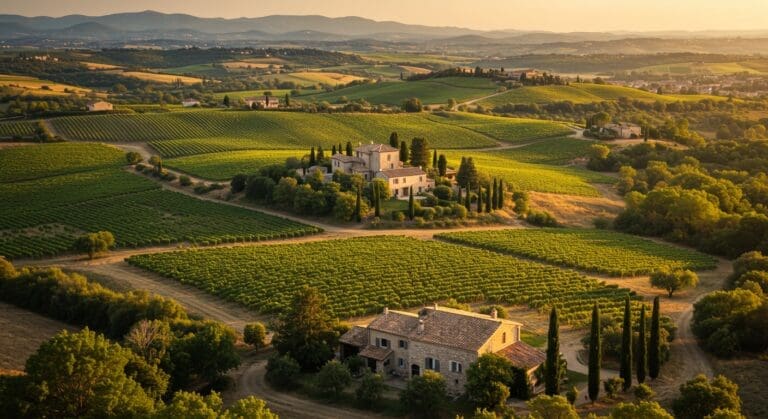
The Meknes wine corridor is where serious exploration should begin. The region’s estates range from large-scale cooperatives supplying the export market to smaller, quality-focused producers who are doing genuinely interesting work with indigenous and international varieties.
Château Roslane, part of the Celliers de Meknès group, is one of the country’s most prominent estates and offers a reasonable entry point into what Moroccan fine wine looks like at its most polished. The Celliers de Meknès operation more broadly is worth understanding – they are the dominant force in the industry, controlling a substantial portion of total production, and their range spans entry-level to premium cuvées. A visit to Meknes can include a proper tour of the wine-producing areas, with tasting sessions that give a structured overview of the appellation.
Domaine de la Zouina, near Meknes, operates with a distinctly Burgundian sensibility – small parcels, careful vinification, wines that reward patience. Their Volubilia range has attracted attention from international critics. Les Trois Domaines is another name that appears consistently in conversations about quality Moroccan wine.
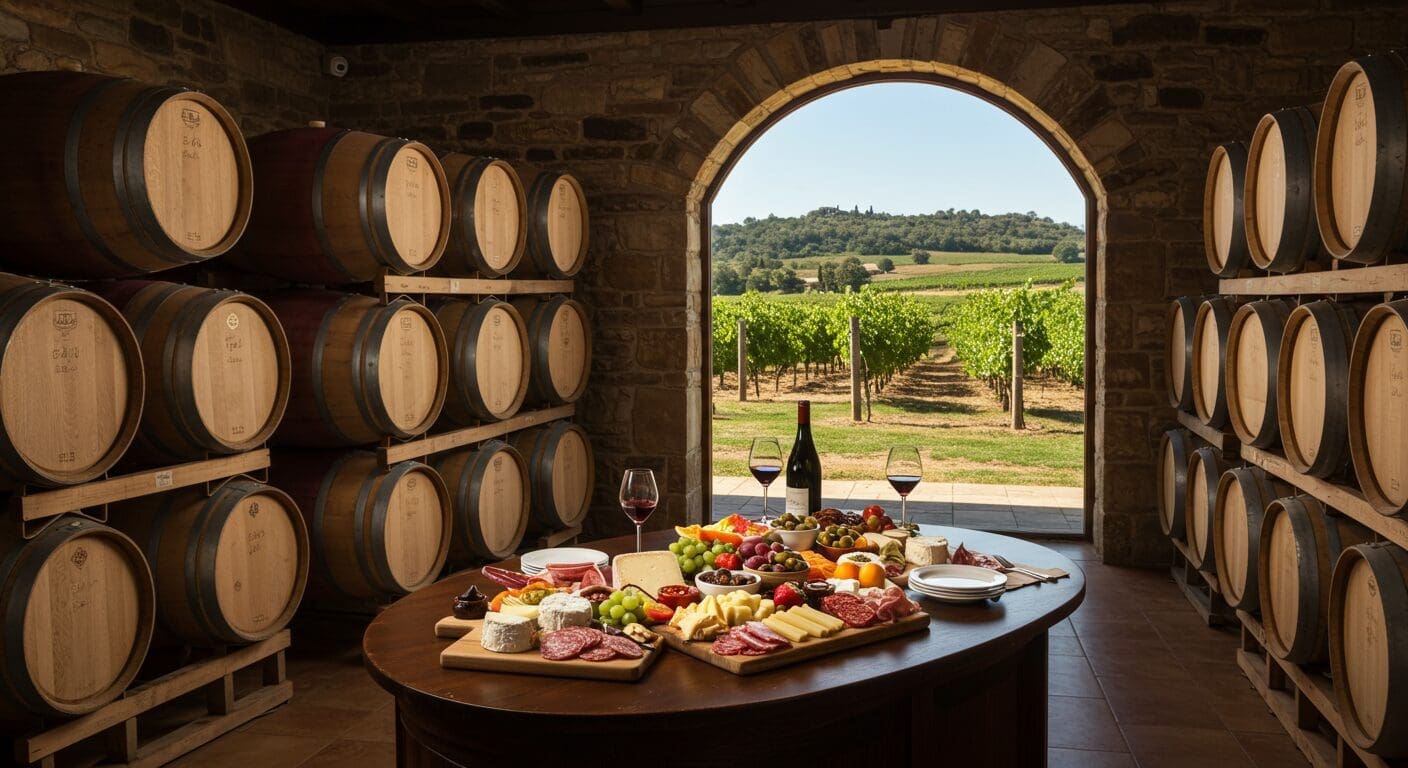
It is worth noting that wine tourism infrastructure in Morocco is still developing relative to, say, Bordeaux or Napa. This is part of the charm. You are not battling tour buses. You are more likely to find yourself at a table in a barrel room with the actual winemaker, eating cheese and talking about the vintage. Arrange visits through your villa concierge or a specialist fixer – cold calling tends to be less productive than a warm introduction.
Food Markets: Where to Shop and What to Expect
The medina souks are the obvious destination and they are, despite the crowds, genuinely worth it. The spice souks of Marrakech and Fes are sensory experiences of the first order – towers of ground turmeric, sacks of dried rose petals, strings of preserved lemon, bark cinnamon in bundles the size of small logs. The vendors are experienced in the art of patient persuasion. You will not need as much saffron as they suggest. You will probably buy it anyway.
For serious food shopping with less theatre, the Mellah markets (the old Jewish quarter markets) in Fes and Marrakech are worth seeking out. They tend to be calmer, the produce is excellent, and the vendors are more inclined toward straightforward transaction than extended negotiation. The fish markets in Agadir and Essaouira operate at dawn and are extraordinarily photogenic, though you should be realistic about whether you are genuinely going to cook the fish you buy or whether you are just enjoying the chaos.
Ramadan evenings transform every market in Morocco. The food stalls that appear after sunset – selling harira, chebakia (honey-soaked sesame pastries), dates, and every manner of fried thing – are one of the great street food occasions in the world. If your travel dates coincide, do not miss it.
Cooking Classes and Culinary Experiences
Learning to cook Moroccan food is not a trivial undertaking, which is precisely what makes it interesting. The techniques are specific, the spice ratios are not guesswork, and the patience required for a properly made tagine is genuinely instructive. Several cooking schools across Marrakech and Fes offer half-day and full-day classes, typically combining a market visit with a hands-on session in a properly equipped kitchen.
The best experiences begin at the souk. You shop first – choosing your vegetables, haggling mildly for your spices, selecting your meat – and then you cook. By the time you sit down to eat what you have made, you understand it in a way that no amount of reading quite manages. You also understand why it took all morning.
Private cooking experiences arranged through a villa chef are a different proposition: more intimate, more personalised, and often more illuminating. A chef who has been cooking Moroccan food for forty years in their family kitchen will teach you things that a formal cooking school syllabus does not cover. Ask your villa team to arrange it. Bring good questions and a reasonable appetite for the tutorial meal.
For those interested in the deeper culinary culture, some operators offer food-focused itineraries that move between cities, tracking regional variations and seasonal ingredients. A well-curated food tour of the imperial cities – Fes to Meknes to Marrakech – structured around eating rather than sightseeing, is one of the most satisfying ways to experience Morocco over the course of a week.
Argan Oil, Olive Oil, and the Liquid Gold of Morocco
No serious consideration of Moroccan food culture omits argan oil, and yet it is frequently misunderstood by visitors who encounter it primarily in cosmetics shops. Culinary argan oil – made from roasted kernels, produced by Berber women’s cooperatives in the Sous Valley south of Agadir – is a remarkable ingredient. Nutty, rich, faintly smoky, with a depth that ordinary olive oil does not approach. Used in amlou, drizzled over tagines, stirred into couscous, it is entirely its own thing.
Visiting a cooperative to see the process – the cracking of the argan nuts, the hand-grinding, the pressing – is an experience worth the detour. The cooperatives are genuine, the work is genuinely hard, and buying directly from the source matters. The argan oil sold in airport souvenir shops is often adulterated. Do not buy it there.
Moroccan olive oil is a quieter story but an equally good one. The country is among the world’s major olive producers, and the best extra virgin oils – from estates in the Meknes and Beni Mellal regions – are world-class. They tend not to travel well commercially, which means they are best sourced in-country. Look for early-harvest oils pressed from Picholine Marocaine olives: sharp, grassy, with a proper peppery finish. They make a Marrakech breakfast of msemen and honey into something quite serious.
The Best Food Experiences Money Can Buy in Morocco
A private dinner in a riad courtyard, prepared by a chef whose family has been cooking Moroccan food for generations, with a table set beneath the orange trees and a selection of Meknes reds decanted and ready. This is available. It requires organisation and a good concierge, but it is available, and there is very little else in travel quite like it.
A dawn visit to a traditional bread oven – the communal farran – in a medina neighbourhood, where families bring their bread dough each morning to be baked at the communal oven, is an experience that costs nothing and reveals everything about the social architecture of Moroccan food culture. Go early. Go quietly.
A mechoui lunch in the Atlas Mountains, arranged by a knowledgeable local guide, with the lamb cooked overnight in a clay-sealed pit and a table set up in the open air with Berber bread, olives, and local wine. Followed by a long walk to justify it. Followed by mint tea and pastries because Morocco does not let you leave the table without them. This is, by any reasonable measure, a near-perfect afternoon.
For the genuinely committed, a private tour of the Meknes wine region paired with estate visits and a dinner featuring wine and food pairings – Moroccan cuisine matched with Moroccan wine, which is a pairing that remains underexplored – offers an experience that is both pleasurable and genuinely educational. Syrah with slow-cooked lamb and prunes, as it turns out, is not a difficult argument to make.
Truffles appear occasionally in Morocco’s culinary calendar, though they are not the black truffle of Périgord or the white truffle of Alba. Moroccan desert truffles – terfez – are foraged after the winter rains in the arid south and east. They are earthy, delicate, best prepared simply: sautéed in butter or stirred into eggs. Finding them requires timing and local knowledge. If your travel falls between January and April and you express interest, a knowledgeable guide can usually arrange an encounter with someone who knows where to look.
Plan Your Moroccan Food Journey
Morocco rewards the traveller who eats with intention. Not just showing up hungry – though that helps – but choosing to understand what is on the table, where it comes from, who made it, and why it tastes the way it does. This is a cuisine with centuries of accumulated intelligence behind it, and it gives back generously to anyone who pays attention.
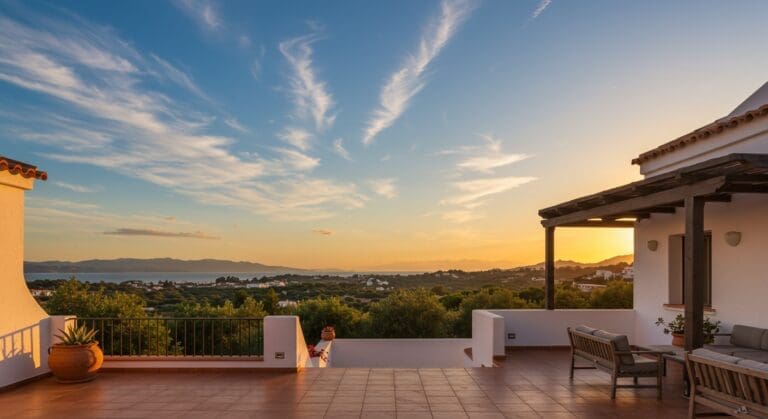
The full Morocco food and wine guide experience works best when it is anchored by the right base. A private villa gives you what no hotel can: a kitchen to explore, a chef to collaborate with, a table that is genuinely yours, and the freedom to have dinner at ten o’clock under the stars because nobody is waiting to reset the restaurant for breakfast service. Explore our collection of luxury villas in Morocco to find your ideal base for a serious culinary journey through this extraordinary country.
For the full picture on planning a Moroccan trip – from the best time to visit to what to see beyond the dinner table – our Morocco Travel Guide covers the destination in comprehensive detail.