Muğla with Kids: The Ultimate Family Holiday Guide
Here is what most travel guides about the Turkish Aegean will not tell you: Muğla province is not one place. It is a dozen different coastlines, four distinct landscapes, and approximately three hundred reasons to never go anywhere else with your children again. The guidebooks tend to fixate on Bodrum’s whitewashed walls or Ölüdeniz’s lagoon and leave it there, as if the vast, pine-forested interior simply doesn’t exist. But it does exist – and for families, that interior matters enormously. Because between the legendary beaches and the private pool lunches lies a region that has, entirely without making a fuss about it, perfected the art of giving children exactly what they need while allowing their parents to remain sane, well-fed, and occasionally holding a cold glass of something. That is not an accident. That is Muğla.
Why Muğla Works So Exceptionally Well for Families
There is a particular alchemy that happens in some destinations – a convergence of climate, geography, pace, and culture that makes travelling with children feel like a pleasure rather than a logistics exercise. Muğla has this alchemy in abundance, and it is worth understanding why before you pack a single armbands-and-sunscreen bag.
The geography alone does most of the heavy lifting. Muğla is the largest province in Turkey, encompassing the Bodrum and Marmaris peninsulas, the Gulf of Fethiye, the otherworldly Turquoise Coast around Göcek, and the ancient Lycian heartland stretching toward Dalaman. That variety is a gift for families. You can spend your mornings at a sheltered bay with water so clear you can see your children’s feet from the boat, your afternoons exploring Lycian rock tombs that make history feel genuinely dramatic rather than textbook-dull, and your evenings eating grilled fish at a harbourside restaurant where the staff will find your three-year-old’s attempts at Turkish words genuinely charming rather than performatively so.
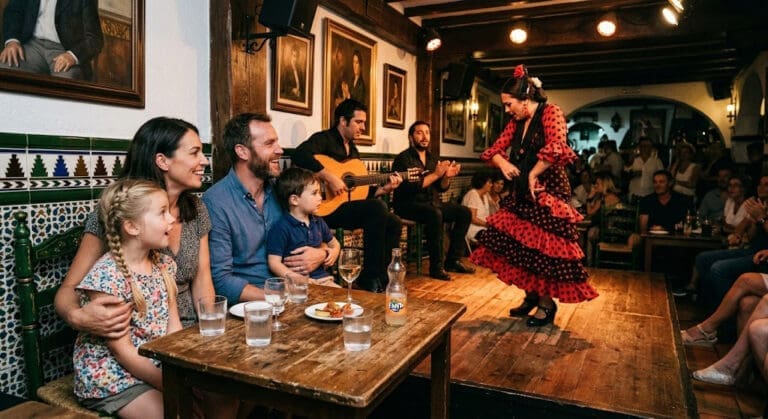
The Turkish attitude toward children is also worth acknowledging directly. In Muğla – as across Turkey – children are welcomed as participants in public life, not tolerated as an inconvenience. A toddler running between restaurant tables at nine in the evening will be gently redirected by a waiter who then brings them a plate of sliced watermelon. This is not a tourist affectation. It is simply how things work here.
The climate between May and October is reliably warm and dry, the waters of the Aegean and Mediterranean are calm enough for even nervous young swimmers at most of the region’s more sheltered beaches, and the combination of ancient ruins, boat trips, sea caves, and excellent ice cream means that even the most screen-dependent teenager can generally be coaxed into engagement.
For more on the region’s broader character and practical foundations, our Muğla Travel Guide covers everything from when to arrive to how the region fits together as a whole.
The Best Family Beaches in Muğla – And How to Use Them
Muğla does not have one famous beach. It has several dozen worth arguing about, which is a far better situation. The key for families is matching the beach to the age of your children, because the difference between a gentle, shallow bay with no current and a wide-open stretch of Aegean exposed to afternoon winds is the difference between a wonderful day and an extremely tiring one.
For families with toddlers and young children, the sheltered coves around Göcek and the Gulf of Fethiye are hard to beat. The water is extraordinarily calm here – the gulf acts as a natural barrier – and many of the smaller beaches are accessible only by boat, which keeps crowds to a minimum. The sea floor tends to be sandy or smooth pebble, the water temperature in July and August hovers around a deeply pleasant 28 degrees, and the surrounding pine forests mean there is natural shade onshore.
Ölüdeniz, despite its fame, remains worthy of the journey – particularly if you time your visit for early morning before the day-trippers arrive by the busload. The Blue Lagoon section is a designated nature reserve and the water inside it is almost unnervingly still and brilliantly turquoise. Children who are confident swimmers will be in paradise. For those still working on their water confidence, the lagoon’s shallower edges are ideal. (Arriving by 8am feels antisocial until you witness what the beach looks like by noon.)
On the Bodrum peninsula, Bitez Bay is the local’s choice for families – a long, gently curving beach with calm water, good amenities, and enough shallow wading area to keep non-swimmers happy for hours. It also has excellent windsurfing conditions if you have a teenager who needs a proper challenge.
The Marmaris area offers the long sandy stretch of Içmeler for families who want facilities close at hand, while the boat trips departing daily from Marmaris harbour take families into entirely different territory – sea caves, deserted coves, and swimming stops above Cleopatra’s Beach, so named for reasons that history cannot quite verify but tourism has enthusiastically adopted anyway.
Activities and Experiences That Actually Work for All Ages
The best family activities in Muğla share a common trait: they are genuinely interesting for adults too. This matters more than most family travel writing admits. A child being dragged around something that bores their parents will always sense the performance. The good news is that Muğla’s range of activities makes the performance almost entirely unnecessary.
A gulet cruise – a traditional Turkish wooden sailing boat – is among the most transformative experiences available to families in this region. These boats can be chartered privately, typically from Bodrum, Göcek, Fethiye, or Marmaris, and allow you to move between bays at your own pace, swimming off the back of the boat, eating lunch onboard, and anchoring overnight in sheltered coves. For children aged roughly six and above this is pure adventure. For teenagers it is, reluctantly and then enthusiastically, freedom. For parents it is something that looks and feels almost implausibly like a proper holiday.
Sea kayaking around the Göcek islands suits families with children from around eight upward. The waters are protected, the islands are genuinely beautiful in a slightly austere way, and paddling past Lycian sarcophagi half-submerged at the water’s edge tends to generate more genuine historical curiosity than any classroom has ever managed.
The ancient city of Kaunos, accessible by rowing boat across the Dalyan Delta, is one of the region’s most under-visited archaeological sites and all the better for it. The walk up through the ruins is not demanding, the views over the delta are extraordinary, and the Lycian rock tombs carved directly into the cliff face above the river provide a visual drama that makes ancient history feel like something other than a subject to be endured. Combine this with a boat trip through the Dalyan reeds and a stop at İztuzu Beach – one of Turkey’s most important loggerhead turtle nesting sites – and you have a full day that children will actually discuss afterward.
For families with teenagers, the thermal pools and mud baths at Köyceğiz Lake are a reliably memorable afternoon – primarily because covering each other in sulphurous grey mud removes all teenage composure and dignity, which is occasionally exactly what a family holiday requires.
Eating with Children in Muğla
Turkish food, it is worth saying clearly, is one of the world’s great cuisines for travelling with children. The flavours are bold but not aggressive, the options are varied, and the culture of meze – small shared plates arriving in waves – suits families perfectly because everyone can try everything and no one is committed to a single plate for the duration. Muğla’s coastal location adds excellent fresh seafood to the mix, along with locally grown vegetables, regional olive oils of considerable character, and bread that arrives warm and appears with the same reliable frequency as the sunrise.
Along the Bodrum peninsula and around Fethiye harbour, waterfront restaurants are a fixture of family evenings – casual enough that children are genuinely comfortable, good enough that parents are genuinely satisfied. Meze platters of stuffed vine leaves, hummus, grilled halloumi, and the local specialty of deep-fried courgette flowers are a reliable crowd-pleaser. Fish is ordered by weight from the display case and grilled simply, which tends to convert even moderately fish-resistant children when the quality is this good.
In the market towns of the interior – Köyceğiz, Dalaman, the old town of Muğla itself – smaller, more local restaurants serve the kind of slow-cooked lamb and aubergine dishes that define Turkish home cooking. The pide shops (essentially Turkish flatbread pizzas, and an entirely accurate description) are universally popular with children and tend to cost so little that ordering multiple varieties to share makes complete sense. Street food – roasted corn, simit sesame rings, fresh pomegranate juice – keeps younger children happy during any market visit and costs very little.
For families renting private villas, the combination of excellent local markets and simple cooking facilities means that some of the best family meals happen at home, with produce bought that morning from whatever was grown within ten kilometres. This is less about saving money and more about the particular pleasure of eating ripe tomatoes that actually taste of tomato.
A Practical Guide by Age Group
Travelling to Muğla with children is not a single experience – it shifts considerably depending on who you are travelling with, which is why a genuinely useful family travel guide has to acknowledge that a two-year-old and a fifteen-year-old require almost entirely different holidays in the same destination.
Toddlers and Under-Fives
The key considerations for very young children in Muğla are heat management, shallow water access, and the avoidance of long drives across a province that is larger than some European countries. Base yourself in one area rather than trying to cover the whole region. The Fethiye-Göcek area or the quieter parts of the Bodrum peninsula both work well, offering calm beaches within short distances, good supermarkets, and a pace that does not require military scheduling. Sunscreen and shade are non-negotiable between roughly 11am and 3pm. The good news is that most private villas have pools that are shaded by late morning, and the afternoon heat maps perfectly onto the nap schedule that parents of toddlers are vigorously defending at all costs.
Junior Travellers: Six to Twelve
This is the golden age for Muğla. Children old enough to actually experience a boat trip, snorkel over a sea turtle, walk through a set of 2,500-year-old ruins, and eat something adventurous without requiring extensive negotiation. The gulet cruise becomes a genuine possibility at this age. Day trips to Kaunos, Dalyan, or the ghost village of Kayaköy – a remarkable abandoned settlement in the hills above Ölüdeniz – land with proper impact. Children in this age group tend to respond well to the freedom that comes with a private villa base: the ability to swim at ten at night, eat when hunger dictates rather than when restaurants seat you, and invite new friends over from the next villa for an afternoon in the pool. These are the holidays that actually get remembered.
Teenagers
The teenager abroad is a particular challenge, and Muğla, to its considerable credit, meets this challenge with options rather than obligation. Water sports – including kitesurfing at Bitez, sailing courses from Marmaris or Bodrum, diving qualifications through several reputable centres along the coast – give teenagers something to master, which is the key. The independence of a villa with a pool removes the need to enforce group activity from morning to evening. The food is varied and interesting enough to hold even the most determinedly unadventurous palate. And the ancient sites, approached correctly – which generally means via boat rather than tour bus – tend to get through even the most carefully maintained veneer of teenage indifference. Kayaköy at golden hour, with its hundreds of crumbling stone houses abandoned after the 1923 population exchanges, tends to land differently than any classroom history lesson. There are no queues. There are almost no other tourists. History feels, for once, genuinely present.
Why a Private Villa with a Pool Changes Everything
It is tempting to frame the private villa argument as a luxury preference – something for people who would rather not share a pool with strangers. This is true, but it dramatically undersells the practical transformation that a villa makes to a family holiday with children.
Hotels, however well-appointed, impose structure. Breakfast ends at a particular time. The pool opens at a particular time. If a child has a meltdown at 7pm – and they do, with the reliability of tides – that meltdown happens in a corridor or a restaurant or a shared space where it becomes a performance for other guests and a source of low-level parental mortification. None of this is catastrophic, but it accumulates, and the accumulation is what turns a two-week holiday into something that requires recovery afterward.
A private villa in Muğla removes almost all of this. The pool is available at six in the morning when your four-year-old decides they want to swim before breakfast. Dinner happens when the children are actually hungry rather than when the kitchen accepts reservations. The evening swim that extends until ten o’clock – the one that makes children sleep like they have been sedated – is entirely possible without inconveniencing anyone. The older children and the younger children can occupy entirely different spaces within the same property, which is the spatial equivalent of a peace treaty.
Beyond the structural benefits, the quality of villa available in Muğla is genuinely exceptional. Private infinity pools overlooking the Aegean, terraces large enough for outdoor dining for twelve, fully equipped kitchens that allow market produce to become a proper meal, and the particular spaciousness that means family members can be together or apart according to what the moment requires. Some villas have private beach access. Some have outdoor cinema setups. Most have gardens substantial enough that children can range freely in safety.
The cumulative effect is that the holiday actually delivers on the promise holidays make. Parents relax properly. Children run free. Everyone arrives home with real memories rather than a collection of hotel corridor photographs.
If you are ready to find the right base, browse our selection of family luxury villas in Muğla and find the property that makes your particular family’s holiday possible.